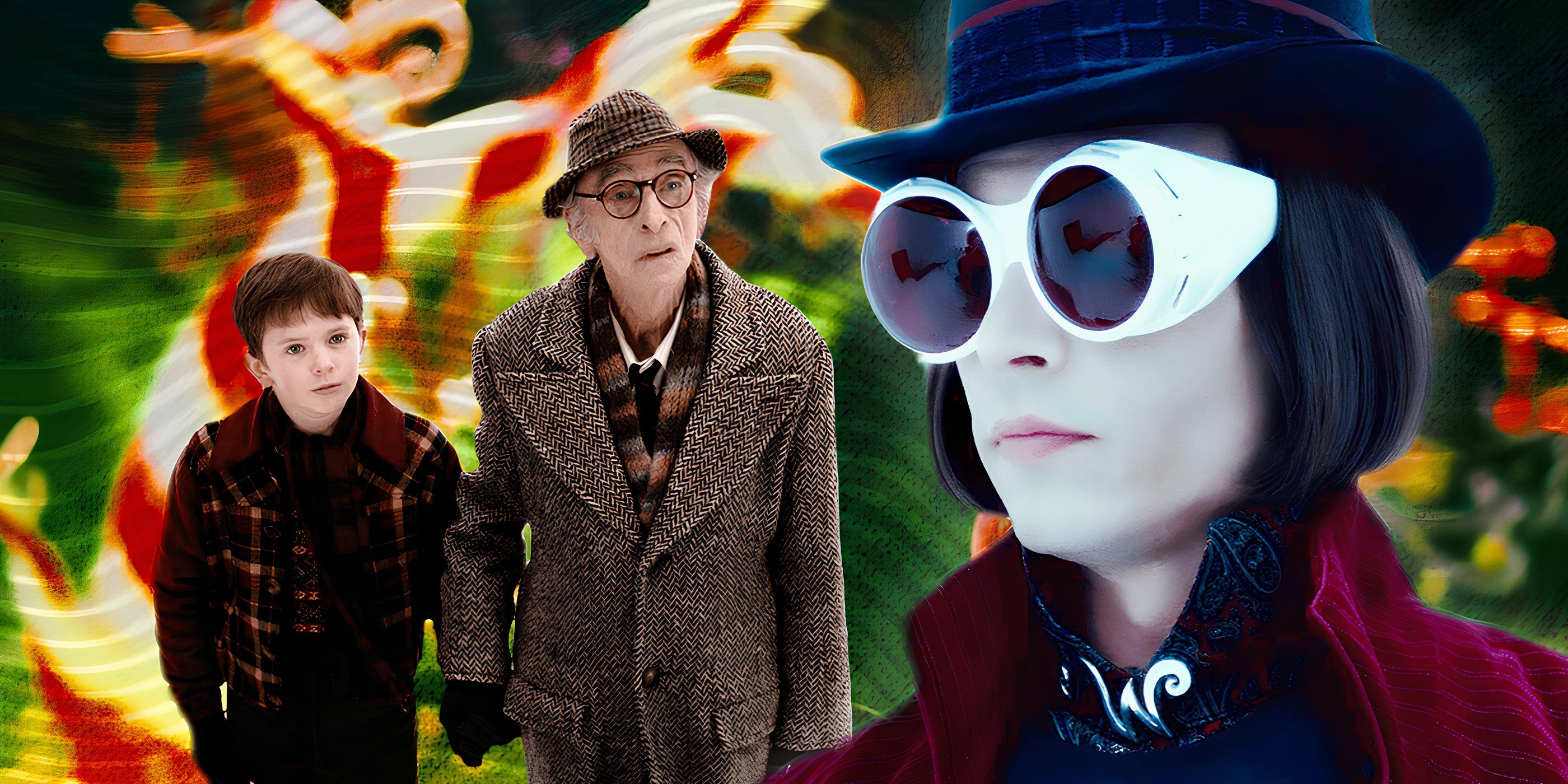
The 2005 film Charlie and the Chocolate Factory, directed by Tim Burton and starring Johnny Depp, is a visually spectacular adaptation of Roald Dahl’s classic book. Generally recommended for children aged 7 and up, the movie follows young Charlie Bucket as he tours Willy Wonka’s magical factory, offering a whimsical yet cautionary tale about the importance of kindness, family, and humility.
As of 2026, the 2005 version of Charlie and the Chocolate Factory remains a staple of family cinema. While it was released over two decades ago, its vibrant use of practical effects and early digital technology allows it to hold up remarkably well for a modern audience. For parents and educators, the film serves as more than just entertainment; it is a moral playground where children can witness the direct consequences of greed, selfishness, and poor behavior. This guide explores the narrative depth, age-appropriateness, and educational value of this specific adaptation to help families decide if it is the right fit for their viewing schedule.
The Narrative Arc: A Journey from Poverty to Imagination
The story begins in a dark, snowy town where the young and impoverished Charlie Bucket lives in a lopsided house with his parents and four bedridden grandparents. This opening segment is crucial for children to understand, as it establishes the emotional stakes of the film. Unlike many modern protagonists who desire gadgets or fame, Charlie’s primary concern is the well-being of his family. The 2005 film leans heavily into the Dickensian aesthetic of the Bucket household, emphasizing the stark contrast between their meager lives and the looming mystery of the nearby chocolate factory.
When the eccentric candy maker Willy Wonka announces a contest to find five Golden Tickets hidden inside Wonka Bars, the world enters a chocolate-buying frenzy. The "Golden Ticket" concept is an excellent way to introduce children to the ideas of luck, scarcity, and the different ways people pursue their goals. The movie follows the discovery of the first four tickets by children who represent various negative traits, leaving the fifth and final ticket for Charlie.
The second half of the film takes place inside the factory. This is where Tim Burton’s visual imagination takes center stage. The factory is not just a building; it is a surreal landscape featuring chocolate rivers, edible grass, and rooms where physics seems to operate differently. For a child audience, this transition from the gray, drab town to the neon-colored factory is a powerful visual metaphor for the power of imagination and the rewards of perseverance.
Character Analysis: Lessons in Behavior and Consequence
One of the most effective aspects of the 2005 film for children is its "morality play" structure. Each of the children who accompanies Charlie into the factory serves as a caricature of a specific vice. By watching these characters fail, children can engage in a dialogue about what constitutes good character.
Charlie Bucket: The Pillar of Selflessness
Charlie, played by Freddie Highmore, is the heart of the story. His character remains steadfast in his love for his family. In the 2005 version, there is a specific plot point where Charlie considers selling his Golden Ticket to help buy food for his family. This moment is a vital teaching tool, showing that true integrity means putting the needs of others above one's own desires.
The Four "Naughty" Children
Each of the other winners represents a failure of parenting and personal discipline. The film uses dark humor to show their "demise" within the factory:
- Augustus Gloop: Represents gluttony. His inability to control his appetite leads him to fall into the chocolate river. This can spark conversations about moderation and self-control.
- Violet Beauregarde: Represents hyper-competitiveness and pride. Her obsession with winning at all costs (and her habit of chewing gum) results in her turning into a giant blueberry. This highlights the dangers of arrogance.
- Veruca Salt: Represents greed and entitlement. Raised by parents who never say "no," she is eventually deemed a "bad nut" by trained squirrels. This is a classic lesson in the difference between "want" and "need."
- Mike Teavee: Represents aggression and tech-obsession. In the 2005 film, he is portrayed as a hyper-intelligent but disrespectful child who thinks he knows more than the adults. His obsession with television and video games leads to his own shrinking.
Willy Wonka: The Eccentric Mentor
Johnny Depp’s portrayal of Willy Wonka is significantly different from the 1971 version. He is socially awkward, fearful of the word "parents," and deeply lonely. For older children, this version of Wonka provides a more complex character study about how childhood trauma (revealed through flashbacks of his dentist father, Dr. Wilbur Wonka) can affect an adult. It teaches children that even the most successful people carry their own struggles and that reconciliation is a powerful tool for happiness.
Age Appropriateness and Content Considerations
While rated PG, parents should be aware that Tim Burton’s style often incorporates "creepy" or "dark" elements that might be unsettling for very young or highly sensitive children.
Visual Style and Atmosphere
The factory is filled with wonder, but it also contains moments of mild peril. The Oompa-Loompas, all played by actor Deep Roy, are synchronized and slightly robotic, which some children might find uncanny. The scene involving the trained squirrels in the Nut Room can be intense, as they pin Veruca Salt to the floor to test if she is a "bad nut." However, these scenes are generally handled with enough humor to prevent them from being truly frightening.
Language and Humorous Tone
The movie uses Roald Dahl’s original biting wit. The dialogue is sharp, and the Oompa-Loompa songs (composed by Danny Elfman) are derived directly from the book’s poetry. These songs are educational in their own right, as they summarize the flaws of the children in a rhythmic, rhyming format. Parents should note that Wonka is occasionally dismissive or rude to the parents of the other children, which is intended as comedy but may require context for younger viewers regarding how to speak to adults.
Educational Themes for School and Home
Charlie and the Chocolate Factory is a favorite for educators because it touches on several cross-curricular themes. Whether watching at home in 2026 or using it as a classroom resource, consider these discussion points:
- Socioeconomics: Discuss the difference between Charlie’s life and the lives of the other winners. Why does Charlie appreciate the factory more than Veruca Salt does?
- Creative Writing: Roald Dahl was a master of wordplay. The 2005 film preserves many of his invented words (like "Snozzberries" and "Whipple-Scrumpets"). Children can be encouraged to invent their own candy names and descriptions.
- Music and Poetry: The Oompa-Loompa songs are masterpieces of cautionary poetry. Analyzing the lyrics can help children understand rhyme schemes and metaphors.
- The Science of Chocolate: For a more technical angle, the film can lead into a study of how chocolate is actually made, from cacao beans to the final product, contrasting the "magic" of the film with real-world manufacturing.
Comparing the 2005 Movie to Other Versions
In 2026, viewers have multiple ways to experience this story: the original 1964 book, the 1971 movie Willy Wonka & the Chocolate Factory, the 2005 Burton film, and the 2023 Wonka prequel.
| Feature | 2005 Movie (Burton) | 1971 Movie (Stuart) | 1964 Original Book |
|---|---|---|---|
| Willy Wonka Persona | Socially awkward, eccentric, child-like | Mystery-driven, theatrical, paternal | Calculating, energetic, small |
| Oompa-Loompas | All played by one actor (Deep Roy), digital clones | Practical makeup, orange skin, green hair | Described as small people from Loompaland |
| Charlie's Flaw | None; he is portrayed as nearly perfect | He breaks a rule (Fizzy Lifting Drinks) | None; he is the "silent observer" |
| Ending | Wonka reconciles with his father | Charlie wins the factory immediately | Charlie and family move into the factory |
| Musical Style | Danny Elfman (Rock, Disco, Psych-pop) | Classic Broadway-style musical | Written lyrics (no music) |
The 2005 version is often cited as being more "book-accurate" regarding the factory’s rooms and the Oompa-Loompa songs, though it adds an entirely new backstory for Willy Wonka that does not exist in Dahl's original text.
Practical Tips for Watching with Children
To make the most of the viewing experience, parents can follow these simple steps:
- Pre-reading: If possible, read the book with your child before watching the movie. This allows them to compare their own mental images with Tim Burton’s visuals.
- Discuss the "Flashbacks": Younger children may be confused by the scenes showing young Willy Wonka and his father. Explain that these are memories that help us understand why Mr. Wonka acts the way he does.
- Watch for Details: The film is packed with visual Easter eggs. Encourage children to look for the various inventions in the background of the Inventing Room.
- The "Squirrel" Scene: If your child is afraid of animals, you may want to stay close during the Nut Room scene. Remind them that the squirrels are "working" and that the scene is part of the factory's magical logic.
Technical Aspects: Music and Visual Effects
The 2005 production is notable for its commitment to practical effects where possible. The chocolate river was made of 192,000 gallons of actual (though non-edible) flowing liquid to give it the right viscosity on camera. This creates a sense of "realness" that 100% CGI films often lack.
The music by Danny Elfman is another standout feature. Each child’s "exit song" is composed in a different musical style:
- Augustus Gloop: A big-band, brass-heavy style.
- Violet Beauregarde: 1970s Funk/Disco.
- Veruca Salt: 1960s "flower power" psychedelic pop.
- Mike Teavee: Modern (for 2005) rock and electronic music.
These musical shifts help children distinguish between the characters and keep the pacing of the tour energetic.
Frequently Asked Questions
Is the 2005 movie scary for 5-year-olds?
It depends on the child. The 2005 version has a darker "Burtonesque" aesthetic. Some scenes, such as the burning puppets at the factory entrance or the giant squirrels, might be slightly frightening for very young children. However, the film is rated PG and generally considered safe for primary-school-aged kids.
How is the 2005 movie different from the 1971 version?
The 2005 movie is more visually aligned with the book's descriptions and features a more socially isolated Wonka. It also excludes the "Fizzy Lifting Drinks" subplot from the 1971 film, meaning Charlie does not break any rules in the 2005 version. Additionally, the 2005 film provides a backstory for Wonka's family, which is absent in the 1971 film.
What happened to the other children at the end?
In the 2005 film, you briefly see the other children leaving the factory. Unlike the 1971 version, where their fate is left slightly more ambiguous, the 2005 version shows them covered in the remnants of their ordeals (Augustus covered in chocolate, Violet still blue but flexible, etc.), proving they are safe but changed by their experience.
Why does Willy Wonka hate parents in this movie?
In the 2005 version, Willy Wonka had a strict father who was a dentist and forbade him from ever eating candy. Wonka ran away from home to follow his dreams, leading to a long-term estrangement. This subplot was added to the film to explain Wonka's eccentricities and to emphasize the movie's theme of family reconciliation.
Is the 2005 movie on any streaming services in 2026?
As of 2026, Charlie and the Chocolate Factory is a Warner Bros. property and is most commonly found on the Max streaming platform. It is also frequently available for digital purchase or rental on platforms like Amazon Prime, Apple TV, and Google Play. Availability can vary by region.
Final Recommendation
Charlie and the Chocolate Factory (2005) is an excellent choice for a family movie night. It combines high-level visual artistry with timeless moral lessons that remain relevant in 2026. While Johnny Depp’s Wonka is a departure from previous interpretations, the film’s dedication to the spirit of Roald Dahl’s writing makes it a valuable experience for children. It encourages them to value their families over material wealth and to understand that their actions—and their attitudes—have real-world consequences. For the best experience, watch it with your children and use the "naughty" characters as a starting point for a fun but meaningful conversation about behavior.
More information can be found via the following official and review resources: