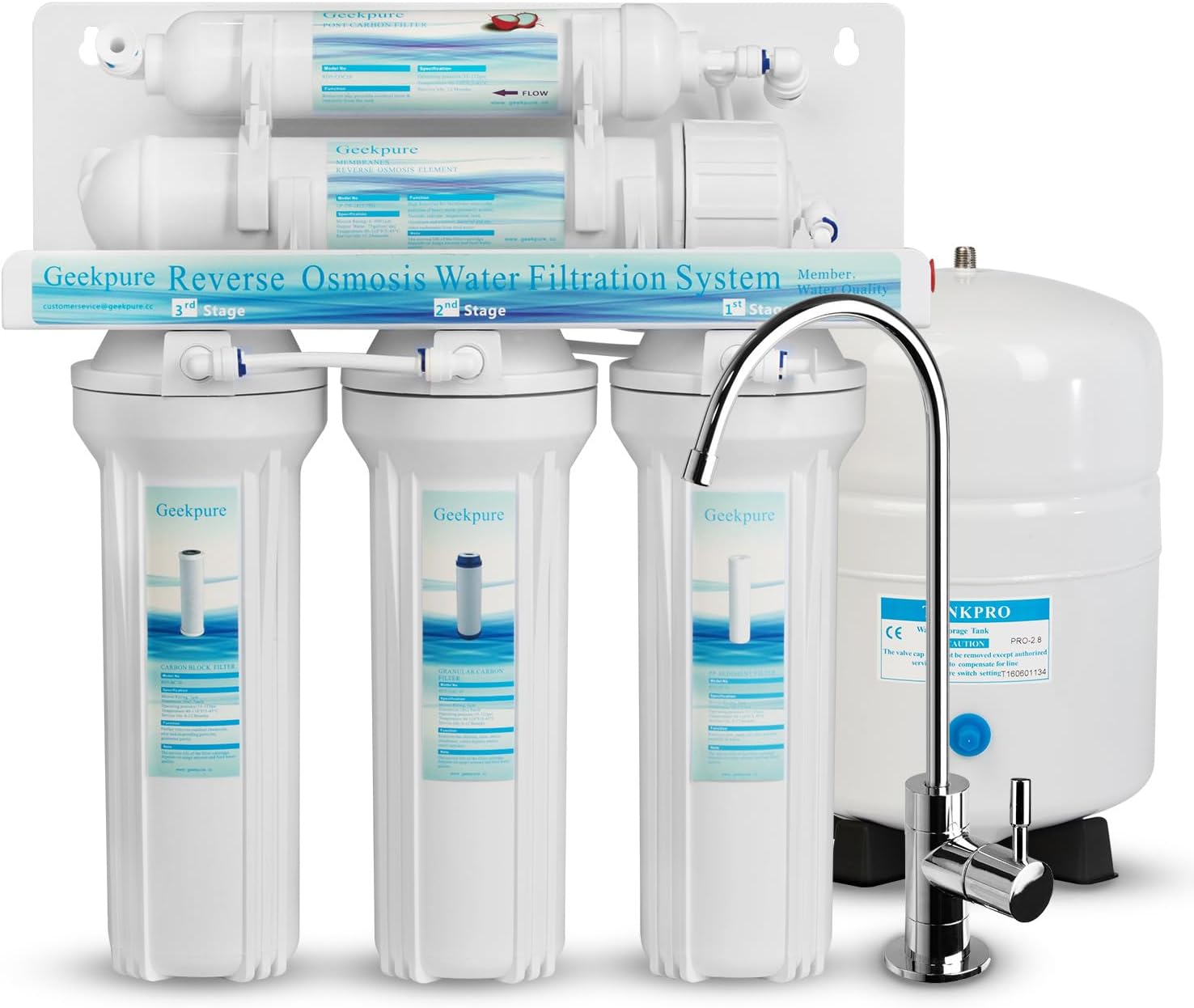
There is no single "best water filter in the world" because water contamination profiles vary dramatically by region, source water, and individual health requirements. Instead, elite water filtration systems are engineered to target specific contaminant classes—such as microbiological pathogens, heavy metals, or volatile organic compounds—using specialized technologies like reverse osmosis, multi-stage carbon block, and advanced ultrafiltration.
When consumers search for the 1 best water filter in the world, they are usually looking for an absolute standard of purity, reliability, and contaminant reduction. However, water treatment engineering is governed by precise certifications and chemistry rather than a single universal crown. A gravity-fed survival filter optimized for backcountry bacteria removal operates under entirely different principles than a whole-house municipal system designed to strip out industrial chemicals and heavy metals. Understanding how different filtration mechanisms perform against certified laboratory standards is essential for identifying the ideal solution for any specific water supply.
Understanding Water Quality and Contaminant Profiles
Before evaluating filtration technologies, it is necessary to examine what needs to be removed from water. Contaminants generally fall into four major categories: biological pathogens (bacteria, viruses, and protozoan cysts), suspended solids (sediment, rust, and silt), inorganic chemicals (heavy metals like lead, arsenic, and nitrates), and organic compounds (chlorine, disinfection byproducts, pharmaceuticals, and pesticides).
Municipal water supplies in developed nations are generally treated to meet regulatory standards, such as those enforced by the United States Environmental Protection Agency (EPA) or the European Union Drinking Water Directive. Despite this treatment, water often accumulates contaminants as it travels through aging municipal infrastructure and domestic plumbing pipes. Lead leaching from old service lines and copper piping represents a pervasive domestic hazard.
Conversely, private wells and untreated surface water sources present entirely different biological and mineral challenges. Well water may contain high concentrations of dissolved minerals, causing hardness, alongside agricultural runoff, nitrates, and pathogenic microorganisms. Therefore, the concept of a single best filter collapses under scrutiny; a system optimized to remove microscopic bacteria in a remote wilderness setting will not necessarily address dissolved chemical contaminants in an industrial urban area.
Certified Standards and Testing Protocols
To navigate marketing claims and identify high-performing systems, consumers must rely on independent third-party testing and certification standards. Organizations like NSF International and the American National Standards Institute (ANSI) establish rigorous testing protocols to verify a filter's ability to reduce specific contaminants.
Understanding these specific certification standards prevents buyers from relying on vague manufacturer claims:
- NSF/ANSI 42: Evaluates aesthetic effects, focusing on chlorine taste and odor, particulate reduction, and pH balancing.
- NSF/ANSI 53: Addresses health-related contaminants, including lead, volatile organic compounds (VOCs), cysts, and asbestos.
- NSF/ANSI 58: Specifically governs reverse osmosis systems, measuring total dissolved solids (TDS) reduction and structural integrity.
- NSF/ANSI 401: Targets "emerging compounds," such as trace pharmaceuticals, over-the-counter medications, and specific herbicides and pesticides.
- NSF/ANSI P231: Evaluates microbiological water purifiers, testing efficacy against bacteria, viruses, and live protozoan cysts in challenging water conditions.
Systems that carry certifications verified by accredited bodies like the Water Quality Association (WQA) or NSF provide quantifiable assurance of performance. Without these standards, performance claims remain unverified by independent science.
Comparative Breakdown of Elite Filtration Technologies
Different filtration technologies utilize distinct physical and chemical mechanisms. Selecting the appropriate category depends entirely on the contaminants present in the water supply and the desired flow rate or volume.
| Technology Category | Primary Mechanism | Key Strengths | Primary Limitations | Typical Application |
|---|---|---|---|---|
| Reverse Osmosis (RO) | Semi-permeable membrane (approx. 0.0001 microns) | Removes up to 99% of dissolved solids, heavy metals, fluoride, and salts | Low flow rate, wastes water during production, strips beneficial minerals | Point-of-use under-sink systems |
| Advanced Carbon Block | Adsorption via activated carbon (0.5 to 1 micron) | Effectively removes chlorine, lead, VOCs, and cysts while retaining minerals | Ineffective against dissolved salts and certain minerals; requires frequent filter changes | Countertop pitchers, under-sink units, whole-house pre-filters |
| Ultrafiltration (UF) | Hollow-fiber membrane (approx. 0.01 to 0.1 microns) | Physical barrier against bacteria and cysts; high flow rate without electricity or wastewater waste | Does not remove dissolved chemicals, heavy metals, or viruses | Emergency preparedness, camping, whole-house pre-filtration |
| UV Disinfection Systems | Ultraviolet germicidal irradiation (wavelength ~254 nm) | Neutralizes bacteria, viruses, and protozoa instantly without adding chemicals | Requires electricity; no residual disinfection; ineffective with turbid water | Whole-house point-of-entry (paired with sediment filtration) |
Reverse Osmosis: The Gold Standard for Chemical and Mineral Reduction
For consumers seeking the highest possible degree of chemical and dissolved solid purity, reverse osmosis (RO) systems are widely regarded as the most comprehensive point-of-use option available for residential homes. An RO system forces water under pressure through a tightly wound semi-permeable membrane. While water molecules pass through, the membrane rejects up to 99% of dissolved inorganic solids, heavy metals, sodium, and radiological contaminants.
Advanced RO systems typically incorporate a multi-stage process: an initial sediment filter to protect the membrane, a carbon block filter to remove chlorine and organic compounds that can degrade the membrane, the RO membrane itself, and a final post-carbon polishing filter to ensure optimal taste.
Despite their exceptional purification capabilities, reverse osmosis systems have notable operational trade-offs. The process generates wastewater as it flushes rejected contaminants down the drain, with traditional ratios ranging from three to four gallons of wastewater for every gallon of purified water produced. Furthermore, because RO removes virtually all minerals from the water, the resulting liquid can taste flat and slightly acidic, prompting many premium systems to include a remineralization stage that reintroduces calcium and magnesium.
Carbon Block Adsorption: Balancing Purity and Mineral Retention
Activated carbon filtration relies on adsorption, a process where chemical contaminants adhere to the vast internal surface area of porous carbon material. High-end carbon block filters compress activated carbon into a solid matrix, allowing them to function as both a chemical adsorption medium and a mechanical sub-micron physical filter.
High-end carbon systems certified to NSF/ANSI 53 and 401 are capable of reducing heavy metals like lead and mercury, volatile organic compounds, PFAS (per- and polyfluoroalkyl substances), and chlorine-induced taste and odor issues. Unlike reverse osmosis, carbon filtration preserves beneficial naturally occurring minerals such as calcium and magnesium, which contribute to water alkalinity and flavor profile.
The primary limitation of carbon filtration is its finite capacity. As adsorption sites fill with contaminants, the filter's efficacy declines. Consequently, adhering strictly to manufacturer replacement schedules is critical to prevent contaminant breakthrough or microbial growth within the exhausted filter media.
Whole-House vs. Point-of-Use Systems
When evaluating water filtration infrastructure, a fundamental architectural decision involves choosing between point-of-entry (POE) whole-house systems and point-of-use (POU) targeted systems.
Point-of-entry systems are installed directly where the main water supply enters a building. These systems treat every drop of water used for showering, washing clothes, flushing toilets, and drinking. Whole-house configurations frequently combine sediment filters, catalytic carbon tanks, water softeners, and ultraviolet disinfection units. Protecting plumbing fixtures from scale buildup and removing volatile chemicals that can vaporize into steam during hot showers are primary benefits of POE systems.
Conversely, point-of-use systems focus on a single outlet, most commonly the kitchen sink or a dedicated drinking water faucet. Because they concentrate treatment efforts on water designated exclusively for human consumption, POU systems like multi-stage carbon blocks or reverse osmosis units can achieve a higher degree of purification for drinking and cooking without the expense of treating water used for secondary household tasks.
Evaluating Practical Performance, Cost, and Maintenance
Investing in an elite water filtration system requires analyzing long-term total cost of ownership rather than merely evaluating upfront retail prices. Maintenance requirements, replacement filter frequency, water waste rates, and installation complexity directly impact the practical value of any system.
- Initial Acquisition Cost: Ranges from modest investment for certified gravity pitchers to significant capital expense for complex, multi-stage under-sink reverse osmosis units or whole-house automated filtration arrays.
- Consumable Expenses: Replacement filters, UV lamps, and specialized membranes represent recurring annual costs that must be factored into household budgeting.
- Installation Requirements: While countertop units and gravity systems require zero plumbing modification, under-sink and whole-house systems frequently necessitate professional plumbing installation to ensure leak-free operation and compliance with local building codes.
- Water Efficiency: Homeowners utilizing well water or municipal metered utilities must account for the water waste generated by continuous flushing in certain RO configurations.
Common Mistakes and Misconceptions
Navigating the consumer water treatment market requires avoiding several prevalent misconceptions regarding water safety and filtration efficiency.
One common error is assuming that clear, odorless water is automatically safe to consume. Many hazardous contaminants, including heavy metals like lead, arsenic, PFAS "forever chemicals," and synthetic pesticides, are entirely colorless, odorless, and tasteless at dangerous concentrations. Only laboratory water testing can accurately reveal the precise contamination profile of a water supply.
Another mistake is treating filtration systems as "set-and-forget" appliances. Every filter has a rated capacity measured in gallons or operational months. Exceeding these thresholds not only compromises contaminant reduction capabilities but can also create an environment where trapped organic matter fosters bacterial growth within the cartridge.
Finally, relying on uncertified marketing terminology can lead to poor purchasing decisions. Terms like "purified," "natural," or "laboratory-grade" hold no regulatory meaning unless backed by accredited third-party certifications such as NSF, WQA, or ANSI standards.
Practical Guidance and Action Plan
To determine the optimal water filtration setup for any specific environment, follow a structured, evidence-based approach:
- Test the Water Supply: Obtain a comprehensive water quality report from the local municipal utility or commission an independent laboratory analysis for private well sources to identify specific contaminants present.
- Define Primary Objectives: Determine whether the goal is improving taste, removing aesthetic chlorine, eliminating heavy metals, or achieving absolute microbiological and chemical purity.
- Match Technology to Contaminants: Select a filtration category with verified certifications (such as NSF/ANSI 53 or 58) that directly addresses the identified contaminants in the water test report.
- Assess Installation and Maintenance Constraints: Evaluate available under-sink space, plumbing access, electricity availability, and willingness to maintain scheduled filter replacements.
- Monitor and Maintain: Establish a calendar reminder for filter replacements and periodically retest water quality to verify ongoing system performance.