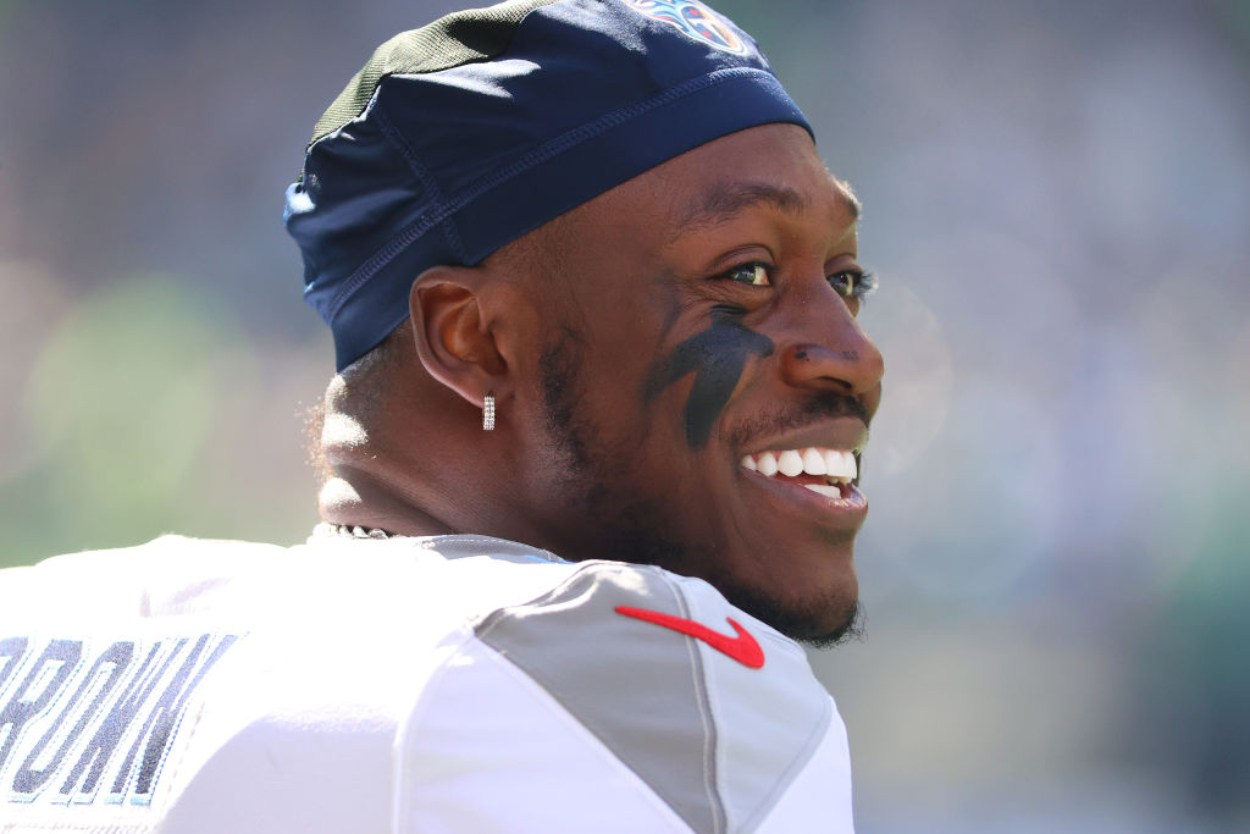
In November 2021, NFL wide receiver AJ Brown revealed that he had experienced a profound mental health crisis one year prior, in November 2020, during which he contemplated suicide. By sharing his vulnerability, Brown shifted the narrative surrounding professional athletes and mental health, emphasizing that external success and physical toughness do not provide immunity against depression or suicidal ideation.
The revelation from AJ Brown was not merely a headline in the sports world; it was a watershed moment for the National Football League (NFL) and the broader conversation on men’s mental health. As we look at his journey from the perspective of 2026, his transparency continues to serve as a benchmark for how public figures can use their platforms to dismantle the stigma associated with psychological struggles.
The 2021 Revelation: A Timeline of Vulnerability
The public first learned of AJ Brown’s struggle through a deeply personal video he posted on social media in late 2021. At the time, Brown was a standout receiver for the Tennessee Titans. In the video, he disclosed that exactly one year earlier—during a period when he was performing at an elite level on the field—he was suffering in silence off of it.
Brown stated that he had "wanted to be gone" and had seriously considered taking his own life. This admission was particularly jarring to fans and analysts because, during the 2020 season, Brown appeared to be at the pinnacle of his career. He was a Pro Bowler, a dominant physical force, and a rising star. His testimony underscored a critical truth: mental health struggles are often invisible and can coexist with high-level achievement.
The timing of his message was intentional. He chose the anniversary of his darkest moment to show others that there is a way forward. By 2021, Brown had sought professional help and was in a significantly healthier headspace, which allowed him to speak about his experience with clarity and purpose.
The Psychological Pressures of the Elite Athlete
To understand why a player like AJ Brown reached such a low point, one must examine the unique stressors inherent in professional football. While the financial rewards are significant, the psychological toll is often overlooked.
The Performance Trap
For many athletes, their entire identity is tied to their performance on the field. When an injury occurs, or when the team faces a losing streak, the athlete may feel a loss of purpose. Brown hinted at the weight of expectations—not just from the fans and the media, but the pressure he placed on himself to be a "provider" and a "hero" for his family and community.
Social Media and Public Scrutiny
In the modern era, athletes are accessible to the public 24/7. A dropped pass or a loss can result in thousands of vitriolic messages sent directly to a player’s smartphone. For someone already struggling with clinical depression, this constant stream of negativity can exacerbate feelings of worthlessness and isolation.
The "Toughness" Culture
The NFL has historically been a bastion of "hyper-masculinity," where showing any sign of emotional or psychological "weakness" was seen as a liability. Players were taught to "play through the pain," a mantra that often extended from physical injuries to mental ones. Brown’s decision to speak out was a direct challenge to this outdated culture.
Support Systems and the Role of Elijah Moore
One of the most poignant aspects of AJ Brown’s story was the role of his friend and fellow NFL player, Elijah Moore. Brown credited Moore for being a crucial support system during his darkest hours. When Brown felt he could no longer carry the burden alone, it was the persistent check-ins and the genuine care from a peer that helped him navigate the crisis.
This highlights a vital component of suicide prevention: the power of community. In the years since 2021, the relationship between Brown and Moore has been cited frequently by mental health advocates as a prime example of "looking out for your brother." It demonstrated that professional athletes need more than just team doctors; they need emotional safe havens within their peer groups.
Mental Health Advocacy in the NFL (2020–2026)
Since AJ Brown shared his story, the NFL has seen a significant shift in how it handles mental health. Brown was not alone in his advocacy; he joined the ranks of other players like Lane Johnson, who took a temporary leave from the Philadelphia Eagles to address anxiety and depression, and Dak Prescott, who spoke openly about his struggles following the death of his brother.
| Player | Team Context | Key Mental Health Focus |
|---|---|---|
| AJ Brown | Tennessee Titans / Phila. Eagles | Suicidal ideation, depression, and peer support. |
| Lane Johnson | Philadelphia Eagles | Anxiety disorders and the importance of clinical leave. |
| Dak Prescott | Dallas Cowboys | Grief-related depression and societal expectations. |
| Solomon Thomas | Las Vegas Raiders / NY Jets | Suicide prevention (The Defensive Line Foundation). |
| Hayden Hurst | Various Teams | Suicide prevention and recovery from substance use. |
The collective efforts of these athletes led to the NFL and the NFL Players Association (NFLPA) mandating that every team employ at least one full-time behavioral health clinician. By 2026, these resources have become as integrated into team facilities as weight rooms and training tables.
The Transition to Philadelphia and Continued Openness
When AJ Brown was traded to the Philadelphia Eagles in 2022, he entered an organization that had already established itself as a leader in mental health support. Under the leadership of executives like Jeffrey Lurie and players like Lane Johnson, the Eagles fostered an environment where vulnerability was not just accepted but encouraged.
In Philadelphia, Brown’s advocacy didn't stop. He remained vocal about his journey, often using his platform to remind fans that mental health is a "continuous work in progress." This was an important distinction; he didn't present himself as "cured," but rather as someone who was actively managing his health through therapy, community, and self-awareness.
Recognizing the Signs and Seeking Help
AJ Brown’s story is a reminder that suicidal thoughts can affect anyone, regardless of their status or success. Understanding the warning signs is essential for early intervention.
- Withdrawal from Social Circles: Isolating oneself from friends, family, and teammates is a common precursor to a crisis.
- Increased Substance Use: Using alcohol or drugs as a way to numb emotional pain or "escape" reality.
- Changes in Sleep and Appetite: Drastic shifts in physical habits can often signal underlying psychological distress.
- Talking About Being a Burden: Expressing that others would be better off if they weren't around.
- Giving Away Possessions: In severe cases, individuals may start making final arrangements or giving away meaningful items.
For fans or individuals reading about Brown’s journey, the most important takeaway is that seeking help is a sign of strength. The same discipline required to be a professional athlete is required to face one's mental health challenges.
Professional Resources
If you or someone you know is struggling, there are immediate resources available:
- 988 Suicide & Crisis Lifeline: Call or text 988 in the U.S. and Canada for 24/7, free, and confidential support.
- The Crisis Text Line: Text "HOME" to 741741.
- NAMI (National Alliance on Mental Illness): Provides education and support groups for individuals and families.
The Long-Term Impact of Brown’s Transparency
By 2026, the ripple effects of AJ Brown's 2021 video are still being felt. His honesty did more than just save his own life; it gave "permission" to thousands of young athletes to acknowledge their own pain. In high school and collegiate programs, coaches now increasingly prioritize the emotional well-being of their players, citing the courage of NFL stars as the blueprint.
Brown’s journey also impacted the sports media landscape. Analysts and commentators have become more cautious and empathetic when discussing "poor performance" or "lack of effort," recognizing that there may be unseen battles occurring behind the scenes. The narrative has shifted from "What's wrong with this player?" to "Is this player okay?"
Common Misconceptions About Athletes and Depression
Despite the progress made, several misconceptions persist. Addressing these is crucial to maintaining the momentum Brown helped create.
Misconception: Wealth eliminates the risk of depression. Financial security does not alter brain chemistry or prevent trauma. In some cases, the sudden influx of wealth and the pressure to manage it can actually increase stress and feelings of isolation.
Misconception: Only "unsuccessful" players struggle. As AJ Brown proved, a player can be at the top of their game and still feel completely empty. Depression does not discriminate based on stats or accolades.
Misconception: Talking about it makes a player a "distraction." For years, teams feared that discussing mental health would distract from the goal of winning. However, teams with high emotional intelligence and strong support systems—like the Eagles during the mid-2020s—have shown that healthy players perform better on the field.
FAQs Regarding AJ Brown and His Mental Health Journey
When did AJ Brown first speak about his suicidal thoughts?
AJ Brown first shared his experience in November 2021 through a social media video. He revealed that he had reached his lowest point a year earlier, in November 2020, while playing for the Tennessee Titans.
Who did AJ Brown credit with helping him through his crisis?
He specifically credited his close friend and fellow NFL wide receiver, Elijah Moore. Brown noted that Moore’s consistent communication and support played a vital role in his decision to seek help and keep going.
How did the NFL respond to AJ Brown’s revelation?
The NFL and various players' organizations supported Brown's transparency. His story, along with those of other players, contributed to the league-wide implementation of more robust mental health resources and the requirement for full-time clinicians on every team.
Is AJ Brown still an advocate for mental health in 2026?
Yes. Throughout his career with the Philadelphia Eagles and beyond, Brown has remained a consistent voice for mental health awareness. He often participates in campaigns and uses his social media presence to encourage others to talk about their struggles.
What was the main message AJ Brown wanted to convey?
His primary message was: "Talk to someone." He emphasized that men, in particular, should not feel the need to suffer in silence or maintain a facade of invincibility. He wanted to show that there is no shame in being vulnerable.
Has AJ Brown’s performance on the field been affected by his mental health?
While he has had his ups and downs like any athlete, Brown has remained one of the elite receivers in the league. His story has helped fans understand that managing mental health is part of an athlete's overall "fitness," much like physical therapy or nutrition.
Next Actions for Support and Education
If AJ Brown’s story resonates with you, consider taking proactive steps toward mental wellness for yourself or your community.
- Educate Yourself: Learn the difference between situational sadness and clinical depression. Resources like the American Foundation for Suicide Prevention (AFSP) offer valuable insights.
- Check on Your Peers: You don't need to be a professional therapist to be a good friend. A simple "How are you really doing?" can make a significant difference.
- Support Advocacy Organizations: Consider donating to or volunteering with organizations that focus on athlete mental health, such as Hilinski’s Hope or The Defensive Line.
- Speak Up: If you are struggling, follow Brown’s advice: Talk to someone. Whether it is a friend, a doctor, or a crisis counselor, taking that first step is the most courageous thing you can do.
AJ Brown’s legacy is no longer defined solely by his yards per catch or his touchdown celebrations. In the history of the NFL, he will be remembered as a man who chose to be brave when the cameras were off, ensuring that the next generation of players wouldn't have to carry their burdens alone.