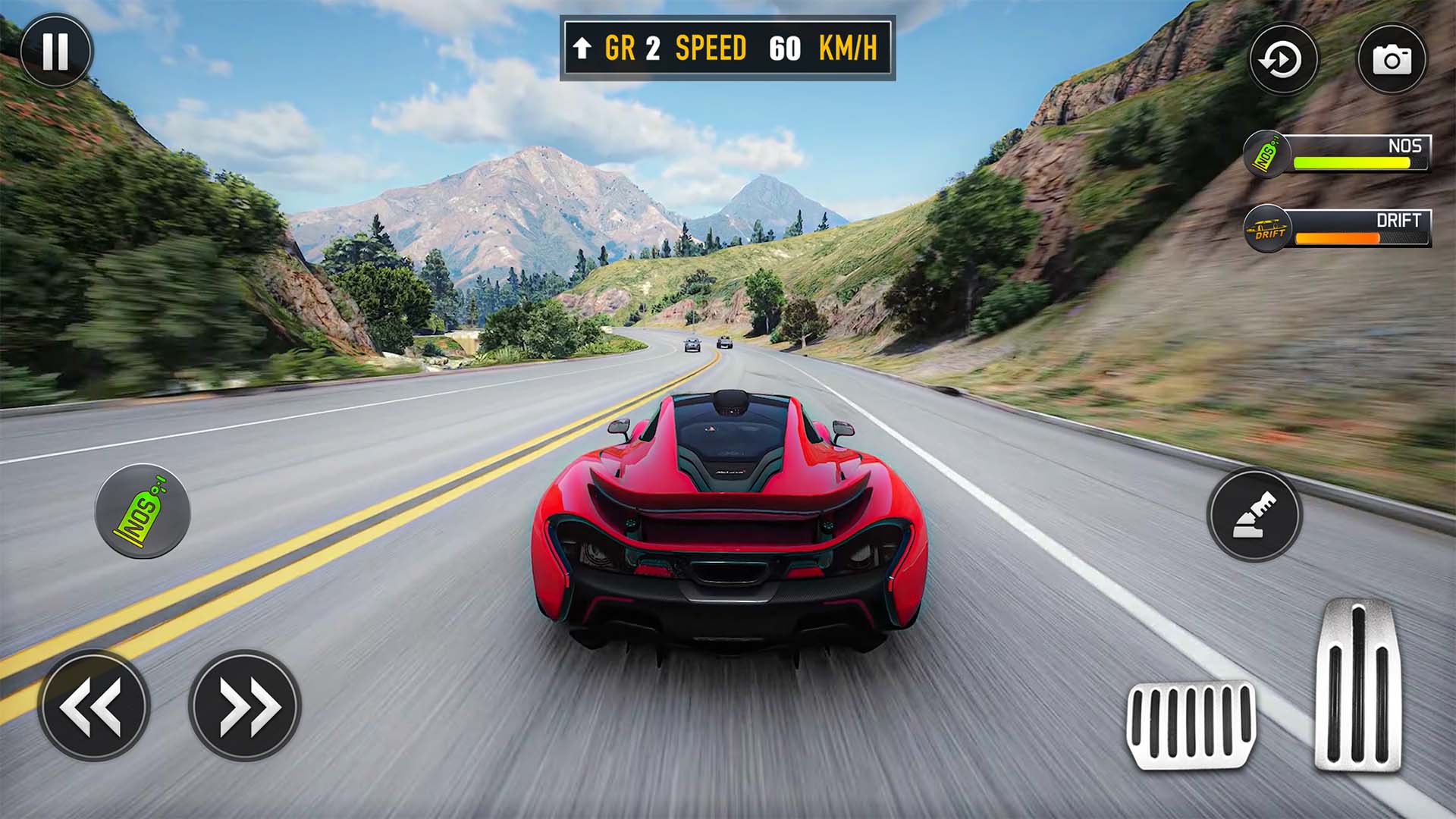
Selecting the right driving experience depends on balancing your hardware capabilities, your desire for realism versus arcade-style fun, and the specific vehicular focus of the title. This overview categorizes the current car game landscape into three primary tiers: professional-grade simulators, sim-cade hybrids, and accessible arcade racers, helping you identify the best fit for your gaming setup.
Defining the Car Gaming Spectrum
The world of automotive gaming is broad, often confusing potential players who seek a specific experience. To understand a car game list overview, one must first categorize titles by their physics engines and intended user experience. At one end of the spectrum, you have "Hardcore Simulators," which prioritize telemetry, tire degradation, and track accuracy. At the other end, "Arcade Racers" focus on spectacle, speed, and ease of control, often utilizing simplified physics to maintain constant momentum. Between these two poles exists the "Sim-Cade" category—a blend designed to provide the thrill of racing with accessible steering and braking assists that make the game approachable for casual players using standard controllers.
Professional Simulators: Precision and Technique
For players utilizing direct-drive steering wheels and load-cell pedal sets, professional simulators are the gold standard. These titles are used not only for recreation but often by real-world automotive engineers and professional racing teams to test track configurations and driver technique.
- iRacing: Operating on a subscription-based model, this platform remains the most recognized competitive environment. It features laser-scanned tracks and rigorous vehicle physics. Its primary strength lies in its matchmaking system, which forces players to compete with others of similar skill levels, fostering a highly regulated and professional racing environment.
- Assetto Corsa Competizione (ACC): Focusing specifically on the GT3 and GT4 categories, ACC is celebrated for its sophisticated tire model and weather simulation. It is currently the most popular platform for endurance racing simulations due to its stable netcode and realistic day-night cycles.
- rFactor 2: Known for its "RealFeel" force feedback, rFactor 2 is often favored by developers and professional drivers. While its user interface can be less intuitive for newcomers, it provides a level of chassis-tuning depth that few other titles can match.
Sim-Cade Hybrids: The Best of Both Worlds
Sim-cade titles bridge the gap between realism and accessibility. These games are designed to be played comfortably with a gamepad while still offering enough technical depth to satisfy those interested in vehicle customization and authentic racing rules.
- Gran Turismo 7: This title maintains a focus on automotive culture, collecting, and history. It serves as an entry point for many, blending a "carpg" (car-based role-playing game) progression system with physics that are grounded in reality but forgiving enough for novice players.
- Forza Motorsport (2023 release): Positioned as the premier title for Xbox and PC ecosystems, this iteration emphasizes the "builder’s cup" experience. It relies on a heavy progression system where players level up individual cars to unlock performance upgrades. It is ideal for those who enjoy the tinkering aspect of vehicle ownership as much as the track time.
Arcade Racers: Accessibility and Spectacle
If your goal is high-speed thrills, environmental destruction, or exotic car culture without the steep learning curve of technical racing, the arcade genre is your destination. These games generally feature "rubber-banding" AI to keep races competitive and physics that allow for spectacular drifts and jumps.
- Forza Horizon 5: Set in a massive, open-world representation of Mexico, this game focuses on exploration, seasonal events, and "festival" culture. It is the definitive choice for players who want to drive a vast collection of cars without the pressure of strict competitive regulations.
- Need for Speed Unbound: This series leans heavily into the street racing subculture, featuring customization, police chases, and a distinct aesthetic style. It prioritizes the "cool factor" of vehicle modification and high-stakes racing over real-world track accuracy.
Hardware Prerequisites and Considerations
The enjoyment of a car game is intrinsically linked to your input hardware. While a keyboard and mouse can suffice for arcade racers, they generally offer a poor experience for simulators.
- Gamepads: Most modern controllers offer analog triggers for gas and brake control, which are essential for throttle modulation. These are perfectly adequate for sim-cade and arcade titles.
- Entry-Level Wheels: Products like the Logitech G923 or Thrustmaster T248 provide force feedback, allowing the player to "feel" the road surface and grip levels. These are strongly recommended for anyone looking to transition from arcade games to simulators.
- High-End Direct Drive Systems: Used primarily for competitive sim racing, these systems utilize a motor directly attached to the steering shaft, providing high-fidelity torque feedback that mimics a real car's steering rack.
Comparative Analysis of Leading Titles
| Title | Primary Focus | Best Hardware | Accessibility |
|---|---|---|---|
| iRacing | Competitive Sim | Direct Drive Wheel | Low |
| ACC | GT3/GT4 Racing | Direct Drive/Belt Wheel | Medium |
| Gran Turismo 7 | Car Culture/Sim-Cade | Controller/Wheel | High |
| Forza Horizon 5 | Open World/Arcade | Controller | Very High |
| NFS Unbound | Street/Arcade | Controller | Very High |
Essential Setup Checklist
Before purchasing or diving into a specific title, confirm the following technical requirements:
- Platform Compatibility: Ensure the title supports your hardware (e.g., PlayStation, Xbox, or PC). Cross-play is common in arcade titles but rare in hardcore simulators.
- Peripheral Support: If you own specific steering wheel models, check the developer’s website for driver support. Some simulators have limited support for non-standard or legacy hardware.
- Storage Requirements: Modern racing titles often feature high-resolution textures and laser-scanned track data, leading to large file sizes. Ensure your system meets the SSD requirements to prevent stuttering.
Frequently Asked Questions
Which car game is the most realistic? iRacing and Assetto Corsa Competizione are widely considered the most realistic due to their complex tire models and integration with professional motorsport standards. They require significant time investment to master.
Can I use a controller for racing simulations? While you can, it is suboptimal. Simulators are designed to interpret force feedback data through a wheel. Using a controller often requires high levels of "steering assists," which can make the car feel detached and inconsistent.
What is "Sim-Cade"? Sim-cade is a hybrid genre that maintains realistic visual presentation and basic automotive principles but adjusts the physics to be forgiving enough for casual players. It removes the need for technical setup knowledge.
How do I decide between Forza Motorsport and Gran Turismo? The choice often comes down to your platform. Forza Motorsport is exclusive to Xbox and Windows PC, while Gran Turismo is exclusive to the PlayStation ecosystem. Choose based on your existing hardware.
Are there free-to-play options worth considering? Yes, but they are usually entry-tier. Trackmania offers a competitive arcade experience with a free tier, and some racing platforms offer limited-time trials. Always verify the subscription costs before committing, as some top-tier simulators hide content behind monthly fees.
Recommendation for New Players
If you are new to the genre, begin with Forza Horizon 5 to get a feel for car control in an open-world setting. If you find yourself enjoying the driving mechanics more than the exploration, consider moving to Gran Turismo 7 to introduce yourself to structured racing. Only invest in a dedicated steering wheel setup once you have confirmed your interest in long-term skill development, as these peripherals are a significant financial commitment and require dedicated space.