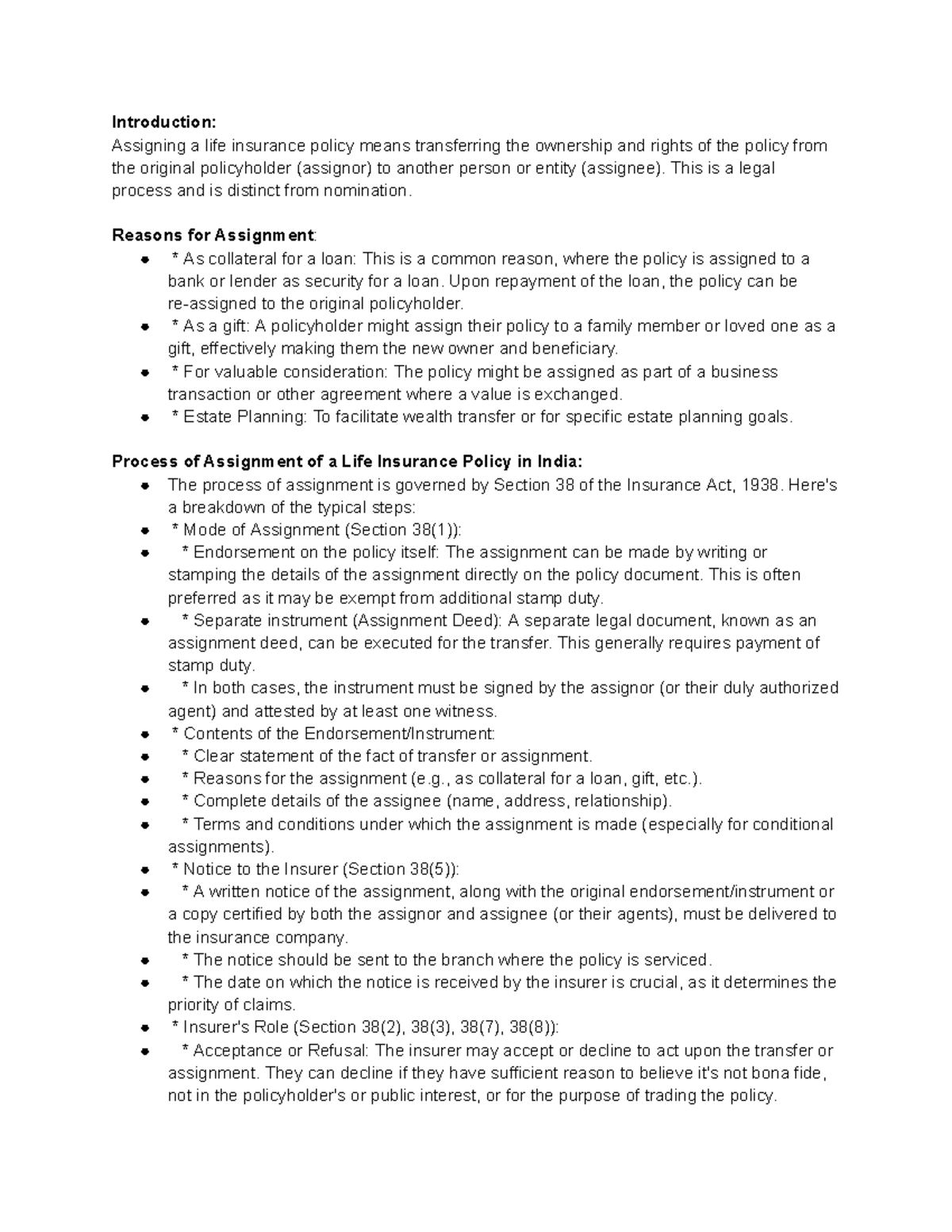
An owned life insurance policy operates under two primary assignment systems: Absolute Assignment and Collateral Assignment. Absolute assignment involves the permanent transfer of all ownership rights and "incidents of ownership" to another party, while collateral assignment is a temporary transfer of partial rights used to secure a debt or financial obligation.
In the legal and financial landscape of 2026, life insurance is recognized not merely as a death benefit but as a sophisticated financial asset. Because a life insurance policy is considered personal property, the owner has the legal right to transfer their interest in the policy to another person or entity. This transfer process is known as "assignment." Understanding which system to use is critical for estate planning, business continuity, and securing credit.
The Concept of Ownership and Incidents of Ownership
Before exploring the specific assignment systems, it is essential to understand what it means to "own" a life insurance policy. Ownership is defined by the "incidents of ownership," a legal term that encompasses all the rights granted to the policyholder.
In 2026, these rights typically include:
- The right to designate and change the beneficiary.
- The right to surrender or cancel the policy for its cash value.
- The right to assign the policy as collateral for a loan.
- The right to take out a policy loan against the cash accumulation.
- The right to receive policy dividends (in the case of participating policies).
- The right to elect settlement options for the death benefit.
When a policyholder decides to move these rights to another party, they must utilize one of the two assignment systems. The choice between them depends entirely on the intent of the transfer—whether it is intended to be a total gift, a sale, or a temporary security measure.
The Absolute Assignment System
Absolute assignment is the most comprehensive form of transfer within the life insurance industry. When an owner executes an absolute assignment, they are effectively "stepping out" of the contract and installing a new owner in their place.
Characteristics of Absolute Assignment
In an absolute assignment, the original owner (the assignor) transfers every right, title, and interest they have in the policy to the recipient (the assignee). This transfer is permanent and irrevocable. Once the insurer processes the assignment, the assignor no longer has any control over the policy.
The assignee becomes the new policyowner. As of 2026, the assignee has the sole authority to change beneficiaries, access cash values, and even surrender the policy for its terminal value without the consent of the original owner.
Common Use Cases for Absolute Assignment
- Gifting for Estate Planning: A policyholder may absolutely assign a policy to a child or a family member to remove the death benefit from their taxable estate. Under current tax guidelines, transferring ownership can help mitigate future estate tax liabilities, provided the transfer occurs more than three years before the insured's death (the "three-year rule").
- Charitable Giving: An individual may choose to assign their life insurance policy to a non-profit organization or a university. This allows the charity to become the owner and beneficiary, often providing the donor with an immediate income tax deduction based on the policy's value.
- Life Settlements: In the secondary market for life insurance, a policyholder may sell their policy to a third-party investor for an amount greater than the cash surrender value but less than the death benefit. This transaction requires an absolute assignment to the purchasing entity.
- Transferring to a Trust: Many high-net-worth individuals assign their policies to an Irrevocable Life Insurance Trust (ILIT). The trust becomes the absolute owner, ensuring the proceeds are managed according to the trust's specific instructions and kept outside of the probate process.
The Collateral Assignment System
Collateral assignment is a restricted and temporary transfer of rights. It is most commonly used in commercial transactions where a life insurance policy serves as security for a loan.
How the Collateral Assignment System Functions
Unlike the absolute system, a collateral assignment does not make the assignee the owner of the policy. Instead, it grants the assignee (usually a bank or lender) a "lien" on the policy's proceeds. The assignee's interest is limited to the amount of the debt owed to them, plus any accrued interest.
In the 2026 banking environment, collateral assignments are standardized. The owner retains all ownership rights that do not conflict with the assignee's security interest. For instance, the owner can still change the beneficiary, but that beneficiary's right to the death benefit is subordinate to the lender's claim.
Rights of the Assignee in a Collateral System
When a policy is collaterally assigned, the lender typically gains the right to:
- Receive the portion of the death benefit necessary to pay off the outstanding loan balance.
- Prevent the owner from surrendering the policy or taking a cash value loan that would drop the policy's value below the secured debt amount.
- Receive notice if the policy is at risk of lapsing due to non-payment of premiums.
Once the debt is fully repaid, the lender executes a "release of assignment," which restores full, unencumbered rights to the policyowner.
Key Differences Between Absolute and Collateral Assignments
Choosing the wrong system can lead to unintended tax consequences or loss of control over a valuable asset. The following table summarizes the functional differences between these two systems as they stand in 2026.
| Feature | Absolute Assignment | Collateral Assignment |
|---|---|---|
| Extent of Transfer | Full transfer of all ownership rights. | Partial transfer of specific rights (security interest). |
| Duration | Permanent and irrevocable. | Temporary; ends when the debt is repaid. |
| Ownership Status | The assignee becomes the new owner. | The original owner remains the owner. |
| Beneficiary Rights | New owner can change the beneficiary at will. | Beneficiary rights are secondary to the lender's claim. |
| Cash Value Access | Assignee has full access to cash values. | Assignee's access is usually limited to the debt amount. |
| Primary Intent | Gifting, sale, or trust funding. | Securing a loan or financial obligation. |
| Reversibility | Requires a new assignment back to the original owner. | Replaced by a simple "release of assignment" form. |
Legal and Tax Implications of Assignment Systems
In 2026, the legal framework surrounding assignments is governed largely by state insurance law and the federal Internal Revenue Code (IRC). It is vital to consider the following implications before proceeding with an assignment.
The Transfer-for-Value Rule
One of the most significant risks in life insurance assignment is the "Transfer-for-Value" rule. Generally, life insurance death benefits are received income-tax-free by the beneficiary. However, if a policy is transferred for "valuable consideration" (money or something of value), a portion of the death benefit may become taxable as ordinary income.
While absolute assignments in the form of gifts are usually exempt from this rule, absolute assignments in business buy-sell agreements or life settlements must be structured carefully to avoid creating a massive tax burden for the recipient.
Consent Requirements
An assignment is a contract between the owner and the assignee. However, the insurance company must be notified for the assignment to be binding on them. Most policies in 2026 include an "Assignment Clause" stating that the company is not responsible for the validity of the assignment and is not bound by it until a written notice is filed at the home office.
Furthermore, if the policy has an irrevocable beneficiary, that beneficiary must sign off on any assignment. Because an irrevocable beneficiary has a vested interest in the policy proceeds, the owner cannot diminish that interest via assignment without the beneficiary's expressed written consent.
The Process of Assigning an Owned Policy
Executing an assignment is a procedural task that requires precision. Mistakes in the paperwork can lead to legal disputes between heirs and creditors at the time of the insured’s death.
Step 1: Review the Policy Contract
Before initiating an assignment, the owner should review the original policy document to ensure there are no prohibitions against assignment. While rare in individual policies, some group life insurance certificates or non-assignable term policies may have restrictions.
Step 2: Determine the System
The owner must decide if the transfer is for a loan (Collateral) or a permanent change of hands (Absolute). Using the wrong form can lead to the bank accidentally becoming the permanent owner of the policy, which is difficult to undo.
Step 3: Complete the Standardized Forms
In 2026, most insurers provide standardized forms for both absolute and collateral assignments. These forms require:
- The policy number and the insured’s name.
- The name and Taxpayer Identification Number (TIN) of the assignee.
- The signature of the current owner.
- The signature of any irrevocable beneficiaries.
- Notarization (frequently required for absolute assignments).
Step 4: Notification and Acknowledgment
The completed form must be sent to the insurance carrier. The carrier will "record" the assignment. It is critical for the assignor to receive a written acknowledgment from the insurer that the assignment has been filed. In 2026, this is typically handled through secure digital portals, providing an instant digital trail of the transaction.
Common Mistakes and How to Avoid Them
Even with standardized systems, policyholders often encounter pitfalls when assigning their life insurance.
Failure to Update the Beneficiary
In an absolute assignment, the new owner should immediately review the beneficiary designations. The assignment itself changes the owner, but it does not always automatically change the beneficiary unless the assignment form specifically dictates a change to "the estate of the new owner" or a new named individual.
Over-Assigning Collateral
When using a collateral assignment for a small loan, owners sometimes inadvertently assign the entire policy value rather than just the amount of the debt. While most standard collateral assignment forms protect the owner by stating the lender only receives what is "as interest may appear," it is essential to verify that the language does not grant the lender more power than necessary.
Ignoring Tax Deadlines
For those using absolute assignment for estate tax purposes, the "three-year rule" is a major hurdle. If the insured dies within three years of the absolute assignment, the IRS will still include the death benefit in the insured's taxable estate. Waiting until the last minute to assign a policy for estate planning is a common and costly error.
Practical Scenarios in 2026
The SBA Loan Requirement
Small business owners in 2026 frequently encounter the collateral assignment system when applying for Small Business Administration (SBA) loans. Lenders often require a life insurance policy on the key business owner to ensure the loan can be repaid if the owner passes away. A collateral assignment is the perfect tool for this, as it satisfies the lender's security needs while allowing the business owner to maintain control over the policy's dividends and eventual ownership once the loan is retired.
Divorce Settlements
In divorce proceedings, an absolute assignment is often used to fulfill the terms of a settlement. One spouse may be required to transfer an existing life insurance policy to the other spouse to provide for alimony or child support security. This ensures that the recipient spouse has total control over the policy and is not dependent on the former spouse to keep the policy in force or maintain the correct beneficiary.
Frequently Asked Questions
Can I change my mind after an absolute assignment?
Generally, no. An absolute assignment is a permanent transfer of property. Unless the assignee voluntarily agrees to assign the policy back to you—which may have gift tax implications—you cannot unilaterally revoke an absolute assignment once it has been recorded by the insurance company.
Does a collateral assignment affect the death benefit payout time?
Yes, it can slightly delay the process. When a claim is filed on a collaterally assigned policy, the insurance company must contact the assignee (the lender) to determine the current balance of the debt. The insurer pays the lender first and then pays the remaining balance to the named beneficiaries.
Can I assign only a portion of my policy?
Under an absolute assignment system, you typically assign the entire policy. However, you can achieve a "partial" transfer by first splitting the policy into two smaller policies (if the insurer allows) and then assigning one of them. Under a collateral assignment, you are effectively only assigning a portion of the proceeds equal to the debt, while retaining the rest.
Who pays the premiums after an assignment?
In an absolute assignment, the new owner is typically responsible for premium payments, as they now own the asset. In a collateral assignment, the original owner usually continues to pay the premiums to keep the security (the policy) in force for the lender. If the owner stops paying, the lender may pay the premiums to protect their interest and add that cost to the loan balance.
Is the assignee's consent needed to change the beneficiary in a collateral assignment?
It depends on the language of the assignment form. Most modern collateral assignments allow the owner to change the beneficiary without the lender's consent, provided the new beneficiary's rights remain subordinate to the lender’s claim. However, some restrictive assignments may require the lender's signature for any policy changes.
What happens if the assignee dies or goes out of business?
If an individual assignee dies, their interest in the policy (in an absolute assignment) passes to their heirs. In a collateral assignment, the debt is still owed to the assignee's estate. If a corporate lender goes out of business, the assignment usually follows the debt as it is sold to another financial institution.
Practical Recommendation
When dealing with an owned life insurance policy, always match the assignment system to your specific financial goal. If you are intending to give the policy away forever for estate or charitable reasons, use an Absolute Assignment. If you are simply using the policy as a "financial handshake" to secure a loan or a business deal, use a Collateral Assignment.
Before signing any assignment documents in 2026, consult with both a tax advisor and your insurance professional. They can ensure that the wording of the assignment does not trigger the Transfer-for-Value rule and that your "incidents of ownership" are protected or transferred exactly as you intended. Always keep a copy of the recorded assignment and the insurer’s acknowledgment in your permanent financial records to avoid complications during the claims process.