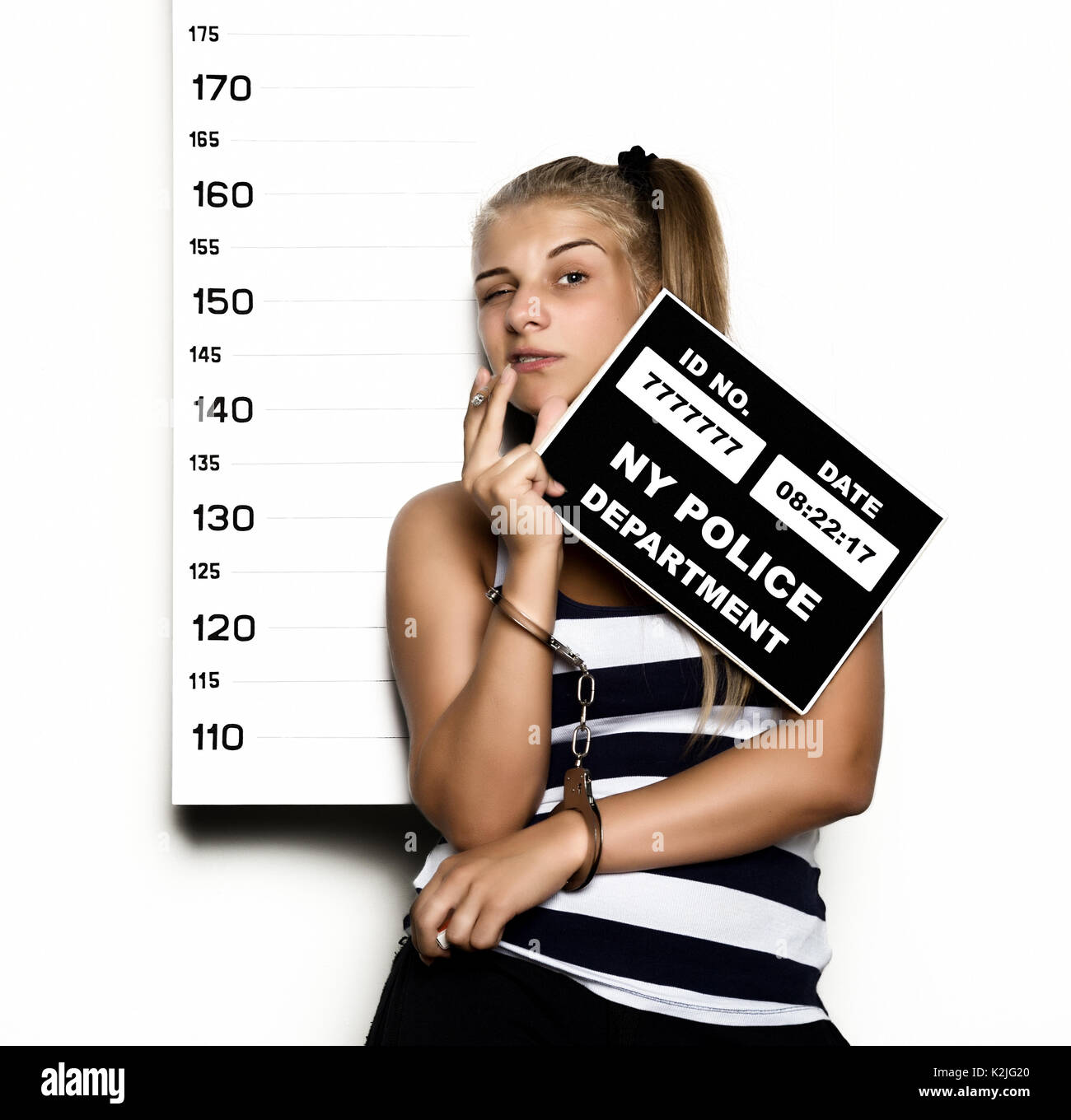
An attractive mugshot is a law enforcement booking photograph that gains widespread public, media, or social media attention due to the subject's conventional physical symmetry and aesthetic appeal. This internet phenomenon highlights the tension between public criminal records, social media virality, psychological phenomena like the halo effect, and evolving privacy laws governing mugshot distribution.
The Emergence of the "Hot Mugshot" Meme in Popular Culture
The public fascination with attractive mugshots began long before social media, but digital platforms dramatically altered the speed and scope of their distribution. Historically, police blotters and local newspapers published mugshots as part of public record transparency. However, as municipal law enforcement agencies in the early 2010s began posting booking photos directly to public Facebook pages and Twitter accounts, high-contrast booking photos transformed into shareable digital content.
When a booking photo captures someone with distinct facial symmetry, piercing eyes, or striking features, online communities frequently detach the photograph from its law enforcement context. Instead of reading about the underlying criminal charges, social media users focus entirely on visual presentation. This shift creates viral subcultures, meme pages, and online commentary centered around physical appearance rather than judicial proceedings.
Viral Mugshot Pipeline:
- Arrest & Processing: Standard Police Booking Photo Taken
- Digital Publication: Law Enforcement Social Media / Public Database
- Internet Discovery: Social Media Sharing, Aggregation & Memes
- Public Discourse: Halo Effect Debate & Media Coverage
- Long-Term Impact: Legal Takedown Requests or Career Opportunities
High-Profile Case Studies
The most prominent example of this phenomenon occurred in June 2014, when the Stockton Police Department in California posted the booking photo of Jeremy Meeks following his arrest during a multi-agency gang sweep dubbed Operation Ceasefire. Featuring sharp cheekbones, blue eyes, and a teardrop tattoo, the photograph accumulated tens of thousands of likes within hours. Dubbed the "Hot Felon" by global news outlets, Meeks secured a modeling contract with White Cross Management while serving a federal prison sentence for illegal firearm possession. Upon his release in 2016, he launched a runway and commercial modeling career, demonstrating how digital virality can alter life trajectories.
Subsequent instances followed a similar pattern:
- Sarah Seawright (2016): Arrested in Pulaski County, Arkansas, for failure to appear in court, her smiling booking photo earned the moniker "Prison Bae." The photograph circulated widely across X (formerly Twitter) and Instagram, resulting in media appearances and online commentary.
- Angela Coates (2014): A former Jet magazine Beauty of the Week whose booking photo in Georgia led to public offers from social media users to pay her bail.
- Mirella Ponce (2017): Arrested in Fresno, California, her booking photo went viral due to her prominent tattoos and styled appearance, drawing public commentary regarding her bail status.
The Visual and Technical Aesthetics of Booking Photos
It may seem counterintuitive that raw, unedited booking photos can produce visually striking portraits. Booking environments in jails and police stations are intentionally devoid of professional studio lighting, makeup artists, or flattering angles. Understanding why certain mugshots appear aesthetically appealing requires examining basic principles of portrait photography and lighting optics.
- Overhead Fluorescent Tube
- Subject Head (Stark overhead shadows define jawline & cheekbones)
- Direct Camera Flash
Unfiltered High-Contrast Lighting
Police booking stations rely on standardized, direct lighting designed to capture clear identifying features without shadows obscuring skin tone, scars, or marks. Standard setups feature an overhead fluorescent light paired with an on-axis, direct flash mounted on a fixed camera rig.
For individuals with defined facial structure, this direct, high-contrast lighting acts similarly to harsh high-fashion photography. The overhead light creates strong shadows beneath the cheekbones and jawline, accentuating facial contouring. Simultaneously, the direct camera flash fills the center of the face, casting a distinct catchlight—a bright specular reflection—in the subject's pupils.
Natural Symmetry and Neutral Focal Lengths
Booking cameras are positioned at eye level using fixed focal lengths (typically between 50mm and 85mm equivalent) to minimize optical distortion. This prevents the nose from appearing enlarged or the forehead sloped, preserving natural facial proportions. When a subject possesses high facial symmetry, this neutral, square-on framing highlights balanced features more accurately than casual selfies taken at close range with wide-angle smartphone lenses.
Additionally, the absence of digital filters, soft-focus edits, or posing creates an impression of unpolished authenticity. Viewers accustomed to heavily edited social media images often find raw, high-resolution clarity visually striking.
Psychological Drivers: The Halo Effect and Legal Bias
The internet's fascination with attractive booking photos is grounded in established psychological principles regarding human perception, social evaluation, and cognitive bias.
The Halo Effect in Criminal Contexts
First identified by psychologist Edward Thorndike in 1920, the Halo Effect is a cognitive bias wherein an individual's positive trait in one area—such as physical attractiveness—causes observers to infer positive traits in unrelated areas, such as intelligence, kindness, or trustworthiness.
When applied to booking photos, the halo effect creates severe cognitive dissonance for the viewer:
- Premise A: Society conditions people to associate criminal mugshots with dangerous or undesirable behavior.
- Premise B: Society conditions people to associate physical beauty with positive personal attributes.
- Conflict: An attractive booking photo presents physical beauty within a criminal context.
To resolve this cognitive dissonance, observers frequently downplay the gravity of the underlying criminal charges, assume innocence, or romanticize the individual as a misunderstood "bad boy" or "rebel." Social media comments on viral mugshots routinely display statements minimizing potential offences or expressing a willingness to offer bail based solely on appearance.
Cognitive Dissonance Process:
- Expectation: Criminal Record — Associated with Negative Traits
- Visual Input: Striking Mugshot — Associated with Positive Traits
- Resulting Conflict: Contradictory cognitive signals
- Resolution: Viewer minimizes alleged crime or romanticizes subject
Attractiveness Bias in the Criminal Justice System
The influence of physical appearance extends far beyond internet commentary into actual legal proceedings. Extensive criminological and psychological research confirms the existence of an "attractiveness bias" throughout the criminal justice process:
- Jury Perception: Studies dating back to Landy and Aronson (1969) demonstrate that mock jurors consistently recommend lighter sentences for defendants perceived as physically attractive, provided the defendant did not use their appearance to facilitate the crime (such as in fraud or confidence schemes).
- Bail and Plea Bargaining: Research published in the Journal of Social Psychology indicates that attractive defendants frequently receive lower bail amounts and more favorable plea bargains from prosecutors compared to less attractive individuals charged with identical offenses.
- Judicial Sentencing: Quantitative analyses of state sentencing databases show statistically significant disparities, where conventionally attractive convicts serve less time on average for non-violent offenses.
Famous Viral Mugshots: Comparative Overview
The following table summarizes key viral booking photos, detailing the context of their release, public reception, and long-term societal outcomes.
| Subject | Year | Jurisdiction / Arrest Reason | Primary Aesthetic Factor | Media Outcome / Career Impact |
|---|---|---|---|---|
| Jeremy Meeks | 2014 | Stockton, CA (Weapons Charges) | Chiseled jawline, blue eyes, teardrop tattoo | Signed modeling contract; walked New York & Milan fashion weeks |
| Angela Coates | 2014 | DeKalb County, GA (Disorderly Conduct) | Professional headshot appearance, symmetrical features | Gained massive social media following; crowd-funded bail offers |
| Sarah Seawright | 2016 | Pulaski County, AR (Failure to Appear) | Smiling posture, warm lighting, polished hair | Viral nickname "Prison Bae"; brand promotions and media interviews |
| Mirella Ponce | 2017 | Fresno, CA (Firearm Possession) | Stylized appearance, prominent neck tattoos | Thousands of social media shares; public offers to pay $50,000 bail |
| Sean Kory | 2014 | Santa Cruz, CA (Assault) | Long dreadlocks, green eyes, high symmetry | Compared publicly to Jeremy Meeks; covered by international press |
Public Record Laws, Exploitation, and Statutory Reforms
While a select few individuals experience commercial success after their booking photos go viral, the overwhelming majority of people whose mugshots appear online face severe reputational, financial, and personal damage. The widespread publication of booking photos rests at the intersection of open-record laws and commercial exploitation.
Freedom of Information Act (FOIA) and State Public Records
In the United States, mugshots created by state and local law enforcement agencies are generally classified as public records under state Freedom of Information laws (often referred to as Sunshine Laws). The rationale for public access includes:
- Government Transparency: Ensuring law enforcement agencies do not arrest and detain individuals in secret.
- Public Safety: Informing communities about active arrests or individuals suspected of dangerous crimes.
- Accountability: Allowing the public and press to verify proper processing and physical treatment of detainees.
At the federal level, the legal status of mugshots differs. In 2016, the U.S. Court of Appeals for the Sixth Circuit ruled in Detroit Free Press v. Department of Justice that federal criminal defendants have a personal privacy interest in their booking photographs under FOIA Exemption 7(C). Consequently, the federal government generally does not release mugshots of individuals charged in federal court prior to conviction unless a specific public safety need arises.
Mugshot Scraping and Extortion Websites
The digital age gave rise to commercial mugshot websites that utilize automated web scrapers to harvest booking photos from sheriff's department portals. These websites index the images on search engines alongside the arrestee's full name, creating immediate public visibility.
- Law Enforcement Portal
- Automated Web Scraping
- Commercial Mugshot Website
- Indexes Photo on Search Engines
- Extortion Model
- Demands Fee for Removal
- Photo Re-uploaded on Affiliate Sites
Historically, these operations operated on an extortion-based business model:
- The website publishes the mugshot, causing it to rank highly on search engines for the individual's name.
- The arrestee, seeking to protect employment prospects or personal reputation, contacts the site requesting removal.
- The site demands an unpublishing fee ranging from $100 to over $1,000.
- Once paid, the image is often transferred or sold to affiliated mugshot sites, which then demand secondary removal fees.
Legislative Interventions Restricting Booking Photo Releases
In response to widespread predatory practices and the permanent digital footprint left on individuals who were never convicted, numerous states enacted strict legislation between 2014 and 2026 to restrict mugshot dissemination.
Statutory Reforms Governing Mugshots
| State | Statute / Bill | Core Restriction |
|---|---|---|
| California | AB 1475 (2021)AB 994 (2023) | Prohibits police from posting non-violent mugshots to social media. Mandates deletion after 14 days. |
| Georgia | O.C.G.A. § 35-1-19 | Outlaws charging fees for mugshot removal; mandates free removal if charges are dismissed. |
| Florida | Fla. Stat. § 901.43 | Requires websites to remove mugshots within 10 days of written notice without charging a fee. |
| Oregon | HB 3273 (2021) | Restricts law enforcement from releasing booking photos to public except post-conviction or for safety. |
- California Assembly Bill 1475 (2021) & AB 994 (2023): AB 1475 prohibited law enforcement agencies from posting booking photos of individuals accused of non-violent crimes to social media platforms unless urgent public safety threats exist. AB 994 expanded this protection by requiring police departments to use a suspect's preferred name/pronouns and automatically remove mugshots from social media after 14 days, regardless of the underlying charge.
- Georgia O.C.G.A. § 35-1-19: Made it unlawful for commercial entities to charge fees for removing booking photographs, requiring sites to remove photos free of charge within 30 days if the individual was acquitted, charges were dropped, or records were sealed.
- Florida Statute § 901.43: Establishes civil penalties for mugshot website operators who fail to remove photos within 10 calendar days of receiving a written registered notice, prohibiting any remuneration for the removal process.
Legal Remedies and Reputation Management
For individuals whose mugshots (whether considered attractive or not) appear online, navigating the removal process requires a clear understanding of legal avenues, search engine policies, and public record expungement options.
1. Legal Expungement and Record Sealing
The most permanent solution for eliminating mugshots from public access is securing a formal court order for record expungement or sealing.
- Expungement: Completely erases or destroys the legal record of arrest and conviction, treating the event as though it never legally occurred.
- Sealing: Restricts public access to court and police records, making them accessible only to law enforcement agencies under court order.
Once a court grants an expungement or sealing order, law enforcement agencies are legally required to remove the booking photo from public portals. Certified copies of the court order can then be submitted to third-party search engines and websites to mandate compliance under state statutes.
2. Utilizing Search Engine De-indexing Guidelines
Major search engines maintain policies allowing individuals to request the removal of predatory commercial mugshot pages from search results:
- Google Search Removal Policy: Google allows users to submit formal removal requests for commercial mugshot sites that require payment for unpublishing. If approved, Google de-indexes the specific URLs, preventing them from appearing in name-based searches globally.
- Personal Identifiable Information (PII) Requests: If a mugshot page exposes sensitive PII alongside the booking photo (such as a Social Security number, home address, or date of birth), individuals can request expedited removal under general privacy guidelines.
Mugshot Removal Recourse Checklist:
- Obtain official court disposition (Dismissal, Acquittal, Expungement)
- Issue formal statutory takedown notice to website host (via Certified Mail)
- Submit Google Search Removal Request for predatory pay-to-remove sites
- File a complaint with State Attorney General if website demands payment
- Monitor online presence using automated search alerts
3. Avoiding Commercial Removal Scams
Individuals seeking mugshot removal often encounter online reputation management companies claiming guaranteed removal for high fees. Caution is strongly advised:
- Unenforceable Guarantees: Some removal agencies operate in tacit coordination with mugshot scraping networks, temporarily removing a photo only for it to re-appear on an affiliate site months later.
- Excessive Costs: Many services charge thousands of dollars for basic administrative tasks—such as sending statutory takedown letters or submitting Google de-indexing forms—that individuals or licensed attorneys can complete directly.
- Best Practice: Consult a licensed defense attorney specializing in record expungement rather than engaging unregulated online repair services.
Frequently Asked Questions
Why do some mugshots look like high-quality fashion headshots?
Standard booking rooms utilize direct flash photography paired with eye-level camera lenses. This lighting setup creates strong shadows along the jawline and cheekbones while casting direct catchlights in the eyes. For individuals with symmetrical facial features, these technical conditions mirror high-fashion, direct-flash studio lighting, producing a striking image despite the somber setting.
Is it legal for police departments to post booking photos on social media?
State laws govern whether law enforcement agencies can post mugshots online. In jurisdictions like California (under AB 1475 and AB 994), police are legally prohibited from posting mugshots of individuals accused of non-violent crimes to social media unless specific public safety exceptions apply. In many other states, booking photos remain public records, allowing law enforcement agencies full discretion to publish them online.
Can an attractive mugshot legitimately launch a modeling career?
While exceedingly rare, it has occurred. Jeremy Meeks successfully transitioned his viral 2014 booking photo into a professional fashion modeling career upon completing his prison sentence. However, this remains an extreme statistical anomaly; for the vast majority of individuals, published booking photos lead to employment discrimination, public embarrassment, and severe reputational damage.
How does physical appearance impact legal outcomes in court?
Criminological studies confirm an "attractiveness bias" in judicial systems. On average, defendants perceived as physically attractive receive lower bail amounts, more favorable plea bargain offers, and lighter sentences for non-violent offenses compared to less attractive individuals facing identical charges. However, this bias diminishes or reverses if the court determines physical appearance was actively used to commit the crime (e.g., in fraud or confidence schemes).
What is the most effective way to remove a mugshot from search engines?
The most reliable method is securing an official court order for criminal record expungement or sealing. Once granted, certified copies of the order can be provided to websites and search engines to force removal. Additionally, major search engines like Google provide direct removal request forms to de-index mugshot pages from predatory websites that demand payment for removal.
Key Guidance and Next Actions
The cultural phenomenon of the attractive mugshot illustrates how modern internet culture, psychological biases, and public record laws intersect. While social media algorithms often treat booking photos as lighthearted viral content, the underlying legal and personal realities carry significant weight.
For individuals navigating the unwanted public release of a booking photo, proactive steps grounded in legal rights yield the most effective results:
- Prioritize Formal Legal Resolution: Consult a criminal defense attorney to determine eligibility for record sealing, dismissal, or expungement under state law.
- Utilize Statutory Takedown Laws: Exercise statutory rights under state privacy laws (such as those in California, Florida, Georgia, and Oregon) that prohibit sites from charging fees for mugshot removal.
- Submit Direct Search Engine Removal Requests: Use Google's official removal tools for commercial mugshot sites to clear search results without paying extortionist removal fees.