If you are searching for attorneys that handle life insurance denial near me, you need a specialist who understands both state contract law and federal ERISA regulations. These legal professionals represent beneficiaries whose claims have been wrongly rejected, delayed, or undervalued by insurance companies, helping them recover the death benefits they are legally owed.
Facing a life insurance claim denial is a devastating experience, often occurring during a period of profound grief. As of 2026, the life insurance industry has become increasingly automated, with many initial claim reviews handled by algorithmic systems. While efficient, these systems frequently trigger "red flags" that lead to the denial of legitimate claims. When an insurance company issues a denial letter, it is rarely the final word. Instead, it is the beginning of a legal process where the right representation can make the difference between financial security and significant loss.
The Role of a Life Insurance Denial Attorney
A life insurance denial attorney focuses on insurance litigation and beneficiary rights. Their primary objective is to prove that the insurance company’s reason for denial is either factually incorrect or legally unsupported. Unlike general practice lawyers, these specialists are intimately familiar with the specific tactics insurers use to avoid payouts.
The legal landscape for life insurance claims is split into two distinct categories: ERISA (Employee Retirement Income Security Act) claims and individual policy (non-ERISA) claims. A qualified attorney will first determine which set of laws governs your policy.
- ERISA Claims: If the life insurance policy was provided by an employer as part of a benefits package, it is likely governed by federal ERISA law. These cases are complex because they generally do not allow for jury trials, and you are often barred from introducing new evidence once the internal appeal process is over.
- Individual/Private Policies: If the policy was purchased directly from an insurance company or through a broker, it is governed by state law. These cases often offer more protection for the consumer, including the right to a jury trial and the potential for "bad faith" damages.
Common Reasons for Life Insurance Claim Denials in 2026
To effectively challenge a denial, your attorney must first analyze the specific reason the insurer provided for the rejection. In 2026, insurers continue to rely on several standard justifications, though the methods for discovering these reasons have become more sophisticated through data mining and electronic health record (EHR) analysis.
Material Misrepresentation
This is the most frequent reason for denial. The insurer claims that the deceased lied or omitted information on their initial application—typically regarding their medical history, tobacco use, or dangerous hobbies. An attorney’s job is to prove that the omission was not "material" (meaning it wouldn't have changed the policy's issuance) or that the agent who filled out the form was at fault.
The Contestability Period
If a policyholder dies within the first two years of the policy being active, the insurer has a legal right to "contest" the claim. They will perform a deep dive into the deceased's history to find any excuse to void the policy. Attorneys near you who handle these cases specialize in defending beneficiaries during this high-scrutiny window.
Policy Lapse Due to Non-Payment
Insurers often claim the policy was cancelled because a premium was missed. However, many states have strict notice requirements. If the insurance company failed to send a proper "grace period" notice or didn't offer a required secondary addressee notification, a lawyer can argue the policy should be reinstated and the claim paid.
Exclusions (Suicide, Illegal Acts, and Hazardous Activities)
Policies often contain "fine print" exclusions. For example, if a death is ruled a suicide within the first two years, or if it occurred during the commission of a felony, the insurer may deny the claim. Attorneys often work with independent medical examiners and private investigators to challenge the insurer's version of events.
Why Searching for "Near Me" Matters for Your Case
While many national firms handle life insurance denials, finding an attorney "near me" or one licensed in your specific state is crucial for non-ERISA cases. Life insurance is heavily regulated at the state level.
- State-Specific Statutes: Each state has its own "bad faith" laws. In states like California or Florida, beneficiaries may be entitled to significant punitive damages if an insurer acts in bad faith. A local attorney will know the specific case law that applies to your jurisdiction.
- Knowledge of Local Courts: If your case goes to trial, having a lawyer who is familiar with local judges and court procedures is a distinct advantage.
- Access to Local Experts: Proving a claim often requires testimony from local doctors or accident reconstruction experts. A local firm has an established network of these professionals.
For ERISA cases, which are federal, geographic location is slightly less critical because the laws are uniform across the country. However, even in ERISA cases, an attorney near you can provide the personal communication and accessibility that a large, distant "claim mill" cannot.
The Crucial Difference Between ERISA and State Law Claims
Understanding which law applies to your case is the first step your attorney will take. The procedural requirements for each are vastly different.
| Feature | ERISA (Employer-Provided) | State Law (Individual Policies) |
|---|---|---|
| Governing Law | Federal (ERISA) | State Contract Law |
| Right to Jury Trial | No (Bench trial/Judge only) | Yes |
| Evidence | Restricted to "Administrative Record" | New evidence can be introduced |
| Bad Faith Damages | Not available | Available in most states |
| Attorney Fees | May be awarded by the judge | Can be part of a settlement/judgment |
| Appeal Process | Mandatory internal appeal first | Can often file a lawsuit immediately |
How to Vet a Life Insurance Denial Attorney
Not all lawyers are equipped to handle the complexities of insurance litigation. When looking for "attorneys that handle life insurance denial near me," use the following criteria to evaluate your options:
1. Experience with the Specific Insurer
Ask the attorney if they have previously litigated against the specific company that denied your claim (e.g., MetLife, Prudential, New York Life). Large insurers have specific legal strategies; an attorney who knows their "playbook" is more likely to succeed.
2. Focus on Life Insurance
Avoid "general practitioners" who handle everything from divorces to traffic tickets. You want a firm where life insurance and ERISA litigation comprise a significant portion of their practice.
3. Contingency Fee Structure
Most reputable life insurance denial attorneys work on a contingency fee basis. This means you pay nothing upfront. The attorney takes a percentage (typically 33% to 40%) only if they successfully recover money for you. If they don't win, you don't owe them for their time.
4. Trial Readiness
While many cases settle out of court, you want an attorney who is prepared to go to trial. Insurance companies know which lawyers are afraid of the courtroom and will offer lower settlements to those who never litigate.
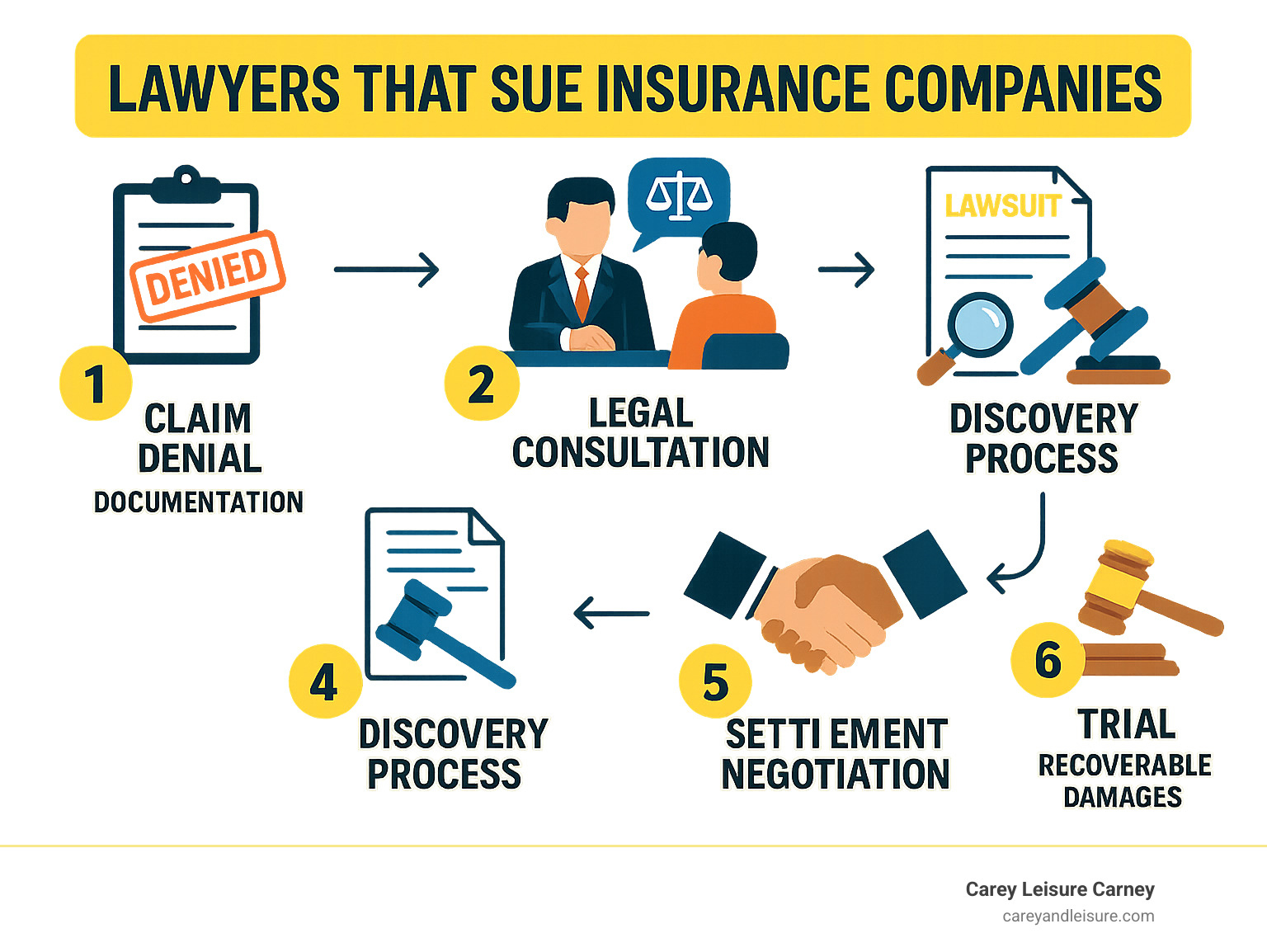
The Step-by-Step Process of Overturning a Denial
Once you hire an attorney, the process generally follows a structured path. Understanding this timeline helps manage expectations during what can be a lengthy ordeal.
- Initial Case Review: The attorney reviews the policy, the death certificate, and the denial letter.
- Information Gathering: The lawyer collects medical records, witness statements, and evidence of premium payments. This is the "discovery" phase.
- The Administrative Appeal (ERISA only): If your policy is through an employer, your lawyer must file a formal appeal with the insurance company itself. This is a critical stage because you must include all possible evidence here; you cannot add more later if you go to court.
- Filing the Lawsuit: If the internal appeal is denied (or if no appeal is required by state law), your attorney files a complaint in state or federal court.
- Mediation and Settlement: Most courts require parties to attempt mediation. This is where many life insurance disputes are resolved through a negotiated settlement.
- Litigation/Trial: If no settlement is reached, the case proceeds to a judge or jury who will make the final determination.
Navigating the Contestability Period Challenges
As we move through 2026, insurers have become more aggressive in using the contestability period. This two-year window from the policy's effective date allows insurers to investigate the truthfulness of the application after the death of the insured.
Many people mistakenly believe that if they die of a heart attack, the insurer can only deny the claim if they lied about a heart condition. This is false. If the insured lied about anything material—such as a history of depression or a minor surgical procedure—the insurer may attempt to void the entire policy, even if the cause of death was completely unrelated to the omission.
A skilled attorney will argue "waiver" or "estoppel" if the insurance company knew about the medical issue but continued to collect premiums, or they may argue that the omission was not "material" under state law definitions.
Frequently Asked Questions
Can I fight a life insurance denial on my own?
While you can technically file an appeal yourself, it is highly discouraged, especially in ERISA cases. Once an administrative appeal is closed, the "record" is locked. If you failed to include a crucial medical report or expert opinion during your self-represented appeal, an attorney may not be able to fix that mistake later in court.
How much does a life insurance attorney cost?
As mentioned, most work on contingency. You should also ask about "costs" (filing fees, expert witness fees, and medical record retrieval fees). Some firms cover these costs and deduct them from the final settlement, while others may ask the client to pay them as they arise. Always get the fee agreement in writing.
How long does it take to resolve a denied claim?
Simple cases where the insurer made a clerical error can be resolved in a few months. Complex litigation, particularly cases involving medical disputes or ERISA appeals, can take 12 to 24 months.
What if the insurance company says the policy lapsed?
Do not take their word for it. State laws regarding policy lapses are very protective of consumers. Attorneys often find that the insurer failed to provide the "Right to Reinstate" notice or didn't follow the 30-day grace period requirements mandated by the state’s Department of Insurance.
Is there a time limit to sue for a life insurance denial?
Yes. This is known as the Statute of Limitations. The timeframe varies by state and by the type of policy. In some cases, it can be as short as one year from the date of denial, while other states allow several years. Contacting an attorney immediately upon receiving a denial is the best way to ensure you don't lose your right to sue.
Practical Recommendation for Beneficiaries
If you have received a denial letter, do not call the insurance company to argue with the claims adjuster. Anything you say can be recorded and used against you later in court. Instead, gather the following documents:
- A copy of the full life insurance policy (the "Summary Plan Description" is not enough).
- The formal denial letter from the insurer.
- The death certificate of the insured.
- Any correspondence you have sent to the insurer.
Search for "attorneys that handle life insurance denial near me" and schedule a free consultation. Most specialized firms will review your denial letter at no cost to determine if you have a viable case. In 2026, with the rise of complex insurance "tech," having a human advocate who understands the intersection of medical data and contract law is your best path to securing the benefits your loved one intended for you to have.