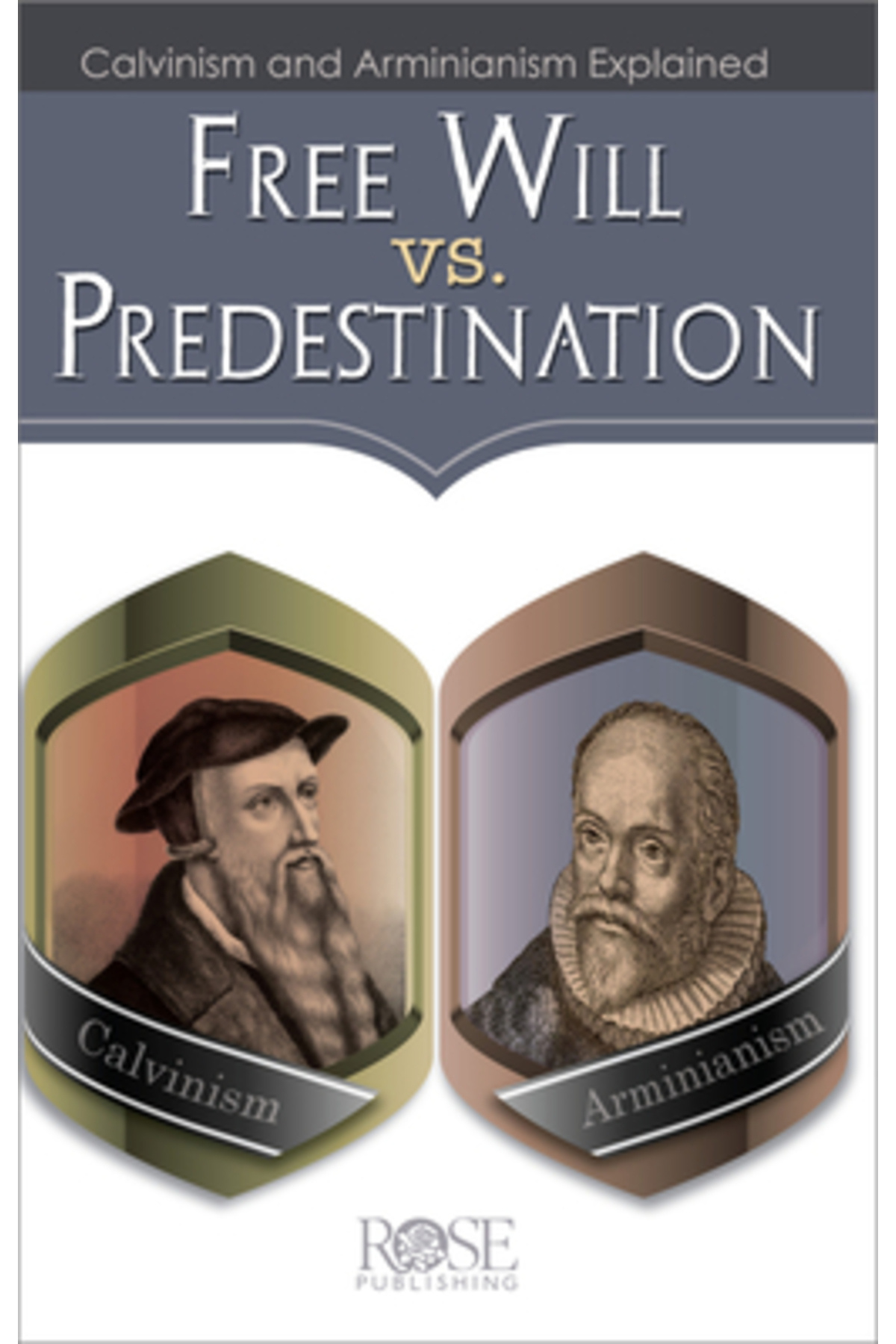
While they sound nearly identical, "Arminian" and "Armenian" refer to entirely different concepts. An Arminian is a follower of Arminianism, a theological system in Protestant Christianity emphasizing free will, whereas an Armenian refers to an ethnic group, a language, or a citizen of the nation-state of Armenia in the South Caucasus.
The confusion between these two terms is one of the most common phonetic hurdles in the study of history and religion. Because they are near-homophones, they are frequently swapped in speech and writing, leading to significant misunderstandings. To navigate these terms correctly in 2026, one must distinguish between the 17th-century theological debates of the Netherlands and the millennia-old heritage of a nation situated between Europe and Asia. This guide provides a comprehensive breakdown of the origins, definitions, and modern contexts of both terms.
What is an Arminian? The Theological Definition
An Arminian is an individual who adheres to the theological teachings of Jacobus Arminius (1560–1609), a Dutch Reformed theologian. Arminianism emerged as a challenge to the strict predestination doctrines of high Calvinism that dominated the Dutch Reformed Church during the early 17th century.
The Origins of Jacobus Arminius
Jacobus Arminius was a professor at the University of Leiden. His studies led him to question the prevailing interpretation of the "election" of believers. While the Calvinists of his day—following the teachings of John Calvin—argued for "unconditional election" (the idea that God chooses individuals for salvation based solely on His will, without regard to human choice), Arminius proposed that God’s election was based on his foreknowledge of those who would believe.
After his death, his followers organized his views into a document known as the Remonstrance of 1610. This document outlined five specific points of disagreement with the established church, which later prompted the famous Synod of Dort (1618–1619). At this synod, Arminianism was officially condemned by the Dutch Reformed Church, leading to the creation of the Five Points of Calvinism (often remembered by the acronym TULIP) as a direct rebuttal to Arminian thought.
Core Tenets of Arminian Theology
To understand what it means to be an Arminian in 2026, one must look at the specific theological pillars that define the movement. These are often contrasted with Calvinism to highlight their focus on human agency and the universality of God’s grace.
- Conditional Election: Arminians believe that God elects individuals for salvation based on His foreknowledge of their faith. Election is not an arbitrary choice by God but is conditioned on the individual's response to the Gospel.
- Universal Atonement: Unlike the Calvinist view of "Limited Atonement" (that Christ died only for the elect), Arminians hold that Jesus Christ died for every human being. However, only those who believe receive the benefits of that sacrifice.
- Prevenient Grace: This is a crucial technical term in Arminianism. It refers to the grace of God that "goes before" a person’s decision. Arminians believe that because of the Fall, humans are unable to choose God on their own. However, God grants a measure of grace to all people, which restores their ability to either accept or reject the Gospel.
- Resistible Grace: Arminians argue that humans can successfully resist the call of the Holy Spirit. While God desires all to be saved, He does not force His grace upon anyone.
- Conditional Perseverance: There is debate within Arminian circles regarding "eternal security." Classical Arminians believe it is possible for a believer to turn away from faith and lose their salvation, although God provides every means necessary for them to remain secure.
What is an Armenian? The National and Ethnic Identity
An Armenian (Armenian: հայ, hay) belongs to an ethnic group native to the Armenian Highlands. The term also refers to the citizens of the Republic of Armenia, a landlocked country in the South Caucasus region. Unlike Arminianism, which is a set of beliefs one chooses to hold, being Armenian is an identity rooted in ancestry, language, and a long, complex history.
A History of Resilience
Armenia is one of the world's oldest civilizations. Its history spans thousands of years, with the first mentions of "Armina" appearing in the Behistun Inscription around 520 BC. The Armenian people have maintained a distinct identity despite being partitioned and ruled by various empires, including the Romans, Persians, Byzantines, Arabs, Ottomans, and Soviets.
One of the most defining moments in Armenian history occurred in 301 AD, when Armenia became the first nation in the world to adopt Christianity as its state religion. This conversion, led by Saint Gregory the Illuminator and King Tiridates III, fundamentally shaped Armenian culture, literature, and architecture.
The Armenian Diaspora and Language
The Armenian identity was profoundly impacted by the Armenian Genocide of 1915, during which the Ottoman Empire systematically exterminated approximately 1.5 million Armenians. This tragedy led to the creation of a massive global diaspora. As of 2026, there are more Armenians living outside the Republic of Armenia—in countries like the United States, Russia, France, and Lebanon—than within its borders.
The Armenian language is also a unique branch of the Indo-European language family. It has its own distinct alphabet, created by Mesrop Mashtots in 405 AD. When someone speaks of "Armenian culture," they are referring to this rich linguistic heritage, as well as distinct traditions in music, carpet weaving, and culinary arts.
The Semantic Confusion: Why Do People Get Them Mixed Up?
The confusion between Arminian and Armenian is primarily linguistic. In English, the words are nearly identical in pronunciation, differing only by a single vowel sound in the second syllable (/ɑːrˈmɪniən/ vs. /ɑːrˈmiːniən/).
The Religious Intersection
The confusion is compounded by the fact that both terms are frequently used in religious contexts. A researcher looking into "Armenian Christianity" will find information about the Armenian Apostolic Church, which is one of the oldest Christian denominations. However, the Armenian Apostolic Church is not Arminian in its theology.
The Armenian Apostolic Church belongs to the Oriental Orthodox family of churches. Theologically, it is Miaphysite, a position that predates the Protestant Reformation by over a thousand years. Therefore, an Armenian Christian is almost never an "Arminian" in the sense of following the Dutch Remonstrants. In fact, most Armenians follow a liturgical and sacramental tradition that is very different from the Protestant denominations (like Methodists or Pentecostals) that typically hold Arminian views.
Comparison of Arminian vs. Armenian
The following table provides a quick reference to distinguish between these two terms across several categories.
| Feature | Arminian | Armenian |
|---|---|---|
| Primary Meaning | A follower of a specific Protestant theological system. | A member of an ethnic group or a citizen of Armenia. |
| Origin of Term | Named after the Dutch theologian Jacobus Arminius. | Derived from the ancient name of the region/people. |
| Nature of Identity | Theological/Ideological (Chosen belief). | Ethnic/National (Ancestry or citizenship). |
| Key Period | Early 17th Century (Reformation era). | Ancient times (recorded since at least 500 BC). |
| Geography | Originates in the Netherlands; global in Protestantism. | Originates in the South Caucasus/Armenian Highlands. |
| Primary Focus | Free will, resistible grace, and salvation. | National survival, culture, language, and heritage. |
| Church Affiliation | Methodists, General Baptists, Nazarenes, Pentecostals. | Armenian Apostolic Church (Oriental Orthodox). |
Theological Impact: Arminianism in 2026
In the landscape of 2026, Arminianism remains one of the two dominant poles of Protestant thought. It provides the theological backbone for some of the world's largest Christian denominations.
Methodism and John Wesley
The most famous proponent of Arminianism after the 17th century was John Wesley, the founder of Methodism. Wesley refined Arminian thought, emphasizing "Christian Perfection" and the "Witness of the Spirit." Because of Wesley’s influence, the Methodist Church and its various offshoots (including the Holiness movement and the Church of the Nazarene) are firmly Arminian.
Pentecostalism and Global Growth
Most modern Pentecostal and Charismatic movements, which represent a significant portion of global Christianity in 2026, are functionally Arminian. They emphasize the individual's choice to accept Christ and the ability to fall from grace, even if they do not explicitly use the label "Arminian." This theological framework is particularly popular in the Global South, where the emphasis on personal transformation and spiritual experience aligns with Arminian views on human response to God.
Modern Armenia: Geopolitics and Culture in 2026
As of 2026, the term Armenian is also heavily associated with the geopolitical challenges and cultural endurance of the Republic of Armenia. Following several years of regional instability in the Caucasus, the Armenian identity has become a focal point for international discussions on human rights, territorial integrity, and the protection of ancient cultural sites.
The Republic and its Diaspora
In 2026, the relationship between the Republic of Armenia and its diaspora is stronger than ever. The diaspora plays a critical role in the country’s economy and political advocacy. When people discuss "Armenian interests," they are referring to the preservation of the Armenian state, the recognition of historical injustices, and the promotion of Armenian tech and agricultural sectors, which have seen significant growth in recent years.
Cultural Preservation
Armenian culture continues to influence the global stage. From the music of system-of-a-down members to the widespread popularity of Armenian cuisine (like khorovats or lavash), the term "Armenian" evokes a sense of ancient history blended with modern resilience. This cultural footprint is entirely separate from the theological debates of Arminianism.
Common Mistakes and How to Avoid Them
To maintain professional and academic accuracy, keep these tips in mind when using these terms:
- Check the Context: If you are discussing the Protestant Reformation, the Synod of Dort, or "free will vs. predestination," the correct term is Arminian.
- Check the Geography: If you are discussing the Caucasus, the Middle East, or the first Christian nation, the correct term is Armenian.
- Spelling Matters: Note the vowel after the 'm'. A-r-m-i-n-i-a-n (Theology) vs. A-r-m-e-n-i-a-n (People).
- Avoid Assumptions: Do not assume an Armenian person is an Arminian. Statistically, an Armenian is much more likely to be an Orthodox Christian whose theology has nothing to do with the Dutch Remonstrance.
Frequently Asked Questions
Is the Armenian Apostolic Church Arminian?
No. The Armenian Apostolic Church is an Oriental Orthodox church. Its theology was established in the early centuries of Christianity, long before Jacobus Arminius was born. While they both believe in the importance of human will in salvation, the Armenian Apostolic Church does not use the framework of the five points of Arminianism.
Can someone be both Arminian and Armenian?
Yes, but it is rare. It would mean that a person of Armenian ethnicity has joined a Protestant denomination that follows Arminian theology (such as an Armenian Methodist or an Armenian Pentecostal). While there are Armenian Evangelical churches, they often have historical roots in Reformed (Calvinist) missions, though many have shifted toward Arminian-leaning views over time.
Why is Arminianism often compared to Calvinism?
Arminianism was born as a direct reaction against the Calvinist doctrine of predestination. The two systems represent the two primary ways Protestant Christians have historically understood the relationship between God’s sovereignty and human freedom. Most Protestant denominations today lean toward one of these two camps.
Which denominations are Arminian?
In 2026, denominations that are traditionally Arminian include the United Methodist Church, the Church of the Nazarene, the Assemblies of God, and various General Baptist groups. Many "non-denominational" churches also hold Arminian views regarding the "altar call" and the personal choice to follow Jesus.
What is the "Remonstrance"?
The Remonstrance of 1610 was a document written by followers of Jacobus Arminius after his death. It outlined five points of disagreement with the prevailing Calvinist orthodoxy of the Dutch Reformed Church. These five points are the foundation of what we call Arminianism today.
Practical Recommendations
When writing or speaking about these topics, always prioritize clarity through definition. If you are writing a theological paper, briefly define Arminianism by mentioning Jacobus Arminius and the concept of free will. If you are writing about international relations or history, define Armenian by mentioning the Republic of Armenia or the ethnic heritage of the people.
By understanding the distinct roots of these two terms—one in the intellectual debates of the 17th-century Netherlands and the other in the ancient soil of the Caucasus—you can communicate with precision and avoid the common pitfalls that lead to confusion in religious and historical discourse.