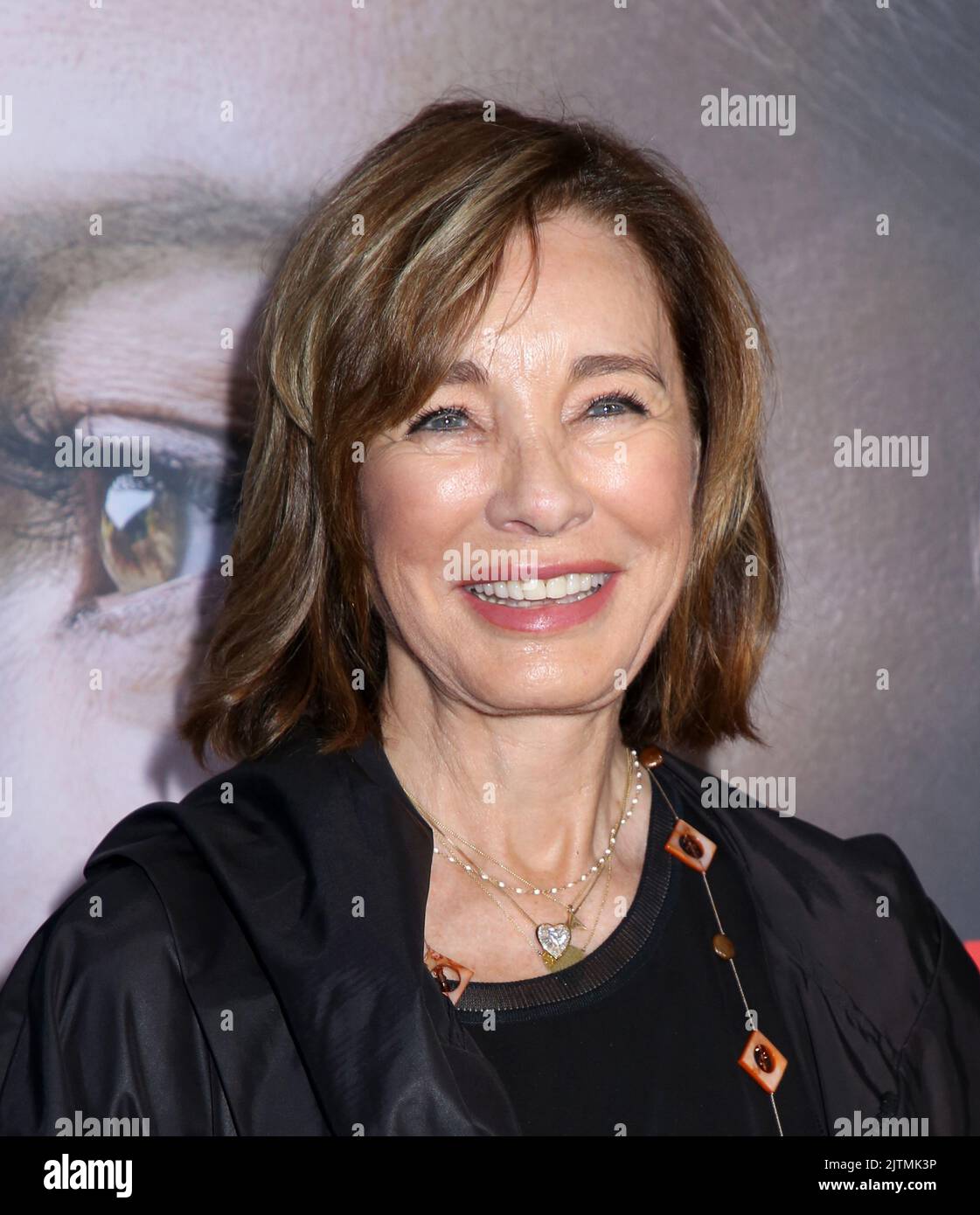
Anne Archer is an acclaimed American actress best known for her Academy Award-nominated performance as Beth Gallagher in the 1987 psychological thriller Fatal Attraction. With a career spanning over five decades, she has earned critical recognition for her nuanced portrayals in major motion pictures, television series, and prestigious stage productions across the globe.
The Foundations of an Acting Dynasty
To understand the trajectory of Anne Archer, one must first look at the environment in which she was raised. Born in Los Angeles in 1947, Archer was the product of a true Hollywood pedigree. Her mother, Marjorie Lord, was a beloved television icon known for her role in Make Room for Daddy, while her father, John Archer, was a prolific actor seen in classics such as White Heat.
Growing up within the industry provided Archer with an early understanding of the discipline required for a sustained career. However, she did not rely solely on her family name. She studied drama at Pitzer College in Claremont, California, where she honed the foundational skills that would later define her "intellectual" and "grounded" acting style. Her early years in the late 1960s and early 1970s were spent navigating the transition from the "Golden Age" of Hollywood to the more experimental "New Hollywood" era.
Archer’s debut in the early 1970s involved a series of guest appearances on television staples like Hawaii Five-O and The Mod Squad. These roles served as a proving ground, allowing her to showcase a versatility that would eventually lead to her first major film roles. By the time she appeared in the 1976 film Lifeguard alongside Sam Elliott, she had established herself as a leading lady capable of bringing depth to roles that might have remained one-dimensional in the hands of a less capable performer.
Fatal Attraction and the 1988 Award Season
The definitive turning point in Anne Archer’s career arrived with the 1987 release of Fatal Attraction. Directed by Adrian Lyne, the film became a cultural phenomenon, but much of the discourse focused on the tension between Michael Douglas's Dan Gallagher and Glenn Close's Alex Forrest. However, critics and industry peers recognized that the film’s emotional stakes rested entirely on the shoulders of Anne Archer, who played the betrayed wife, Beth Gallagher.
Archer’s performance was hailed for its subtlety and strength. While the film could have easily devolved into a melodrama, Archer provided a grounded, realistic portrayal of a woman protecting her family. This performance earned her several of the industry's highest honors:
- Academy Award Nomination: Best Actress in a Supporting Role.
- Golden Globe Nomination: Best Performance by an Actress in a Supporting Role in a Motion Picture.
- BAFTA Nomination: Best Actress in a Supporting Role.
Her work in Fatal Attraction remains a masterclass in "reactionary" acting. In the famous climax of the film, Archer’s ability to convey terror, resolution, and maternal instinct without over-the-top theatrics solidified her reputation as a "thinking person's actress." This role fundamentally changed her career, moving her from a steady working actress to a globally recognized star.
The Jack Ryan Franchise and the 1990s
Following the success of Fatal Attraction, Archer became the go-to choice for sophisticated, intelligent female leads in high-stakes dramas. This led to her casting as Dr. Cathy Ryan in the film adaptations of Tom Clancy’s novels.
Appearing in Patriot Games (1992) and Clear and Present Danger (1994), Archer played opposite Harrison Ford. Her portrayal of Cathy Ryan was a significant departure from the "damsel in distress" tropes common in 1990s action cinema. As a skilled ophthalmic surgeon and the moral compass for Jack Ryan, Archer’s version of the character is still cited by fans as the definitive interpretation. Her chemistry with Ford was rooted in a sense of mutual respect and intellectual parity, which added a layer of domestic realism to the high-octane political thrillers.
During this same period, Archer sought out roles that challenged her creatively beyond the blockbuster format. In 1993, she joined the ensemble cast of Robert Altman’s Short Cuts. The film, a sprawling mosaic of Los Angeles life based on the stories of Raymond Carver, showcased Archer’s ability to work within a highly collaborative, improvisational environment. The cast of Short Cuts was awarded a Special Golden Globe Award for Best Ensemble Cast, as well as the Volpi Cup at the Venice Film Festival.
Television Excellence and Later Career Evolutions
As the landscape of entertainment shifted toward prestige television in the 2000s and 2010s, Anne Archer seamlessly adapted. Unlike many of her contemporaries who struggled to find meaningful roles as they aged, Archer leveraged her gravitas to secure significant roles in both drama and comedy.
One of her most notable television arcs occurred in the Showtime series The L Word, where she played Lenore Pieszecki, the eccentric mother of Alice Pieszecki. This role allowed Archer to display a comedic timing and flair for the flamboyant that was rarely seen in her earlier dramatic work. She also made significant appearances in Ghost Whisperer and Privileged, often playing matriarchal figures with complex motivations.
In the 2020s, Archer continued to prove her relevance. In the 2022 Hulu limited series The Dropout, she portrayed Lorraine Fuisz, the wife of Richard Fuisz (played by William H. Macy). Her performance was praised for capturing the specific social dynamics of the wealthy elites involved in the Theranos scandal. As of 2026, looking back at her recent credits, it is clear that Archer remains a preferred choice for directors seeking an actress who can convey a lifetime of experience and unspoken history with a single look.
The Stage and "The Trial of Jane Fonda"
Beyond the camera, Archer has maintained a rigorous commitment to the theater. For many actors of her generation, the stage is a place to "recharge" their craft, and Archer is no exception. Her most significant theatrical endeavor in recent decades has been her work on The Trial of Jane Fonda.
In this production, which she performed in London’s West End and at the Edinburgh Festival Fringe, Archer took on the role of the controversial actress and activist. The play focuses on a 1988 meeting between Fonda and a group of Vietnam veterans. Archer’s performance was lauded for its lack of bias; she did not seek to canonize or demonize Fonda, but rather to explore the humanity and the political complexities of the era. This role underscored Archer’s commitment to socially relevant art and her ability to carry a production as a powerhouse lead.
Earlier in her stage career, she also took on the iconic role of Mrs. Robinson in the West End production of The Graduate. Following in the footsteps of Anne Bancroft and Kathleen Turner, Archer brought a unique vulnerability to the role, emphasizing the character’s boredom and existential dread rather than just her predatory nature.
Humanitarian Work and Advocacy
Anne Archer’s legacy is not limited to her filmography. She has long been an advocate for human rights, specifically through her work with Artists for Human Rights (AFHR). As the founder of this non-profit organization, Archer has worked to bring together artists from various disciplines to promote the Universal Declaration of Human Rights.
Her advocacy work is characterized by the same pragmatism she brings to her acting. Rather than focusing on partisan politics, AFHR aims to educate the public—particularly youth—about their fundamental rights. This commitment to global issues has made her a respected figure in international circles, often appearing at forums and summits to discuss the role of the artist in modern society.
Summary of Major Awards and Recognitions
The following table outlines the key competitive awards and major honors received by Anne Archer throughout her career.
| Year | Award Body | Category | Work | Result |
|---|---|---|---|---|
| 1988 | Academy Awards (Oscars) | Best Actress in a Supporting Role | Fatal Attraction | Nominated |
| 1988 | Golden Globes | Best Supporting Actress - Motion Picture | Fatal Attraction | Nominated |
| 1989 | BAFTA Awards | Best Actress in a Supporting Role | Fatal Attraction | Nominated |
| 1993 | Venice Film Festival | Volpi Cup (Best Ensemble Cast) | Short Cuts | Won |
| 1994 | Golden Globes | Special Award for Best Ensemble Cast | Short Cuts | Won |
| 2011 | MovieGuide Awards | Grace Award for Inspiring Performance | The Lost & Found Family | Nominated |
Frequently Asked Questions
What is Anne Archer’s most famous movie?
While she has appeared in many hits, Fatal Attraction (1987) remains her most culturally significant film. Her portrayal of Beth Gallagher earned her an Academy Award nomination and defined the "strong but betrayed spouse" archetype for a generation. Her roles in the Jack Ryan franchise (Patriot Games and Clear and Direct Danger) are also highly regarded by audiences.
Has Anne Archer ever won an Oscar?
No, she has not won an Academy Award, but she was nominated for Best Supporting Actress in 1988 for Fatal Attraction. The award that year went to Olympia Dukakis for Moonstruck. However, Archer has won other prestigious honors, including a Golden Globe and a Volpi Cup for her work in the ensemble of Short Cuts.
Who are Anne Archer's famous parents?
She is the daughter of Marjorie Lord and John Archer. Marjorie Lord was a major star of early television, most famous for playing Kathy Williams on The Danny Thomas Show (also known as Make Room for Daddy). John Archer was a prolific film and stage actor known for his roles in the 1940s and 50s.
Is Anne Archer still active in the entertainment industry?
As of 2026, Anne Archer remains active, though she is more selective with her roles. She continues to appear in prestige television projects and remains a dedicated advocate for human rights through her foundation. Her career serves as a model for longevity in an industry that often overlooks older actresses.
What was Anne Archer's role in "The Dropout"?
In the 2022 series The Dropout, Archer played Lorraine Fuisz. She portrayed the wife of Richard Fuisz, an early skeptic of Elizabeth Holmes and Theranos. Her performance was noted for its sharp characterization of high-society dynamics and the personal toll of corporate litigation.
The Enduring Impact of a Disciplined Artist
Anne Archer’s career is a testament to the power of consistent, high-quality craft. In an industry often distracted by the "new," Archer has maintained her status as a respected professional by choosing roles that offer psychological depth and social relevance. Whether she is playing the moral center of a political thriller or a complex figure in a stage drama, she brings a level of dignity and intelligence to her work that is rare.
For aspiring actors and film historians alike, Archer represents the "actor's actor"—someone who understands that the strength of a performance often lies in what is left unsaid. Her transition from the daughter of Hollywood icons to an award-winning actress in her own right was not a matter of luck, but the result of a disciplined approach to the performing arts. As she continues her work into the late 2020s, her influence can be seen in a new generation of actresses who prioritize substance over spectacle.
For those looking to explore her work further, a retrospective viewing of her "trilogy" of major performances—Fatal Attraction, Patriot Games, and Short Cuts—provides a comprehensive look at the range and capability of one of Hollywood’s most enduring talents.