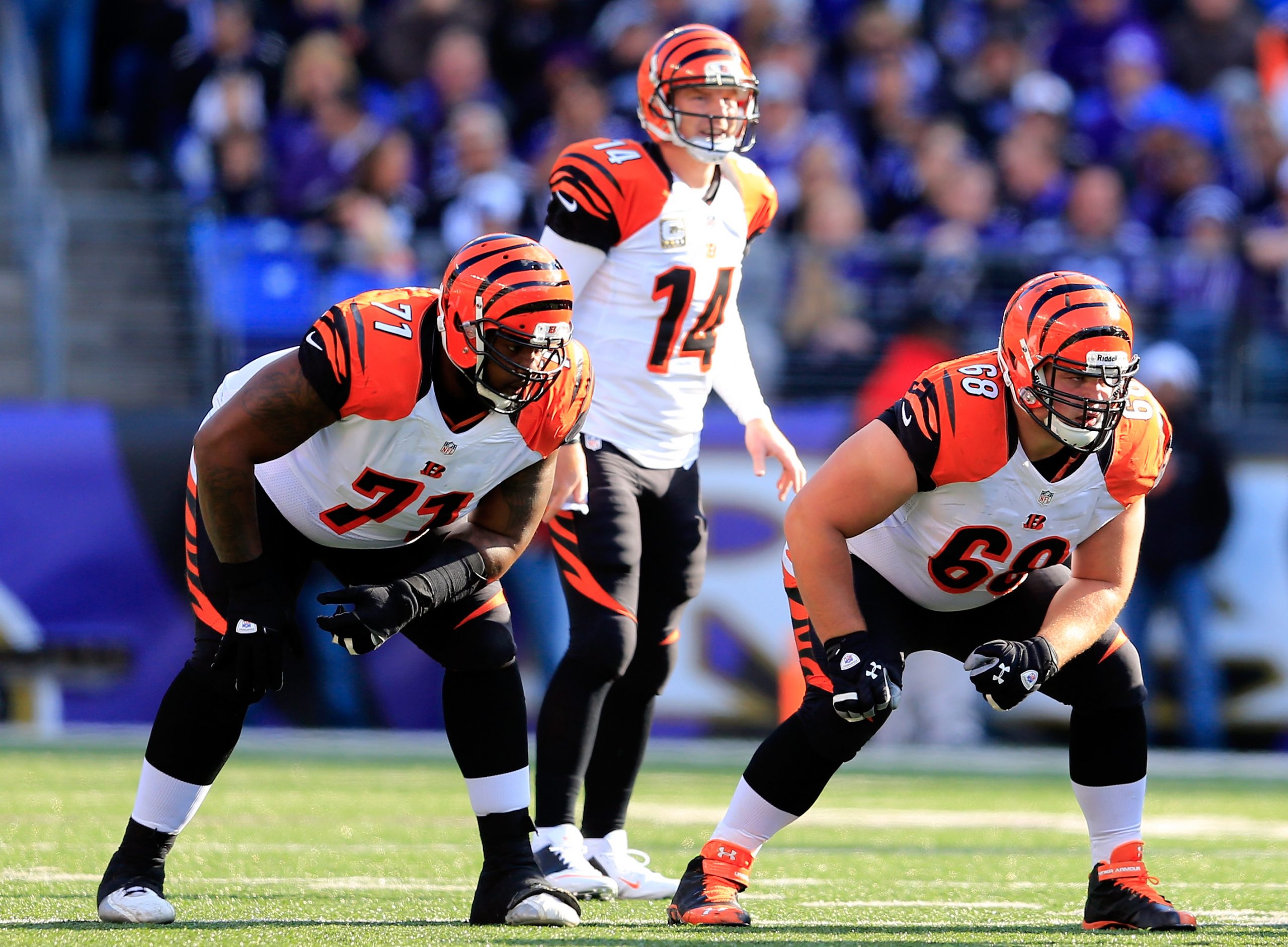
Andre Smith established himself as a prominent figure in professional football through his formidable size, dominant run-blocking prowess at the University of Alabama, and a decade-long career as an offensive tackle in the National Football League. Selected sixth overall in the 2009 NFL Draft by the Cincinnati Bengals, Smith carved out a reputation as a hard-nosed, physical presence on the line of scrimmage, weathering numerous injuries, shifting coaching staffs, and multiple team transitions across a physical era of professional gridiron competition.
Early Life, Collegiate Dominance, and Draft Pedigree
Long before making his mark on Sundays, Andre Smith built his football foundation as a heavily recruited prospect out of Huffman High School in Birmingham, Alabama. Standing out immediately due to his massive physical frame and extraordinary functional strength, Smith chose to stay close to home, committing to the University of Alabama under head coach Nick Saban.
During his tenure with the Crimson Tide, Smith became a cornerstone of the offensive line. His technique, lateral mobility relative to his size, and raw power overwhelmed Southeastern Conference defensive linemen. By his junior season in 2008, his achievements culminated in winning the prestigious Outland Trophy, awarded annually to the nation's best interior lineman, alongside consensus All-American honors. His collegiate tape showcased a player capable of resetting the line of scrimmage in the run game while providing a sturdy anchor against elite edge rushers.
Entering the 2009 NFL Draft, evaluators viewed Smith as one of the premier tackle prospects in the country. Despite some pre-draft scrutiny regarding his conditioning and off-field preparation, his immense ceiling convinced front offices of his franchise-altering potential. The Cincinnati Bengals capitalized on that upside, calling his name with the sixth overall pick, cementing his transition to the highest level of professional competition.
Professional Career: The Cincinnati Bengals Years
Smith’s journey with the Cincinnati Bengals formed the longest and most productive chapter of his professional career. Spanning multiple stints in Cincinnati, his time with the franchise coincided with an era of sustained playoff contention for the team under head coach Marvin Lewis.
Rookie Challenges and Early Development
The transition to the professional ranks proved demanding for the young tackle. Contract negotiations delayed his arrival at his first training camp, and injuries—a recurring theme throughout his professional timeline—hindered his early development. Foot and leg ailments limited his participation during his rookie campaign, restricting him to just six games.
However, Smith rebounded strongly in subsequent seasons. By 2011 and 2012, he firmly established himself as the Bengals' starting right tackle, locking down the right side of an offensive line that protected young quarterback Andy Dalton and opened running lanes for tailback BenJarvus Green-Ellis. His finest professional campaign arguably arrived in 2012, when he started all 16 regular-season games, showcasing exceptional run-blocking grades and displaying the durability and power that justified his high draft status.
Contract Extension and Continued Physicality
Following his stellar 2012 season, Smith signed a multi-year contract extension with the Bengals in March 2013. For the next several years, he remained a fixture of Cincinnati's upfront unit. While pass protection occasionally posed challenges against elite, speed-oriented edge rushers, his primary value remained anchored in his punishing style of run blocking. He routinely neutralized heavy defensive ends and linebackers, helping anchor a physical Bengals identity that routinely challenged for the AFC North division crown.
Journeys Across the League: Minnesota, Arizona, and Return Stints
As his career progressed into its later stages, Smith transitioned into a veteran journeyman role, lending his experience and depth to several different franchises.
Minnesota Vikings and Arizona Cardinals
In March 2016, Smith signed a one-year deal with the Minnesota Vikings, seeking a fresh opportunity in the NFC. Unfortunately, triceps injuries cut his season short after appearing in just four games, landing him on injured reserve and stalling his momentum in Minneapolis.
Following his brief stint in Minnesota, Smith signed with the Arizona Cardinals prior to the 2017 season. In Arizona, he served primarily as a swing tackle and rotational blocker, appearing in 13 games with four starts. His veteran presence provided valuable depth for an evolving offensive line, though physical wear and tear continued to limit his availability.
Later Years and Final NFL Actions
Smith eventually returned to the Cincinnati Bengals for the 2018 season under a reunion contract, filling both starting and reserve roles. In 2019, he had a brief stint with the Carolina Panthers before returning for a final, abbreviated chapter in Cincinnati, officially wrapping up an extensive professional career that spanned over a decade of high-level trench warfare.
Position Analysis, Playing Style, and Physical Profile
To understand Andre Smith's impact on the field, one must examine the specific traits that defined his playing style as an offensive tackle.
- Size and Strength: Standing approximately 6-foot-4 and routinely playing near or above 330 pounds, Smith possessed an imposing physical profile that naturally occupied space and absorbed bull rushes.
- Run-Blocking Dominance: His greatest asset was his capacity to generate immediate push in the run game. He excelled in gap-scheme and power-run concepts, where his momentum and strength cleared pathways for ball carriers.
- Adaptability: Throughout his career, while primarily stationed at right tackle, Smith occasionally shifted inside or filled emergency roles, showcasing a solid grasp of blocking schemes.
| Team | Tenure | Key Role / Status |
|---|---|---|
| Cincinnati Bengals | 2009–2015 | Primary starter at right tackle; key anchor in run game |
| Minnesota Vikings | 2016 | Projected starter; season shortened by triceps injury |
| Arizona Cardinals | 2017 | Rotational swing tackle and veteran depth |
| Cincinnati Bengals | 2018–2019 | Veteran mentor and situational blocker |
| Carolina Panthers | 2019 | Brief reserve stint |
Legacy and Impact on the Game
Andre Smith's career offers a compelling narrative of perseverance through physical adversity. While high draft selections often carry expectations of perennial Pro Bowl appearances, Smith's trajectory highlights the demanding reality of professional football longevity. Despite battling chronic injuries that occasionally interrupted his peak seasons, he carved out a durable, 10-plus-year career in the toughest football league in the world.
For the Cincinnati Bengals, he was a foundational piece during a competitive window in the 2010s, earning the respect of teammates and opponents alike for his toughness in the trenches. His transition from a decorated collegiate superstar at Alabama to a battle-tested professional blocker illustrates the resilience required to survive and produce at the highest level of sport.
Frequently Asked Questions
What college did Andre Smith attend?
Andre Smith attended the University of Alabama, where he played under head coach Nick Saban and won the Outland Trophy in 2008 as the nation's best interior lineman before entering the professional draft.
What year was Andre Smith drafted into the NFL?
Smith was selected in the first round of the 2009 NFL Draft. The Cincinnati Bengals chose him with the sixth overall pick.
What position did Andre Smith play?
He played primarily as an offensive tackle, logging the vast majority of his professional snaps at the right tackle position where his run-blocking strength could be fully leveraged.
Which teams did Andre Smith play for during his career?
Over his career, Smith played the majority of his seasons for the Cincinnati Bengals, with brief professional stops with the Minnesota Vikings, Arizona Cardinals, and Carolina Panthers.
What were some of his primary challenges in the league?
Injuries were a persistent hurdle throughout his professional career, particularly foot, leg, and arm ailments that periodically interrupted his seasons and limited his consecutive game streak.