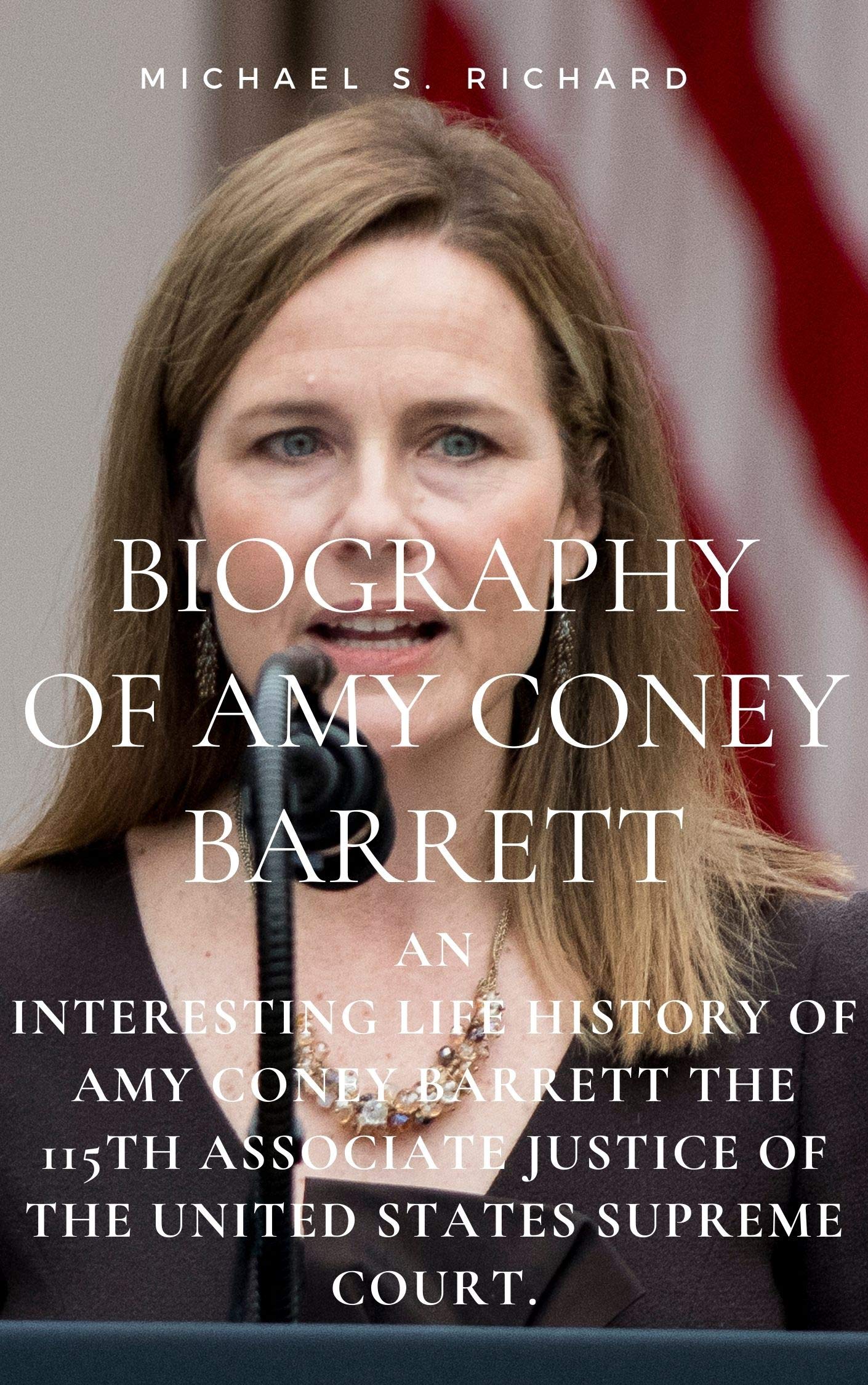
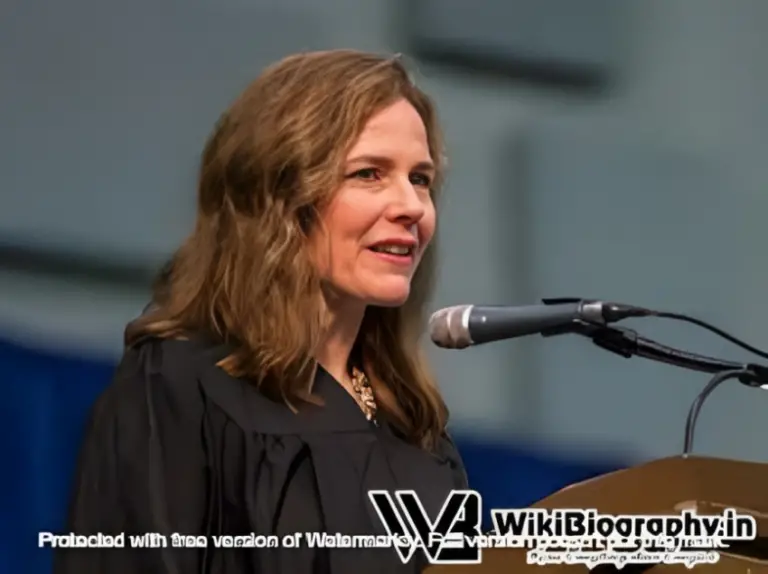
Amy Coney Barrett is an Associate Justice of the Supreme Court of the United States, serving since her confirmation in October 2020. A former judge of the U.S. Court of Appeals for the Seventh Circuit and a long-time professor at Notre Dame Law School, she is known for her judicial philosophy of originalism and textualism, and for being the first mother of school-aged children to serve on the nation’s highest court.
Early Life and Family Roots
Amy Vivian Coney was born on January 28, 1972, in New Orleans, Louisiana. She was the eldest of seven children, raised in a household where faith, education, and community service were central pillars. Her father, Michael Coney, served as an attorney for Shell Oil Company, and her mother, Linda, was a high school French teacher. Growing up in the suburb of Metairie, Barrett attended St. Mary’s Dominican High School, an all-girls Catholic school where she was a standout student and served as student body president.
Her upbringing in the South, particularly within a large and vibrant Catholic community, significantly shaped her worldview. The discipline required to navigate a large family and the intellectual rigor encouraged by her parents provided an early foundation for her future legal career. Following high school, she moved to Memphis, Tennessee, to attend Rhodes College. At Rhodes, she majored in English literature and minored in French, graduating in 1994 with a Bachelor of Arts, magna cum laude. She was inducted into Phi Beta Kappa and was chosen by the faculty as the most outstanding English major in her graduating class.
Legal Education and the Notre Dame Connection
Barrett’s transition from literature to law took her to the University of Notre Dame Law School in South Bend, Indiana. Her time at Notre Dame was marked by exceptional academic achievement. She served as an executive editor of the Notre Dame Law Review and graduated first in her class in 1997, earning her Juris Doctor summa cum laude.
It was during her years in South Bend that she deeply integrated her legal studies with a sophisticated understanding of constitutional theory. The faculty at Notre Dame recognized her as a brilliant scholar who possessed a rare ability to synthesize complex legal doctrines. This period also solidified her lifelong connection to the university, an institution where she would later spend the majority of her professional life as a teacher and researcher.
Prestigious Clerkships and Early Career
Upon graduation, Barrett embarked on a series of highly competitive judicial clerkships that are traditionally reserved for the top legal minds of a generation. She first clerked for Judge Laurence Silberman of the U.S. Court of Appeals for the District of Columbia Circuit from 1997 to 1998. The D.C. Circuit is often referred to as the "second most important court in the land," and Silberman was a prominent conservative jurist known for his rigorous administrative law expertise.
Following her year with Judge Silberman, Barrett secured a clerkship with Associate Justice Antonin Scalia of the Supreme Court of the United States for the 1998–1999 term. Justice Scalia was the leading proponent of originalism—the theory that the Constitution should be interpreted as it was understood at the time of its drafting. Barrett’s time with Scalia was transformative; she not only mastered the nuances of originalist thought but also developed a reputation for her sharp intellect and ability to defend her positions with clarity and grace. Justice Scalia famously described her as "the finest student I ever had."
After her clerkships, Barrett spent two years in private practice at Miller, Cassidy, Larroca & Lewin in Washington, D.C. There, she focused on civil and criminal litigation, gaining practical experience in the complexities of the federal court system. However, her true calling remained in academia and the theoretical underpinnings of the law.
The Academic Years: Scholarship and Teaching
In 2002, Barrett returned to Notre Dame Law School as a member of the faculty. For the next 15 years, she established herself as a prolific scholar and a beloved teacher. Her research focused primarily on federal courts, constitutional law, and statutory interpretation. She published numerous articles in prestigious law journals, including the Columbia Law Review, Virginia Law Review, and Texas Law Review.
A significant portion of her scholarship explored the concept of stare decisis—the legal principle of determining points in litigation according to precedent. Barrett argued that while precedent is vital for stability, a justice’s primary duty is to the Constitution itself. This nuanced view on the flexibility of precedent became a focal point during her later confirmation hearings.
As a professor, Barrett was thrice named "Professor of the Year" by the graduating classes. She was known for her "cold-calling" style, which demanded that students be thoroughly prepared to defend their interpretations of the law. Despite her rigorous standards, she was widely respected for her fairness and her commitment to helping students understand the divergent viewpoints within legal philosophy.
Judicial Appointment to the Seventh Circuit
In 2017, President Donald Trump nominated Barrett to a seat on the U.S. Court of Appeals for the Seventh Circuit. This nomination marked her transition from the classroom to the bench. Her confirmation hearing before the Senate Judiciary Committee became a national flashpoint, particularly regarding her religious faith.
During the hearing, Senator Dianne Feinstein famously remarked, "The dogma lives loudly within you," suggesting that Barrett’s Catholic beliefs might interfere with her judicial duties. Barrett responded by asserting that her personal convictions would not dictate her legal rulings, stating, "It is never appropriate for a judge to apply their personal convictions, whether it derives from faith or anywhere else, to the law."
She was confirmed by the Senate in a 55–43 vote on October 31, 2017. During her three years on the Seventh Circuit, she authored nearly 100 opinions, demonstrating a consistent commitment to textualism—the practice of interpreting statutes based on the plain meaning of the text rather than legislative intent or policy goals.
The Supreme Court Nomination of 2020
The death of Associate Justice Ruth Bader Ginsburg on September 18, 2020, created a vacancy on the Supreme Court just weeks before the presidential election. President Trump nominated Amy Coney Barrett to fill the seat on September 26, 2020. The nomination was historically significant not only for its timing but also because it presented the opportunity to shift the Court toward a solid 6-3 conservative majority.
The confirmation process was intense and highly polarized. Because of the ongoing COVID-19 pandemic, the hearings featured a mix of in-person and remote testimony. Barrett navigated the four days of questioning with a notable lack of notes, demonstrating an encyclopedic knowledge of case law and constitutional history. She emphasized the "Barrett Rule"—refusing to comment on how she might vote on specific issues that might come before the Court, maintaining the independence of the judiciary.
On October 26, 2020, the Senate confirmed her to the Supreme Court in a 52–48 vote. She was sworn in by Justice Clarence Thomas in a private ceremony later that evening.
Judicial Philosophy: Originalism and Textualism
To understand Justice Barrett's impact on the Court, one must understand the twin pillars of her judicial philosophy: Originalism and Textualism.
- Originalism: This approach posits that the Constitution has a fixed meaning that does not change over time. Justice Barrett seeks to understand what the words meant to the public at the time they were ratified. She argues that if the Constitution is to be changed, it must be done through the formal amendment process described in Article V, rather than through judicial reinterpretation.
- Textualism: Similar to originalism but applied to statutes passed by Congress, textualism focuses on the literal text of the law. Barrett avoids looking at "legislative history"—such as floor speeches or committee reports—to determine what a law means. Instead, she looks at the grammar, structure, and contemporary definitions of the words used in the statute.
Critics of these philosophies argue they are too rigid and fail to account for modern societal changes. Supporters, however, believe they prevent judges from "legislating from the bench" and ensure that the law remains predictable and grounded in democratic consent.
Major Decisions and Influence (2020–2026)
Since joining the Court, Justice Barrett has been a pivotal vote in some of the most significant cases of the 21st century. As of 2026, her record reflects a jurist who is deeply conservative but often seeks to find a narrow, technically precise ground for her rulings.
- Dobbs v. Jackson Women’s Health Organization (2022): Barrett joined the majority in overturning Roe v. Wade, ending the constitutional right to abortion. Her vote was decisive in returning the authority to regulate or prohibit abortion to individual states.
- New York State Rifle & Pistol Association, Inc. v. Bruen (2022): She joined the majority in expanding Second Amendment rights, ruling that the Constitution protects an individual's right to carry a handgun for self-defense in public.
- 303 Creative LLC v. Elenis (2023): Barrett supported the ruling that the First Amendment prohibits a state from forcing a website designer to create expressive content that violates her beliefs, a significant win for religious liberty and free speech.
- Loper Bright Enterprises v. Raimondo (2024): Barrett was part of the majority that overturned the "Chevron doctrine," significantly curtailing the power of federal agencies to interpret their own regulatory authority. This move signaled a major shift toward judicial oversight of the administrative state.
Career Timeline and Milestones
| Year | Milestone | Significance |
|---|---|---|
| 1972 | Born in New Orleans, LA | Roots in a large, Catholic, Southern family. |
| 1994 | Graduated Rhodes College | Academic excellence in English and French. |
| 1997 | Graduated Notre Dame Law | Summa Cum Laude, first in her class. |
| 1998 | Clerkship with Justice Scalia | Formative training in originalist philosophy. |
| 2002 | Joined Notre Dame Faculty | Beginning of a 15-year career in legal academia. |
| 2017 | Confirmed to 7th Circuit | Transition from scholar to federal judge. |
| 2020 | Confirmed to Supreme Court | Succeeded Justice Ruth Bader Ginsburg. |
| 2022 | Vote in Dobbs Decision | Major shift in U.S. constitutional law. |
Personal Life and Public Image
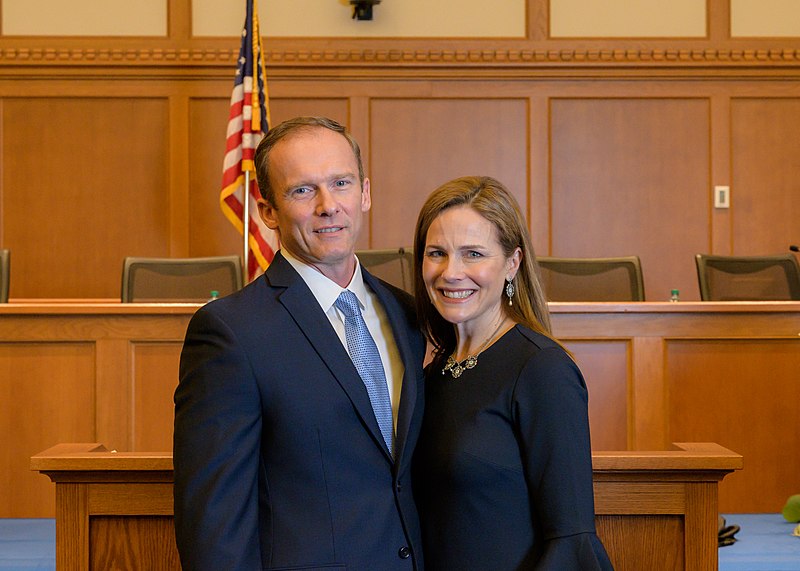
Justice Barrett is married to Jesse M. Barrett, a fellow Notre Dame Law graduate and a partner at a law firm in South Bend. Together, they have seven children, including two children adopted from Haiti and one child with special needs. Her role as a mother has been a frequent point of discussion in the media, often used as a symbol of the "new feminism" that embraces both professional excellence and traditional family life.
Barrett is also a member of People of Praise, a charismatic Christian community. While her affiliation with the group drew scrutiny during her confirmation, she has consistently maintained that her religious life is separate from her judicial obligations. In public appearances, she is often described as poised, articulate, and deeply committed to the principle that the Supreme Court should not be viewed as a political institution.
FAQ
What is Amy Coney Barrett’s judicial philosophy?
Justice Barrett is a proponent of originalism and textualism. Originalism means she interprets the Constitution based on its original public meaning at the time of adoption. Textualism means she interprets statutes based on the plain meaning of their written text, rather than the intent of the legislators who wrote them.
How many children does Justice Barrett have?
She has seven children. Five are biological, and two were adopted from Haiti following the 2010 earthquake. She has often spoken about the challenges and rewards of balancing a demanding legal career with the responsibilities of a large family.
Who did Amy Coney Barrett replace on the Supreme Court?
She replaced Associate Justice Ruth Bader Ginsburg, who passed away in September 2020. The replacement of a liberal icon like Ginsburg with a conservative originalist like Barrett represented one of the most significant ideological shifts in the Court’s history.
Where did Amy Coney Barrett go to law school?
She attended the University of Notre Dame Law School, where she graduated first in her class in 1997. She later returned to the school to serve as a professor for over a decade.
Has Justice Barrett written any books?
While she has not authored a traditional memoir or trade book as of early 2026, she has authored dozens of highly influential law review articles. Her scholarly work is frequently cited by other legal academics and judges exploring the boundaries of federal jurisdiction and constitutional interpretation.
Summary and Practical Recommendation
Justice Amy Coney Barrett’s biography is a testament to the influence of intellectual consistency and academic rigor. From her early days in New Orleans to her tenure on the Supreme Court, she has remained steadfast in her adherence to a specific set of legal principles. For those seeking to understand the current direction of American law, a study of her written opinions—particularly her concurrences where she often clarifies her specific originalist reasoning—is essential. To follow her ongoing work, readers should monitor the official Supreme Court of the United States website for newly released opinions and orders. Understanding her approach provides critical insight into the judicial framework that will likely govern the United States for decades to come.