Aluminum injection molding, specifically referred to as Aluminum Metal Injection Molding (Al-MIM), is an advanced manufacturing process that combines the design flexibility of plastic injection molding with the high-strength, lightweight properties of aluminum alloys. By utilizing a feedstock of fine aluminum powder and a thermoplastic binder, manufacturers produce complex, high-precision components that are difficult or impossible to achieve through traditional die casting or machining alone.
Understanding the Landscape of Aluminum Injection Molding
To accurately discuss aluminum injection molding in 2026, one must distinguish between two frequently confused industrial concepts: the production of aluminum parts via Metal Injection Molding (MIM) and the use of aluminum tooling for plastic injection molding. While both are critical to modern manufacturing, the primary technical intent of "aluminum injection molding" involves the creation of solid aluminum components using MIM technology.
Metal Injection Molding has traditionally been dominated by stainless steels and titanium. However, the demand for lightweighting in aerospace, automotive, and portable electronics has pushed aluminum MIM into the mainstream. The process allows for the creation of intricate geometries—such as internal cavities, thin walls, and complex undercuts—without the waste associated with subtractive manufacturing (CNC machining) or the porosity issues often found in conventional high-pressure die casting.
As of 2026, the technology has matured significantly. Early challenges regarding the stable oxide layer on aluminum particles, which historically hindered the sintering process, have been largely overcome through specialized atmosphere controls and the development of proprietary liquid-phase sintering aids. This has opened the door for high-volume production of aluminum parts that exhibit up to 98% of the density of wrought materials.
The Aluminum MIM Process: From Powder to Part
The transformation of raw aluminum powder into a finished, high-performance component follows a rigorous four-stage progression. Each stage requires precise calibration to account for aluminum’s unique thermal and chemical characteristics.
1. Feedstock Preparation and Compounding
The process begins with the creation of the feedstock. Fine aluminum powder (typically with particle sizes ranging from 5 to 20 microns) is blended with a multi-component binder system. This binder usually consists of various thermoplastics, waxes, and surfactants. In 2026, many manufacturers utilize water-soluble or catalytic binders that allow for faster processing and lower environmental impact. The goal is to create a homogenous mixture that is roughly 60% to 70% metal by volume. This feedstock is then pelletized for use in injection molding machines.
2. Injection Molding
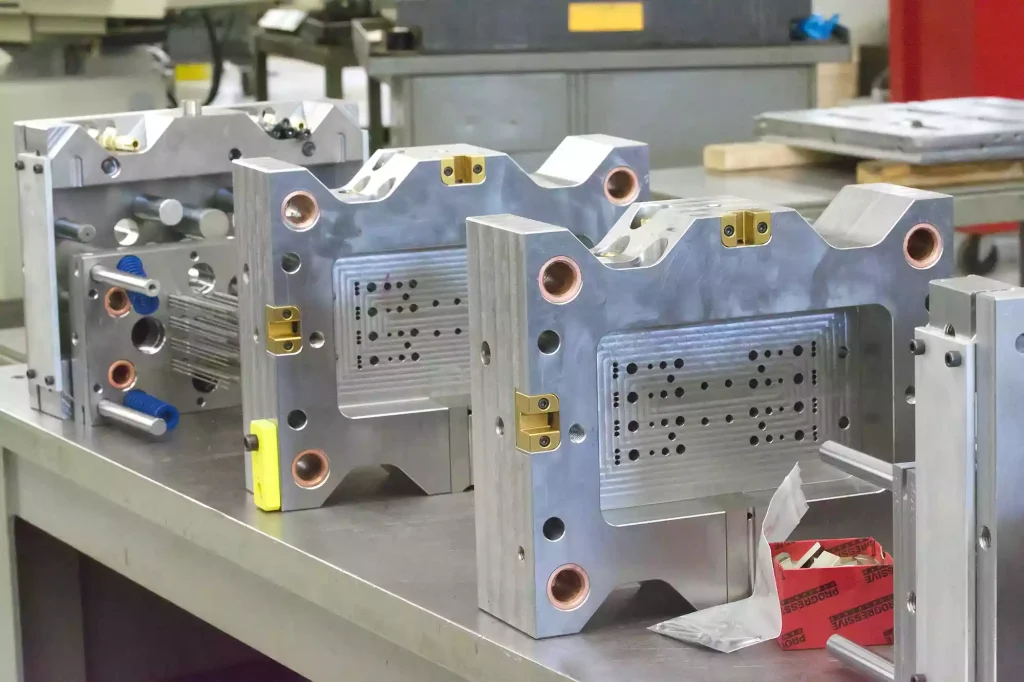
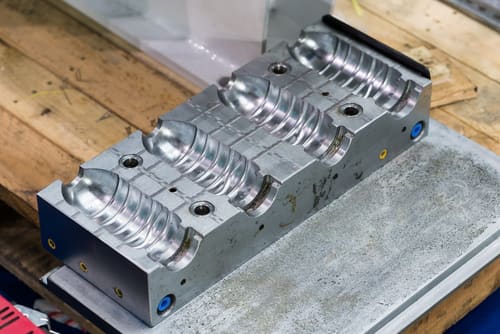
The pelletized feedstock is fed into a standard injection molding machine, though the screw and barrel are often specifically coated to prevent contamination and wear from the metallic powder. The feedstock is heated until the binder melts, turning it into a viscous slurry. This slurry is injected into a precision-engineered steel mold at high pressure. The resulting part is known as a "green part." It is approximately 15% to 20% larger than the final intended size to account for shrinkage during the subsequent sintering phase.
3. Debinding: Removing the Scaffold
The green part is essentially a metal-filled plastic component. To turn it into pure metal, the binder must be removed. This is the debinding stage, which typically occurs in two steps:
- Primary Debinding: Most of the binder is removed via solvent immersion, thermal evaporation, or catalytic reaction. This creates a network of interconnected pores throughout the part.
- Secondary Debinding (Pre-sintering): The remaining binder, which holds the part’s shape, is burned off in the initial heating phase of the sintering furnace. After this stage, the part is referred to as a "brown part," which is extremely fragile and held together only by the mechanical interlocking of the metal particles.
4. Sintering: Achieving Density
Sintering is the most critical phase in aluminum injection molding. The brown parts are placed in a high-temperature furnace with a highly controlled atmosphere—usually high-purity nitrogen or argon. The temperature is raised to just below the melting point of the specific aluminum alloy.
Through atomic diffusion and liquid-phase sintering, the particles fuse together, and the pores collapse. This results in a solid, high-density metallic part. Because aluminum forms a tenacious oxide layer ($Al_2O_3$), the furnace environment in 2026 utilizes specific "getters" or magnesium-based additives in the feedstock to break down this oxide, ensuring strong metallurgical bonds between particles.
Material Selection and Properties in 2026
The choice of aluminum alloy significantly impacts the mechanical performance and sinterability of the final product. While early Al-MIM focused on pure aluminum, current industrial standards prioritize high-strength alloys.
| Alloy Series | Common Grade | Key Characteristics | Typical 2026 Applications |
|---|---|---|---|
| 2xxx Series | 2014, 2024 | High strength, copper-based, heat treatable. | Aerospace fasteners, structural brackets. |
| 6xxx Series | 6061 | Excellent corrosion resistance, good formability. | Consumer electronics, thermal management. |
| 7xxx Series | 7075 | Very high strength-to-weight ratio, zinc-based. | High-stress automotive components, drones. |
| Al-Si Alloys | AlSi10Mg | Excellent fluidity and low shrinkage. | Complex heat sinks, cooling fins. |
Components produced through aluminum injection molding in 2026 typically reach a relative density of 95% to 98%. This density allows the parts to be anodized, plated, or welded using standard techniques. Furthermore, the isotropic grain structure of MIM parts often provides more uniform mechanical properties compared to the directional grain structure found in extruded or forged aluminum.
Design Guidelines for Aluminum Injection Molding
Designing for Al-MIM requires a departure from traditional machining logic. To maximize the benefits of the process and minimize defects like warping or internal voids, engineers should adhere to specific Design for Manufacturing (DFM) principles.
- Wall Thickness: The ideal wall thickness for aluminum MIM parts ranges from 0.5 mm to 5.0 mm. While thinner walls are possible, they may require specialized feedstock. Conversely, sections thicker than 10 mm are difficult to debind and sinter uniformly, often leading to internal "clumping" or incomplete binder removal.
- Uniformity: Maintaining uniform wall thickness is paramount. Transitions between thick and thin sections should be gradual to prevent stress concentrations and uneven shrinkage during the sintering process.
- Draft Angles: Unlike plastic molding, Al-MIM parts require very small draft angles, typically between 0.5° and 1.0°, to facilitate easy ejection from the mold.
- Radii and Fillets: Sharp internal corners should be avoided. A minimum radius of 0.2 mm is recommended to improve the flow of the metal-heavy feedstock and reduce the risk of cracking during sintering.
- Cores and Holes: MIM is exceptionally good at producing blind and through-holes. Holes should be placed parallel to the direction of the mold opening to simplify tooling and reduce costs.
Comparative Analysis: Al-MIM vs. Alternative Methods
When deciding whether to utilize aluminum injection molding, manufacturers must weigh it against traditional die casting and CNC machining.
Al-MIM vs. High-Pressure Die Casting (HPDC)
Die casting is the industry standard for high-volume aluminum production. However, HPDC often suffers from entrained porosity caused by the turbulent injection of molten metal. This makes die-cast parts difficult to heat treat or weld. Aluminum MIM, by contrast, uses a solid-state sintering process that results in much lower porosity and a finer microstructure. While Al-MIM tooling is expensive, it allows for more complex geometries (like internal threads) that die casting cannot achieve without secondary operations.
Al-MIM vs. CNC Machining
CNC machining is the preferred method for low-volume prototypes or parts requiring extreme tolerances. However, it is highly wasteful; for complex parts, up to 80% of the raw aluminum block may end up as scrap. Al-MIM is a near-net-shape process, meaning it produces very little waste. In 2026, the economic "break-even point" where MIM becomes more cost-effective than CNC is typically around 5,000 to 10,000 units, depending on the complexity of the geometry.
Economic and Strategic Considerations
The adoption of aluminum injection molding is often a strategic decision based on total lifecycle costs rather than initial unit price.
Tooling Investment: The initial cost for Al-MIM tooling (hardened steel molds) is significant, often ranging from $10,000 to $50,000. This makes the process unsuitable for small-batch production unless the geometry is so complex that no other method can produce it.
Secondary Operations: One of the primary cost-saving aspects of Al-MIM is the reduction of secondary operations. Features like knurling, logos, date stamps, and intricate cooling fins can be molded directly into the part. By 2026, advancements in molding precision have reduced the need for post-sintering machining for most functional tolerances, though critical mating surfaces may still require a light grinding or CNC touch-up.
Scalability: Once the tool is qualified, Al-MIM offers immense scalability. Automated injection cells can produce thousands of parts per day with high repeatability, ensuring that the millionth part is identical to the first.
Common Challenges and Troubleshooting
Despite its advantages, aluminum injection molding is a sensitive process. Understanding common failure modes is essential for quality control.
- Slumping: During sintering, aluminum becomes very soft as it approaches its solidus temperature. Large or unsupported features may "slump" or deform under their own weight. This is managed through the use of ceramic "setters" or supports that mirror the part's geometry during the furnace cycle.
- Incomplete Debinding: If the binder is removed too quickly, internal gas pressure can cause "bloating" or surface blisters. If removed too slowly, it bottlenecks production. Precise thermal profiling in 2026 is managed by AI-driven furnace controllers that adjust ramp rates based on real-time sensor data.
- Contamination: Aluminum is highly reactive. Any carbon residue from the binder or oxygen in the furnace atmosphere can significantly degrade the mechanical properties. Utilizing high-purity atmosphere gas and specialized binder chemistries is mandatory for aerospace-grade components.
Frequently Asked Questions
Is aluminum injection molding the same as die casting?
No. Die casting involves injecting molten aluminum into a mold. Aluminum injection molding (MIM) involves injecting a mixture of aluminum powder and plastic binder, followed by debinding and sintering. MIM allows for higher density, more complex shapes, and better material properties but is generally limited to smaller part sizes (usually under 150 grams) compared to die casting.
How strong are parts made with aluminum injection molding?
Parts produced via Al-MIM in 2026 can achieve mechanical properties very close to wrought aluminum alloys. Depending on the density (typically 95-98%) and the heat treatment applied after sintering, Al-MIM parts can reach tensile strengths and hardness levels comparable to machined 6061-T6 or 7075 alloys.
What are the size limitations for Al-MIM parts?
The Al-MIM process is most efficient for small, intricate parts. The "sweet spot" is typically between 0.1 grams and 100 grams. While larger parts up to 250 grams are possible, the cost of the raw metal powder and the increased risk of warping during sintering often make other manufacturing methods more economical for larger components.
Can Al-MIM parts be anodized for color or corrosion resistance?
Yes. Because Al-MIM achieves high surface density, the parts can be successfully anodized. This is a common requirement for consumer electronics (smartphones, wearables) and automotive trim. However, it is essential to ensure the sintering process has closed all surface porosity to prevent the "bleeding" of chemicals during the anodizing bath.
What is the lead time for aluminum injection molded parts?
Developing a new Al-MIM component typically takes 8 to 12 weeks. This includes mold design and fabrication (4-6 weeks), feedstock blending, and the "sampling" phase where the sintering shrink rates are fine-tuned to ensure dimensional accuracy. Once the process is validated, production cycles are much faster.
Final Recommendation for Manufacturers
When considering aluminum injection molding for a project in 2026, start with a comprehensive cost-per-feature analysis. If your component requires high thermal conductivity, low weight, and has a complex geometry that would require multiple CNC setups or result in high scrap rates, Al-MIM is likely the most competitive solution.
Engage with a specialized MIM provider early in the design phase. Because the 15-20% shrinkage during sintering is non-linear and depends heavily on part geometry, the manufacturer’s expertise in mold compensation is the single most important factor in the success of your project. For high-volume, high-complexity aluminum components, Al-MIM remains the gold standard for balancing performance, precision, and material efficiency.