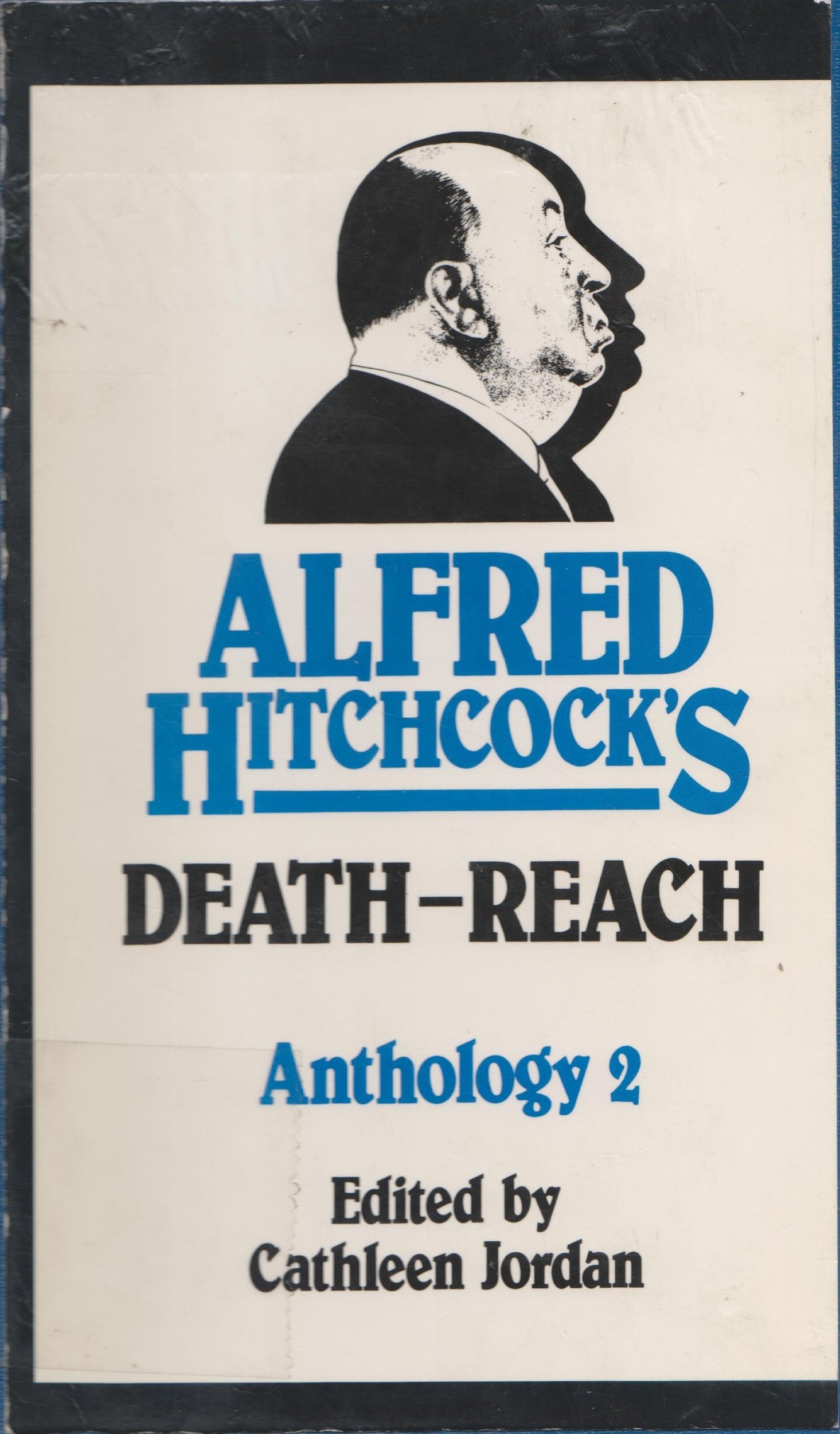
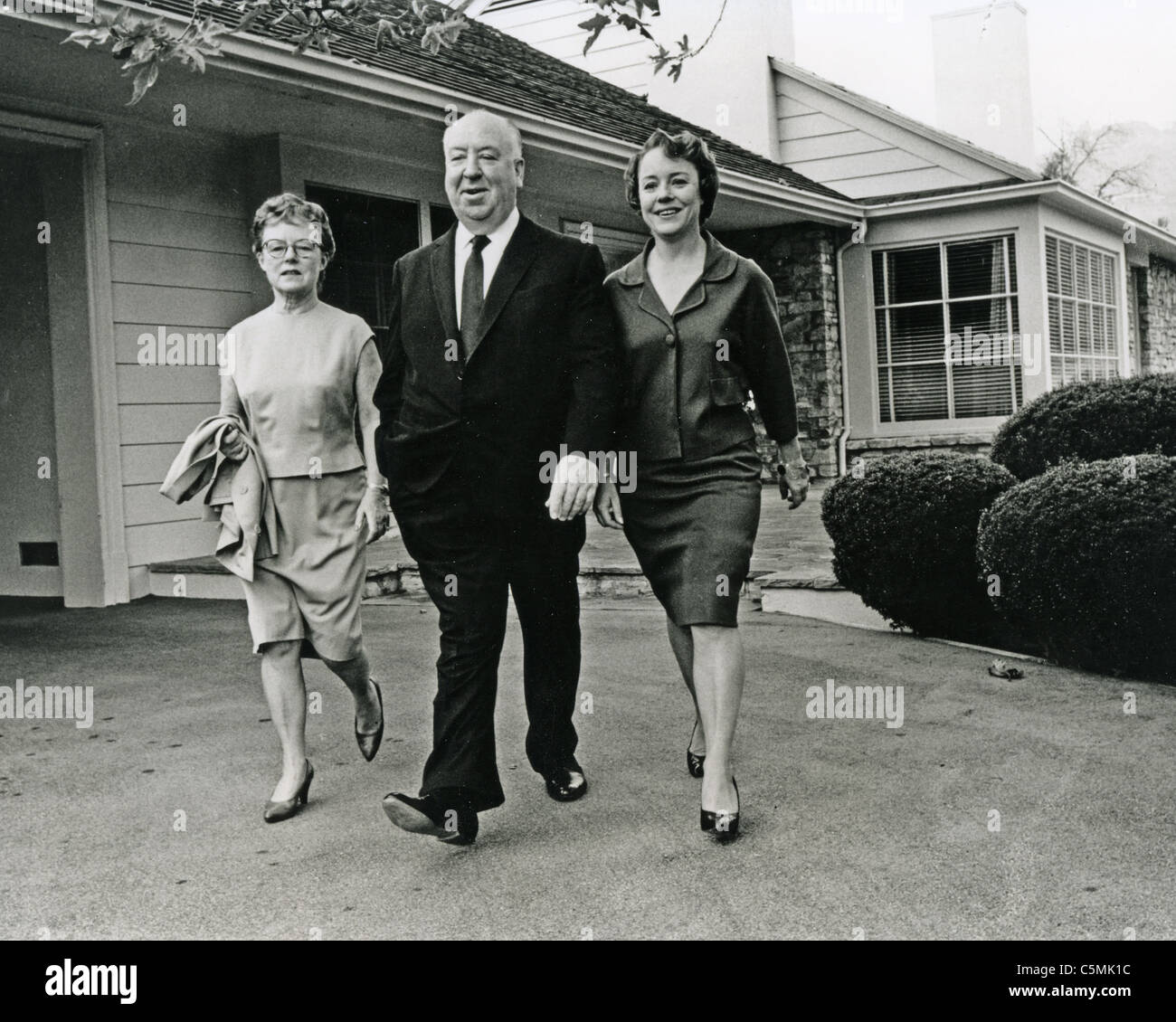
Sir Alfred Hitchcock died on April 29, 1980, at the age of 80 in his Bel Air home in Los Angeles, California. The world-renowned filmmaker passed away quietly from kidney failure following years of deteriorating health and cardiovascular complications, concluding an extraordinary six-decade career that permanently transformed the cinematic medium.
Hitchcock's passing marked the end of cinema’s classic golden age. As one of the few directors whose name and profile were universally recognized by the moviegoing public, his death resonated far beyond the Hollywood studio system. Understanding his final months—marked by failing physical health, prestigious lifetime honors, and the quiet cancellation of his final creative endeavor—provides vital context to the life and disciplined work ethic of cinema's most famous auteur.
The Circumstances of Hitchcock’s Passing in Bel Air
Alfred Hitchcock died at 9:17 a.m. on Tuesday, April 29, 1980, at his longtime residence located at 10957 Bellagio Road in the affluent Bel Air neighborhood of Los Angeles. At the time of his death, he was surrounded by his immediate family: his wife of 53 years, Lady Alma Hitchcock (née Reville), and their only child, daughter Patricia Hitchcock O'Connell.
The primary cause of death listed was renal failure, aggravated by ongoing cardiovascular disease and severe, crippling arthritis. In his final months, Hitchcock’s physical condition had deteriorated substantially:
- Cardiovascular Issues: Hitchcock was fitted with an electronic cardiac pacemaker in 1974 at Cedars-Sinai Medical Center, which stabilized his irregular heartbeat but required continuous monitoring.
- Renal Decline: Progressive kidney failure severely limited his energy and cognitive stamina during late 1979 and early 1980, necessitating ongoing physician visits at his residence.
- Mobility Impairments: Severe arthritis in his hips and knees, compounded by lifelong obesity, left him largely confined to a wheelchair or bed during the last year of his life.
- Spousal Caregiving: Lady Alma had suffered her own series of debilitating strokes in the 1970s, which deeply distressed Hitchcock and added an emotional burden to his final years.
Despite rumors of extended hospital stays immediately prior to his death, Hitchcock chose to spend his final weeks at his Bel Air home under round-the-clock nursing care and the supervision of his personal physicians. He remained conscious intermittently until his final days, slipping into quiet seclusion as his organ functions failed.
The Final Years (1976–1980): Health Battles and the Unfinished Film
Hitchcock remained an active filmmaker well past conventional retirement age. His final completed feature, Family Plot (1976), proved to be an upbeat, darkly comic caper that earned positive critical notices and modest box-office success. Following its release, Hitchcock refused to retire, maintaining his bungalow office at Universal Studios (Building 4220) and reporting to work almost daily.
The Abandonment of The Short Night
Between 1976 and 1979, Hitchcock invested his remaining creative energy into developing his planned 54th feature film, The Short Night. Adapted from Ronald Kirkbride’s novel and the real-life prison escape of British double agent George Blake, the spy thriller was intended to return the director to the espionage territory of North by Northwest and Torn Curtain, with location filming slated for Finland and England.
Hitchcock hired screenwriters James Kostelniuk, Ernest Lehman, and ultimately David Freeman to draft and refine the screenplay. However, several operational and health realities intervened:
- Strenuous Location Demands: Hitchcock’s inability to walk without assistance made the prospect of shooting an espionage thriller across frozen Finnish landscapes practically impossible.
- Creative Stagnation: Hitchcock found himself struggling with the logistical complexity of the script, obsessing over minute narrative details while acknowledging his inability to supervise a fast-paced production unit.
- Universal Studios' Intervention: In May 1979, recognizing that their flagship director could not safely manage a major motion picture shoot, Universal leadership and Hitchcock mutually agreed to shutter the production.
Hitchcock subsequently closed his production office at Universal Studios, ending a continuous commercial directing career that began during the British silent era in 1925.
Final Accolades: The AFI Life Achievement Award and Knighthood
Although Hitchcock’s physical health rapidly declined throughout 1979, his final 14 months were distinguished by two of the highest honors of his career.
The 1979 AFI Life Achievement Award
On March 7, 1979, the American Film Institute (AFI) honored Hitchcock with its 7th Life Achievement Award at the Beverly Hilton Hotel. The televised gala was attended by dozens of his legendary collaborators, including James Stewart, Ingrid Bergman, Cary Grant, Francois Truffaut, and Janet Leigh.
Despite his extreme frailty, Hitchcock delivered a poignant, witty acceptance speech. He dedicated the honor entirely to his wife and creative collaborator, Alma Reville, remarking:
"I beg permission to mention by name only four people who have given me the most affection, appreciation, and encouragement, and constant collaboration. The first of the four is an editor; the second is a scriptwriter; the third is the mother of my daughter, Pat; and the fourth is as fine a cook as ever performed miracles in a domestic kitchen. And their names are all Alma Reville."
The tribute served as a public farewell from Hollywood to its most famous cinematic icon.
Knighthood: Knight Commander of the Order of the British Empire (KBE)
In the 1980 New Year Honours list published in late December 1979, Queen Elizabeth II made Hitchcock an honorary Knight Commander of the Most Excellent Order of the British Empire (KBE). Because Hitchcock had become a naturalized United States citizen in 1956 while retaining his British status, the award recognized his monumental contribution to British and global arts.
Too frail to travel to Buckingham Palace in London, Hitchcock received the formal insignia on March 16, 1980, during a private ceremony at the British Consulate General in Los Angeles. British Consul General Montgomery presented the knighthood insignias to the director as he sat in a wheelchair, just six weeks before his death. When reporters asked why the recognition had taken so long, Hitchcock dryly replied, "I suppose it was a matter of carelessness."
Funeral Services, Cremation, and Final Resting Place
Hitchcock strictly disdained public display and ostentatious ceremonies, leaving explicit instructions regarding his post-mortem arrangements.
- Funeral Mass: A private Catholic funeral mass was held on Wednesday, April 30, 1980, at the Church of the Good Shepherd on Santa Monica Boulevard in Beverly Hills. Approximately 600 invited mourners, close friends, and industry colleagues attended.
- Absence of a Formal Eulogy: In strict compliance with Hitchcock’s personal wishes, there was no formal eulogy or public speech during the service. The service focused on the Catholic liturgy and traditional hymns.
- Cremation: Following the funeral services, his body was transported to the Chapel of the Pines Crematory in Los Angeles.
- Disposition of Ashes: Hitchcock’s cremated remains were scattered over the Pacific Ocean, ensuring that there is no public cemetery plot or headstone bearing his name.
Chronology of Alfred Hitchcock’s Final Phase (1974–1980)
The following table summarizes the key milestones, health events, and official recognitions that defined the final phase of Hitchcock’s life in Southern California:
| Date / Period | Major Milestone or Health Event | Context and Significance |
|---|---|---|
| May 1974 | Cardiac Pacemaker Surgery | Implantation at Cedars-Sinai stabilized a long-standing arrhythmia, allowing him to complete one final film. |
| April 1976 | Release of Family Plot | Hitchcock’s 53rd and final completed feature film; signaled a graceful, comic exit from theatrical directing. |
| 1977–1979 | Development of The Short Night | Worked with screenwriters James Kostelniuk, Ernest Lehman, and David Freeman at Universal Studios. |
| March 7, 1979 | AFI Life Achievement Award | Major televised gala celebrating his career; featured his widely remembered tribute to Alma Reville. |
| May 1979 | Universal Office Closure | Formally closed his production office (Building 4220), officially retiring from active filmmaking. |
| December 31, 1979 | KBE Knighthood Announcement | Designated Knight Commander of the Order of the British Empire by Queen Elizabeth II in the 1980 New Year Honours. |
| March 16, 1980 | Knighthood Investiture | Invested at the British Consulate in Los Angeles due to extreme physical frailty preventing overseas travel. |
| April 29, 1980 | Death in Bel Air (Age 80) | Died at 9:17 a.m. at his home (10957 Bellagio Road) of kidney and heart failure. |
| April 30, 1980 | Catholic Memorial Service | Funeral mass celebrated at the Church of the Good Shepherd in Beverly Hills, followed by cremation. |
Disposition of the Hitchcock Estate and Literary Properties
Hitchcock’s death initiated significant commercial, legal, and archival processes that governed his cinematic legacy and intellectual property throughout the 1980s and beyond.
The "Five Lost Hitchcocks"
During his mid-century peak at Paramount Pictures, Hitchcock negotiated an unprecedented contractual clause: after a predetermined initial release window, the distribution rights and original camera negatives for five major films reverted entirely to his personal ownership. These titles included:
- Rope (1948)
- Rear Window (1954)
- The Trouble with Harry (1955)
- The Man Who Knew Too Much (1956 remake)
- Vertigo (1958)
Because Hitchcock kept these titles in private vaults for roughly a decade to maximize their long-term residual value, they were largely unseen by the public throughout the late 1970s. Following his death, his estate, led by Lady Alma and daughter Patricia, negotiated a landmark re-licensing deal with Universal Pictures in 1983. The theatrical and home-video re-release of these "Five Lost Hitchcocks" in the early 1980s catalyzed a major critical reassessment, cementing Vertigo and Rear Window at the summit of canonical film history.
Archival Preservation
Hitchcock’s personal production records, annotated shooting scripts, correspondence, storyboards, and administrative files were subsequently preserved across two primary repositories:
- The Margaret Herrick Library: Maintained by the Academy of Motion Picture Arts and Sciences in Beverly Hills, the Alfred Hitchcock Papers contain extensive primary documentation spanning his Hollywood career.
- The British Film Institute (BFI): Houses vital collections relating to his early British silent and sound period from the 1920s and 1930s.
Enduring Impact and Historical Significance
Alfred Hitchcock's death at age 80 closed the book on an artist who effectively designed modern visual storytelling. Beyond suspense tropes, Hitchcock pioneered cinematic grammar through subjective camera placement, precision editing rhythms, and innovative acoustic design.
He operated at the unique intersection of mainstream Hollywood entertainment and serious European modernism. French New Wave critics like François Truffaut, Claude Chabrol, and Éric Rohmer had long argued that Hitchcock was not merely a commercially reliable genre director, but an auteur whose recurring motifs—innocent men falsely accused, the psychological transfer of guilt, voyeurism, and the fragility of civilized social orders—ranked him alongside the century's great literary figures. His death prompted global reflections from filmmakers worldwide, solidifying his standing as the primary architect of cinematic suspense.
Practical Guidance for Film Researchers and Historians
For biographers, academics, and cinema enthusiasts investigating Alfred Hitchcock’s final years, specific research protocols ensure access to verified historical materials:
- Examine Primary Production Records: The Alfred Hitchcock Collection at the Academy of Motion Picture Arts and Sciences Margaret Herrick Library provides original files concerning the aborted production of The Short Night, including David Freeman’s script drafts and production memos.
- Consult Contemporary Trade Press: Historical issues of Variety, The Hollywood Reporter, and the Los Angeles Times from late April and early May 1980 supply original, day-of reporting detailing his memorial attendees, commercial estate evaluations, and industry tributes.
- Review the David Freeman Memoir: Author David Freeman published The Last Days of Alfred Hitchcock (1984), which documents Hitchcock's daily professional routine at Universal Studios during 1978 and 1979, providing an eyewitness account of his physical decline and creative process.
- Explore Film Restoration Projects: Study the archival restoration reports produced during the Universal Pictures re-release campaigns between 1983 and 1996, which detail the technical state of Hitchcock’s privately held negative vaults at the time of his passing.
Frequently Asked Questions
What was the official cause of Alfred Hitchcock’s death?
Alfred Hitchcock died of renal (kidney) failure, compounded by underlying chronic heart disease and arthritis. He had been fitted with a cardiac pacemaker in 1974, but his renal function steadily declined through late 1979 and early 1980 until he passed away peacefully at his Bel Air home.
Where is Alfred Hitchcock buried?
Alfred Hitchcock does not have a physical grave or public headstone. Following his funeral mass at the Church of the Good Shepherd in Beverly Hills, his body was cremated at the Chapel of the Pines Crematory, and his ashes were scattered over the Pacific Ocean per his wishes.
What was Alfred Hitchcock’s final completed movie?
His 53rd and final completed feature film was Family Plot, released in April 1976 by Universal Pictures. Starring Karen Black, Bruce Dern, Barbara Harris, and William Devane, the film was a lighthearted, darkly comedic suspense mystery that proved commercially and critically successful.
Did Alfred Hitchcock ever win an Academy Award for Best Director?
No. Despite five competitive Academy Award nominations for Best Director (Rebecca, Lifeboat, Spellbound, Rear Window, and Psycho), Hitchcock never won a competitive Oscar. The Academy of Motion Picture Arts and Sciences did, however, award him the Irving G. Thalberg Memorial Award in 1968 for lifetime achievement.
Who inherited Alfred Hitchcock’s estate?
The primary beneficiary of his estate was his wife of 53 years, Lady Alma Hitchcock. Following Alma’s death two years later in July 1982, the estate, including valuable residual film rights and literary properties, passed to their only daughter, Patricia Hitchcock O'Connell, who managed the estate until her death in 2021.