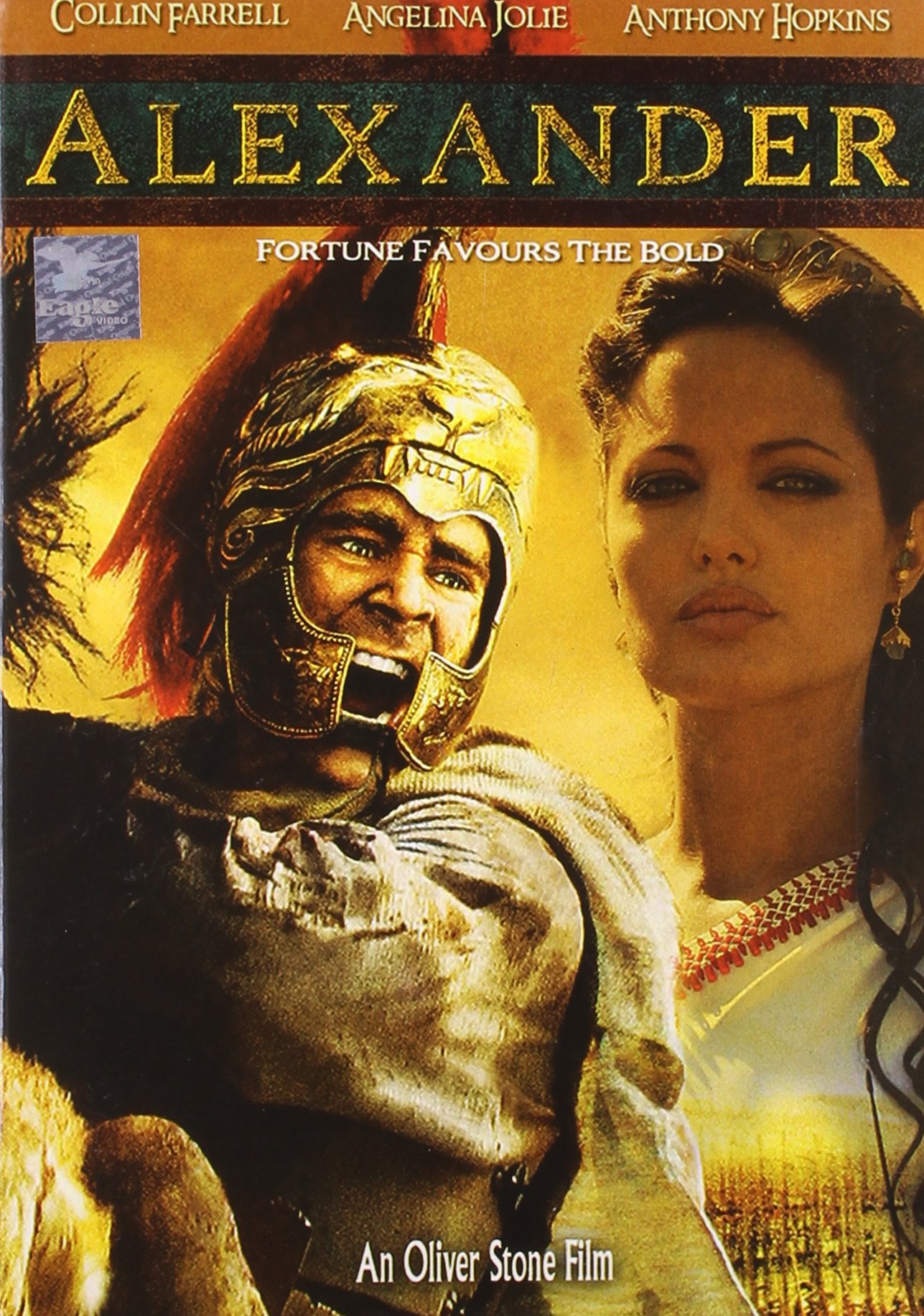
Oliver Stone’s Alexander remains one of the most ambitious and divisive historical epics in cinema history. While the 2004 theatrical release was widely criticized for its pacing and narrative choices, subsequent re-edits—particularly the "Final" and "Ultimate" cuts—have transformed the film into a dense, psychologically complex exploration of power, legacy, and the burdens of greatness.
The Evolution of an Epic: Understanding the Four Versions
To review Alexander properly in 2026, one must first clarify which movie is being discussed. Oliver Stone, a director known for his obsessive refinement of his work, released four distinct versions of the film between 2004 and 2014. Each version significantly alters the structure, tone, and character development, making "the Alexander experience" highly dependent on the edit selected.
The Theatrical Cut (2004) was a linear, traditional narrative that felt bloated yet incomplete, hampered by studio pressure to keep the runtime manageable while still hitting "epic" beats. The Director’s Cut (2005) was actually shorter, removing some scenes to increase the film's velocity, but it felt rushed. It wasn’t until Alexander Revisited: The Final Cut (2007) and the subsequent Ultimate Cut (2014) that Stone’s true vision emerged. These later versions utilized a non-linear structure, interweaving Alexander’s childhood with his Persian campaigns and his later years in Babylon and India. This structural shift transformed the movie from a standard biopic into a psychological mosaic, mirroring the fragmented and restless mind of its protagonist.
For the modern viewer, the Ultimate Cut is the definitive version. It provides the necessary breathing room for the characters’ motivations to land, particularly the influence of Alexander's parents, Philip II and Olympias. In 2026, with the benefit of high-dynamic-range (HDR) mastering and 4K restorations, the visual grandeur of these extended cuts finally matches the weight of the historical narrative.
Narrative Complexity and the Burden of Legacy
At its core, Alexander is not a film about conquest in the heroic sense; it is a film about the "Great Man" theory of history and its devastating personal costs. Stone focuses heavily on the psychological trauma inflicted by Alexander’s parents. The film positions Alexander as a man caught between the hammer of his father’s martial brutality and the anvil of his mother’s mystical, manipulative ambition.
The narrative utilizes Ptolemy (played by Anthony Hopkins) as an aged narrator looking back from his palace in Alexandria. This framing device is crucial; it establishes the film as a piece of "remembered history"—subjective, prone to myth-making, and deeply philosophical. Ptolemy’s narration allows Stone to tackle complex geopolitical ideas, such as Alexander’s dream of a unified world where East and West merge, a concept that feels increasingly relevant in the globalized context of 2026.
However, the film’s insistence on the Oedipal struggle can occasionally feel heavy-handed. The scenes between Alexander and Olympias (Angelina Jolie) are charged with a Shakespearean intensity that borders on melodrama. Yet, this is precisely what Stone was aiming for: a Greek tragedy played out on a global stage. The tragedy isn’t just that Alexander died young, but that his vision of a borderless world was fundamentally incompatible with the tribalism of his own Macedonian generals.
Evaluating the Performances: Farrell, Jolie, and Kilmer
Colin Farrell’s portrayal of Alexander was met with significant derision in 2004, largely due to his blonde wig and the decision to have the Macedonian characters speak with Irish accents. Viewed today, these criticisms seem superficial. Farrell delivers an incredibly vulnerable performance. He captures the transition from a wide-eyed youth driven by Homeric ideals to a paranoid, exhausted ruler crumbling under the weight of his own myth. He portrays Alexander as a man who is essentially a "god" to his men but a lonely, misunderstood human to himself.
Angelina Jolie, as Olympias, provides the film’s most heightened performance. Her accent is thick, her gaze predatory, and her presence looms over the entire film even when she isn't on screen. She embodies the "serpent" in Alexander’s garden, providing the psychological impetus for his flight into Asia. Val Kilmer, as Philip II, is equally transformative. His Philip is a scarred, one-eyed brute who possesses a rough wisdom and a deep-seated resentment of his son’s refinement. The tension between Kilmer and Farrell provides the film’s strongest emotional anchor.
Jared Leto’s Hephaistion is the quiet heart of the movie. While their relationship is depicted with a restraint that some 2004 audiences found confusing and others found too bold, the extended cuts make it clear: Hephaistion is the only person Alexander truly trusts. Their bond is the emotional "home" that Alexander can never return to, and Leto plays the role with a soulful, understated devotion that balances Farrell’s manic energy.
Technical Artistry: Cinematography and the Vangelis Score
Technically, Alexander remains a triumph. The cinematography by Rodrigo Prieto is masterclass-level, particularly in its use of color palettes to distinguish different geographical and emotional states. The golden hues of Macedonia contrast sharply with the dusty, scorched earth of Gaugamela and the lush, hallucinogenic greens of the Indian jungle.
One cannot discuss the film without highlighting the score by the late Vangelis. In what was one of his last great epic contributions to cinema, Vangelis combined traditional orchestral elements with synthesizers and ancient instruments. The main theme is both triumphant and melancholic, perfectly capturing the dual nature of Alexander’s life. The music doesn't just underscore the action; it provides a mythic atmosphere that elevates the film above the standard Hollywood "swords and sandals" fare.
The production design and costumes also deserve mention. Unlike many CGI-heavy films of the mid-2000s, Alexander relied heavily on practical sets, thousands of extras, and authentic-looking armor. This gives the film a tactile, "lived-in" quality that has aged far better than the digital environments of its contemporaries like 300 or Troy.
Historical Authenticity vs. Cinematic Dramatization
Oliver Stone employed renowned historian Robin Lane Fox as a consultant, and the attention to detail in the military tactics and equipment is immense. The Battle of Gaugamela is arguably the most accurate depiction of ancient warfare ever put to film. It illustrates the complexity of the Phalanx, the importance of the Companion Cavalry, and the sheer chaos of a desert battlefield where visibility is near zero.
However, Stone takes significant liberties with the timeline and geography. Several major battles (such as Issus and the Siege of Tyre) are omitted or condensed into the narrative for the sake of pacing. The film also telescopes the multi-year Indian campaign into a single sequence at the Hydaspes River.
The most controversial aspect of the film’s "history" remains its depiction of Alexander’s sexuality. While Stone was praised by some for acknowledging Alexander’s bisexuality, the film was criticized in Greece and by some conservative scholars for its interpretation. In 2026, this debate has largely settled; most modern historians agree that the concept of "sexuality" in the 4th Century BCE was vastly different from modern categories, and Stone’s depiction of a deep, likely physical bond between Alexander and Hephaistion is well within the bounds of historical plausibility.
Comparison of the Four Major Versions of Alexander
| Feature | Theatrical Cut (2004) | Director’s Cut (2005) | Final Cut (2007) | Ultimate Cut (2014) |
|---|---|---|---|---|
| Runtime | 175 Minutes | 167 Minutes | 214 Minutes | 206 Minutes |
| Structure | Linear | Linear (Faster Pace) | Non-Linear | Refined Non-Linear |
| Pacing | Slow / Uneven | Very Fast | Deliberate / Epic | Balanced / Fluid |
| Focus | Plot-driven | Action-oriented | Psychological / Character | Philosophical / Definitive |
| Narrative Depth | Moderate | Surface-level | Extremely Deep | Extremely Deep |
| Best For | Casual viewers | Completionists | History/Philosophy fans | The "Correct" Experience |
Modern Viewing in 2026: Why the Film Endures
Two decades after its release, Alexander has transitioned from a high-profile "flop" to a respected cult classic. Its endurance can be attributed to its refusal to follow the standard "hero’s journey" template. It is a messy, flawed, and occasionally brilliant film that dares to be as big and unruly as its subject.
In the 2020s, cinema has seen a resurgence of the auteur-driven epic (such as Ridley Scott’s later works or Denis Villeneuve’s Dune), and Alexander fits better into this landscape than it did in the post-9/11 era of 2004. Stone’s exploration of the "clash of civilizations" and the dangers of imperial overreach feels prescient. The film asks whether it is possible to impose "liberty" and "civilization" through conquest—a question that has dominated global discourse for the last twenty years.
The film is also a testament to the era of big-budget, R-rated filmmaking. It doesn't shy away from the brutality of war or the complexity of human desire. While it may never be a "perfect" movie, its flaws are the result of over-ambition rather than a lack of effort. It is a film that demands multiple viewings to fully grasp its layers of meaning.
Frequently Asked Questions (FAQ)
Which version of Alexander should I watch first?
You should watch the Ultimate Cut (2014). It is the most polished version and uses a non-linear structure that makes much more sense of the characters’ psychological development. The Theatrical Cut is generally considered the weakest version.
Is the movie historically accurate?
In terms of military tactics, costuming, and general atmosphere, it is highly accurate. However, it condenses a 13-year campaign into a few hours, skips several major battles, and interprets the internal psychological state of historical figures through a modern, Freudian lens.
Why was the film so poorly received in 2004?
The initial backlash was due to several factors: the long runtime, the non-traditional structure, Colin Farrell’s appearance, and the controversy surrounding the depiction of Alexander’s sexuality. Many audiences expected an action-heavy film like Gladiator and were disappointed by a philosophical character study.
What is the significance of the eagle in the movie?
The eagle is a recurring motif representing Zeus, whom Alexander believed was his true father. It serves as a visual metaphor for Alexander's ambition and his "god-like" perspective, appearing at crucial moments of decision-making and battle.
Is the Vangelis score available for the extended cuts?
Yes, the Vangelis score is integral to all versions, though the extended cuts feature more of the atmospheric and ambient tracks that were trimmed for the theatrical release.
Final Recommendation: A Journey Worth Taking
For those who enjoy historical epics that prioritize theme and character over simple action, Alexander is essential viewing. It is recommended to approach the film not as a documentary, but as a sweeping, operatic tragedy. Set aside a full evening for the Ultimate Cut, and pay close attention to the parallel development of Alexander’s childhood and his final months in Babylon. The film's final act, as the empire begins to fracture from within, is a haunting meditation on how the very qualities that allow a person to change the world can also lead to their destruction.
The film remains a bold, uncompromising piece of art. Even in 2026, there are very few movies that attempt to capture the sheer scale of ancient history with such raw, psychological intensity. Whether you love it or hate it, you are unlikely to forget it.