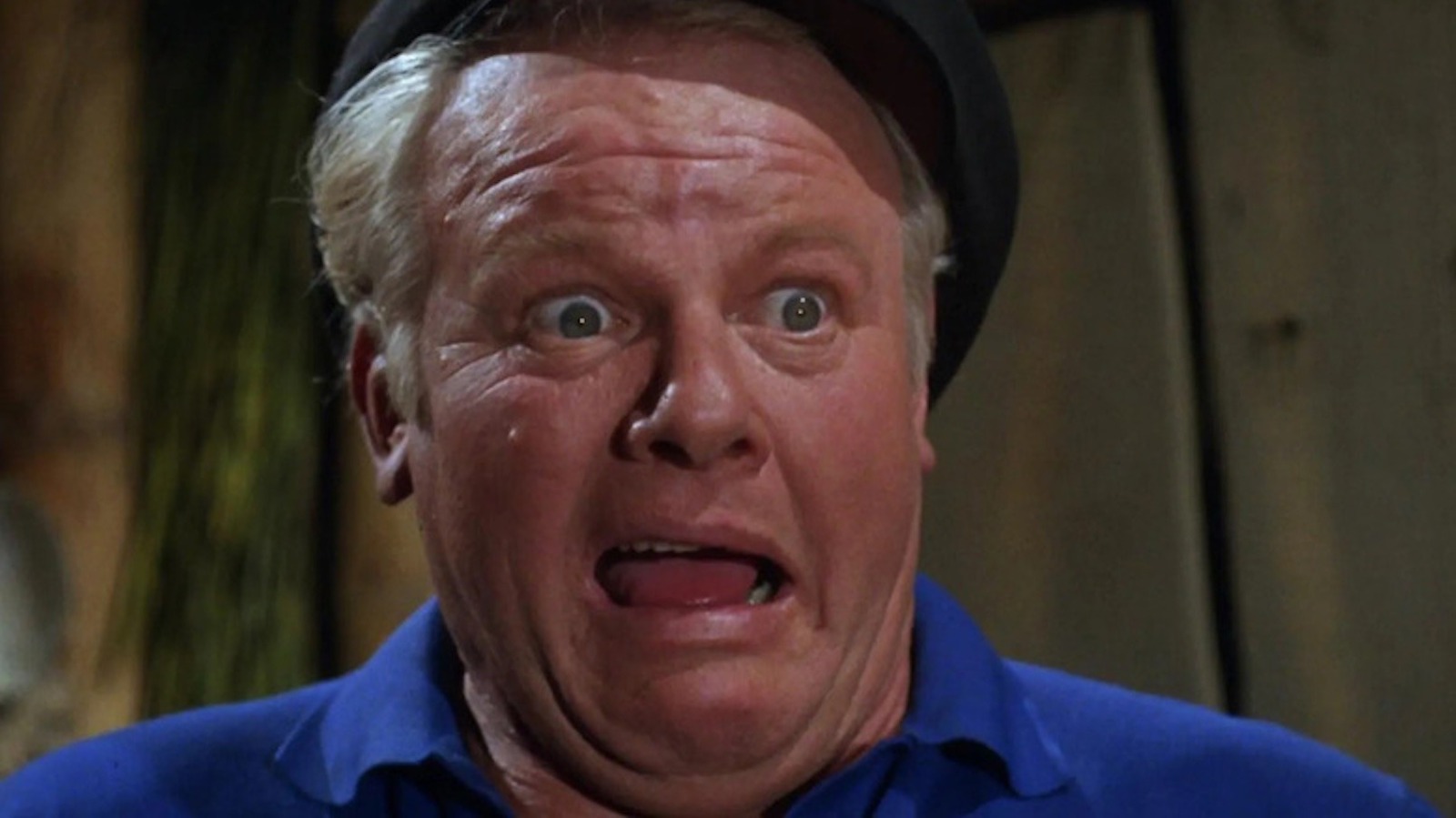
Alan Hale Jr. was a prolific American character actor whose career spanned over five decades, encompassing more than 200 credits across film and television. While globally recognized as the "Skipper" from the 1960s sitcom Gilligan's Island, his body of work includes significant contributions to the Golden Age of Hollywood Westerns, military dramas, and early television procedurals.
The Professional Evolution of Alan Hale Jr.
To understand Alan Hale Jr.’s place in entertainment history, one must first distinguish him from his father, Alan Hale Sr., a legendary character actor and frequent collaborator of Errol Flynn. Born Alan Hale MacKahan, the younger Hale initially performed under the name Alan Hale Jr. to honor his father’s legacy, though he eventually dropped the "Jr." after his father's death in 1950.
His career is defined by a transition from a rugged, dependable supporting player in feature films to a beloved, jovial leading man in the television era. Standing six-foot-two with a powerful build, Hale possessed a physical presence that allowed him to play both intimidating antagonists and warm-hearted sidekicks. This versatility ensured him steady work from his debut in the late 1930s until his final roles in the late 1980s.
Early Film Career and the Western Genre
Alan Hale Jr. began his cinematic journey during the height of the studio system. His early roles often saw him cast in "tough guy" parts, frequently in Westerns or war films. His physical stature made him a natural fit for the cavalrymen, outlaws, and soldiers that dominated the box office in the 1940s and 1950s.
In 1950, he appeared in the classic Western The Gunfighter alongside Gregory Peck, portraying a role that showcased his ability to hold the screen with established leading men. Throughout this decade, he appeared in numerous high-profile projects, including The West Point Story (1950) and The True Story of Jesse James (1957). Unlike many of his contemporaries who struggled with the transition from film to the burgeoning medium of television, Hale embraced the new format early, recognizing its potential for consistent employment.
Pioneering Television: From Biff Baker to Casey Jones
Before he ever set foot on the S.S. Minnow, Alan Hale Jr. was already a television star. In 1952, he took the lead in Biff Baker, U.S.A., an espionage series where he played a businessman traveling the world with his wife, getting caught up in Cold War intrigue. This role was a significant departure from his Western roots, proving he could lead a series with charisma and poise.
However, his most significant pre-Gilligan television success was Casey Jones (1957–1958). In this series, Hale played the legendary locomotive engineer. The show was a hit with younger audiences and solidified Hale’s image as a dependable, fatherly, and heroic figure. His performance as Casey Jones utilized his physical strength and booming voice, traits that would later be repurposed for comedic effect in his most famous role.
The Gilligan's Island Era: Defining the Skipper
In 1964, Alan Hale Jr. was cast as Jonas Grumby, better known as "The Skipper," in the CBS sitcom Gilligan's Island. The casting process for the Skipper was rigorous; the show’s creator, Sherwood Schwartz, needed an actor who could be physically imposing enough to command a ship, yet tender enough to treat the bumbling Gilligan (Bob Denver) like a younger brother.
Hale famously won the role after a long day of screen tests with other actors. According to television lore, Hale was filming a movie in Utah when he was asked to test. He reportedly hitchhiked to an airport, flew to Los Angeles, completed the test, and flew back to the movie set without the film's producers ever knowing he was gone.
The Dynamics of the "Little Buddy" Relationship
The chemistry between Hale and Bob Denver became the emotional anchor of the show. Hale’s comedic "slow burn"—the act of looking directly into the camera in exasperation after a Gilligan blunder—became a hallmark of the series. Despite the physical slapstick, which often involved Hale hitting Denver with his cap or being the victim of a falling coconut, Hale insisted that the Skipper’s frustration always come from a place of love. This nuance prevented the character from becoming a mere bully and instead made him one of the most endearing figures in sitcom history.
Hale’s commitment to the role was legendary. During the filming of the episode "Waiting for Watubi," Hale fell from a coconut tree and broke his arm. He didn't tell anyone on set because he didn't want to delay production. He filmed the rest of the week’s scenes, including those requiring him to lift heavy props, before seeking medical attention.
Post-Gilligan Career and Typecasting
When Gilligan's Island was canceled in 1967, Hale faced the challenge of severe typecasting. To the American public, he was the Skipper. Rather than resisting this association, Hale leaned into it. He frequently appeared in public wearing his trademark Skipper's hat and opened a restaurant, Alan Hale's Lobster Barrel, where he would greet fans in character.
His later television work consisted largely of guest appearances on the most popular shows of the 1970s and 1980s. He appeared in multiple episodes of Gunsmoke, Bonanza, The Andy Griffith Show, and The Love Boat. In many of these roles, producers played on his "jolly giant" persona, often casting him as a character with a hidden strength or a boisterous personality.
Filmography and Notable Television Appearances
The following table highlights key milestones in Hale’s career, showcasing the breadth of his work across different genres.
| Year | Title | Role | Format | Significance |
|---|---|---|---|---|
| 1942 | Wake Island | Sightsetter | Film | Early uncredited role in a major war film. |
| 1950 | The Gunfighter | Eddie | Film | High-profile Western with Gregory Peck. |
| 1952 | Biff Baker, U.S.A. | Biff Baker | TV Series | His first leading role in a television series. |
| 1957 | Casey Jones | Casey Jones | TV Series | Solidified his status as a TV leading man. |
| 1964 | Gilligan's Island | The Skipper | TV Series | The defining role of his professional life. |
| 1970 | The Andy Griffith Show | Jeff Pruitt | TV Series | Memorable guest turn as a mountain man looking for a wife. |
| 1978 | Rescue from Gilligan's Island | The Skipper | TV Movie | First of three highly-rated reunion specials. |
| 1987 | Back to the Beach | The Skipper | Film | A meta-cameo alongside Bob Denver. |
Technical Mastery and Acting Style
Hale was often categorized as a "physical actor," but this description undersells his technical proficiency. His background in the final years of the studio system taught him the importance of hitting marks and understanding camera angles—skills that were essential for the tight filming schedules of 1960s television.
His comedic timing was built on his ability to play the "straight man" to Bob Denver’s "funny man." In comedy, the straight man is often the more difficult role, as it requires the actor to provide the necessary tension for the joke to land. Hale’s ability to transition from a booming command to a look of sheer, silent defeat allowed the show’s absurd plots to feel grounded in a recognizable human emotion.
Professional Impact and Public Persona
By 2026, the legacy of Alan Hale Jr. is viewed not just through the lens of nostalgia, but as a study in career longevity and brand management. Long before "personal branding" was a common industry term, Hale understood that his identity was inextricably linked to his most famous character.
His willingness to embrace the Skipper persona made him a beloved figure in the early days of fan conventions. He was known for his genuine kindness toward children, often spending hours talking to fans and signing autographs. This goodwill extended to his peers; he was widely regarded as one of the most professional and easy-to-work-with actors in Hollywood, a reputation that kept him employed for fifty years.
FAQ: Frequently Asked Questions about Alan Hale Jr.
Did Alan Hale Jr. serve in the military?
Yes, Alan Hale Jr. served in the United States Coast Guard during World War II. His real-life maritime experience likely contributed to the authenticity and comfort he displayed when filming scenes involving boats and naval procedures, particularly on the set of Gilligan's Island.
How many movies did Alan Hale Jr. make with his father?
While both were incredibly active in Hollywood, they rarely appeared on screen together. One notable instance is the 1947 film It Happened on Fifth Avenue, where both Hales had roles. Generally, their careers followed different trajectories, with the elder Hale focusing on prestigious dramas and the younger Hale finding his niche in Westerns and television.
Was Alan Hale Jr. the first choice for the Skipper?
He was not the only actor considered, but he was the first choice of creator Sherwood Schwartz after the initial pilot. The original pilot for Gilligan's Island (which did not air until decades later) featured a slightly different cast, but Hale's audition for the series proper was so convincing that Schwartz stopped looking for other actors immediately after seeing him interact with Bob Denver.
What was the cause of Alan Hale Jr.'s death?
Alan Hale Jr. passed away on January 2, 1990, at the age of 68. The cause of death was thymus cancer. In accordance with his wishes, his ashes were scattered at sea, a fitting tribute to a man who spent so much of his career associated with the ocean.
Did he ever win an Emmy for Gilligan's Island?
Despite the immense popularity of the show and his iconic performance, Hale never won an Emmy for his role as the Skipper. During its original run, Gilligan's Island was often dismissed by critics as "low-brow" humor, and the Academy of Television Arts & Sciences rarely recognized broad sitcoms of that era. However, his work has since been lauded for its technical precision and enduring cultural impact.
Recommendation for Further Exploration
For those looking to appreciate the full range of Alan Hale Jr. beyond his comedic work, the best starting point is his work in the mid-1950s. Viewing episodes of Casey Jones provides a clear look at his capabilities as a dramatic lead. Additionally, his supporting roles in 1950s Westerns like The Gunfighter offer a glimpse into his early career as a stalwart of the silver screen. In 2026, many of these titles are available through classic film streaming services and digital archives, preserving the work of a man who was much more than just a captain of a stranded charter boat.