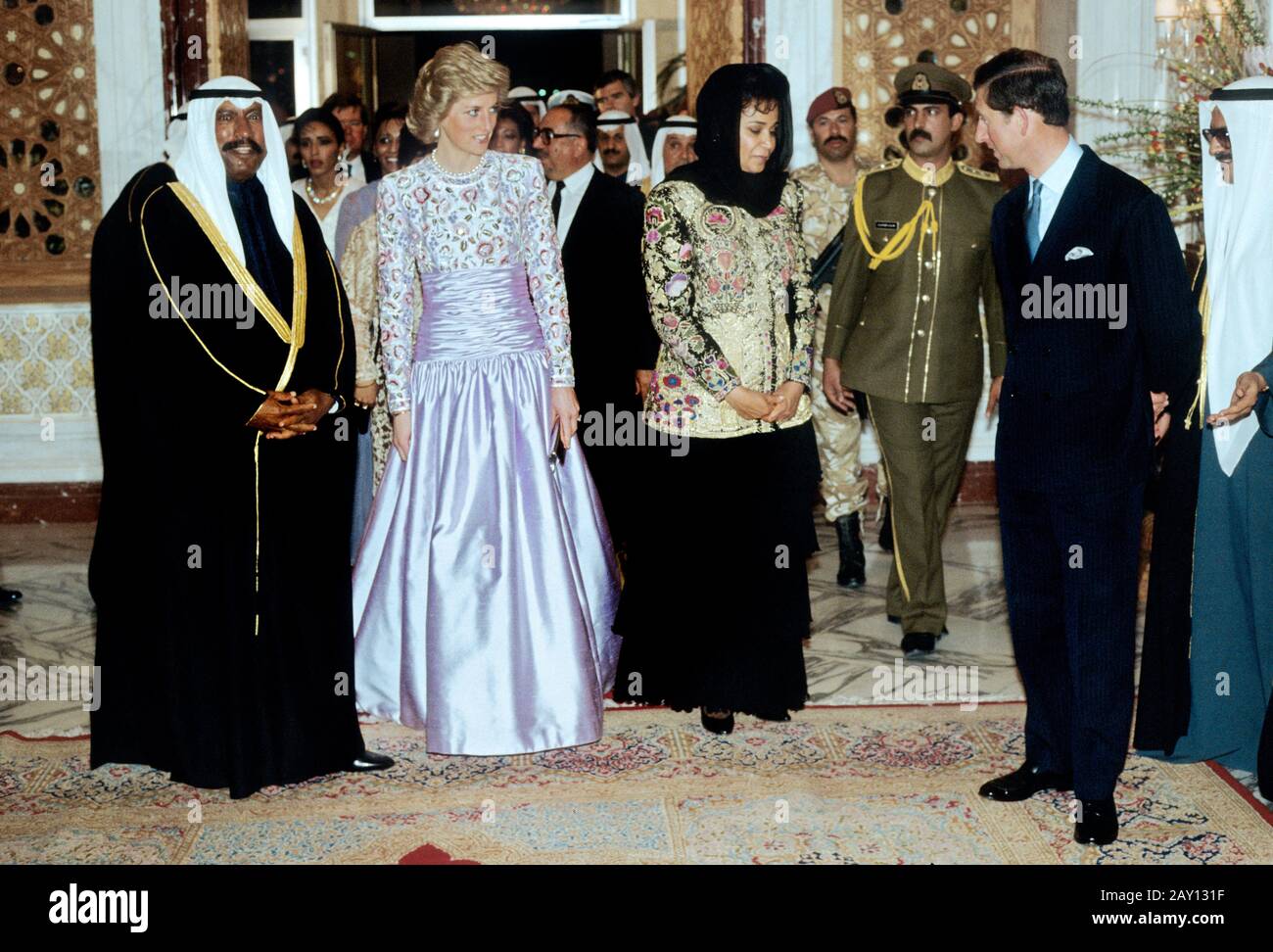
The Al Sabah family is the ruling dynasty of the State of Kuwait, a position they have held since the formal establishment of their leadership in 1752. As one of the most influential political entities in the Middle East, the family operates within a unique constitutional monarchy that balances traditional tribal authority with a robust, often contentious, parliamentary system. Their governance is defined by the management of vast sovereign wealth and a strategic role in global energy markets.
For those seeking to understand the socio-political landscape of the Arabian Gulf in 2026, the Al Sabah family represents a vital case study in institutional continuity and modernization. This article explores their historical origins, the intricacies of the Kuwaiti succession system, the family's role in the national economy, and their ongoing relationship with the Kuwaiti people through the National Assembly.
Historical Origins and the Rise of the Al Sabah
The narrative of the Al Sabah family begins with the migration of the Bani Utbah tribe from the Nejd region of central Arabia. In the early 18th century, several clans, including the Al Sabah, Al Khalifa (who later ruled Bahrain), and Al Jalahma, moved toward the shores of the Persian Gulf in search of better economic opportunities and relief from drought.
By approximately 1716, these clans settled in what is now Kuwait City. At the time, the area was a small fishing village under the nominal influence of the Bani Khalid tribe. However, the settlers’ proficiency in maritime trade, pearling, and shipbuilding quickly transformed the settlement into a significant regional port.
The Social Contract of 1752
The Al Sabah’s rise to power was not a product of conquest, but rather a communal consensus—a historical "social contract" that remains a point of pride in Kuwaiti political discourse. In 1752, the local merchants and tribal elders selected Sheikh Sabah bin Jaber (Sabah I) to handle administrative affairs, diplomacy, and security.
In exchange for his leadership, the merchant families agreed to provide the necessary financial support through taxes on trade and pearling. This arrangement established a dual-pillar system: the Al Sabah provided political stability and protection, while the merchant class drove the economy. This early interdependence laid the groundwork for the consultative nature of Kuwaiti politics that persists in 2026.
Mubarak the Great and British Protection
The most pivotal figure in the family’s modern history is Sheikh Mubarak Al-Sabah, known as "Mubarak the Great" (reigned 1896–1915). Facing threats from the Ottoman Empire and regional rivals, Mubarak signed an agreement with Great Britain in 1899. This treaty turned Kuwait into a British protectorate, ensuring the Al Sabah’s autonomy from the Ottomans in exchange for British control over Kuwait’s foreign policy.
Mubarak’s reign saw the modernization of the state’s administrative apparatus and the formalization of the borders. His descendants form the two main branches of the family—the Al-Jaber and the Al-Salim—which have historically alternated in the role of Emir.
The Constitutional Framework of Al Sabah Rule
Unlike many of its neighbors in the Gulf Cooperation Council (GCC), Kuwait operates under a formal constitution, promulgated in 1962. This document defines the Al Sabah’s powers and limits, creating a hybrid system that blends hereditary rule with democratic elements.
The Role of the Emir
The Emir is the Head of State and is considered "immune and inviolable" under Article 54 of the Constitution. His powers include:
- Appointing the Prime Minister: While the Emir has the final say, the choice is often influenced by the political climate within the National Assembly.
- Commander-in-Chief: The Emir holds supreme authority over the armed forces.
- Legislative Authority: The Emir can dissolve the National Assembly, though he must call for new elections within two months. He also has the power to veto legislation, though the Assembly can override a veto with a two-thirds majority.
The Crown Prince and Succession
Succession within the Al Sabah family is governed by the Constitution and the Inheritance of the Emirate Law. To become Emir, a candidate must be a descendant of Mubarak Al-Sabah.
The process of naming a Crown Prince is a critical moment for the family. The Emir must nominate a successor within one year of his accession. This nomination must then be approved by a majority vote in the National Assembly. If the Assembly rejects the nominee, the Emir must submit three other names from the descendants of Mubarak Al-Sabah, and the Assembly chooses one. This requirement for parliamentary approval is a unique check on the Al Sabah's power, ensuring that the chosen successor has broad national legitimacy.
Understanding the Al-Jaber and Al-Salim Branches
For much of the 20th century, the Al Sabah family maintained internal stability through an informal alternation between the Al-Jaber and Al-Salim branches. This tradition was designed to prevent any single lineage from monopolizing power.
| Branch | Primary Ancestor | Notable Rulers |
|---|---|---|
| Al-Jaber | Sheikh Jaber Al-Mubarak | Sheikh Ahmad Al-Jaber, Sheikh Jaber Al-Ahmad, Sheikh Sabah Al-Ahmad, Sheikh Nawaf Al-Ahmad, Sheikh Mishal Al-Ahmad |
| Al-Salim | Sheikh Salim Al-Mubarak | Sheikh Abdullah Al-Salim (Father of the Constitution), Sheikh Sabah Al-Salim, Sheikh Saad Al-Abdullah |
In recent years, the Jaber branch has held the Emirate for several consecutive terms. This shift began after the brief reign of Sheikh Saad Al-Abdullah (Al-Salim) in 2006, who abdicated due to health reasons. Since then, the leadership has remained within the Al-Jaber line, leading to discussions within the family and the public regarding the future balance of power and the eventual inclusion of the younger generation of royals in top-tier leadership roles.
Key Figures and Current Leadership in 2026
As of 2026, the leadership of the Al Sabah family continues to focus on reform, economic diversification, and maintaining regional neutrality.
Sheikh Mishal Al-Ahmad Al-Jaber Al-Sabah
Following the passing of Sheikh Nawaf in late 2023, Sheikh Mishal Al-Ahmad ascended to the throne. His reign has been characterized by a "firm hand" approach to governance. Having spent decades in the security apparatus—specifically leading the Kuwait National Guard—Sheikh Mishal has prioritized state discipline, anti-corruption measures, and the streamlining of government bureaucracy.
In 2026, his focus remains on "Kuwait Vision 2035," a strategic roadmap intended to transform the country into a financial and commercial hub. Under his guidance, the Al Sabah family has sought to de-escalate the frequent gridlock between the executive branch (the cabinet) and the legislative branch (parliament) to expedite essential infrastructure projects.
The Next Generation of Al Sabah
The year 2026 marks a period of transition as younger members of the family move into more prominent administrative roles. While the top positions—Emir, Crown Prince, and Prime Minister—have traditionally been held by the elders, there is increasing pressure to integrate tech-savvy and Western-educated younger royals into the Council of Ministers and the management of sovereign wealth funds. These figures are crucial in bridging the gap between the traditional values of the dynasty and the aspirations of Kuwait’s youthful population.
Economic Stewardship: Managing the Future Generations Fund
One of the Al Sabah family’s most significant responsibilities is the stewardship of Kuwait’s enormous oil wealth. Kuwait holds roughly 6% of the world’s proven oil reserves, and the family oversees the Kuwait Investment Authority (KIA), the world’s oldest sovereign wealth fund.
The KIA and the Future Generations Fund
The KIA manages the General Reserve Fund and the Future Generations Fund (FGF). By law, a percentage of Kuwait's annual oil revenue is diverted into the FGF, which is intended to provide for the nation once oil reserves are depleted. In 2026, the KIA’s assets are estimated to exceed $900 billion, making it one of the most powerful institutional investors globally.
The Al Sabah family’s role in the KIA is both protective and strategic. They must ensure that the fund remains insulated from short-term political spending demands from the National Assembly while also using it to invest in the domestic "New Kuwait" initiatives. This includes:
- Silk City (Madinat al-Hareer): A massive development project in the north intended to link Kuwait to China's Belt and Road Initiative.
- Renewable Energy: Shifting the domestic energy mix to include solar and wind power to preserve more oil for export.
- Digital Transformation: Investing in AI and fintech to modernize Kuwait's banking sector.
The Al Sabah and the National Assembly: A Delicate Balance
The relationship between the Al Sabah family and the Majlis al-Umma (National Assembly) is the defining feature of Kuwaiti politics. Unlike other Gulf monarchs, the Al Sabah must contend with a 50-member parliament that has the power to question ministers, block budgets, and pass "no-confidence" motions.
Frequent Dissolutions and Political Stability
The 2020s have seen a cycle of parliamentary dissolutions and re-elections. The Al Sabah family often finds itself at odds with populist MPs who demand higher public spending or increased subsidies. Conversely, the government, led by the family, often pushes for fiscal reforms, such as the introduction of Value Added Tax (VAT) and the reduction of the public sector wage bill.
In 2026, the family’s strategy has shifted toward more proactive engagement. Rather than merely reacting to parliamentary opposition, the Al Sabah-led government has focused on "clear communication" of economic realities, attempting to build a broader coalition of support for the Vision 2035 reforms.
The Diwaniya Culture
A critical tool for the Al Sabah in maintaining their connection to the populace is the Diwaniya. These are traditional social gatherings where Kuwaiti men (and increasingly women in separate or mixed forums) meet to discuss politics, business, and social issues. Members of the Al Sabah family frequently visit these gatherings, providing a direct line of communication between the ruling house and the citizens. This accessibility helps the family gauge public sentiment and resolve grievances outside of the formal political apparatus.
Foreign Policy: The Al Sabah as Regional Mediators
On the international stage, the Al Sabah family has cultivated a reputation as the "diplomatic bridge" of the Middle East. This legacy was pioneered by the late Sheikh Sabah Al-Ahmad, who was known as the "Dean of Arab Diplomacy."
In 2026, this policy of neutrality remains the cornerstone of Kuwaiti foreign relations. The Al Sabah family focuses on:
- GCC Cohesion: Acts as a neutral party in disputes between other Gulf states (e.g., Saudi Arabia and Qatar).
- Humanitarian Leadership: Kuwait continues to be a leading donor for international aid, particularly in conflict zones like Syria and Yemen.
- Balanced Relations: Maintaining strong security ties with the United States while building deep economic partnerships with China and the European Union.
Timeline of Recent Al Sabah Leadership and Milestones
| Year | Milestone/Event | Impact on the Family |
|---|---|---|
| 1961 | Independence from Britain | Transition from protectorate to fully sovereign state under Sheikh Abdullah Al-Salim. |
| 1962 | Promulgation of the Constitution | Defined the legal limits of Al Sabah rule and created the National Assembly. |
| 1990 | Iraqi Invasion | The family led the government-in-exile, securing international support for liberation. |
| 2006 | Succession Crisis | The National Assembly voted to remove Sheikh Saad (Al-Salim) due to ill health, marking a shift to Jaber branch dominance. |
| 2020 | Accession of Sheikh Nawaf | A period focused on domestic reconciliation and pardoning political exiles. |
| 2023 | Accession of Sheikh Mishal | Shift toward stricter governance, economic reform, and anti-corruption. |
| 2026 | Implementation of Vision 2035 | Major infrastructure milestones reached under the family's direct oversight. |
FAQ: Common Questions About the Al Sabah Family
Is the Al Sabah family the wealthiest in the world?
While the Al Sabah family collectively oversees one of the world's largest sovereign wealth funds (the KIA), their personal wealth is distinct from the state's assets. While they are certainly among the wealthiest families globally, their primary influence comes from their control over the state's economic policy and the Future Generations Fund rather than private liquid assets alone.
How does the Al Sabah family choose the next Emir?
Succession is not purely primogeniture (father to eldest son). It is based on the Inheritance of the Emirate Law. The Emir must be a descendant of Mubarak Al-Sabah. The family council usually reaches a consensus on the most capable candidate, who is then nominated by the Emir as Crown Prince and must be confirmed by the National Assembly.
Can a woman from the Al Sabah family rule Kuwait?
Under the current constitution and the 1964 Inheritance Law, the rulership is restricted to the male descendants of Mubarak Al-Sabah. While women in the Al Sabah family hold high-ranking positions in business, diplomacy, and education, they do not currently have a path to the Emirate or the Crown Prince position.
What is the Al Sabah family’s role in everyday Kuwaiti life?
Beyond formal governance, the family is deeply embedded in the social fabric. They patronize arts, sports, and charitable organizations. Their presence at weddings, funerals, and Diwaniyas is a standard expectation of Kuwaiti social life, reinforcing the tribal and personal bonds that underpin their political legitimacy.
How has the family responded to calls for a "Full Parliamentary System"?
Some political factions in Kuwait advocate for a system where the Prime Minister is chosen from the elected majority in parliament rather than being appointed by the Emir. The Al Sabah family has generally resisted this, arguing that an appointed Prime Minister serves as a necessary neutral arbiter in a society with deep sectarian and tribal divisions.
Practical Guidance: Engaging with Kuwaiti Institutions
For businesses or diplomats engaging with Kuwait in 2026, understanding the Al Sabah hierarchy is essential. Projects of national significance usually require the blessing of the "Amiri Diwan"—the Emir’s royal court.
- Respect Protocol: When dealing with members of the family, strict adherence to formal titles (Sheikh/Sheikha) and traditional greetings is expected.
- Acknowledge the Dual System: Never assume that a royal decree is the final word; most significant economic changes must also navigate the National Assembly.
- Long-term Relationship Building: The Al Sabah value loyalty and long-term commitment. Success in Kuwait is often built on years of personal networking within the family and the merchant class.
The Al Sabah family continues to be the stabilizing force of Kuwait. In 2026, they face the dual challenge of transitioning to a post-oil economy while maintaining the delicate social contract that has kept them in power for nearly three centuries. Their ability to adapt to the demands of a modern, vocal electorate while preserving their traditional role as "the father of the people" will determine Kuwait’s trajectory for the remainder of the 21st century.