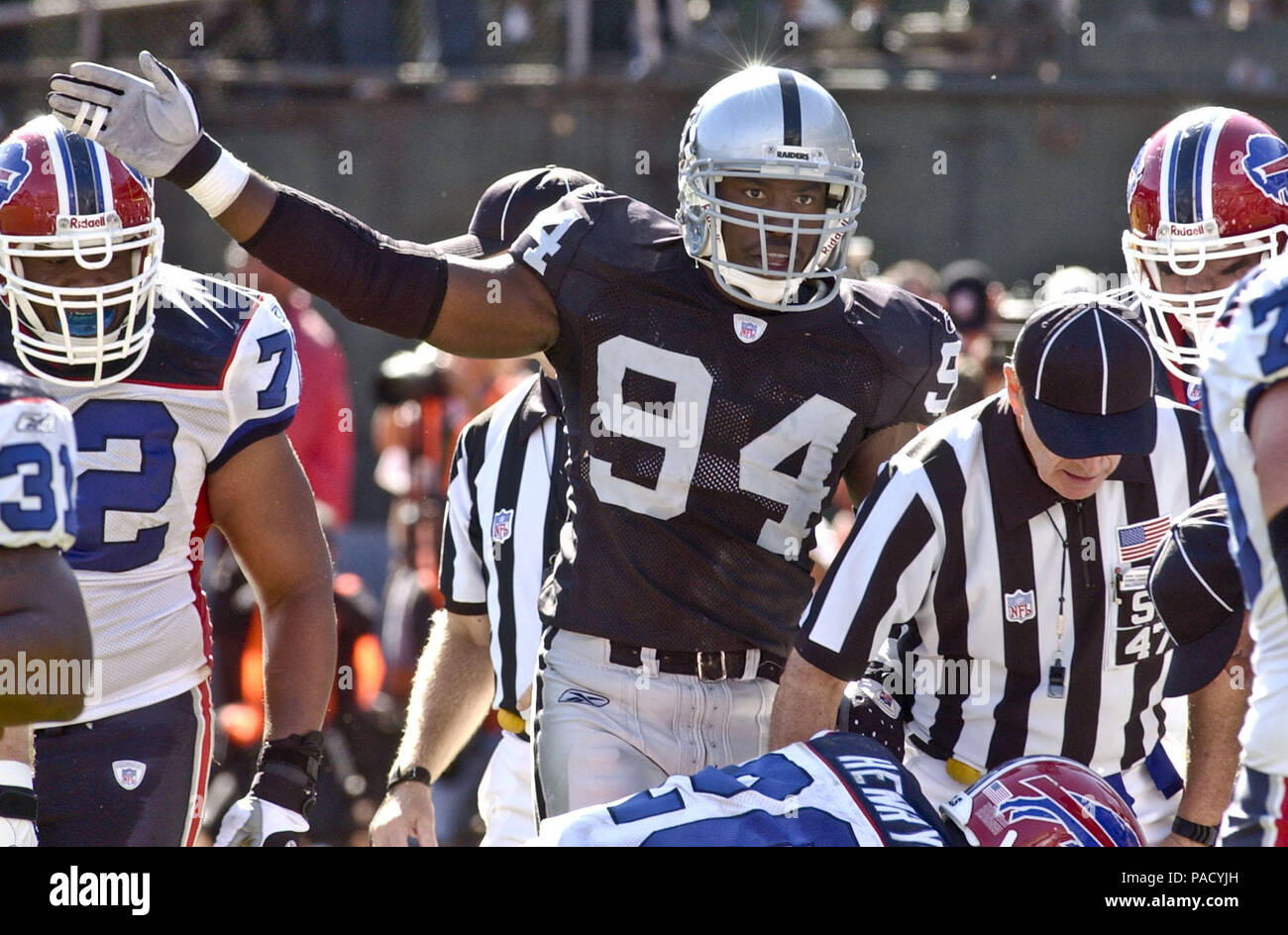
Akbar Gbajabiamila played five seasons in the NFL as a defensive end and linebacker from 2003 to 2007. After entering the league as an undrafted free agent with the Oakland Raiders, he transitioned into a high-profile media career, currently serving as a prominent host on American Ninja Warrior and The Talk as of 2026.
The Collegiate Foundation at San Diego State University
Before his professional debut, Akbar Gbajabiamila was a standout athlete at San Diego State University (SDSU). Playing for the Aztecs, he developed the physical tools and tactical intelligence that would eventually catch the eyes of NFL scouts. During his time at SDSU, he was known for his explosive off-the-line speed and a frame—standing 6'6" and weighing approximately 263 pounds—that was ideal for the hybrid defensive roles emerging in the early 2000s.
His collegiate career was marked by consistent growth. Unlike many blue-chip prospects who are highly touted from their freshman year, Gbajabiamila was a "developmental" success story. He utilized his time in the Mountain West Conference to refine his hand-fighting techniques and gap discipline. By his senior year, he had established himself as a reliable edge rusher, though he remained under the radar of many national draft analysts. This underdog status at the collegiate level would later define his "grinder" mentality in the professional ranks.
Entering the NFL: The Undrafted Free Agent Journey
The 2003 NFL Draft passed without Akbar Gbajabiamila hearing his name called. While being undrafted is often a career-ender for many aspiring athletes, for Gbajabiamila, it served as a catalyst. He signed as an undrafted free agent (UDFA) with the Oakland Raiders, a team that was just a year removed from a Super Bowl appearance.
The Oakland Raiders Era (2003–2005)
Joining the Raiders in the early 2000s meant entering one of the most intense locker room cultures in professional sports. Under the ownership of Al Davis, the Raiders valued "speed and length," two attributes Gbajabiamila possessed in abundance.
During his three-year tenure in Oakland, he defied the odds by not only making the 53-man roster but also contributing significantly on the field. In his rookie season (2003), he appeared in 13 games, recording his first professional sack. His role was primarily that of a situational pass rusher and a core special teams player. The ability to play multiple positions—sliding between defensive end in a 4-3 scheme and an outside linebacker—made him a valuable "swing" player for the Raiders' defensive coordinators.
By 2005, his final year in Oakland, he had become a consistent presence in the rotation. His time with the Raiders provided the foundation for his professional reputation: a high-motor defender who could execute complex defensive assignments under pressure.
Mid-Career Transitions: Chargers and Dolphins
Following his stint in Oakland, Gbajabiamila’s career took him to two other franchises, where he faced the typical volatility of a non-star NFL veteran.
San Diego Chargers (2006)
In 2006, he returned to the city where he played his college ball, signing with the San Diego Chargers. The mid-2000s Chargers were a powerhouse, featuring legends like LaDainian Tomlinson and Junior Seau. In this environment, Gbajabiamila was tasked with providing depth to a defensive unit that was among the best in the league. While his statistical output was modest, his veteran presence in the locker room and his proficiency in kickoff and punt coverage units kept him on the active roster for 10 games that season.
Miami Dolphins (2007)
His final active season in the NFL took place with the Miami Dolphins in 2007. This was a difficult year for the franchise, which struggled to a 1-15 record. For an aging veteran like Gbajabiamila, playing on a struggling team presented both challenges and opportunities. He appeared in 13 games that year, starting two of them. He recorded a career-high in solo tackles during his time in Miami, proving that he could still compete at the highest level despite the team's overall struggles.
Comparing the Gbaja-Biamila Brothers
It is impossible to discuss Akbar’s NFL career without mentioning his brother, Kabeer Gbaja-Biamila. Kabeer enjoyed a legendary career with the Green Bay Packers, eventually being inducted into the Packers Hall of Fame.
The dynamic between the two brothers was one of mutual support rather than sibling rivalry. While Kabeer was a Pro Bowl-level specialist known for high sack totals, Akbar was the versatile "utility" defender. The "Gbaja-Biamila" name became synonymous with Nigerian-American excellence in the NFL during the 2000s. Akbar often credited Kabeer’s success as a blueprint for his own professional conduct, emphasizing the importance of film study and off-season conditioning.
| Year | Team | Games Played | Total Tackles | Sacks | Forced Fumbles |
|---|---|---|---|---|---|
| 2003 | Oakland Raiders | 13 | 7 | 1.0 | 0 |
| 2004 | Oakland Raiders | 14 | 12 | 1.0 | 0 |
| 2005 | Oakland Raiders | 14 | 12 | 0.0 | 0 |
| 2006 | San Diego Chargers | 10 | 2 | 0.0 | 0 |
| 2007 | Miami Dolphins | 13 | 11 | 0.0 | 0 |
| Total | -- | 54 | 44 | 2.0 | 0 |
Data Source: Historical NFL Archive Records
The Psychology of the NFL Transition
As 2026 looks back on the careers of early 2000s players, Akbar Gbajabiamila stands out as a primary example of successful career pivoting. The transition from the NFL to "civilian" life is notoriously difficult for many athletes. Gbajabiamila, however, began preparing for his exit while he was still active.
He participated in the NFL’s "Broadcast Boot Camp," a program designed to help players develop on-camera skills. He recognized early on that his personality—a mix of infectious energy, articulate analysis, and an ability to simplify complex concepts—was better suited for the broadcast booth than the coaching sidelines.
His transition wasn't immediate. It required years of "paying dues" in local radio and smaller sports networks (such as the Mountain West Network) before he landed his breakout role on the NFL Network. This period of his life is often cited by career counselors as a model for "active transition," where a professional uses their existing platform to build a bridge to their next industry.
From the Gridiron to American Ninja Warrior
While his NFL career provided the platform, it was his role as a host on American Ninja Warrior (ANW) that made Akbar a household name. Starting in 2013, he paired with Matt Iseman to provide color commentary for the obstacle course competition.
His NFL background was vital to this role. He could speak with authority on the "functional strength" and "explosive power" required by the ninjas, often comparing their movements to those of elite cornerbacks or wide receivers. His catchphrases and genuine emotional reactions to the athletes' successes and failures resonated with a global audience. By 2026, he has become one of the longest-serving hosts in the show's history, bridging the gap between niche sports entertainment and mainstream television.
Life in 2026: The Talk and Beyond
In 2026, Akbar Gbajabiamila's identity is no longer solely tied to the "former NFL player" label. As a co-host on the CBS daytime talk show The Talk, he has expanded his reach into social commentary, lifestyle, and entertainment news.
His presence on daytime television is significant. He brings a unique perspective—that of a child of Nigerian immigrants and a former professional athlete—to a diverse panel. This role has allowed him to discuss topics far beyond the football field, including fatherhood, mental health, and the importance of leadership. His book, Everyone Leads, further solidified his status as a thought leader in the space of personal development, drawing on his experiences in NFL locker rooms to provide lessons for corporate and personal growth.
The Technical Evolution of the Edge Rusher
To understand Gbajabiamila's place in NFL history, one must look at the technical evolution of his position. In the early 2000s, the "Edge" position was undergoing a transformation. Teams were moving away from massive, 300-pound defensive ends toward leaner, faster players who could drop into coverage if needed.
Gbajabiamila was part of this "new wave." His ability to play the "Elephant" position (a hybrid end/linebacker) for the Raiders was a precursor to the modern "Edge" defender seen in 2026. While he was not a double-digit sack artist, his technical discipline in "setting the edge"—preventing running backs from getting to the outside—was highly valued by his coaches. This technical proficiency is what allowed an undrafted player to survive five seasons in a league where the average career length is less than three years.
Frequently Asked Questions
Which NFL team did Akbar Gbajabiamila play for the longest?
Akbar spent the majority of his career with the Oakland Raiders, playing three seasons from 2003 to 2005. This was his most productive period, where he established himself as a reliable rotational defender and special teams contributor.
Was Akbar Gbajabiamila ever a starter in the NFL?
Yes, he earned several starts throughout his career, most notably with the Miami Dolphins in 2007. While he was primarily a rotational player and a "situational specialist," his versatility allowed him to fill in as a starter when teams faced injuries or specific tactical requirements.
How did his NFL career influence his role on American Ninja Warrior?
His NFL experience gave him a deep understanding of athletic performance and biomechanics. He often uses football terminology to describe the obstacles on ANW, helping viewers understand the immense physical toll the course takes on the human body. His "player's perspective" adds a layer of authenticity to the broadcast.
Is Akbar Gbajabiamila still involved with the NFL in 2026?
While he is no longer a player or a full-time sports analyst, he remains an ambassador for the league. He frequently appears at NFL-sanctioned events and works with the league’s transition programs to help current players prepare for life after football.
What was Akbar Gbajabiamila’s jersey number?
During his NFL career, he wore several numbers depending on the team. Most notably, he wore number 93 for the Oakland Raiders and number 95 during his time with the Miami Dolphins.
Practical Recommendation for Aspiring Athletes
Akbar Gbajabiamila’s trajectory offers a vital lesson for current and aspiring athletes: Diversify your skill set early. The "NFL" acronym is often jokingly referred to as "Not For Long," and Gbajabiamila’s success stems from his recognition of this reality.
If you are an athlete or a professional in a high-volatility field, focus on developing your communication skills and professional network while you are still active. Gbajabiamila’s transition to media wasn't a stroke of luck; it was the result of participating in league-sponsored internships and taking entry-level broadcasting roles during his off-seasons. In 2026, the "Akbar Model" of career transition remains the gold standard for professional athletes looking to build a lasting legacy beyond the field.