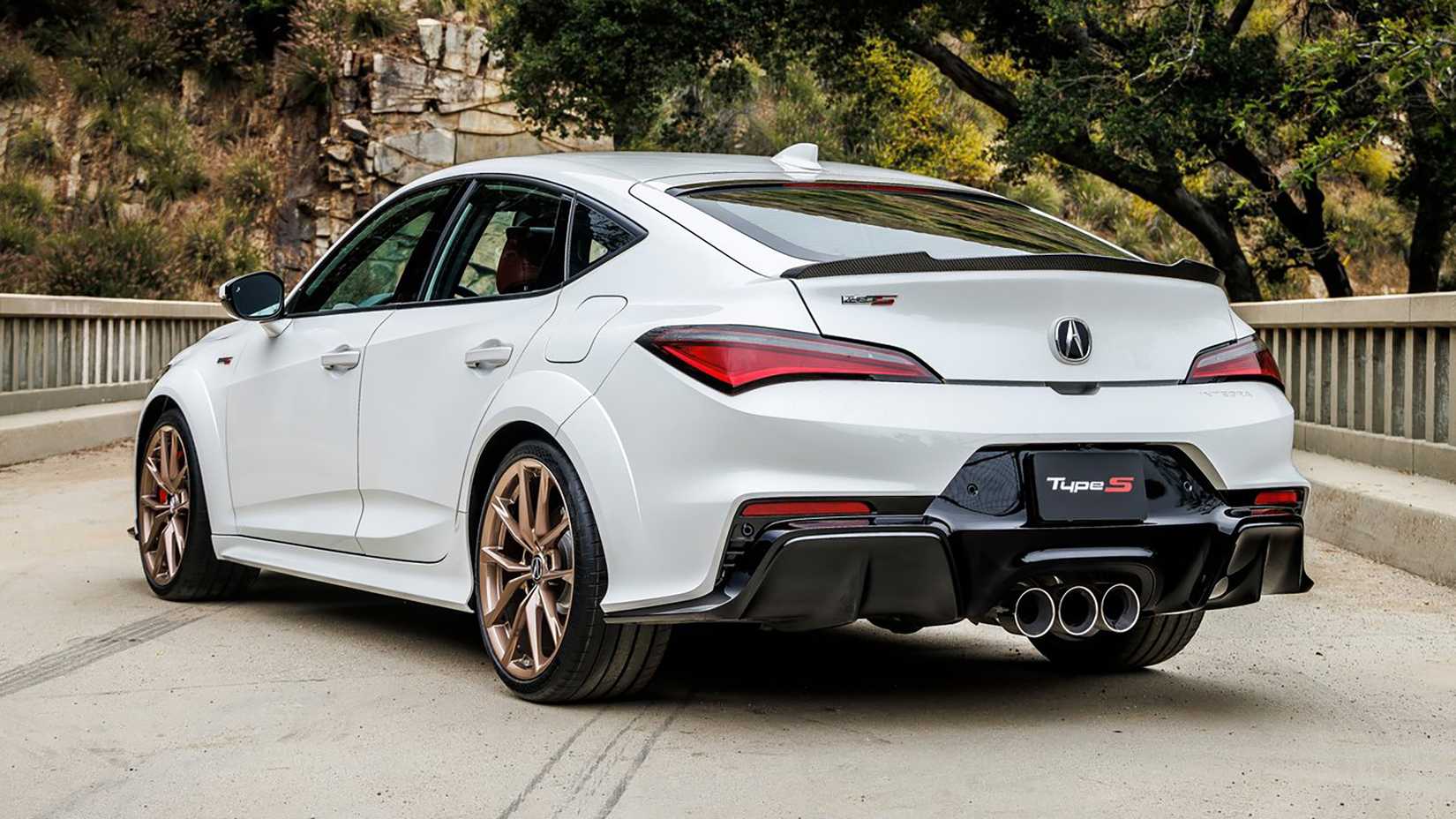
The Acura Integra Type S typically achieves a 0-60 mph acceleration time of 5.1 to 5.4 seconds. This performance is powered by a 320-horsepower 2.0-liter turbocharged engine mated exclusively to a six-speed manual transmission. While front-wheel-drive traction limits off-the-line sprinting compared to all-wheel-drive rivals, its mid-range passing power remains world-class.
The Engineering Behind the Speed: The K20C1 Powerplant
To understand the 0-60 mph capabilities of the Acura Integra Type S, one must look at the heart of the machine: the K20C1 engine. As we look at the automotive landscape in 2026, this engine remains a benchmark for four-cylinder turbocharged performance. It is a 2.0-liter inline-four that produces 320 horsepower and 310 lb-ft of torque. This represents a slight 5-horsepower increase over its platform-mate, the Honda Civic Type R, achieved primarily through a high-flow exhaust system that features a distinct triple-outlet design.
The torque delivery is the most critical factor in the Type S’s acceleration profile. The full 310 lb-ft is available from 2,600 to 4,000 RPM. This broad torque plateau allows the car to pull hard even if the driver hasn't perfectly executed a high-RPM launch. However, because the Type S is a front-wheel-drive (FWD) vehicle, the engineering challenge isn't just making power—it’s putting that power onto the pavement without excessive wheel spin or "axle hop."
Acura utilizes a sophisticated dual-axis strut front suspension system. This mechanical setup is designed to separate the steering geometry from the suspension’s vertical movement, which drastically reduces torque steer. When you floor the throttle in the Integra Type S, the steering wheel stays remarkably neutral in your hands, allowing the helical limited-slip differential (LSD) to distribute power to the front tire with the most grip.
Real-World 0-60 mph Factors: Traction and Technique
While a 5.1-second 0-60 mph time is achievable under perfect conditions, real-world results often fluctuate. Several variables dictate whether a driver will see a low-5-second or a mid-5-second run.
The Manual Transmission Variable
The Integra Type S is offered strictly with a six-speed manual transmission. While this is a boon for driving enthusiasts, it introduces "human error" into 0-60 mph testing. Unlike a dual-clutch transmission (DCT) or a traditional automatic with launch control, the Type S requires the driver to manage the clutch bite point and the throttle simultaneously. A shift that is a fraction of a second too slow, or a launch with too much wheel spin, can easily add half a second to the 0-60 mph time.
Tire Temperature and Surface
The Type S comes factory-equipped with Michelin Pilot Sport 4S summer tires (265/30ZR19). These are high-performance tires, but they are highly temperature-dependent. On a cold morning or a dusty road, these tires struggle to find purchase during a hard launch. In 2026, many owners have opted for even stickier track-focused compounds to shave those final tenths of a second off their acceleration times, though this often comes at the expense of wet-weather safety and tire longevity.
The Role of Software
Acura includes several driving modes—Comfort, Sport, and Sport+—along with an "Individual" mode. These modes adjust the throttle mapping and the stiffness of the adaptive dampers. For the best 0-60 mph sprint, Sport+ is the default choice as it sharpens throttle response, though some experienced drivers prefer a softer damper setting (via Individual mode) to allow for better weight transfer to the rear during the initial launch, which can ironically help with front-end traction.
Performance Comparison: Type S vs. The Competition
In the premium sport compact segment, the Integra Type S faces stiff competition. While its 0-60 mph time is impressive for a FWD manual car, it is often outpaced on paper by all-wheel-drive (AWD) competitors that can launch with significantly more aggression.
| Vehicle | 0-60 MPH (Seconds) | Drivetrain | Horsepower | Transmission |
|---|---|---|---|---|
| Acura Integra Type S | 5.1 - 5.4 | FWD | 320 hp | 6-Speed Manual |
| Honda Civic Type R | 4.9 - 5.2 | FWD | 315 hp | 6-Speed Manual |
| Volkswagen Golf R | 3.9 - 4.3 | AWD | 315 hp | 7-Speed DCT / 6-Speed MT |
| Toyota GR Corolla | 4.7 - 5.0 | AWD | 300 hp | 6-Speed Manual |
| Audi S3 | 4.4 - 4.7 | AWD | 306 hp | 7-Speed DCT |
| Hyundai Elantra N | 5.0 - 5.3 | FWD | 276 hp | 8-Speed DCT / 6-Speed MT |
As shown in the table, the AWD systems in the Golf R and GR Corolla provide a massive advantage in the 0-60 mph sprint. The Golf R, specifically when equipped with its DSG (dual-clutch) transmission, can dip into the high 3-second range. However, the Integra Type S is not designed solely for drag racing. Its value proposition lies in the "rolling start" and mid-range acceleration (50-70 mph or 60-100 mph), where the drivetrain losses of AWD systems are less of a factor, and the lightweight nature of the FWD Type S allows it to shine.
Beyond the 0-60: Handling and Braking
Acceleration is only one part of the performance equation. The Integra Type S is a holistic performance machine that emphasizes driver engagement over raw statistics. To complement its 5.1-second 0-60 capability, Acura equipped the car with high-performance hardware that ensures it can handle and stop as well as it goes.
Braking Performance
The Type S features large Brembo four-piston fixed front calipers and 13.8-inch ventilated front rotors. In 60-0 mph braking tests, the car consistently stops in approximately 102 to 106 feet. This level of braking performance is vital for track use, where heat soak can cause lesser braking systems to fade. The functional air ducts in the front fascia are not just for aesthetics; they provide a constant stream of cooling air to the front rotors, ensuring consistent performance during spirited driving.
Lateral Grip and Stability
The track width of the Type S is 2.8 inches wider than the standard Integra, housed under aggressive flared fenders. This wider stance, combined with the adaptive damper system that evaluates road conditions every few milliseconds, allows the Type S to pull nearly 1.02g on a skidpad. For the driver, this translates to a car that feels "glued" to the road, offering a level of confidence in corners that few other front-wheel-drive cars can match.
Common Modifications to Improve 0-60 Times
By 2026, the aftermarket for the Integra Type S has matured significantly. Owners looking to improve their 0-60 mph times often focus on three specific areas:
- ECU Tuning: Electronic Control Unit (ECU) "reflashes" from reputable tuners can increase boost pressure and optimize ignition timing. It is common to see tuned Type S models reaching 360+ horsepower, which can drop 0-60 times into the high 4-second range, provided traction is managed.
- Motor Mounts: One of the biggest obstacles to a clean launch in a FWD car is wheel hop. Upgrading to stiffer rear motor mounts helps keep the engine and transmission from rocking under load, which keeps the tires in more consistent contact with the pavement.
- Tire Selection: Switching from the standard Pilot Sport 4S to a "200-treadwear" tire like the Bridgestone Potenza RE-71RS or the Michelin Pilot Sport Cup 2 can drastically improve off-the-line grip, though these tires wear out much faster and are less effective in the rain.
Practical Considerations for Potential Buyers
If you are considering an Integra Type S in 2026, it is important to align your expectations with the car’s intent. If your primary goal is winning stoplight drag races against AWD EVs or DCT-equipped German sedans, the Type S might frustrate you. Its 0-60 mph time is limited by the physical constraints of FWD traction and the inherent delay of a manual gear shift.
However, if you value tactile feedback, a world-class shifter, and a car that feels alive at high speeds, the Integra Type S is nearly peerless in its segment. It offers a level of refinement—including a 16-speaker ELS Studio 3D audio system and a head-up display—that its more "hardcore" sibling, the Civic Type R, lacks. It is a "grown-up" performance car that happens to be capable of sprinting to 60 mph faster than many dedicated sports cars from a decade ago.
Frequently Asked Questions
Does the Acura Integra Type S have launch control?
The Integra Type S does not feature a traditional "push-button" launch control system like those found in automatic or DCT-equipped vehicles. Because it uses a manual transmission, the "launch control" is the driver's ability to balance RPM and clutch engagement. However, the car does have a software-based "rev-limiter" when stationary, which can help drivers hold a consistent RPM before dropping the clutch.
Is the Integra Type S faster than the Honda Civic Type R?
In terms of raw 0-60 mph times, the Honda Civic Type R is often a tenth of a second faster. This is largely due to the Civic's slightly lighter curb weight and more aggressive factory aerodynamic tuning. While the Integra Type S has 5 more horsepower, it also carries more sound deadening and luxury features, which results in a negligible performance difference in real-world scenarios.
Why is the 0-60 time slower than some cheaper AWD cars?
0-60 mph times are heavily influenced by traction. AWD cars like the Volkswagen Golf R or Toyota GR Corolla can send power to all four wheels simultaneously, preventing the tires from spinning. The Integra Type S, being FWD, can only use the front two tires for acceleration. While this makes it slower from 0-60, FWD cars are often lighter and more fuel-efficient once they are up to cruising speeds.
Can the Integra Type S do 0-60 in under 5 seconds stock?
Under perfect conditions—specifically on a prepared drag strip surface with warm tires and an expert driver—it is possible to see a 4.9 or 5.0-second 0-60 mph run. However, on standard asphalt with a typical driver, 5.2 to 5.4 seconds is a much more realistic and repeatable expectation.
How does the 2026 model compare to the 2024 debut?
As of 2026, the mechanical underpinnings of the Integra Type S remain largely unchanged from its 2024 debut. Acura has focused on software refinements for the adaptive dampers and minor interior updates. The 0-60 mph performance has remained consistent throughout the production run, as the K20C1 engine was already highly optimized at launch.
Recommendations for Driving Enthusiasts
To get the most out of an Acura Integra Type S, focus on the rolling start. While 0-60 mph is a popular metric for marketing, the Type S is truly at home when accelerating from 20 mph or 40 mph. In these scenarios, traction is no longer the limiting factor, and the turbocharged engine can showcase its impressive power-to-weight ratio.
For those looking to maximize their standing-start performance, investing in high-quality tire pressure gauges and practicing "clutch slipping" techniques—rather than simply dumping the clutch—will yield the most significant improvements in your 0-60 mph times. Always remember that the Type S is a precision instrument designed for the track and winding backroads, where its 0-60 time is just one small part of a much larger, more engaging story.