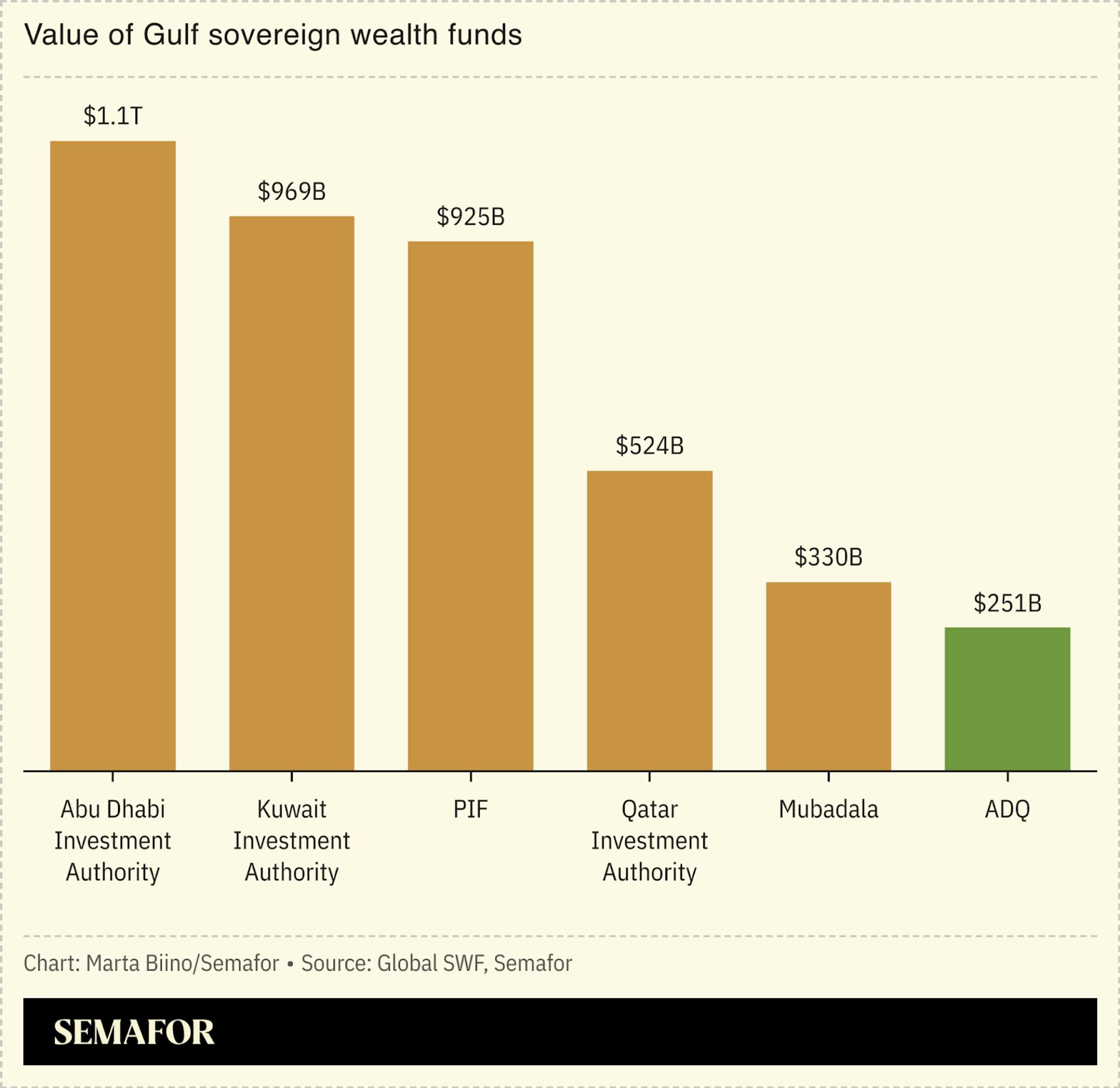
The primary "Abu Dhabi sovereign wealth fund" refers to the Abu Dhabi Investment Authority (ADIA), established in 1976 as the principal vehicle for investing the emirate's excess oil revenues. While other significant investment entities like Mubadala Investment Company and ADQ operate under the Abu Dhabi government, ADIA remains the flagship institution managing a globally diversified portfolio designed to ensure the long-term economic prosperity of the emirate beyond the depletion of natural resources.
The Role and Mandate of Sovereign Wealth Funds in Abu Dhabi
Sovereign Wealth Funds (SWFs) serve as the strategic financial arm of a government. In the context of Abu Dhabi, these funds are not merely savings accounts; they are sophisticated institutional investors that operate with a long-term horizon. By investing in international financial markets, real estate, infrastructure, and private equity, the Abu Dhabi government seeks to decouple its fiscal health from the volatility of global hydrocarbon prices.
The primary mandate is twofold: fiscal stabilization and intergenerational equity. By capturing the rents from petroleum exports and converting them into high-yielding, diversified global assets, the state ensures that future generations of citizens inherit a robust economic foundation. This transition—from a resource-dependent economy to a knowledge-based, diversified global investment powerhouse—defines the operational philosophy of Abu Dhabi’s investment entities.
Key Investment Institutions
While the term "Abu Dhabi sovereign wealth fund" is often used colloquially to refer to the broader investment activity of the emirate, it is technically segmented into three primary organizations. Each entity possesses a distinct mandate, risk tolerance, and operational strategy.
Abu Dhabi Investment Authority (ADIA)
Established by the late Sheikh Zayed bin Sultan Al Nahyan, ADIA is the oldest and largest fund. It functions primarily as a global portfolio manager, investing across a wide array of asset classes, including public equities, fixed income, infrastructure, and real estate. ADIA does not play a direct role in the domestic management of the Abu Dhabi economy; instead, it is tasked with the prudent management of the emirate's financial reserves to achieve sustained long-term returns.
Mubadala Investment Company
Mubadala operates with a more direct focus on domestic economic development and strategic international partnerships. Its mandate involves investing in sectors that facilitate the diversification of the Abu Dhabi economy, such as aerospace, renewable energy, semiconductors, and healthcare. Mubadala acts as a catalyst for industrial advancement, often co-investing with global partners to bring expertise and technology into the region.
ADQ (formerly Abu Dhabi Developmental Holding Company)
ADQ holds a unique position as it oversees a portfolio of major enterprises within the emirate. It is responsible for managing critical infrastructure, logistics, utilities, and food security assets. ADQ bridges the gap between commercial investment and public policy, aiming to strengthen Abu Dhabi’s competitive position in the global supply chain.
Comparison of Investment Mandates
The following table summarizes the strategic focus of the primary investment entities associated with Abu Dhabi.
| Institution | Primary Focus | Economic Role |
|---|---|---|
| ADIA | Global Financial Returns | Long-term fiscal stabilization |
| Mubadala | Strategic Development | Industrial diversification & growth |
| ADQ | Domestic Infrastructure | National essential services & supply chain |
Operational Strategy and Risk Management
To maintain market stability and long-term viability, these funds employ rigorous asset allocation strategies. They utilize a mix of internal management and external fund managers to execute their investment theses. Because these funds act as "long-term capital," they are uniquely positioned to withstand short-term market volatility that would force other investors to liquidate.
Governance is a critical pillar of their success. The funds are governed by boards of directors chaired by senior members of the Abu Dhabi ruling family, ensuring that investment activity remains aligned with the broader national interest. Despite this proximity to the state, the entities operate according to commercial principles, aiming to maximize risk-adjusted returns while adhering to global best practices in transparency and ethical investing.
Geographic and Sector Diversification
The geographic focus of the Abu Dhabi sovereign wealth funds has historically been concentrated in North American and European markets, where stable regulatory environments allow for large-scale capital deployment. However, there has been a notable shift over the last decade toward emerging markets, particularly within the Asia-Pacific region.
Sector-wise, the focus has expanded from traditional "passive" assets like blue-chip stocks and bonds into "active" sectors such as:
- Renewable Energy: Capitalizing on the global transition toward decarbonization.
- Technology & Venture Capital: Investing in AI, cybersecurity, and digital infrastructure to remain at the forefront of the modern economy.
- Healthcare & Life Sciences: Strengthening resilience against future systemic health shocks.
- Logistics & Connectivity: Enhancing the efficiency of global trade routes.
Prerequisites for Partnership and Investment
For international institutions, financial firms, or governments seeking to interact with these entities, it is essential to understand that these funds operate as highly professionalized commercial entities. They do not engage in "cold" solicitation. Collaboration is typically established through:
- Professional Institutional Channels: Proposals are vetted through specialized investment teams focused on specific asset classes (e.g., Real Estate, Private Equity, or Infrastructure).
- Strategic Co-investment: Partnerships are often structured as joint ventures where both parties provide capital and, crucially, operational expertise.
- ESG Compliance: As of 2026, all prospective partners must demonstrate high adherence to Environmental, Social, and Governance (ESG) criteria. These funds are increasingly integrating climate risk assessments into their due diligence process.
Challenges and Market Limitations
Operating as a sovereign wealth fund carries inherent challenges, particularly regarding political perception and market influence. Because these funds command hundreds of billions of dollars in assets, their entry or exit from a specific market or sector can trigger significant price movements. To mitigate this, they often employ "quiet" accumulation strategies and act as minority stakeholders in private transactions to avoid market disruption.
Furthermore, they must manage the delicate balance between commercial profitability and national interest. Occasionally, these two goals may conflict—for instance, when an investment is highly profitable but offers little in terms of technological transfer or strategic value to the local economy. The internal governance structures of these funds are designed to resolve these conflicts by prioritizing the long-term wealth of the emirate above all else.
Frequently Asked Questions
Are Abu Dhabi sovereign wealth funds subject to the same regulations as private equity firms? While they operate on commercial principles, these funds are often exempt from specific local regulatory requirements that apply to private entities, though they are subject to strict internal governance and international reporting standards. They are designed to act with a higher degree of agility than traditional state departments.
How can an international company apply for funding from these institutions? These funds do not have an "application" process in the traditional sense. They are proactive investors. Firms looking for investment should focus on building a professional track record, maintaining high financial performance, and engaging through established investment banks or intermediaries that have direct access to the funds’ asset management divisions.
What is the primary difference between ADIA and Mubadala? ADIA is a traditional "wealth fund" focused on managing financial reserves for future generations, while Mubadala is a "strategic investment company" that focuses on direct investments that generate both financial returns and economic development within Abu Dhabi.
How do these funds handle risk during market downturns? They utilize long-term horizons to "buy through" the cycle. Because they are not subject to the redemption pressures that hedge funds or retail investment funds face, they can acquire high-quality assets at depressed prices during market corrections, ultimately benefiting from the recovery phase.
Are these funds transparent? The funds have made significant strides in transparency since the early 2000s. While they do not disclose every individual transaction, they publish annual reports, provide commentary on their investment philosophies, and adhere to the Santiago Principles—a globally recognized set of voluntary guidelines for sovereign wealth fund transparency and accountability.
Do these funds invest in cryptocurrency or digital assets? As of 2026, the funds have shown increasing interest in blockchain technology, specifically the infrastructure layer (e.g., payment rails, decentralized finance architecture, and high-performance computing). Direct retail-style crypto speculation is generally avoided, but institutional-grade digital asset exposure is growing within their technology portfolios.
Strategic Next Actions for Stakeholders
If you are a professional investor or a corporate entity seeking to align with the investment activities of Abu Dhabi, your strategy should revolve around institutional-grade engagement. Begin by reviewing the annual reports of ADIA, Mubadala, and ADQ to identify current strategic priorities. Note that these funds prioritize partnerships that offer mutual growth. When initiating outreach, ensure that your proposals are backed by verified financial data, a clear value-add proposition, and an explicit explanation of how your project aligns with the long-term economic development goals of the United Arab Emirates. Avoid reliance on unofficial intermediaries, as these organizations primarily engage through direct, reputable institutional channels.