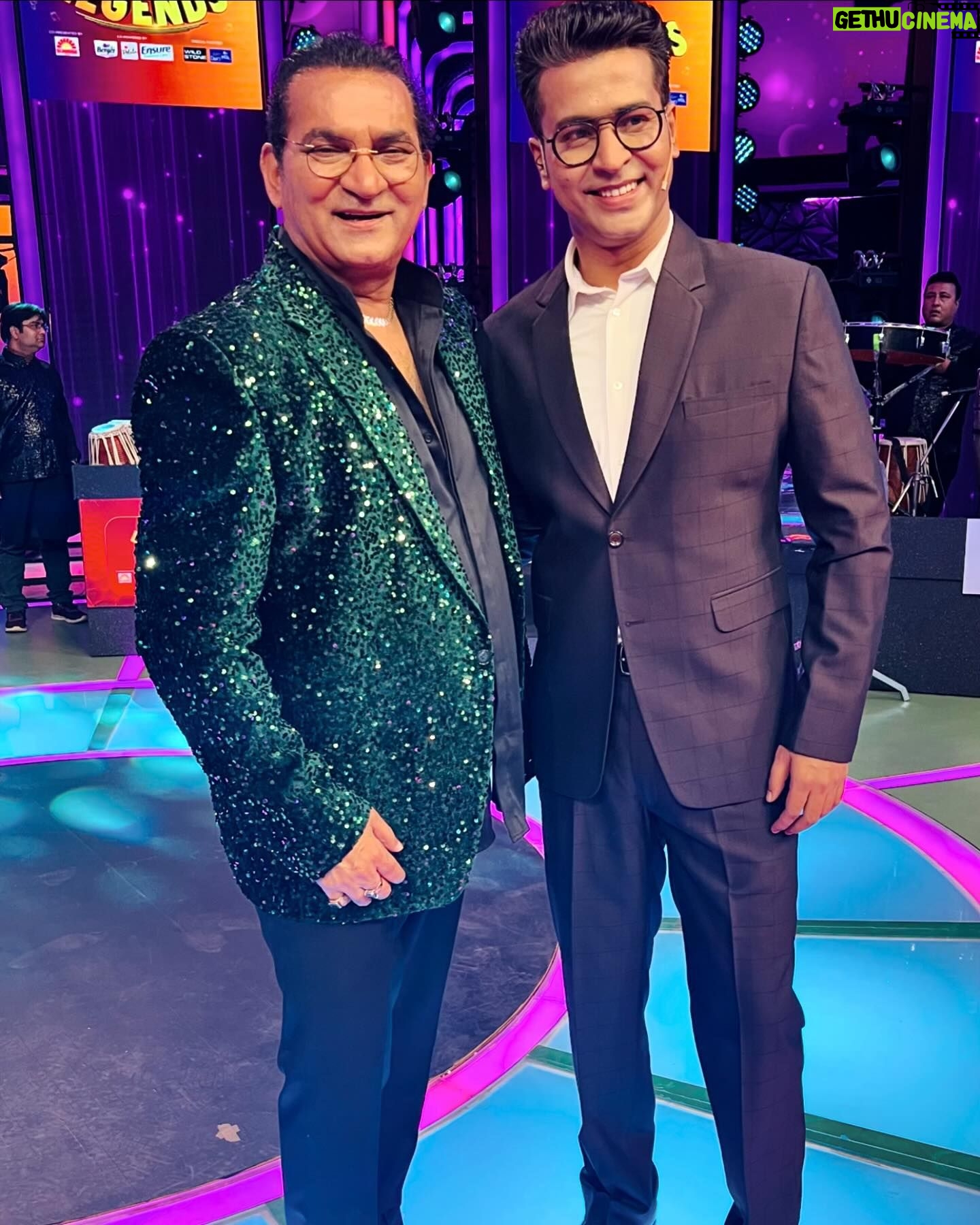
Born on October 30, 1958, in Kanpur, Uttar Pradesh, acclaimed Indian playback singer Abhijeet Bhattacharya is 67 years old as of 2026. Contextualizing his age illuminates a career spanning over four decades, capturing the dramatic musical transformation of Hindi cinema from 1980s orchestral recordings to the modern digital era.
Early Life and the Path to Bollywood (1958–1989)
Abhijeet Bhattacharya was raised in Kanpur in a middle-class Bengali family. Showing a strong affinity for music early in life, he drew primary vocal inspiration from the legendary playback singer Kishore Kumar. Despite earning a degree in commerce from Christ Church College in Kanpur, Abhijeet chose to abandon a conventional corporate trajectory to pursue a full-time career in music.
In 1981, at age 23, Abhijeet relocated to Mumbai (then Bombay), the heart of the Hindi film industry. Like many aspiring singers of the 1980s, his initial years were marked by intense struggle. The playback industry in the early 1980s was dominated by established veterans, leaving little room for newcomer vocalists unless they possessed a distinct style or found backing from influential music directors.
Abhijeet received his first major break when music director R.D. Burman noticed his potential. Burman offered him an opportunity to sing alongside Kishore Kumar in the 1984 film Anand Aur Anand, marking the debut of young actor Karan Kapoor. Although the film did not achieve commercial success, the experience placed Abhijeet on the radar of prominent composers. Throughout the remainder of the 1980s, he recorded modest assignments, refined his vocal delivery, and performed in live concerts, laying the groundwork for his eventual emergence in the subsequent decade.
The Golden Decade: Defining the 1990s Hindi Cinema Sound
By the time Abhijeet reached his early thirties in 1990, the Hindi film industry was undergoing a massive sonic transformation. The gritty, action-dominated cinema of the 1980s was giving way to melded romantic dramas, requiring a fresh generation of playback singers who could deliver melodic, youth-oriented vocals.
- 1981: Moves to Mumbai (Age 23: Struggles)
- 1990: Breakthrough Hits (Baaghi & Khiladi)
- 1997: Filmfare Award Winner (Yes Boss Peak)
- 2004: Main Hoon Na / Indipop Expansion
- 2026: Legacy Era (Age 67 Status)
Breakthrough with Baaghi and Khiladi
Abhijeet's career trajectory shifted dramatically with the release of Baaghi: A Rebel for Love (1990), featuring music composed by Anand-Milind. Songs like "Ek Chanchal Shokh Hasina" demonstrated his crisp tenor and expressive phrasing. Soon after, his collaboration with composer duo Jatin-Lalit for Khiladi (1992) yielded iconic tracks such as "Waada Raha Sanam." This track solidified his status as a premier choice for leading men in commercial cinema.
During his mid-to-late 30s, Abhijeet became the prominent voice for rising superstars including Akshay Kumar, Saif Ali Khan, Suniel Shetty, and Shah Rukh Khan. His vocal timbre brought a blend of playfulness and romantic vulnerability that matched the onscreen personas of these actors.
Collaboration with Shah Rukh Khan and Major Accolades
The artistic synergy between Abhijeet Bhattacharya and actor Shah Rukh Khan produced some of the most memorable film music of the 1990s and early 2000s. Composers frequently paired Abhijeet’s energetic yet smooth vocals with Shah Rukh Khan’s romantic sequences across multiple blockbuster films:
- Raju Ban Gaya Gentleman (1992): Tracks like "Raju Ban Gaya Gentleman" helped establish the actor-singer pairing.
- Dilwale Dulhania Le Jayenge (1995): Abhijeet performed "Zara Sa Jhoom Loon," which remains a staple of 1990s pop culture.
- Yes Boss (1997): His rendition of "Main Koi Aisa Geet Gaoon" earned him the Filmfare Award for Best Male Playback Singer in 1998 at the age of 39.
- Baadshah (1999): Delivered high-energy tracks including "Main To Hoon Pagal" and the title song.
- Chalte Chalte (2003) & Main Hoon Na (2004): Continued the streak with hits such as "Suno Na Suno Na" and "TUMHE JO MAINE DEKHA."
Beyond his film work, Abhijeet capitalized on the Indipop boom of the late 1990s and early 2000s. Non-film pop albums such as Main Deewana Hoon (1997), Tapori No. 1 (1999), and Tere Bina (2003) expanded his reach beyond film soundtracks, proving his commercial viability as an independent recording artist.
Timeline of Abhijeet Bhattacharya’s Life and Musical Evolution
To understand how Abhijeet Bhattacharya’s age correlates with key artistic transitions, the table below outlines his career stages across four distinct decades.
| Era & Age Range | Key Life & Career Milestones | Definitive Tracks & Projects | Industry Context & Recording Tech |
|---|---|---|---|
| 1958–1980(Ages 0–22) | Born in Kanpur; completed commerce degree; early musical training. | Local stage performances; Kishore Kumar covers. | Pre-digital acoustic era; live studio recording with full orchestras. |
| 1981–1989(Ages 23–31) | Relocated to Mumbai; mentored by R.D. Burman; early playback attempts. | "Kisi Se Kisi Ki Wafa" (Anand Aur Anand, 1984). | Analog tape recording; dominant reign of veteran singers. |
| 1990–1999(Ages 32–41) | Peak mainstream stardom; win Filmfare Award (1998); Indipop album success. | "Waada Raha Sanam" (Khiladi), "Main Koi Aisa Geet Gaoon" (Yes Boss). | Rise of cassette market; multitrack analog tape; melodic romance dominant. |
| 2000–2009(Ages 42–51) | Continued blockbuster playback; television reality show judging; pop releases. | "Suno Na Suno Na" (Chalte Chalte), "Tumhe Jo Maine Dekha" (Main Hoon Na). | Shift from cassettes to CDs and early MP3s; introduction of digital audio workstations. |
| 2010–2026(Ages 52–67) | Transition to global concert tours, classical preservation, and industry commentary. | Live concert world tours, independent singles, media commentary. | Streaming dominance; auto-tune standard; focus on catalog legacy and live performance. |
Technical Shift: How Playback Singing Changed Over Abhijeet’s Career
Understanding Abhijeet Bhattacharya’s longevity requires examining how music production shifted technologically throughout his life.
1. Live Orchestra vs. Multi-Track Digital Recording
When Abhijeet entered the industry in the 1980s, recording sessions involved large live orchestras playing simultaneously in single acoustic halls. A singer had to perform flawless long takes; an error by either the musician or the vocalist required repeating the entire take. This required singer precision, pitch stability, and breath control—qualities Abhijeet developed early in his career.
By the late 2000s, Digital Audio Workstations (DAWs) like Pro Tools became standard. Vocalists could record individual lines or phrases, which sound engineers then compiled, edited, and pitch-corrected digitally. While this lowered the barrier to entry for untrained singers, veterans like Abhijeet, who built their skills during the live-recording era, maintained distinct live-performance capabilities.
Evolution of Recording Process
- 1980s: Live Orchestra + Single Track Recording
- Required simultaneous precision from singer & orchestra.
- 1990s: Multi-Track Analog Tape
- Allowed separate recording of vocals and instruments.
- 2000s+: Digital Audio Workstations (DAWs) & Pitch Correction
- Enables phrase-by-phrase editing and auto-tuning.
2. Vocal Preservation and Age-Related Dynamics
As vocalists age into their 60s, vocal cords undergo natural physiological changes, including reduced elasticity and alterations in pitch range. Abhijeet’s vocal technique—characterized by bright nasal resonance, clear diction, and controlled chest voice—has allowed him to sustain vocal clarity. Unlike singers who rely heavily on raw vocal force, his reliance on precise placement helped preserve his voice into his late 60s.
Industry Context: Generational Contemporaries
To fully appreciate Abhijeet’s standing, it helps to place him alongside the generation of playback singers who defined Hindi cinema’s music in the late 20th century.
- 1955: Udit Narayan (Born Nov 1955)
- 1957: Kumar Sanu (Born Oct 1957)
- 1958: Abhijeet (Born Oct 1958)
- 1973: Sonu Nigam (Born July 1973)
- Udit Narayan (Born November 1955): Slightly older than Abhijeet, Udit Narayan was a dominant voice of romantic playback in the 1990s. While Narayan’s voice leaned toward sweet, classical-infused folk tones, Abhijeet brought a urban, energetic quality suitable for upbeat romantic tracks.
- Kumar Sanu (Born October 1957): Born just one year before Abhijeet, Kumar Sanu dominated the early-to-mid 1990s chartbuster space with his distinctive style derived from Kishore Kumar. While Sanu dominated dramatic romantic ballads, Abhijeet excelled in bright, tempo-driven romantic numbers and rhythm-heavy tracks.
- Sonu Nigam (Born July 1973): Emerging a decade later, Sonu Nigam represented the next generation of versatile vocalists. Abhijeet and Sonu frequently shared space on 1990s and 2000s multi-singer tracks and reality television panels.
Advocacy, Royalty Rights, and Recent Standpoints
In his later years, Abhijeet Bhattacharya has become known for his candid commentary on music industry practices. Rather than stepping back quietly, he frequently speaks out on issues affecting performing artists:
- Artist Royalties and Intellectual Property: Abhijeet has consistently advocated for singers to receive fair financial compensation and long-term royalties for their recorded catalog, aligning with broader reforms pursued by the Indian Performing Right Society (IPRS).
- Opposition to Remakes: He has frequently criticized the modern industry trend of recreating classic 1990s tracks, arguing that electronic remakes compromise the artistic integrity of original compositions and strip away human performance nuances.
- Vocal Authenticity: Abhijeet has publicly critiqued the over-reliance on digital pitch correction and auto-tune, arguing that technology often masks a lack of foundational vocal training in contemporary music production.
Frequently Asked Questions
What is Abhijeet Bhattacharya's exact date of birth?
Abhijeet Bhattacharya was born on October 30, 1958, in Kanpur, Uttar Pradesh, India.
How old is Abhijeet Bhattacharya in 2026?
As of 2026, Abhijeet Bhattacharya is 67 years old. He will celebrate his 68th birthday on October 30, 2026.
Which actor is most frequently associated with Abhijeet's playback singing?
Abhijeet is most famously associated with Shah Rukh Khan, having sung iconic hits for him in films like Yes Boss, Dilwale Dulhania Le Jayenge, Baadshah, Chalte Chalte, and Main Hoon Na. He also sang extensively for Suniel Shetty, Saif Ali Khan, and Akshay Kumar.
What major awards has Abhijeet Bhattacharya won?
Abhijeet won the prestigious Filmfare Award for Best Male Playback Singer in 1998 for the song "Main Koi Aisa Geet Gaoon" from the film Yes Boss. Over his career, he has also received numerous state, corporate, and music industry honors.
Did Abhijeet Bhattacharya release non-film music albums?
Yes, Abhijeet was a key figure in the 1990s and early 2000s Indipop era. He released successful solo non-film pop albums including Main Deewana Hoon, Tapori No. 1, Tere Bina, and Aashiqui.
Practical Takeaway for Listeners and Music Enthusiasts
Analyzing Abhijeet Bhattacharya's age in context highlights a career that bridged two distinct eras of Indian film music. For listeners exploring his work today:
- Chronological Listening: Trace his vocal evolution by starting with early 1990s tracks like "Waada Raha Sanam" (Khiladi), moving to mid-career highlights like "Main Koi Aisa Geet Gaoon" (Yes Boss), and finishing with mid-2000s hits like "Tumhe Jo Maine Dekha" (Main Hoon Na).
- Acoustic vs. Digital Comparison: Compare the live orchestrations in his early 1990s work with post-2000 tracks to appreciate how arrangement styles evolved while his core vocal technique remained consistent.
- Explore Non-Film Work: Listen to his solo albums from the late 1990s (Main Deewana Hoon, Tere Bina) to experience his vocal style unconstrained by film scripts or specific actors.