A 90-degree elbow is a vital piping component used to change the direction of flow within a system by 90 degrees. Dimensional accuracy, dictated by standards like ASME B16.9 for buttweld fittings and ASME B16.11 for forged fittings, ensures structural integrity, leak prevention, and flow efficiency. Selecting the correct elbow requires verifying the Outside Diameter (OD), Center-to-Face distance, and wall thickness (Schedule).
In industrial piping, the 90-degree elbow is arguably the most frequently utilized fitting. Whether you are working in petrochemicals, water treatment, or HVAC, understanding the specific dimensions of these components is essential for successful system integration. This guide provides a detailed breakdown of 90-degree elbow dimensions, the differences between Long Radius (LR) and Short Radius (SR) designs, and how to utilize a dimensions chart effectively for your 2026 projects.
Understanding the Fundamentals of 90-Degree Elbows
A 90-degree elbow, often referred to as a "90" or a "quarter bend," is a fitting that connects two pipes to facilitate a right-angle change in direction. While the concept is simple, the engineering behind it involves specific geometries designed to manage internal pressure and minimize flow resistance.
The primary distinction in 90-degree elbows lies in the radius of curvature. This radius determines how "sharp" the turn is, which directly impacts the space required for installation and the pressure drop experienced by the fluid.
Long Radius (LR) Elbows
In a Long Radius elbow, the centerline radius (R) is equal to 1.5 times the Nominal Pipe Size (NPS). For example, a 2-inch NPS LR elbow has a radius of 3 inches. These are the industry standard for most piping systems because they offer a balanced compromise between space efficiency and lower frictional resistance. The smoother turn reduces turbulence and erosion within the pipe wall, extending the lifespan of the system.
Short Radius (SR) Elbows
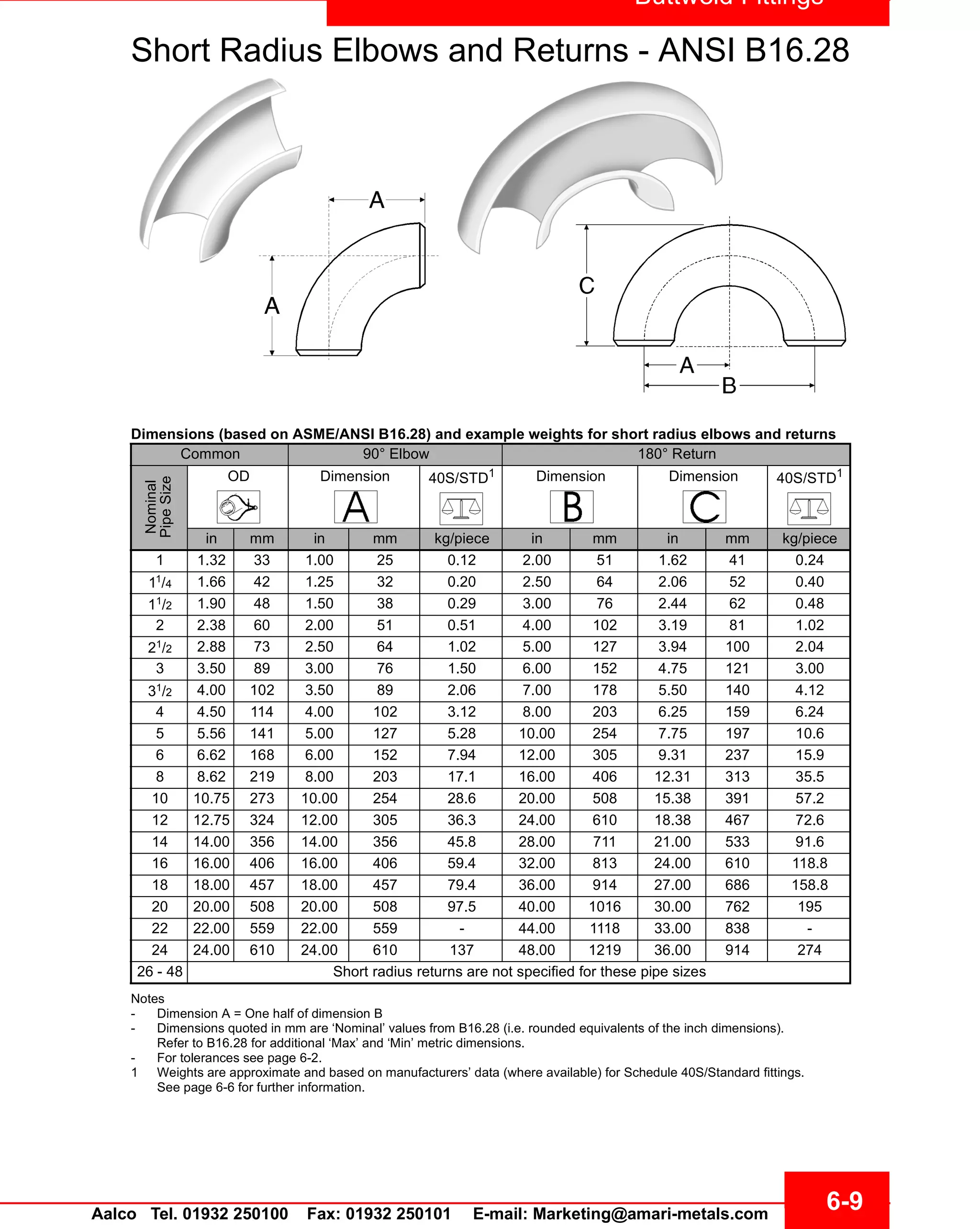
In a Short Radius elbow, the centerline radius (R) is equal to 1.0 times the Nominal Pipe Size (NPS). Using the same 2-inch NPS example, an SR elbow would have a radius of only 2 inches. These fittings are reserved for applications where space is critically limited. However, because the turn is more abrupt, SR elbows cause a higher pressure drop and are more susceptible to internal wear when transporting abrasive media.
Governing Standards for 90-Degree Elbow Dimensions
In 2026, the dimensional consistency of piping components remains anchored in international standards. These standards ensure that an elbow manufactured by one company will perfectly align with a pipe manufactured by another.
- ASME B16.9 (Factory-Made Wrought Buttwelding Fittings): This is the most common standard for large-diameter piping. It covers the overall dimensions, tolerances, ratings, and testing for buttweld elbows from NPS 1/2 through NPS 48.
- ASME B16.11 (Forged Fittings, Socket-Welding and Threaded): This standard applies to smaller, high-pressure elbows. Unlike buttweld fittings, these are usually used for pipes with an NPS of 4 or smaller.
- MSS SP-43: This standard covers Wrought Stainless Steel Buttweld Fittings for low-pressure applications, specifically focusing on schedules 5S and 10S.
- DIN/EN Standards: In European markets, dimensions are often governed by EN 10253, which uses Metric (DN) designations rather than NPS.
For more technical details on the current specifications, the American Society of Mechanical Engineers (ASME) provides the formal documentation for B16.9 and B16.11 compliance.
Key Dimensional Parameters Explained
When viewing a 90-degree elbow dimensions chart, you will encounter several technical terms. Understanding these is crucial for reading the data correctly.
Nominal Pipe Size (NPS) and DN
NPS is a North American set of standard sizes for pipes. It is a "nominal" size, meaning it does not always represent the actual physical diameter. For example, an NPS 2 pipe has an outside diameter of 2.375 inches. In the metric system, this is represented as DN (Diameter Nominal), where NPS 2 is equivalent to DN 50.
Outside Diameter (OD)
The OD is the measurement across the very edge of the elbow's opening. This must match the OD of the pipe it is being welded to. For buttweld fittings, the elbow and the pipe should have identical ODs to allow for a clean V-groove weld.
Center-to-Face (Distance A)
This is the most critical measurement for a piping drafter or installer. It is the distance from the centerline of one opening to the face of the other opening. In a 90-degree elbow, this measurement tells you exactly how much "take-out" or space the fitting will occupy in a run.
- For LR Elbows: $A = 1.5 \times NPS$ (for NPS 2 and larger).
- For SR Elbows: $A = 1.0 \times NPS$.
Wall Thickness (Schedule)
The schedule (e.g., Sch 40, Sch 80, Sch XXS) determines the thickness of the elbow wall. While the OD remains constant for a given NPS, the Inside Diameter (ID) changes based on the schedule. Higher schedule numbers indicate thicker walls, which are required for higher pressure ratings.
90 Degree Elbow Dimensions Chart (Buttweld ASME B16.9)
The following table provides the standard dimensions for Long Radius (LR) and Short Radius (SR) 90-degree buttweld elbows. These measurements are essential for calculating pipe lengths and ensuring fit-up.
| NPS (Inches) | Outside Diameter (OD) (Inches) | Center-to-End LR (Inches) | Center-to-End SR (Inches) |
|---|---|---|---|
| 1/2 | 0.84 | 1.50 | - |
| 3/4 | 1.05 | 1.12 | - |
| 1 | 1.32 | 1.50 | 1.00 |
| 1-1/4 | 1.66 | 1.88 | 1.25 |
| 1-1/2 | 1.90 | 2.25 | 1.50 |
| 2 | 2.38 | 3.00 | 2.00 |
| 2-1/2 | 2.88 | 3.75 | 2.50 |
| 3 | 3.50 | 4.50 | 3.00 |
| 3-1/2 | 4.00 | 5.25 | 3.50 |
| 4 | 4.50 | 6.00 | 4.00 |
| 5 | 5.56 | 7.50 | 5.00 |
| 6 | 6.62 | 9.00 | 6.00 |
| 8 | 8.62 | 12.00 | 8.00 |
| 10 | 10.75 | 15.00 | 10.00 |
| 12 | 12.75 | 18.00 | 12.00 |
| 14 | 14.00 | 21.00 | 14.00 |
| 16 | 16.00 | 24.00 | 16.00 |
| 18 | 18.00 | 27.00 | 18.00 |
| 20 | 20.00 | 30.00 | 20.00 |
| 24 | 24.00 | 36.00 | 24.00 |
Note: For sizes below 1", Short Radius elbows are generally not standardized in ASME B16.9. Dimensions for larger sizes up to NPS 48 are available in full technical PDF specifications from manufacturers.
Material Considerations for 90-Degree Elbows
Selecting the right material is just as important as selecting the right dimensions. The material must be compatible with the pipe and the fluid being transported.
- Carbon Steel (ASTM A234 WPB): The most common material for room-temperature and high-temperature service in oil, gas, and water systems. It is durable and cost-effective.
- Stainless Steel (ASTM A403 WP304/316L): Used in corrosive environments or for hygienic applications like food processing and pharmaceuticals.
- Alloy Steel (ASTM A234 WP11/WP22): Designed for extreme high-temperature services, such as power plant steam lines.
- Low-Temperature Carbon Steel (ASTM A420 WPL6): Necessary for environments where the temperature drops significantly, preventing the material from becoming brittle.
For a deep dive into material grades and their pressure-temperature ratings, the American Society for Testing and Materials (ASTM) maintains the definitive registers for these metal alloys.
Forged 90-Degree Elbows: Socket Weld and Threaded
For small-bore piping (usually 2 inches and under), forged fittings are used instead of buttweld fittings. These are governed by ASME B16.11.
Socket Weld Elbows
A socket weld elbow has a female socket into which the pipe is inserted. The weld is then applied to the exterior of the pipe and the face of the fitting. This design is excellent for high-pressure systems because it provides high structural strength and prevents leaks.
Threaded Elbows
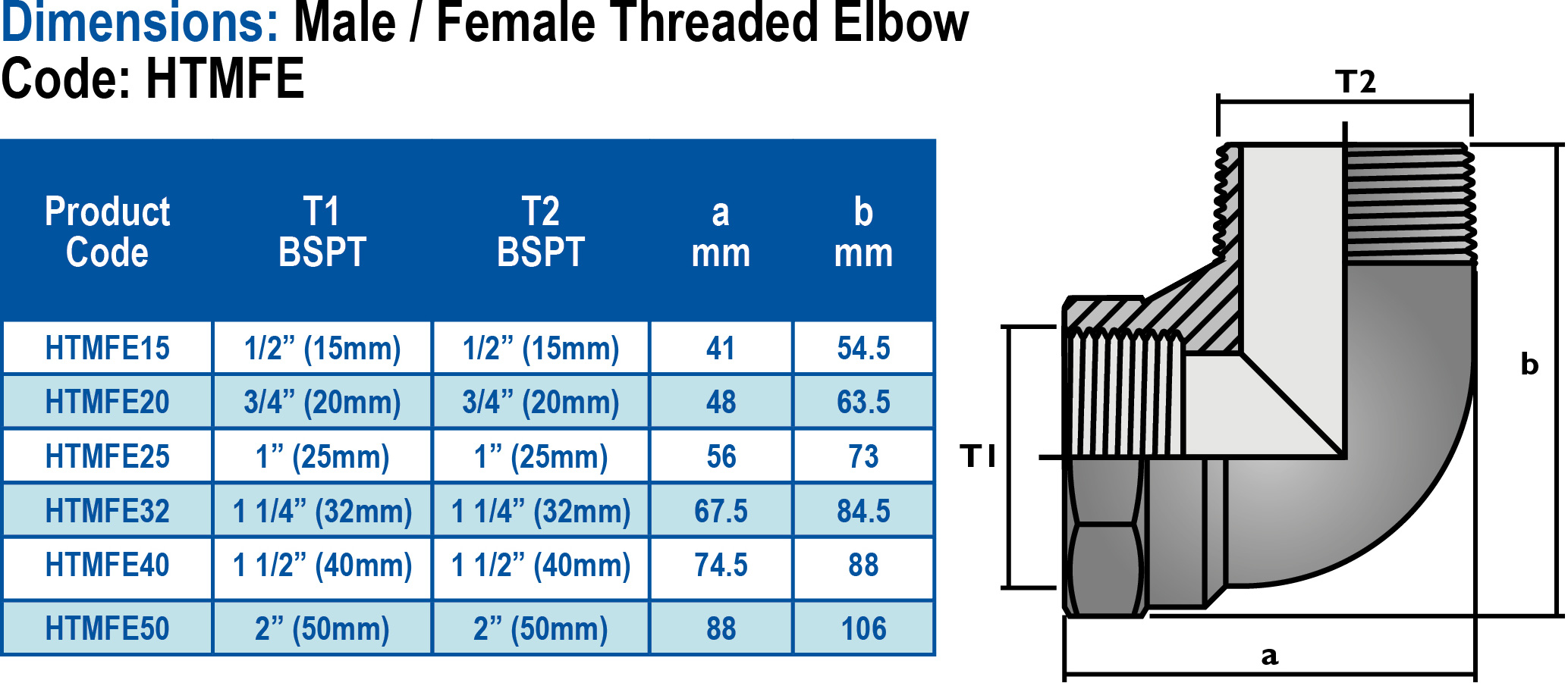
These elbows feature internal threads (usually NPT - National Pipe Thread) that screw onto the male threads of a pipe. They are commonly used in low-pressure, non-critical applications where welding is not feasible or where the system may need to be disassembled.
Pressure Classes for Forged Elbows
Forged elbows are categorized by "Class" rather than Schedule:
- Class 2000: Primarily for threaded fittings.
- Class 3000: The most common for both socket weld and threaded applications.
- Class 6000 & 9000: Used for extreme high-pressure industrial applications.
How to Read and Use a PDF Dimensions Chart Effectively
Engineers and contractors often rely on a 90 degree elbow dimensions chart PDF during the planning phase. To use these documents effectively in 2026, follow these best practices:
- Verify the Standard: Ensure the PDF explicitly states it follows ASME B16.9 or the relevant local standard. Using a DIN chart for an NPS system will result in catastrophic misalignments.
- Check the "End Preparation": Ensure the chart specifies if the elbow is beveled (for welding) or plain end. ASME B16.9 buttweld elbows come with a standard bevel of 37.5 degrees.
- Cross-Reference Schedule with ID: If your system requires a specific flow rate, do not just look at the NPS. Check the wall thickness to ensure the resulting Inside Diameter (ID) won't cause excessive velocity or backpressure.
- Accounting for Tolerances: Dimensional charts provide nominal values. However, manufacturing tolerances allow for slight variations. For example, for NPS 12 and smaller, the center-to-face tolerance is typically ± 0.06 inches (2mm).
Common Installation Mistakes to Avoid
Even with a perfect dimensions chart, installation errors can compromise the integrity of a piping system.
- Mixing LR and SR Elbows: Inadvertently using an SR elbow where an LR was specified can lead to unexpected pressure drops and pump cavitation if the system was designed for the smoother flow of an LR fitting.
- Ignoring Pipe Gap: When performing buttwelding, a small gap (usually 1/16" to 1/8") must be maintained between the elbow and the pipe to ensure full weld penetration. Failure to account for this gap in your total length calculations can lead to "piping creep."
- Material Mismatch: Welding a stainless steel elbow to a carbon steel pipe without proper transition protocols can lead to galvanic corrosion, which significantly weakens the joint over time.
- Alignment Issues: Ensuring the elbow is perfectly square (90 degrees) before tack welding is essential. A 1-degree deviation at the elbow can result in an offset of several inches further down a long pipe run.
Why 90-Degree Elbows Are Essential in Modern Infrastructure
As we move through 2026, the demand for sophisticated piping systems in green hydrogen production, carbon capture, and advanced water reclamation is increasing. The 90-degree elbow remains a fundamental building block of these systems.
The precision offered by ASME-standardized dimensions allows for Modular Construction. In modern industrial projects, piping "spools" are often prefabricated in a controlled shop environment and then shipped to the site. This is only possible because of the rigid dimensional standards of fittings like 90-degree elbows. If a 10-inch LR elbow didn't measure exactly 15 inches from center to face every single time, these massive modular assemblies would never fit together on-site.
Frequently Asked Questions
What is the difference between a 90-degree elbow and a 90-degree bend?
While the terms are often used interchangeably, an "elbow" is a standard fitting manufactured according to specific dimensions (like ASME B16.9). A "bend" usually refers to a piece of pipe that has been bent using a machine. Bends can have custom radii (e.g., 3D or 5D), whereas elbows are strictly LR (1.5D) or SR (1D).
How do I calculate the "Take-Out" for a 90-degree elbow?
The "take-out" is the distance the fitting subtracts from the straight pipe run. For a 90-degree LR elbow, the take-out is simply the Center-to-Face dimension (1.5 x NPS). If you are connecting two pipes with an elbow, you must subtract this distance from your pipe measurements to ensure the final assembly matches your blueprints.
Can I use a 90-degree elbow for gas lines?
Yes, but the material and connection type must be rated for gas service. Carbon steel buttweld elbows are standard for high-pressure industrial gas lines, while threaded malleable iron or forged steel elbows are often used for lower-pressure residential or commercial gas plumbing.
Why are there no Short Radius elbows for very small pipe sizes?
In very small pipe sizes (under NPS 1), the physical constraints of the material make it difficult to manufacture a 1.0D radius without compromising the wall thickness or causing significant internal flow restriction. Consequently, most manufacturers only offer Long Radius designs for these smaller diameters.
Does the wall thickness of an elbow change during the bending process?
Yes. During manufacturing, the outer wall (extrados) of the elbow tends to thin slightly, while the inner wall (intrados) thickens. ASME B16.9 accounts for this by requiring that the minimum wall thickness after forming still meets the pressure rating requirements for the specified schedule.
Final Recommendation for 2026 Projects
When sourcing components or designing a system, always prioritize obtaining a certified 90 degree elbow dimensions chart PDF directly from the manufacturer or a recognized standards body. Relying on generic or unverified data can lead to costly rework or safety hazards.
For critical applications, ensure that your procurement includes Material Test Reports (MTRs). These documents verify that the elbow's physical dimensions and chemical composition meet the standards you’ve identified in your charts. Whether you are opting for the low-friction advantages of a Long Radius elbow or the compact nature of a Short Radius fitting, precision in measurement is the foundation of a safe and efficient piping system.