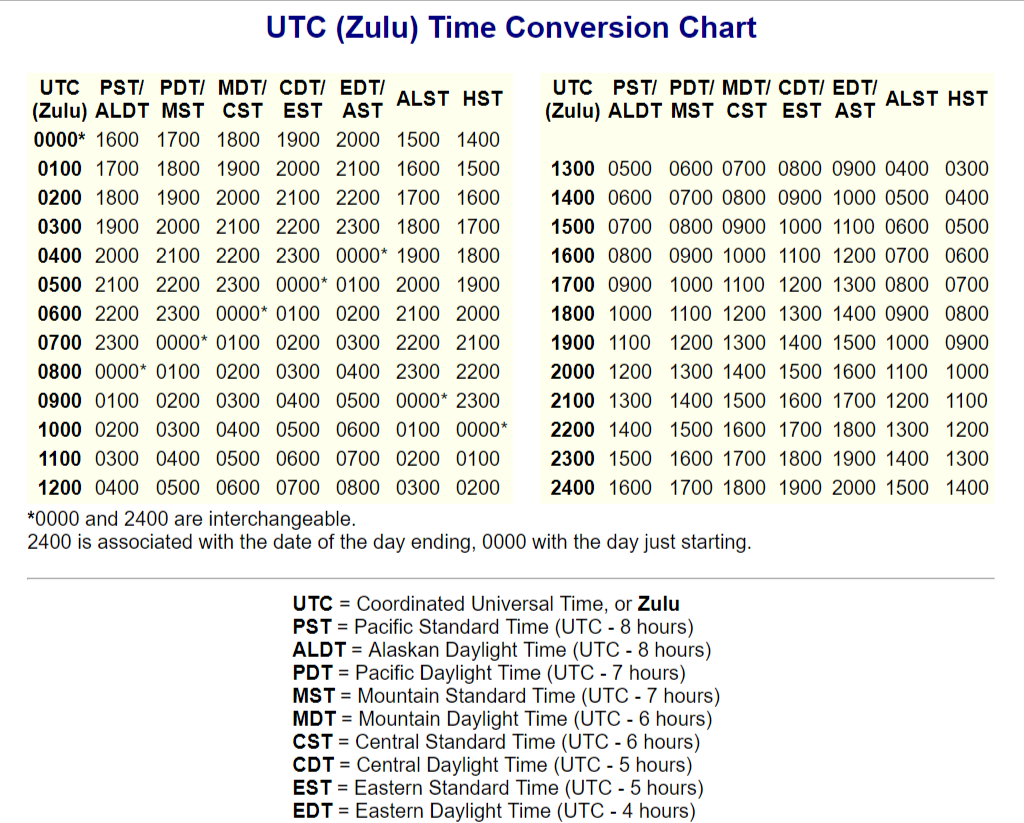
9:00 PM PST converts to 12:00 AM (Midnight) EST. Because the Eastern Time Zone is exactly three hours ahead of the Pacific Time Zone, any time recorded on the West Coast requires adding three hours to determine the East Coast equivalent. This specific conversion frequently results in a date change for the Eastern region.
The Fundamental Three-Hour Gap Between PST and EST
To understand why 9:00 PM on the Pacific Coast is midnight on the Atlantic Coast, we must look at the geographic and mathematical structure of North American time zones. The United States is divided into several time zones based on longitudinal lines, a system established to synchronize railroad schedules in the late 19th century and later formalized by the Standard Time Act of 1918.
Pacific Standard Time (PST) is designated as UTC-8, meaning it is eight hours behind Coordinated Universal Time. In contrast, Eastern Standard Time (EST) is designated as UTC-5, or five hours behind Coordinated Universal Time. When you calculate the difference between these two offsets (8 minus 5), you arrive at a permanent three-hour gap.
This three-hour difference is a constant factor for the vast majority of the year, affecting everything from live television broadcasts and sporting events to corporate deadlines and international travel. When it is 9:00 PM in cities like Los Angeles, San Francisco, or Seattle, the clock has already struck midnight in New York City, Miami, and Boston.
Understanding Daylight Saving Time in 2026
In 2026, it is essential to distinguish between "Standard" time and "Daylight" time. While the primary search query uses "PST" and "EST," these terms technically refer only to the winter months. During the spring, summer, and early autumn, most of North America observes Daylight Saving Time (DST).
For 2026, the transition dates are as follows:
- Daylight Saving Time Begins: Sunday, March 8, 2026 (Clocks move forward).
- Daylight Saving Time Ends: Sunday, November 1, 2026 (Clocks move back).
During the DST period, the zones are referred to as Pacific Daylight Time (PDT) and Eastern Daylight Time (EDT). However, the three-hour gap remains identical because both regions shift their clocks simultaneously. Therefore, 9:00 PM PDT is still 12:00 AM EDT. The only exception to this rule involves regions that do not observe Daylight Saving Time, such as most of Arizona. If you are communicating with someone in a non-observing zone, the offset may fluctuate between two and three hours depending on the time of year.
Why 9:00 PM PST Often Means "Tomorrow" for the East Coast
The most significant complication when converting 9:00 PM PST to EST is the date rollover. Because 12:00 AM marks the start of a new calendar day, an event scheduled for 9:00 PM on a Monday in Los Angeles actually occurs on Tuesday morning for someone in New York.
This "date jump" is a frequent source of confusion in professional and social settings:
- Project Deadlines: If a project is due at "11:59 PM PST on Friday," an East Coast employee has until 2:59 AM on Saturday to submit it, but they must be careful not to confuse the calendar date.
- Travel Bookings: Flights departing the West Coast late at night often arrive on the East Coast the following morning. A 9:00 PM PST departure typically lands in the early morning hours of the next day in EST.
- Digital Releases: Video games or software updates scheduled for a "midnight release" on the East Coast are often available at 9:00 PM on the West Coast the previous evening.
A Comprehensive Conversion Table
To help visualize the relationship between these two major time zones, the following table provides a reference for the hours surrounding the 9:00 PM threshold.
| Pacific Time (PST/PDT) | Eastern Time (EST/EDT) | Context/Notes |
|---|---|---|
| 6:00 PM | 9:00 PM | End of West Coast work day / Peak East Coast evening |
| 7:00 PM | 10:00 PM | Prime time television window |
| 8:00 PM | 11:00 PM | Late night news in the East |
| 9:00 PM | 12:00 AM (Midnight) | Start of a new calendar day in the East |
| 10:00 PM | 1:00 AM | Late night/Early morning transition |
| 11:00 PM | 2:00 AM | Clocks often reset at this hour during DST changes |
| 12:00 AM (Midnight) | 3:00 AM | Early morning prep for East Coast logistics |
Geographic Coverage: Which States and Cities are Affected?
The conversion from 9:00 PM PST to EST affects millions of people across dozens of states. Knowing which major hubs fall into these categories helps in planning cross-country logistics.
Pacific Time Zone (PST/PDT) Hubs:
- California: Los Angeles, San Francisco, San Diego, Sacramento.
- Washington: Seattle, Spokane, Tacoma.
- Oregon: Portland, Eugene, Salem.
- Nevada: Las Vegas, Reno, Carson City.
- British Columbia (Canada): Vancouver, Victoria.
Eastern Time Zone (EST/EDT) Hubs:
- New York: New York City, Buffalo, Albany.
- Florida: Miami, Orlando, Tampa, Jacksonville.
- Georgia: Atlanta, Savannah.
- Pennsylvania: Philadelphia, Pittsburgh.
- Massachusetts: Boston, Worcester.
- Ontario/Quebec (Canada): Toronto, Ottawa, Montreal.
It is worth noting that some states, such as Idaho, Oregon, and Kentucky, are split between two different time zones. Always verify the specific city’s local time if you are operating near a time zone border.
The Professional and Social Impact of a 9:00 PM PST Schedule
In a globalized and remote-first workforce in 2026, the three-hour gap presents unique challenges for synchronization. When a West Coast team schedules a meeting for 9:00 PM PST, they are asking their East Coast counterparts to join at midnight.
Gaming and Live Streaming
For the gaming community, 9:00 PM PST is a "Golden Hour." Many large-scale tournaments or live-streamed events on platforms like Twitch or YouTube are timed to catch West Coast viewers after dinner. However, for the East Coast audience, these events often run well into the early morning hours (1:00 AM or 2:00 AM EST), which can impact viewership numbers and engagement from the Atlantic region.
Remote Work and Asynchronous Communication
Modern businesses often use "core hours" to ensure teams can collaborate. However, 9:00 PM PST falls well outside standard core hours. If a California-based developer pushes code at 9:00 PM, an East Coast project manager will likely not see the update until they start their day at 8:00 AM or 9:00 AM EST the following morning. This creates an inherent 11-hour "lag" in communication that teams must manage using asynchronous tools like Slack, Microsoft Teams, or Jira.
Television and Media
Traditionally, national broadcasts would "tape delay" shows for the West Coast. A show airing at 9:00 PM EST would be shown at 9:00 PM PST three hours later. However, in the era of live social media interaction and streaming, many events are now broadcast "Live Coast-to-Coast." In these instances, the 9:00 PM PST slot is often reserved for late-night programming or repeats, as the East Coast has already moved into the midnight hour.
Technical Implementation: How Modern Software Handles the Shift
In 2026, we rarely calculate time zones manually thanks to sophisticated Network Time Protocol (NTP) synchronization. Your devices—smartphones, laptops, and smartwatches—constantly communicate with global time servers to ensure accuracy.
Operating System Settings
Whether you use Windows 11, macOS, or mobile platforms, the operating system uses a database known as the IANA Time Zone Database (often called the Olson database). This database tracks the history and future of time zone offsets and daylight saving rules for every location on Earth. When you travel from Los Angeles to New York, your phone detects the change in cell tower location or GPS and automatically adds three hours to your clock, moving your 9:00 PM notification to 12:00 AM.
Calendar Management
Tools like Google Calendar and Outlook are essential for preventing time zone errors. When you create an invite for 9:00 PM PST, the software stores the time in UTC. When the recipient in New York opens the invite, the software calculates their local offset from UTC and automatically displays the meeting at 12:00 AM. To avoid scheduling mishaps, always ensure your "Primary Time Zone" is correctly set in your application settings.
Common Challenges and Communication Strategies
Even with the best technology, human error remains the most common cause of time zone confusion. Here are the most frequent pitfalls and how to avoid them:
- The "Tomorrow" Oversight: Always specify the date when scheduling anything at 9:00 PM PST. For example: "The meeting is Monday, October 12th at 9:00 PM PST (which is Tuesday, October 13th at 12:00 AM EST)."
- Acronym Misuse: Many people use "EST" year-round, even when "EDT" is active. To be safe and professional, use "ET" (Eastern Time) or "PT" (Pacific Time) to cover both standard and daylight periods without having to check the calendar.
- The "Midnight" Ambiguity: "Midnight on Monday" can be interpreted as the very beginning of Monday (00:00) or the very end (24:00). When 9:00 PM PST converts to midnight, it is clearer to say "12:00 AM EST Tuesday" rather than just "midnight."
Frequently Asked Questions
Is 9:00 PM PST the same as 12:00 AM EST?
Yes, 9:00 PM PST (Pacific Standard Time) is exactly the same moment in time as 12:00 AM EST (Eastern Standard Time). The only difference is the local clock reading based on the three-hour longitudinal gap between the West Coast and the East Coast of North America.
Does the date change when converting 9:00 PM PST to EST?
Yes, the date changes. Since 12:00 AM (midnight) signifies the start of a new calendar day, any time at or after 9:00 PM PST will result in a "next day" time for those in the Eastern Time Zone. For example, 9:00 PM PST on a Friday is 12:00 AM EST on Saturday.
What happens to the 9:00 PM PST to EST conversion during Daylight Saving Time?
The three-hour difference remains constant. During Daylight Saving Time, the conversion is technically 9:00 PM PDT (Pacific Daylight Time) to 12:00 AM EDT (Eastern Daylight Time). Because both zones move their clocks forward and backward at the same time, the relative offset does not change.
Are there any parts of the US that don't follow this 3-hour rule?
Most of Arizona does not observe Daylight Saving Time. During the summer (when the rest of the country is on PDT/EDT), Arizona is at the same time as the West Coast (PDT). Therefore, during the summer, 9:00 PM in Phoenix is 12:00 AM in New York. However, in the winter, Phoenix is one hour ahead of the West Coast, meaning the gap to the East Coast is only two hours.
How can I easily verify the current time in both zones?
The most reliable way to verify time in 2026 is to use a search engine query like "current time PST" or use the world clock feature on a smartphone. For professional scheduling, websites like World Time Buddy provide a side-by-side visual comparison of different time zones to prevent errors.
Practical Recommendation for Scheduling
When dealing with a 9:00 PM PST (12:00 AM EST) time slot, the most effective strategy is redundant communication. If you are the organizer, send a confirmation that explicitly lists both time zones and both dates. For example: "The broadcast begins at 9:00 PM PST on Wednesday / 12:00 AM EST on Thursday." This eliminates the possibility of an East Coast participant showing up 24 hours early or late due to a date misunderstanding. Additionally, if you are working across these zones regularly, set your digital calendar to display both time zones in the side margin for an at-a-glance reference.