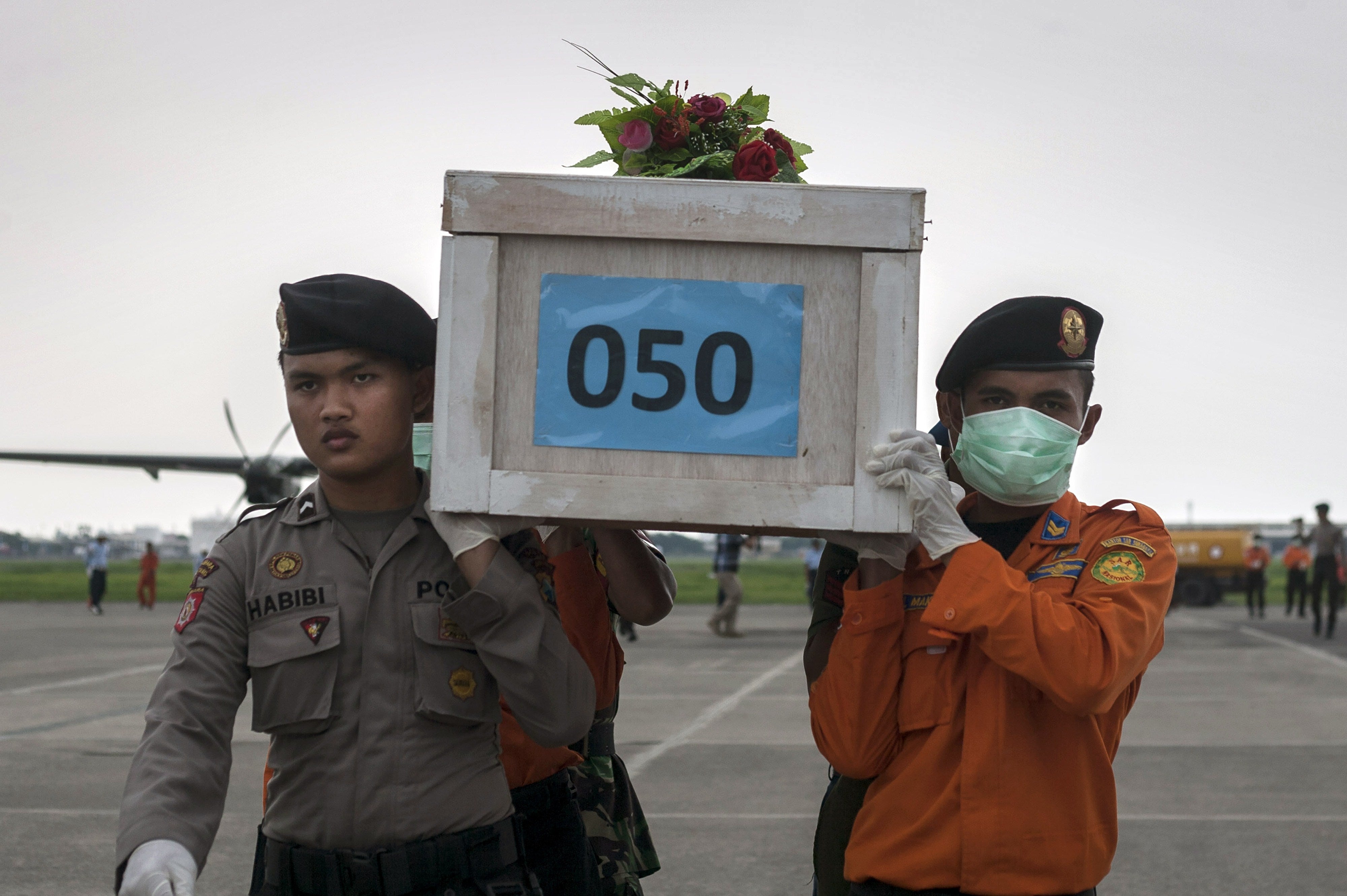
AirAsia Flight 8501 (QZ8501) was an Airbus A320-216 that crashed into the Java Sea on December 28, 2014, resulting in the loss of all 162 people on board. The disaster was triggered by a recurring technical malfunction in the Rudder Travel Limiter Unit (RTLU) and was compounded by the flight crew’s subsequent attempt to troubleshoot the issue by resetting circuit breakers, which led to an aerodynamic stall.
The loss of QZ8501 remains a watershed moment in aviation safety, specifically regarding "upset prevention and recovery training" (UPRT) and the management of automated flight systems. As of 2026, the investigation's findings continue to influence how pilots are trained to handle high-altitude stalls and how maintenance crews address "nuisance" recurring faults. This comprehensive look examines the technical failures, the human-machine interface breakdown, and the lasting legacy of the disaster.
The Flight Profile and Initial Sequence
Flight QZ8501 was a scheduled international flight from Surabaya, Indonesia, to Singapore. On board were 155 passengers and seven crew members. The aircraft, registration PK-AXC, was an Airbus A320, a workhorse of the short-to-medium haul industry known for its "fly-by-wire" technology.
The flight departed Juanda International Airport at 05:35 local time. Approximately 30 minutes into the flight, while cruising at Flight Level 320 (32,000 feet), the crew encountered weather along their path. The pilot requested a deviation to the left and a climb to 38,000 feet to avoid towering cumulus clouds. While Air Traffic Control (ATC) approved the deviation, the climb was initially denied due to other traffic in the area.
Shortly after this interaction, the aircraft began to experience the technical issues that would ultimately lead to its destruction. It is important to note that while weather was a factor in the crew's workload and routing, the Indonesian National Transportation Safety Committee (NTSC) determined that the weather was not the direct cause of the crash.
The Technical Trigger: The Rudder Travel Limiter Unit (RTLU)
The catalyst for the disaster was a fault in the Rudder Travel Limiter Unit (RTLU). On the Airbus A320, the RTLU is a system that restricts the physical movement of the rudder as the aircraft increases speed. This prevents the pilot or the autopilot from making large, abrupt rudder movements at high speeds that could cause structural damage to the vertical stabilizer.
The Cracked Solder Joint
The NTSC investigation revealed that the RTLU on PK-AXC had a cracked solder joint on one of its electronic circuit boards. This crack was microscopic and subject to thermal expansion and contraction. When the circuit board became warm, the crack could expand, breaking the electrical connection and sending a fault signal to the cockpit.
Maintenance History
Evidence showed that this specific aircraft had suffered 23 RTLU-related faults in the 12 months leading up to the crash. In the month of December 2014 alone, the frequency of these faults increased significantly. Maintenance crews had attempted to fix the issue multiple times through various resets and component cleaning, but the underlying cracked solder joint was never identified or repaired. This is what the industry calls a "recurring fault" or a "nuisance message," which can lead to complacency among both flight and ground crews.
The Troubleshooting Error: The FAC Reset
As the RTLU fault triggered "Master Caution" alarms in the cockpit, the crew followed the Electronic Centralized Aircraft Monitor (ECAM) procedures for the first three occurrences. These involved simple resets that momentarily resolved the issue. However, when the fault occurred for a fourth time within minutes, the Captain decided to take a more drastic measure.
The Captain left his seat to reach the circuit breaker panel located behind the First Officer. He pulled the circuit breakers for the Flight Augmentation Computers (FAC). The FACs are critical systems that manage rudder travel, flight envelope protections, and various other automated functions.
By pulling the circuit breakers, the Captain achieved two things, one intended and one catastrophic:
- Intended: He reset the computers, which cleared the RTLU fault message.
- Unintended: He disabled the autopilot, the auto-throttle, and, most importantly, the aircraft’s "Normal Law" flight protections.
Transition to Alternate Law
When the FACs were disabled, the Airbus A320 transitioned from Normal Law (where the computer prevents the pilot from stalling the plane or over-stressing the airframe) to Alternate Law. In Alternate Law, the pilot has direct control, but the safety "buffer" or "envelope" that prevents an aerodynamic stall is no longer active.
The Fatal Sequence: Aerodynamic Stall
When the autopilot disconnected due to the FAC reset, the aircraft was in a slight bank. The First Officer, who was now the Pilot Flying (PF), was caught off guard by the sudden transition to manual flight at high altitude.
Spatial Disorientation
Data from the Flight Data Recorder (FDR) indicated that the First Officer made an abrupt and sustained "pitch-up" input on his side-stick. In the thin air at 32,000 feet, this caused the aircraft to climb rapidly, reaching a rate of nearly 11,000 feet per minute. Such a steep climb is unsustainable for a commercial airliner at that altitude.
The aircraft’s angle of attack—the angle between the wing and the oncoming air—increased until it exceeded the critical limit. The aircraft entered an aerodynamic stall. At this point, the wings lost lift, and the aircraft began to fall rapidly while the nose remained pitched up.
Conflicting Inputs and Side-stick Logic
A major contributing factor in the inability to recover was a breakdown in Crew Resource Management (CRM).
- The First Officer continued to pull back on his stick (requesting more climb).
- The Captain, eventually realizing the danger, pushed forward on his stick (requesting a dive to gain speed and recover from the stall).
Because the Airbus side-sticks are not mechanically linked (unlike the yokes on a Boeing aircraft), one pilot does not feel what the other is doing. When both pilots move their sticks simultaneously, the inputs are "summed." If one pulls back 10 degrees and the other pushes forward 10 degrees, the net input is zero. In the case of QZ8501, the First Officer’s pull-back input was more sustained, which neutralized the Captain’s attempt to push the nose down. The crew never successfully coordinated the "Dual Input" warning or the "Priority" takeover function.
Search, Recovery, and Investigation Findings
The aircraft disappeared from radar at 06:17 local time. An extensive international search and rescue operation was launched, involving Indonesia, Singapore, Malaysia, Australia, and the United States.
Wreckage Location
Debris and bodies were first spotted on December 30, 2014, in the Karimata Strait of the Java Sea. The shallow but murky waters made recovery difficult, especially during the monsoon season. The Flight Data Recorder (FDR) and Cockpit Voice Recorder (CVR) were eventually recovered from the sea floor in January 2015, providing the necessary data to reconstruct the final minutes.
Final NTSC Report Summary
The NTSC released its final report in December 2015. It concluded that the crash resulted from a chain of events starting with the technical failure of the RTLU. However, the report placed significant weight on the crew's response. The key findings included:
- The RTLU Fault: The cracked solder joint was the initiating event.
- Maintenance Shortfalls: The failure of the airline to effectively resolve a recurring fault.
- Operational Error: The Captain’s decision to reset the FAC circuit breakers in flight.
- Loss of Control: The First Officer’s inappropriate control inputs and the crew's inability to communicate effectively during the emergency.
| Technical Aspect | Detail |
|---|---|
| Aircraft Model | Airbus A320-216 |
| Registration | PK-AXC |
| Initiating System Failure | Rudder Travel Limiter Unit (RTLU) |
| Root Technical Cause | Microscopic crack in electronic solder joint |
| Flight Law Transition | Normal Law to Alternate Law |
| Maximum Climb Rate | ~11,000 feet per minute (Abnormal) |
| Final State | Deep aerodynamic stall |
| Total Fatalities | 162 |
The Legacy of AirAsia 8501 in 2026
By 2026, the lessons of AirAsia 8501 have been deeply integrated into the global aviation infrastructure. The disaster highlighted that even the most advanced automated aircraft require pilots to maintain high-level manual flying skills and a deep understanding of systems logic.
1. Upset Prevention and Recovery Training (UPRT)
Following QZ8501 and the similar loss of Air France 447, the International Civil Aviation Organization (ICAO) and various national regulators (like the FAA and EASA) mandated enhanced UPRT. Pilots now undergo rigorous simulator training specifically designed to help them recognize and recover from high-altitude stalls and "unusual attitudes" in Alternate Law.
2. GADSS and Flight Tracking
The disappearance of Flight 8501, shortly after the disappearance of MH370, accelerated the implementation of the Global Aeronautical Distress and Safety System (GADSS). By 2026, aircraft are required to transmit their position more frequently, and "autonomous distress tracking" ensures that if an aircraft behaves abnormally, its location is broadcasted instantly to search and rescue authorities.
3. Managing Recurring Faults
Airlines have overhauled their "Reliability Programs." In 2026, advanced data analytics and AI-driven maintenance systems flag recurring faults like the RTLU issue on PK-AXC much more aggressively. A "nuisance" fault that occurs more than a set number of times within a specific window now triggers a "no-go" status or mandatory component replacement, preventing crews from becoming desensitized to cockpit warnings.
4. Side-stick Awareness
While Airbus has maintained its non-linked side-stick design, training protocols have been updated to emphasize the "Dual Input" audio-visual warnings. Pilots are trained to be more assertive with the "Priority" button to ensure only one pilot is flying the aircraft during a crisis.
Frequently Asked Questions
Was weather the main cause of the AirAsia 8501 crash?
No. While there was severe weather in the area and the pilots were maneuvering to avoid it, the investigation concluded that the weather did not cause the aircraft to crash. The aircraft was flying safely until the crew attempted to troubleshoot a technical fault in the rudder system, which led to a loss of control.
What is a Rudder Travel Limiter Unit (RTLU)?
The RTLU is a safety device that limits how much the rudder can move at high speeds. This prevents the pilot from making a movement that could snap the tail off the plane. In Flight 8501, a tiny crack in a circuit board caused this system to fail repeatedly, triggering alarms in the cockpit.
Why did the pilots' actions make the situation worse?
The Captain tried to "fix" the problem by pulling circuit breakers to reset the flight computers. This turned off the autopilot and the aircraft's automatic safety protections. The First Officer, surprised by the change, accidentally pulled the nose of the plane up too steeply, causing it to stall and fall out of the sky.
Did any passengers survive the 8501 crash?
No. All 162 people on board, including 155 passengers and 7 crew members, perished when the aircraft impacted the water. The impact was high-velocity, and the aircraft broke apart upon hitting the Java Sea.
How has pilot training changed since this disaster?
Pilots now receive much more intensive training on "manual handling" at high altitudes. They also practice specific scenarios where the flight computers fail, learning how to stay calm and fly the aircraft without the aid of automated safety buffers. There is also a much greater focus on communication (Crew Resource Management) to prevent conflicting inputs on the controls.
Practical Recommendation for Aviation Professionals
For maintenance engineers and flight crews, the most critical takeaway from Flight 8501 is the danger of the "Nuisance Fault." When a system fails repeatedly and is "fixed" with a simple reset, it creates a dangerous environment where crews stop respecting the warning.
Next Actions:
- For Operators: Ensure that your reliability management system (RMS) is configured to ground aircraft that exceed a "three-strikes" threshold for the same fault within a 30-day period.
- For Pilots: Never attempt to troubleshoot beyond the approved ECAM or QRH (Quick Reference Handbook) procedures—specifically, avoid resetting circuit breakers in flight unless explicitly directed by the manual.
- For Safety Officers: Review internal CRM training to ensure that "Dual Input" scenarios are practiced in every simulator session, focusing on clear "I have control" handovers.