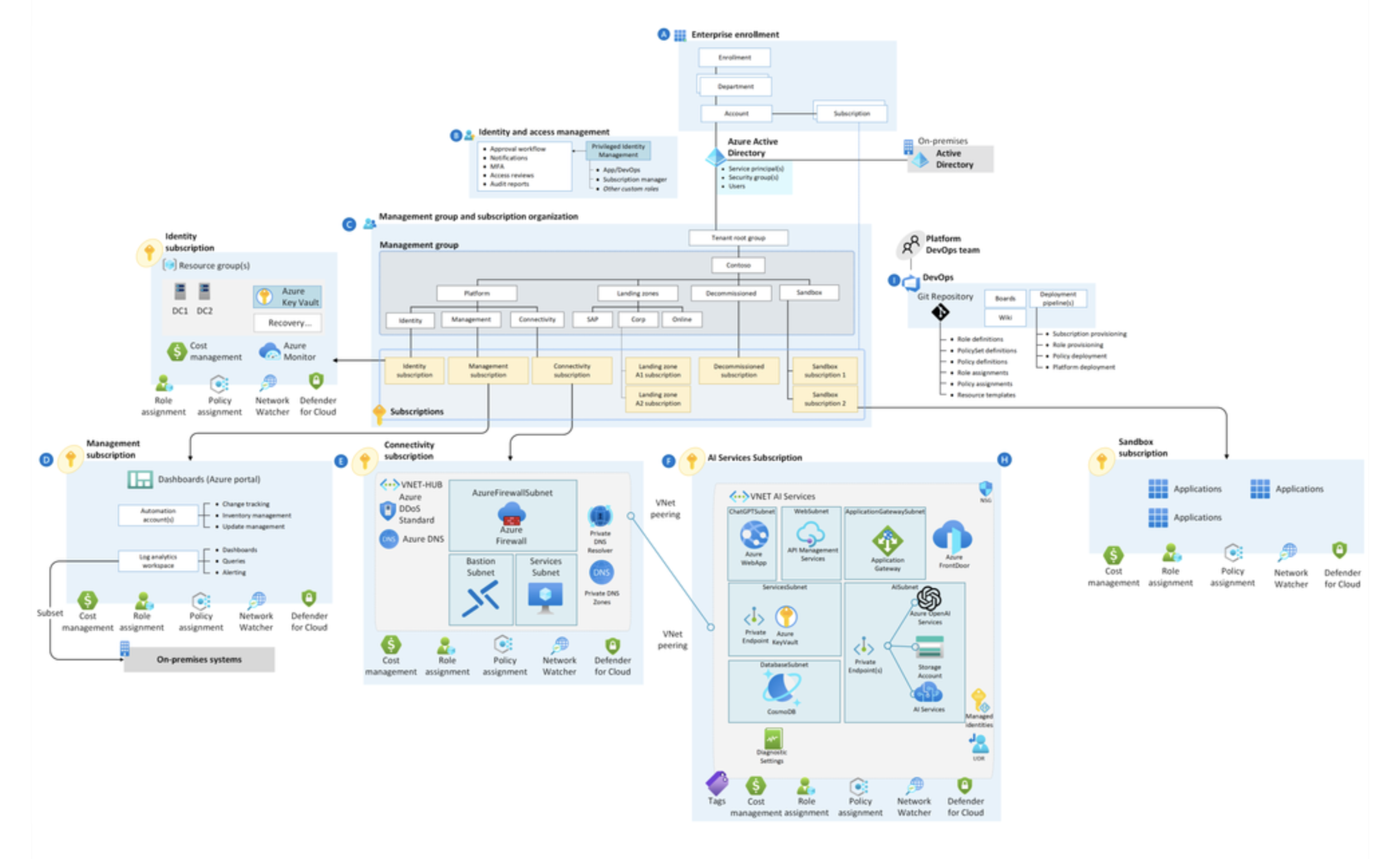
Navigating cloud adoption in the public sector requires harmonizing Microsoft’s structured migration guidelines with stringent regulatory frameworks. Organizations must implement robust security baselines through the Azure Cloud Adoption Framework while strictly aligning with government mandates, identity standards, and continuous compliance protocols to mitigate risk.
Introduction to Cloud Adoption in Regulated Sectors
Public sector entities, defense agencies, and government-regulated contractors face a distinct set of challenges when moving workloads to hyperscale cloud environments. While commercial enterprises often prioritize speed-to-market and operational agility, government organizations must balance these efficiencies with immutable legal obligations, stringent security baselines, and complex compliance frameworks. The Microsoft Azure Cloud Adoption Framework (CAF) provides a structured blueprint for digital transformation, but applying these principles in a government context requires deep alignment with mandates such as FedRAMP, NIST Special Publications, and localized regional compliance standards.
Understanding how to bridge the gap between Microsoft’s prescribed CAF security baselines and statutory government mandates is essential for avoiding deployment delays, security vulnerabilities, and compliance penalties. This article explores five critical considerations for organizations designing secure, compliant Azure environments, offering actionable insights into governance, identity management, data protection, and continuous monitoring.
1. Establishing Rigorous Governance via the Azure Cloud Adoption Framework
The Governance discipline within the Azure Cloud Adoption Framework forms the structural foundation for managing risk, cost, and compliance across a multi-tenant cloud estate. Without a well-defined governance model, agencies risk configuration drift, shadow IT, and severe security gaps.
Defining Corporate Policy and Regulatory Alignment
Corporate policy in the public sector is dictated by statute rather than internal preference. The CAF governance model requires administrators to translate legislative mandates and internal policies into technical enforcement mechanisms. This is achieved through Azure Policy, which automates compliance checking and remediation across subscriptions and management groups.
When establishing governance baselines, teams must map every regulatory requirement—such as data residency rules or encryption standards—to specific Azure Policy definitions. For instance, if a government mandate requires all data to reside within specific geographic boundaries, Azure Policy can deny the creation of storage accounts or compute resources outside those designated regions.
Management Groups and Subscription Design
A scalable Azure architecture relies on a well-designed hierarchy of management groups. By organizing subscriptions based on security requirements, data sensitivity, and operational ownership, organizations can apply targeted governance guardrails.
- Root Management Group: Serves as the apex for organizational policy enforcement.
- Platform Management Group: Houses foundational subscriptions for connectivity, identity, and management.
- Landing Zone Management Group: Contains application-specific workloads that inherit baseline policies while retaining operational flexibility.
Implementing this hierarchy ensures that government mandates enforced at the root level cannot be inadvertently bypassed by individual project teams.
2. Implementing Zero Trust Architecture and Identity Baselines
Government mandates universally emphasize identity as the new security perimeter. The shift away from traditional network-based perimeters toward a Zero Trust model requires comprehensive integration between Microsoft Entra ID (formerly Azure Active Directory) and existing identity providers.
Enforcing Multi-Factor Authentication and Conditional Access
Security baselines demand strict identity verification for every access attempt, regardless of whether the user originates from an internal network or an external location. Conditional Access policies in Microsoft Entra ID serve as the operational engine for these baselines.
Agencies must enforce phishing-resistant multi-factor authentication (MFA), such as FIDO2 security keys or certificate-based authentication, for all privileged and standard users. Conditional access rules should evaluate signal variables in real-time, including:
- User or group membership
- Device compliance status and managed state
- Risk level associated with the sign-in session
- Network location and trusted IP ranges
Privileged Identity Management (PIM)
Standing administrative access represents one of the largest attack surfaces in any cloud environment. Azure AD Privileged Identity Management (PIM) eliminates standing administrative rights by enforcing Just-In-Time (JIT) access. Administrators must request elevation for specific tasks, undergo approval workflows, and operate under time-bound sessions with mandatory logging and auditing.
3. Complying with Regional and Sector-Specific Government Mandates
Government cloud adoption is rarely a purely technical exercise; it is heavily bound by regulatory frameworks that dictate how data must be stored, processed, and protected. Organizations must navigate specialized cloud environments tailored to public sector requirements.
Federal Risk and Authorization Management Program (FedRAMP) and Equivalents
In the United States, federal agencies and contractors must utilize cloud services certified at appropriate FedRAMP impact levels (e.g., FedRAMP Moderate or High). Microsoft operates specialized cloud regions—such as Azure Government—that are physically and logically segregated from commercial clouds and designed to meet these stringent regulatory requirements.
- Azure Government Cloud
- FedRAMP High/Moderate Compliant Datacenters
- DoD IL4 / IL5 / IL6 Isolated Enclaves
- Integrated Compliance Tooling (Microsoft Purview & Defender for Cloud)
Beyond FedRAMP, international and regional mandates—such as the European Union's General Data Protection Regulation (GDPR), the UK's Cyber Essentials, or Department of Defense (DoD) Impact Levels (IL4, IL5, IL6)—dictate specific architectural constraints. Security baselines must be tailored to the exact regulatory tier governing the workload.
Data Sovereignty and Cryptographic Controls
Government mandates often prohibit data from leaving national borders or being accessed by foreign entities, even for support purposes. Azure provides features such as Customer-Managed Keys (CMK) via Azure Key Vault, allowing agencies to retain sole control over the cryptographic keys used to encrypt data at rest. Furthermore, Confidential Computing capabilities protect data while in use by isolating processing inside hardware-based Trusted Execution Environments (TEEs).
4. Network Security, Micro-Segmentation, and Perimeter Defense
A secure cloud adoption strategy requires moving away from flat networks toward highly segmented architectures that limit lateral movement in the event of a breach.
Hub-and-Spoke Network Topologies
The CAF recommends a hub-and-spoke network topology for enterprise and government deployments.
- The Hub Virtual Network (VNet): Acts as a central point for shared services, including Azure Firewall, VPN gateways, ExpressRoute circuits, and intrusion detection systems.
- Spoke VNets: Host workload environments and connect to the hub via VNet peering.
This architecture centralizes security inspection, ensuring that all inbound, outbound, and inter-spoke traffic traverses centralized security controls.
Network Security Groups (NSGs) and Azure Firewall
Micro-segmentation is achieved by combining Azure NSGs at the subnet and Network Interface Card (NIC) levels with Azure Firewall rules. Government security baselines typically require default-deny network postures, where all traffic is blocked unless explicitly authorized by business and security requirements. Utilizing Azure Firewall Premium adds advanced threat intelligence-based filtering, TLS inspection, and URL filtering capabilities to meet rigorous intelligence community standards.
5. Continuous Monitoring, Auditing, and Compliance Automation
Achieving initial compliance is only the first step; maintaining an auditable security posture over time requires continuous monitoring and automated remediation.
Microsoft Defender for Cloud and Sentinel
Microsoft Defender for Cloud provides native Cloud Security Posture Management (CSPM) and Cloud Workload Protection Platform (CWPP) capabilities. It continuously assesses Azure resources against regulatory compliance standards—such as NIST SP 800-53 or CIS Benchmarks—and generates a secure score.
For security event management, Microsoft Sentinel aggregates telemetry from Azure, on-premises systems, and multi-cloud environments. Security Operations Center (SOC) teams use Sentinel's built-in analytics rules and threat-hunting queries to detect anomalies and automate incident response via playbooks.
Infrastructure as Code (IaC) and Compliance as Code
To ensure consistency and prevent configuration drift, government agencies should deploy cloud environments using Infrastructure as Code (IaC) tools such as Bicep, Terraform, or Azure Resource Manager (ARM) templates. Integrating security scanning tools into CI/CD pipelines ensures that compliance rules are validated before resources are provisioned in production.
| Comparison Area | Traditional On-Premises Security | Azure CAF & Mandate Alignment |
|---|---|---|
| Perimeter Defense | Physical firewalls and internal VLANs | Software-defined perimeters, Zero Trust, and micro-segmentation |
| Identity Management | Active Directory domain controllers | Cloud-native Microsoft Entra ID with risk-based Conditional Access |
| Compliance Auditing | Manual point-in-time audits and paperwork | Continuous automated posture assessment and real-time reporting |
| Deployment Speed | Months or years for hardware procurement | Minutes via Infrastructure as Code and standardized landing zones |
Frequently Asked Questions
What is the Azure Cloud Adoption Framework, and why is it important for government agencies?
The Azure Cloud Adoption Framework (CAF) is a comprehensive set of documentation, guidance, and best practices provided by Microsoft to help organizations plan, build, and govern their cloud environments. It is important for government agencies because it provides a proven, repeatable methodology to align cloud migration with security baselines, risk management frameworks, and statutory compliance requirements.
How do Azure security baselines differ from commercial security defaults?
Azure security baselines for government environments incorporate stricter default settings than standard commercial configurations. These differences often include mandatory multi-factor authentication, forced data encryption using customer-managed keys, restricted outbound internet access, stricter logging retention policies, and deployment within isolated government cloud regions to satisfy legal frameworks.
Can standard commercial Azure tenants be used for government workloads?
While some low-impact public sector workloads can reside in commercial Azure regions with appropriate configuration, most regulated government, defense, and intelligence workloads require Azure Government or Azure Secret/Top Secret regions. These specialized environments feature dedicated personnel, physical separation, and formal accreditation matching high-level security mandates.
How does Azure help maintain continuous compliance with NIST and FedRAMP?
Azure integrates compliance tooling like Microsoft Purview and Microsoft Defender for Cloud, which map cloud resource configurations directly to NIST Special Publication controls and FedRAMP requirements. These tools continuously monitor environments, highlight configuration drift, and generate compliance reports required by third-party assessors (3PAOs).
What is the role of Infrastructure as Code (IaC) in government cloud security?
Infrastructure as Code (IaC) allows administrators to define cloud environments using human-readable configuration files. In government adoption, IaC ensures that security baselines and compliance policies are baked into the deployment scripts from inception, eliminating human error, enforcing repeatability, and enabling automated security scanning before resources go live.
Conclusion and Next Actions
Adopting Microsoft Azure within a government or highly regulated context requires strict adherence to both internal architectural best practices and external legal mandates. By implementing the Azure Cloud Adoption Framework's governance structures, enforcing Zero Trust identity models, selecting appropriate sovereign cloud regions, utilizing micro-segmentation, and automating continuous compliance monitoring, organizations can build secure, resilient, and audit-ready cloud estates.
To initiate or refine your cloud adoption journey, begin by mapping your organization's specific regulatory requirements to the corresponding Microsoft cloud environment. Conduct a comprehensive assessment of existing identity and network topologies, deploy a pilot landing zone using automated Infrastructure as Code templates, and integrate Microsoft Defender for Cloud to establish baseline visibility before migrating critical public sector workloads.