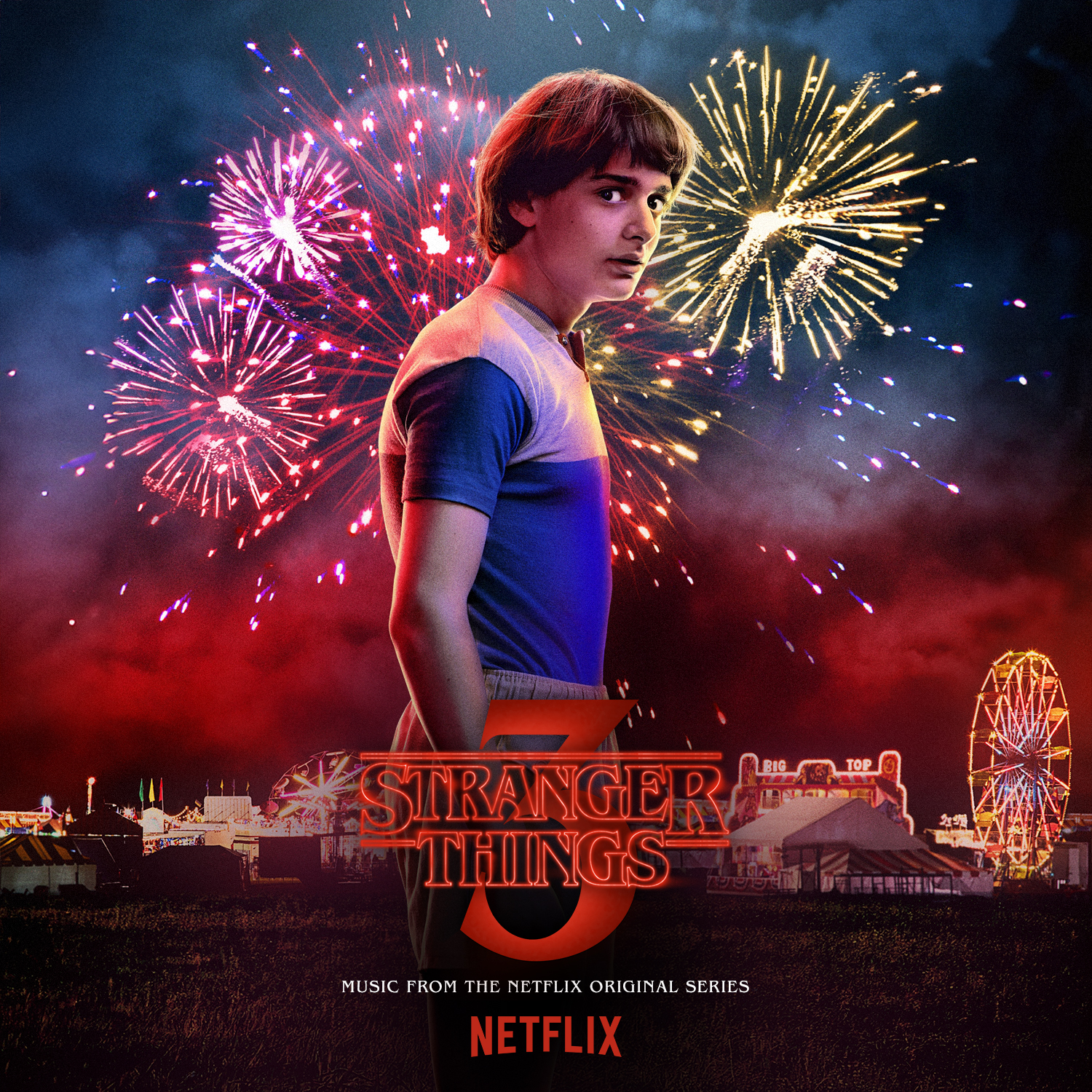
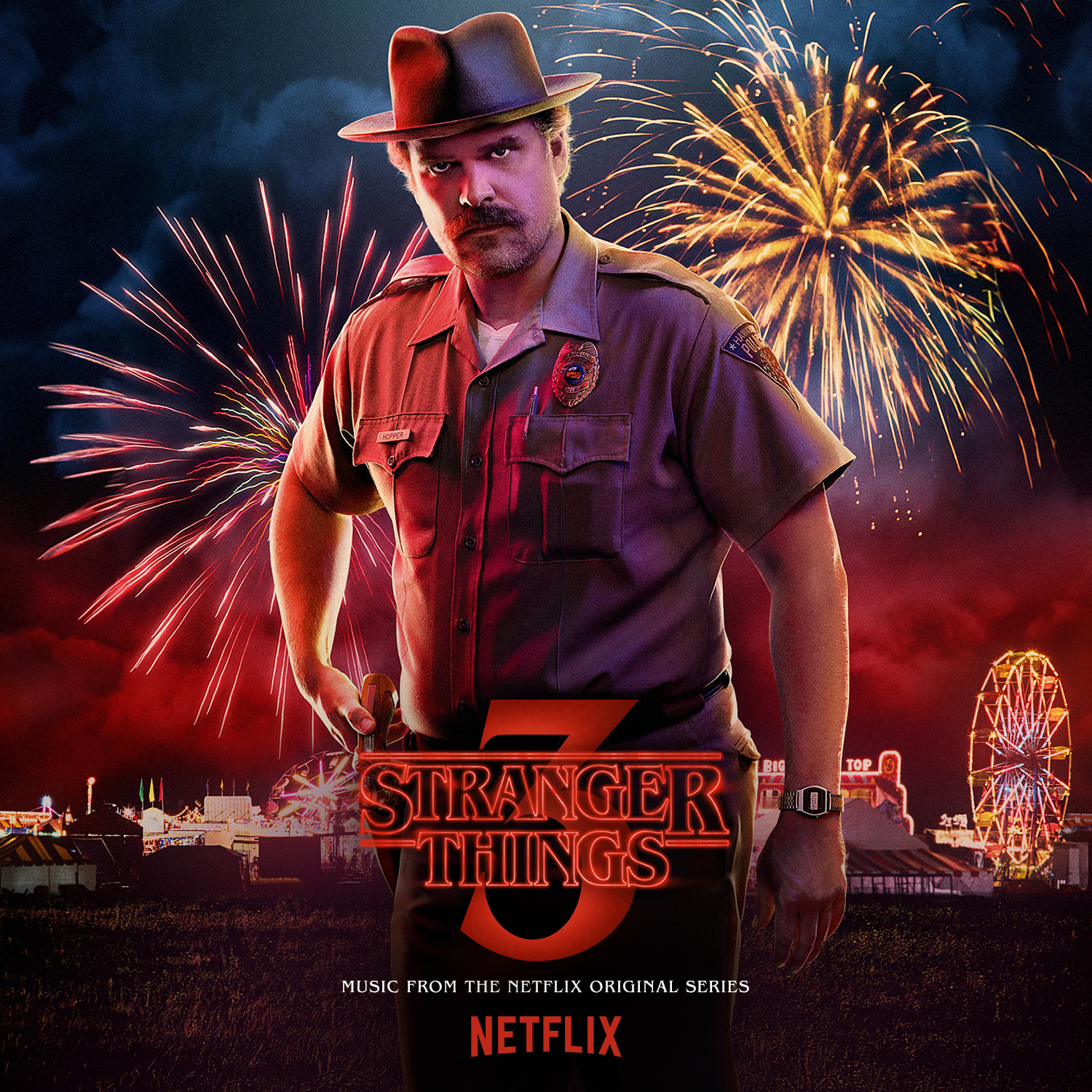
Season 3 of Netflix's hit sci-fi horror series Stranger Things shifts the narrative from the eerie woods and autumn chill of Indiana to the neon-drenched, consumer-driven summer of 1985, centering on the newly opened Starcourt Mall, Cold War espionage, and a mutated Mind Flayer threatening both Hawkins and the world.
Introduction to Summer 1985 in Hawkins
The third season of Stranger Things, released on Netflix globally on July 4, 2019, pivots away from the traditional dark, academic, or wintry aesthetics of its first two runs and plunges headfirst into the vibrant, commercialized culture of mid-1980s America. The town of Hawkins, Indiana, is no longer just a sleepy Midwestern community dealing with local government cover-ups; it is now home to the massive Starcourt Mall. This gleaming retail palace has drastically altered the town's ecosystem, drawing local foot traffic away from downtown businesses and serving as a central hub for the younger generation, including Mike Wheeler, Eleven, Dustin Henderson, Lucas Sinclair, Max Mayfield, and Will Byers.
Behind the bright facades of ice cream shops, movie theaters, and clothing stores, however, subterranean machinations are underway. A secret Soviet military installation has been constructed deep beneath the foundations of Starcourt Mall. The Soviet objective is to force open a tear in the fabric of space-time that was previously sealed beneath Hawkins National Laboratory at the end of Season 2. As the Soviets drill into the dimensional barrier, they inadvertently awaken an eldritch entity from the Upside Down: the Mind Flayer.
This comprehensive summary examines the complex narrative threads of Stranger Things Season 3, detailing the character arcs, the mechanics of the Soviet conspiracy, the horrific biology of the resurrected Mind Flayer, and the tragic conclusion that forever changes the dynamics of the core group.
The Shifting Dynamics of the Hawkins Youth and Adults
As the summer of 1985 begins, the core group of teenagers is experiencing the rapid, often painful onset of adolescence. Childhood games of Dungeons & Dragons are beginning to take a backseat to changing social interests, romantic relationships, and individual identities.
Romance, Independence, and Growing Pains
Mike and Eleven are deeply infatuated with one another, spending the vast majority of their time together in Eleven's cabin or hanging out at the mall. This intense attachment concerns Jim Hopper, Eleven’s adoptive father, who struggles with the emotional reality of his daughter growing up. Hopper’s anxiety manifests as aggressive overprotectiveness, leading to communication breakdowns and comedic yet tense confrontations with Mike.
Concurrently, Lucas and Max are navigating their own cyclical relationship dynamics, while Dustin returns from a summer science camp at Camp Know Where with a sophisticated homemade radio tower called "Cerebro" and tales of a brilliant Utah-based genius girlfriend named Suzie. Will Byers, however, remains emotionally anchored to his childhood. Traumatized by his past possessions and psychological connection to the Upside Down, Will struggles to accept that his friends are moving past board games into romantic interests. His frustration culminates in a pivotal argument where he destroys his childhood castle in the woods, highlighting a poignant theme of the season: the forced, sometimes heartbreaking end of childhood innocence.
Adult Plotlines: Jobs, Romance, and Espionage
The adult characters face parallel transformations. Joyce Byers and Jim Hopper navigate a simmering, unresolved romantic tension that underlines much of the season’s comedic and emotional beats. Joyce is also preoccupied with a mundane yet deeply unsettling mystery: refrigerator magnets throughout Hawkins are mysteriously losing their magnetic properties. This localized scientific anomaly prompts her to consult middle school science teacher Mr. Clarke, setting her on an investigative path that ultimately intersects with classified government conspiracies.
Meanwhile, Steve Harrington has graduated from high school and now endures a mundane, low-paying summer job at Scoops Ahoy, an ice cream parlor inside Starcourt Mall, working alongside his sharp-witted former classmate Robin Buckley. When Dustin returns from camp and intercepts a coded Russian military radio transmission, he brings it to Steve. Joined by an ambitious local newspaper reporter named Erica Sinclair (Lucas’s younger sister), this unlikely crew forms an investigative unit to decode the Soviet communications.
The Soviet Threat and the Starcourt Sub-Basement
One of the most consequential expansions of the Stranger Things mythos in Season 3 is the introduction of a tangible geopolitical threat: the Soviet Union. Operating under the guise of American corporate front companies, Soviet military personnel have infiltrated Hawkins to bypass the closure of the Gate by Eleven at the end of Season 2.
Infiltration and Industrial Espionage
The Soviets purchase vast tracts of land around Hawkins and fund the construction of Starcourt Mall to use its massive structural footprint and logistical network as a cover for their illicit operations. Deep beneath the commercial concourse, they construct a high-tech subterranean base equipped with a massive thermal drill known as the "Key." This device is designed to melt through the electromagnetic barrier separating our dimension from the Upside Down.
The operation is ruthless, highly organized, and overseen by lethal operatives, including a Terminator-esque hitman named Grigori. Their presence in Hawkins highlights how the supernatural anomalies discovered by the United States government are viewed by foreign powers as ultimate tactical and military assets.
The Underground Infiltration Mission
When Dustin, Steve, Robin, and Erica successfully decode the Russian message intercepted via Cerebro, they discover a smuggling ring operating beneath the mall. Using a service elevator chute, Steve and Dustin infiltrate the sub-basement, where they discover heavily armed Soviet guards and laboratories filled with experimental technology.
Although Steve and Dustin are eventually captured and interrogated—and subjected to a truth serum that leads to a memorable, hallucinatory escape aided by Robin and Erica—their espionage exposes the sheer scale of the communist intrusion. They manage to smuggle out a coded keycard and establish radio contact with the older teenagers, bridging the gap between the local mystery and the impending cosmic disaster.
The Return and Evolution of the Mind Flayer
While the Soviet Union attempts to force open the gate through sheer engineering and brute thermal force, the entity known as the Mind Flayer utilizes biological subversion to establish a physical foothold in the material world.
The Flaying of Hawkins
Because the main gate to the Upside Down is only partially open due to Eleven's previous efforts, the Mind Flayer cannot cross over into its massive shadow form. Instead, it exists in a dispersed, gaseous state within our dimension. To gain physical mass and agency, the entity begins "flaying" living hosts.
The Mind Flayer targets vulnerable members of the Hawkins community, most notably Billy Hargrove, Max’s abrasive stepbrother. While driving to a liaison, Billy crashes his car after encountering a supernatural disturbance and is dragged into a derelict steel mill. There, the shadowy entity enters his body, turning him into its primary human proxy.
Under the Mind Flayer's control, Billy abducts numerous Hawkins residents—predominantly working-class citizens, including local lifeguards and elderly townsfolk—and forces them to ingest industrial chemicals, liquid fertilizer, and bleach. Once ingested, these chemicals break down their cellular structures, causing their bodies to melt into viscous, organic biomass.
The Meat Flayer
The harvested biomass from dozens of infected citizens is systematically dragged back to the steel mill and fused together into a singular, colossal monstrosity. This creature—frequently referred to by fans and production notes as the "Meat Flayer"—is a towering, multi-limbed creature composed of human and animal tissue, bone, and psychic energy, directed entirely by the consciousness of the Mind Flayer.
The creature tracks the children down, launching violent, destructive assaults, including an unforgettable confrontation inside the Hawkins Memorial Hospital. During this battle, the entity nearly kills Eleven, leaving a piece of living organic material embedded inside a wound on her leg—a parasitic anchor that further weakens her psychic abilities throughout the climax.
Character Development and Key Figures
Season 3 relies heavily on established character dynamics while introducing fresh pairings that deepen the emotional resonance of the narrative.
| Character | Primary Season 3 Arc | Key Relationships & Alliances |
|---|---|---|
| Eleven (Jane Hopper) | Navigating teenage independence, discovering personal identity outside of the lab, and fighting to retain her powers after psychic exhaustion. | Mike Wheeler, Jim Hopper, Max Mayfield |
| Jim Hopper | Struggling with Eleven growing up, pursuing a romantic relationship with Joyce, and investigating the Soviet conspiracy. | Joyce Byers, Eleven, Joycean romance |
| Joyce Byers | Grieving Bob Newby, investigating anomalous magnetic disturbances, and dismantling the Soviet machine alongside Hopper. | Jim Hopper, Murray Bauman |
| Steve Harrington | Evolving from high school jock into a humbled, empathetic mentor working retail at Scoops Ahoy. | Dustin Henderson, Robin Buckley, Erica Sinclair |
| Robin Buckley | Introduced as Steve’s sharp, multilingual coworker who plays an integral role in decoding and undercover espionage. | Steve Harrington, Dustin Henderson |
| Billy Hargrove | Serving as the primary human antagonist and vessel for the Mind Flayer before a redemptive final sacrifice. | Max Mayfield, The Mind Flayer |
The Battle of Starcourt Mall and Climax
The narrative converges on July 4, 1985, inside the newly opened Starcourt Mall. The various factions—the kids, the older teens, and the adult investigators—reunite just as the colossal Meat Flayer breaches the facility to hunt down Eleven.
The Assault on the Mall
The group executes a desperate defense plan. The younger kids hide in the mall's movie theater, while Dustin and Erica coordinate radio frequencies from the roof to guide Steve and Robin. Joyce and Hopper, accompanied by private investigator Murray Bauman, infiltrate the secret Soviet base using a set of stolen security codes provided by Alexei, a defecting Russian scientist.
Inside the mall concourse, the Mind Flayer attacks with overwhelming force. Billy Hargrove confronts Eleven directly, pinning her down and preparing to deliver her to the entity. However, in his final moments of lucidity, Eleven uses her psychic abilities to reach into Billy's memories, reminding him of his mother and his childhood before the abuse that hardened him. This emotional breakthrough shatters the Mind Flayer's control over Billy. In an act of ultimate redemption, Billy sacrifices his own life by positioning himself between Eleven and the advancing entity, taking the fatal strikes meant for her.
Closing the Gate
Simultaneously, deep in the underground base, Joyce and Hopper reach the Soviet chamber housing the Key. To close the dimensional rift, the twin dials controlling the thermal drill must be turned simultaneously by two individuals—a dangerous procedure that will release massive amounts of energy and radiation, sealing the room permanently.
Before Hopper can execute the final sequence, the relentless Soviet assassin Grigori attacks him. A brutal, agonizing hand-to-hand combat sequence ensues on the gantry above the massive laser. Hopper manages to kill Grigori by throwing him into the path of the rotating energy beam. However, the structural damage to the machinery and the imminent meltdown prevent Hopper from escaping the room.
Recognizing that the drill must be destroyed immediately to save the children and the world, Joyce tearfully locks eyes with Hopper. With a subtle nod of acceptance, Hopper tells her it is okay. Joyce turns the keys, detonating the machine, obliterating the Soviet base, and seemingly vaporizing Jim Hopper in a cataclysmic blast of energy.
Aftermath and Consequences
The fallout from the Battle of Starcourt Mall fundamentally alters the lives of every surviving character in Hawkins.
Public Cover-Up and Geopolitical Fallout
The United States government steps in to manage the disaster, attributing the destruction of Starcourt Mall and the loss of life to a massive shopping center fire caused by electrical malfunctions. The Soviet presence is quietly neutralized through classified channels, preventing a full-scale international military conflict, while Hawkins returns to a semblance of normalcy on the surface.
The Byers Family Relocation
The emotional toll on the Byers household is immense. Believing Hopper is dead and realizing that Hawkins holds too much trauma and danger, Joyce makes the decision to pack up her household and move away from Indiana. She takes Will, Jonathan, and an emotionally drained Eleven with her to start a new life elsewhere.
The parting scene at the Byers home features heartbreaking goodbyes. Mike and Eleven pledge to remain committed to one another, promising to visit during holidays, while Joyce and Eleven share a poignant emotional farewell.
Mid-Credits Scene: Kamchatka
A post-credits sequence set in a secret Soviet prison camp in Kamchatka, Russia, provides a critical twist. Soviet guards march through the freezing facility, selecting a prisoner to feed to a captive Demogorgon. When one guard suggests feeding an American prisoner, the commanding officer delivers a chilling directive: "No. Not the American." While this does not explicitly confirm Hopper's survival to the absolute certainty of the characters, it strongly hints that he survived the vaporization blast and is now held captive behind the Iron Curtain, setting the stage for future conflicts.
Frequently Asked Questions
What year does Stranger Things Season 3 take place?
Season 3 takes place during the summer of 1985, specifically culminating around the Fourth of July holiday. This period is culturally marked by the rise of consumer malls, Cold War tensions, and pop culture staples like Back to the Future and New Coke.
Who dies in Stranger Things Season 3?
The major casualties of Season 3 include Billy Hargrove, who sacrifices himself to save Eleven after breaking free of the Mind Flayer's control; Jim Hopper, who appears to die in the explosion closing the Soviet gate (though later seasons reveal his survival in a Russian gulag); and Alexei, the defecting Soviet scientist who is assassinated at a local carnival.
What is the creature in Stranger Things Season 3?
The primary entity is the Mind Flayer from the Upside Down. Because the main gate is only partially open, it operates by possessing human hosts—most notably Billy Hargrove—and harvesting human biomass from infected citizens to construct a massive, physical avatar known as the Meat Flayer.
Why do the Soviets want to open the Gate?
The Soviet military views the dimensional rift discovered in Hawkins as a strategic asset. By studying and controlling the supernatural phenomena of the Upside Down, they hope to gain technological or military advantages over the United States during the height of the Cold War.
Does Eleven lose her powers in Season 3?
Yes. After sustaining a serious leg wound during the attack at Hawkins Memorial Hospital—where a piece of living organic material from the Mind Flayer embeds itself in her flesh—Eleven experiences a severe psychic burnout. She loses her telekinetic and telepathic abilities entirely during the climactic battle at Starcourt Mall.
Conclusion and Recommended Next Actions
Stranger Things Season 3 successfully transitions the series from a nostalgic small-town mystery into a sprawling cinematic blockbuster spectacle, blending teenage coming-of-age drama with Cold War paranoia and cosmic horror. To fully appreciate how the narrative threads established in this season unfold, viewers should proceed directly to Season 4, which explores the geopolitical fallout of Hopper’s disappearance, Eleven’s journey to recover her powers in a secret facility, and the terrifying origins of Vecna in the Upside Down.