In 2026, the premier fitness watches for runners are the Garmin Forerunner 975, the Apple Watch Ultra 4, and the COROS Pace 4. These devices lead the market by offering unparalleled GPS accuracy, advanced recovery biometrics, and battery lives that cater to both casual joggers and elite ultramarathon athletes.
Running technology has reached a point of high refinement in 2026. The gap between professional-grade laboratory testing and wearable wrist-based data has narrowed significantly, thanks to the integration of more sophisticated optical sensors and AI-driven analysis. For runners, this means that tracking is no longer just about pace and distance; it is about holistic physiological monitoring, predictive performance modeling, and seamless environmental adaptation.
1. Garmin Forerunner 975: The Data Scientist’s Choice
The Garmin Forerunner 975 remains the gold standard for dedicated road and trail runners who prioritize deep data analysis. In 2026, Garmin has moved entirely to ultra-efficient Micro-LED displays for its flagship Forerunner line, providing the vibrant colors of AMOLED with significantly lower power consumption.
Advanced Biometrics and Firstbeat Integration
The heart of the Forerunner 975 is the Elevate Gen 6 optical sensor array. This hardware, combined with the latest Firstbeat Analytics algorithms, provides a "Training Readiness" score that is more nuanced than ever. It doesn't just look at your last night's sleep; it integrates 2026-standard variables such as Heart Rate Variability (HRV) trends, acute-to-chronic workload ratios, and even local environmental stress (temperature and altitude) to tell you exactly how hard you should train today.
A standout feature in this iteration is the Real-Time Stamina 2.0. This tool uses your historical VO2 Max and recent training loads to provide a live "fuel tank" gauge during your run. It helps runners manage their effort during marathons to ensure they do not "hit the wall" prematurely.
Battery Life and SatIQ 2.0 Technology
Battery management has seen a massive leap in 2026. The Forerunner 975 offers up to 25 days in smartwatch mode and 70 hours in full Multi-Band GNSS mode. This is made possible by SatIQ 2.0, which intelligently toggles between GPS modes. If you are running under a clear sky, it uses low-power GPS; if you enter a "urban canyon" with tall buildings or a dense forest, it automatically engages dual-frequency tracking to maintain sub-meter accuracy without the user needing to adjust settings manually.
For those interested in the official specifications and the latest firmware updates for these sensors, visiting the Garmin official site provides the most current technical documentation.
2. Apple Watch Ultra 4: The Ultimate Adventure Hybrid
The Apple Watch Ultra 4 has solidified its place as the best choice for runners who need their watch to perform as a high-end smartwatch during the workday and a rugged athletic tool on the weekends. In 2026, the Ultra 4 features a more refined titanium chassis and a display capable of hitting 3,500 nits, making it legible even in the harshest direct sunlight of the Sahara or high-altitude peaks.
Ecosystem Integration and Safety Features
What sets the Ultra 4 apart in 2026 is its "Cellular Everywhere" capability. Utilizing modernized satellite constellations, the Ultra 4 can now send emergency pings and basic "check-in" messages even when miles outside of traditional cellular range. For trail runners, this is a revolutionary safety feature.
The integration with the Apple Health app has also evolved. The watch now features non-invasive hydration monitoring—a feature that was speculative for years but has been successfully implemented in this generation using specialized infrared spectroscopy. This allows runners to receive alerts when their electrolyte balance or hydration levels drop below a critical threshold.
Performance Metrics in WatchOS 13
Running on WatchOS 13, the Ultra 4 introduces Automatic Track Detection 3.0. When you arrive at a local running track, the watch recognizes the lane you are in and provides lane-specific pacing. Furthermore, the Custom Workouts feature now allows for complex, multi-stage intervals that can be synced directly from third-party coaching platforms like TrainingPeaks or Strava without a middle-man app.
You can explore the deep integration of these health features at Apple’s health technology page.
3. COROS Pace 4: Performance Without the Weight
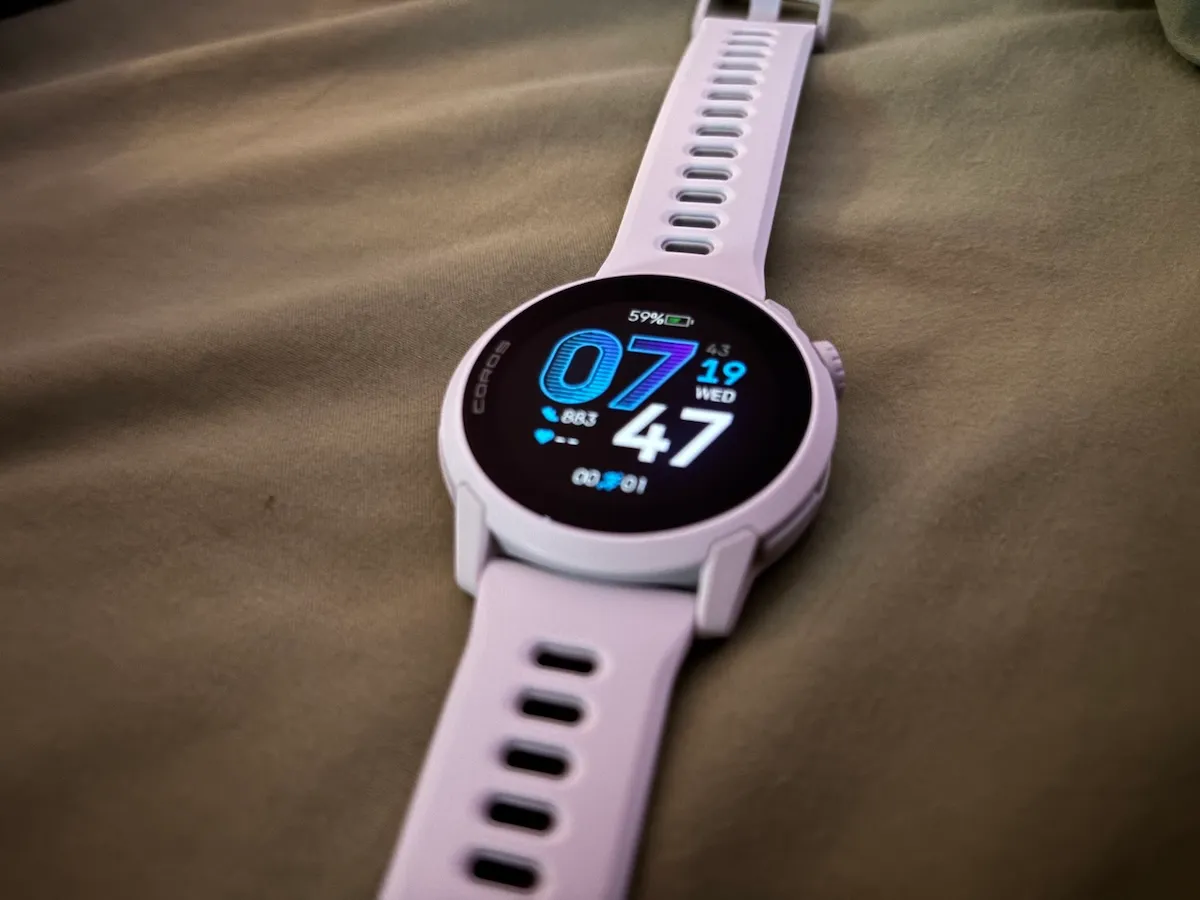
For the runner who wants a "no-nonsense" device that is so light they forget they are wearing it, the COROS Pace 4 is the undisputed champion of 2026. Weighing in at only 28 grams with a nylon band, it provides a power-to-weight ratio that Garmin and Apple struggle to match.
Battery Efficiency and EvoLab 3.0
COROS has built its reputation on battery longevity, and the Pace 4 continues this tradition. Despite its small size and new AMOLED display, it achieves a 22-day battery life. This efficiency is largely due to the EvoLab 3.0 software architecture, which offloads much of the heavy data processing from the watch's processor to the paired smartphone during sync, preserving the watch’s internal energy.
The EvoLab 3.0 platform has become a favorite for collegiate and professional running teams. It provides a "Race Predictor" that is widely considered the most accurate in the industry for distances ranging from 5K to 100 miles, as it factors in muscle fatigue and recovery quality rather than just aerobic capacity.
Ergonomics and Interface
The "Digital Dial" remains the primary interface for the COROS Pace 4. In 2026, this dial has been refined with haptic feedback that makes it easier to use while wearing gloves or when your hands are sweaty during a mid-summer tempo run. The interface is intentionally stripped back; it focuses on providing the metrics you need (Lap Pace, Cadence, Power) without the clutter of unwanted "smart" notifications.
For a detailed breakdown of the EvoLab metrics used in the Pace 4, the COROS official website offers comprehensive whitepapers on their biometric research.
Technical Comparison of 2026 Flagship Models
The following table compares the essential specifications of the three top-tier models to help you determine which fits your specific running style and environment.
| Feature | Garmin Forerunner 975 | Apple Watch Ultra 4 | COROS Pace 4 |
|---|---|---|---|
| Weight (with band) | 52g | 61g | 28g |
| Display Type | Micro-LED (Always-On) | LTPO AMOLED (3500 nits) | AMOLED |
| Battery (GPS Mode) | 70 Hours | 36 Hours (Low Power 72h) | 40 Hours |
| GPS Technology | SatIQ 2.0 Multi-Band | Dual-Frequency (L1/L5) | All-Systems GNSS |
| Key Health Metric | Training Readiness Score | Hydration Monitoring | Recovery Timer |
| Primary Controls | 5 Buttons + Touch | 2 Buttons + Digital Crown | 1 Dial + 1 Button |
| MSRP (2026 USD) | $599 | $799 | $249 |
Key Selection Criteria: How to Choose Your Watch
Selecting the right fitness watch in 2026 requires looking past the marketing jargon and focusing on your specific training constraints. Below are the primary factors that should influence your decision.
1. Training Environment
If your runs primarily take you into the backcountry or deep wilderness, the Apple Watch Ultra 4's satellite communication and the Garmin Forerunner 975's detailed topographic maps are essential. Conversely, if you are a city runner or a track specialist, the lightweight nature and "Lane Detection" of the COROS Pace 4 may be more beneficial.
2. Data Depth vs. Simplicity
Garmin provides the most "raw" data. If you enjoy looking at charts of your vertical oscillation, ground contact time, and power zones, the Forerunner 975 is built for you. However, many runners find this data overwhelming. COROS simplifies this into actionable scores, while Apple integrates it into a broader "Closing the Rings" lifestyle philosophy.
3. Battery Requirements
For the average marathoner finishing in 3.5 to 5 hours, any of these watches will easily last through the race and the surrounding travel days. However, for ultrarunners participating in 100-mile events, the Garmin Forerunner 975 is the only one that can reliably stay in high-accuracy mode for the duration of the race without needing a mid-run charge.
Common Pitfalls and Troubleshooting in 2026 Wearables
Despite the advances in 2026, runners still encounter technical hurdles. Understanding these can help you maintain the accuracy of your device.
- Optical Heart Rate Lag: Even with Gen 6 sensors, wrist-based heart rate can lag during high-intensity interval training (HIIT). If your "Training Load" seems suspiciously low after a sprint session, ensure your watch is tightened two fingers above the wrist bone. For 100% accuracy, many professionals still pair their watches with a chest strap like the Garmin HRM-Pro Plus.
- GNSS Drift in Cities: While SatIQ 2.0 is excellent, the "canyon effect" in cities like New York or Tokyo can still cause your pace to jump. If your watch shows a 4:00/mile pace while you are jogging, try switching to a single-frequency mode or relying on a footpod for more stable instantaneous pace data.
- Software Sync Failures: With the increased complexity of AI coaching, sync times have increased. If your watch fails to sync to Strava or Garmin Connect, the first step is always to check for "clutter" in the activity folder. Deleting old activities from the watch's internal storage often resolves Bluetooth handshake issues.
Frequently Asked Questions
Can I use the Apple Watch Ultra 4 with an Android phone in 2026?
No, the Apple Watch Ultra 4 remains locked to the iOS ecosystem. While there have been regulatory discussions regarding interoperability, as of 2026, you still require an iPhone to set up the device and sync health data. Garmin and COROS, however, remain fully compatible with both Android and iOS.
Is Micro-LED really better than AMOLED for running?
In 2026, Micro-LED is considered superior for outdoor athletes. It provides better sunlight legibility than AMOLED and is significantly more energy-efficient when the "Always-On" display is active. This allows the Garmin Forerunner 975 to maintain a bright map screen for hours without devastating the battery.
Do I need to pay a subscription for the data analysis?
COROS and Garmin provide all their data analysis (EvoLab and Garmin Connect) for free with the purchase of the watch. Apple includes basic metrics in the Health app for free, but more advanced coaching features and "Apple Fitness+" routines require a monthly subscription.
How accurate is the hydration monitoring on the Ultra 4?
The non-invasive hydration monitoring is accurate to within approximately 5-8% of medical-grade sweat patches. It is an excellent tool for general awareness and "thirst cues," but for medical-grade hydration management (particularly for those with specific health conditions), traditional methods are still recommended.
Which watch has the best maps in 2026?
Garmin leads this category. The Forerunner 975 features "Trendline Popularity Routing," which uses billions of miles of uploaded Garmin data to show you the most popular running routes in any city in the world. These maps are stored locally on the watch and do not require a phone connection to function.
Final Recommendation
For the runner who wants the absolute best in performance and data, the Garmin Forerunner 975 is the top choice for 2026. Its battery life, mapping capabilities, and Micro-LED display make it a nearly flawless tool for serious training.
If you are a hybrid athlete who values safety features and a premium smartwatch experience, the Apple Watch Ultra 4 is the clear winner, provided you are an iPhone user. Finally, for competitive road runners and those on a budget, the COROS Pace 4 offers 90% of the performance of the other two at less than half the price, making it the most sensible choice for the majority of runners.