2:00 PM is classified as the afternoon because it occurs two hours after the sun reaches its highest point in the sky, known as solar noon. In the 12-hour clock system, the suffix "PM" stands for the Latin post meridiem, which translates directly to "after midday."
The categorization of time is more than just a linguistic convenience; it is a fundamental aspect of how human society organizes labor, rest, and communication. To understand why 2:00 PM is considered the heart of the afternoon, one must examine the mechanics of the 12-hour clock, the etymology of time-telling terms, and the biological and social impacts of this specific time of day. As of 2026, despite the increasing digitalization of our world, these traditional divisions remain the global standard for daily scheduling.
The Mechanics of the 12-Hour Clock System
The 12-hour clock system divides the 24-hour day into two periods: AM and PM. This system is ancient, tracing its roots back to Mesopotamian and Egyptian civilizations that used base-60 and base-12 numbering systems. The division at 12:00 is not arbitrary; it is based on the meridian—an imaginary line in the sky that passes from North to South through the zenith (the point directly above an observer).
Understanding AM and PM
The abbreviations AM and PM are essential for distinguishing the first half of the day from the second.
- AM (Ante Meridiem): This Latin phrase means "before midday." It covers the hours from 12:00 midnight until 11:59:59 in the morning.
- PM (Post Meridiem): This phrase means "after midday." It covers the hours from 12:00 noon until 11:59:59 at night.
Because 2:00 PM occurs exactly two hours after the transition at noon, it is mathematically and linguistically positioned in the "after-noon" period. In a 24-hour format, which is widely used in military, medical, and international aviation contexts, 2:00 PM is represented as 14:00. This notation clarifies that 14 hours have elapsed since the start of the day at midnight.
The Noon Transition
The most common point of confusion in the 12-hour system is the designation of 12:00. Technically, noon is neither "ante" nor "post" meridiem; it is the meridian itself. However, to maintain consistency in digital clocks and scheduling, 12:00 noon is almost universally designated as 12:00 PM. This means that as soon as the clock ticks one second past 12:00:00, we are officially in the afternoon. Therefore, 2:00 PM is well established within this cycle, occurring long after the morning has concluded.
Defining the "Afternoon" Period
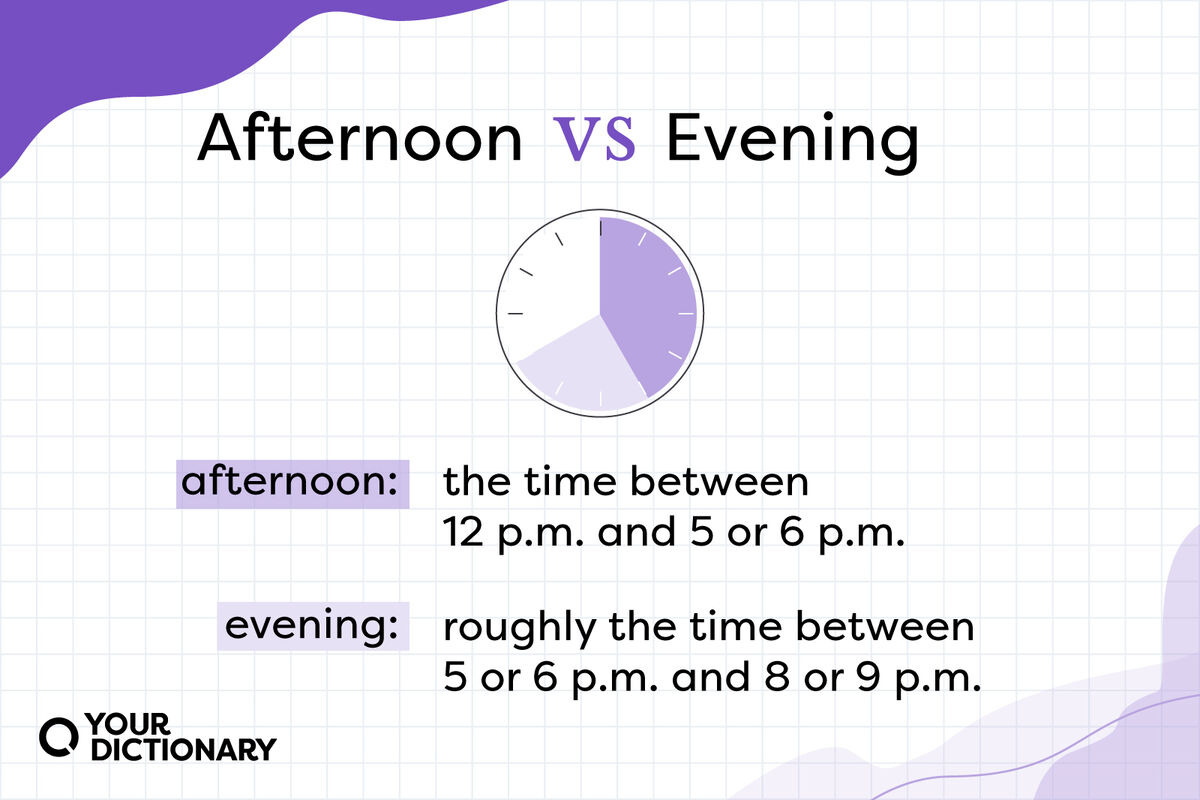
While the 12-hour clock provides a technical boundary, the term "afternoon" also has a cultural and environmental definition. Most linguists and social standards define the afternoon as the period beginning at 12:00 PM (noon) and ending at approximately 5:00 PM or 6:00 PM, or whenever the sun begins its descent toward the horizon (evening).
The Three Phases of Afternoon
The afternoon is often subdivided into three distinct segments to provide better context for meetings and social gatherings:
- Early Afternoon (12:00 PM to 2:00 PM): This period is typically associated with lunch breaks and the immediate transition from morning tasks.
- Mid-Afternoon (2:00 PM to 4:00 PM): 2:00 PM is generally considered the start of mid-afternoon. This is a critical time for productivity and is often the "peak" of the working day's second half.
- Late Afternoon (4:00 PM to 6:00 PM): This is the transition toward the evening, often marked by the end of the traditional workday and the beginning of "rush hour."
By these standards, 2:00 PM sits at the pivotal junction between the post-lunch recovery and the final push of the daily schedule.
The Technical Shift: From 2 PM to 14:00
For those working in technical fields, the 24-hour clock is the preferred method for timekeeping. This system eliminates the ambiguity of AM and PM altogether. The 24-hour clock is the international standard (ISO 8601) because it prevents errors in scheduling, particularly in transportation and emergency services.
In the 24-hour system, the day begins at 00:00 (midnight). Each hour is added sequentially. To convert 2:00 PM to the 24-hour format, you simply add 12 to the hour (2 + 12 = 14).
Comparison of Afternoon and Evening Time Formats
The following table illustrates how 2:00 PM relates to other times within the afternoon and evening periods across different time-telling formats.
| 12-Hour Clock | 24-Hour Clock | Period of Day | Social Context |
|---|---|---|---|
| 12:00 PM | 12:00 | Noon | Midday / Lunch |
| 1:00 PM | 13:00 | Early Afternoon | Post-Lunch |
| 2:00 PM | 14:00 | Mid-Afternoon | Peak Activity |
| 3:00 PM | 15:00 | Mid-Afternoon | School Dismissal |
| 4:00 PM | 16:00 | Late Afternoon | End of Workday |
| 5:00 PM | 17:00 | Late Afternoon | Commute / Early Evening |
| 6:00 PM | 18:00 | Evening | Dinner Time |
The Etymology and History of Afternoon Timekeeping
The word "afternoon" is a compound of "after" and "noon." To understand why 2:00 PM is categorized this way, we must look at the history of the word "noon."
Originally, "noon" derived from the Latin nona hora, meaning the "ninth hour" of the daylight. In the Roman timekeeping system, the day was divided into 12 hours of light and 12 hours of darkness. The "ninth hour" occurred around 3:00 PM. However, over centuries, the timing of the "nona" (the midday meal or prayer) shifted earlier in the day, eventually landing at 12:00 PM.
By the 14th century, the term "noon" was fixed at the meridian. Consequently, any time following that point became "after-noon." By 2:00 PM, the sun has visibly moved from its zenith, casting shadows toward the East, providing a physical indicator that the morning has passed.
Biological and Psychological Aspects of 2 PM
In the year 2026, chronobiology—the study of biological rhythms—continues to emphasize how 2:00 PM affects the human body differently than other times of the day. Because 2:00 PM is firmly in the afternoon, it coincides with specific physiological changes.
The Postprandial Dip
Many people experience a "slump" or a feeling of tiredness around 2:00 PM. This is often referred to as the postprandial dip. While many believe this is solely due to eating lunch, it is actually a natural part of the human circadian rhythm. Most humans experience a slight drop in core body temperature and alertness roughly 12 hours after the midpoint of their sleep cycle. For someone who sleeps from 11:00 PM to 7:00 AM, this dip naturally occurs in the early afternoon.
Productivity and Scheduling
Knowing that 2:00 PM is mid-afternoon allows businesses to schedule tasks more effectively. Low-energy administrative tasks are often better suited for this time, whereas high-concentration tasks are usually reserved for the "morning" (AM) hours when cortisol levels are typically higher.
Global Standardization and ISO 8601
The International Organization for Standardization (ISO) maintains the ISO 8601 standard, which governs how date and time data should be exchanged. This standard is crucial for 2026's interconnected global economy.
Under ISO 8601, the time is expressed in a [hh]:[mm]:[ss] format. For 2:00 PM, this is 14:00:00. By using the 24-hour format, the standard removes any cultural ambiguity regarding whether "2:00" refers to the middle of the night or the middle of the afternoon. This is particularly important for software developers, database administrators, and international logistics firms who must sync systems across different time zones.
Common Misconceptions About Afternoon Timing
Despite the clarity of the 12-hour system, several common errors persist in daily communication.
- Confusing 12 PM and 12 AM: As noted, 12:00 PM is noon. If you have an appointment at 2:00 PM, it is two hours after lunch. If you have an appointment at 2:00 AM, it is in the dead of night.
- The "Late Afternoon" Label: Some people mistakenly refer to 2:00 PM as "late afternoon." However, in most professional and meteorological contexts, late afternoon does not begin until 4:00 PM or 5:00 PM.
- Solar Noon vs. Clock Noon: Depending on your location within a time zone and whether Daylight Saving Time is active, "clock noon" (12:00 PM) may not perfectly align with the sun's highest point. However, the designation of 2:00 PM as "afternoon" remains constant regardless of these minor solar fluctuations.
Practical Guidance for Time-Sensitive Tasks
If you are scheduling events or managing a project in 2026, recognizing the specific nature of 2:00 PM is vital for success.
- For Meetings: 2:00 PM is often a "transition" hour. It is late enough that most people have finished lunch but early enough that they are not yet looking toward the end of the day.
- For Travel: 2:00 PM is generally a period of moderate traffic compared to the morning or evening rush. In aviation, it is a common time for mid-range domestic flights to depart.
- For Health: Medical professionals often monitor patients' blood pressure and glucose levels in the afternoon to see how the body is responding to the day's stressors and meals. 2:00 PM serves as a standard benchmark for these post-midday checks.
Frequently Asked Questions
Is 2 PM considered evening?
No, 2:00 PM is not considered evening. Evening typically begins when the sun starts to set, generally between 5:00 PM and 6:00 PM. 2:00 PM is categorized as mid-afternoon.
What is the difference between 2 PM and 14:00?
There is no difference in the actual time. 2:00 PM is the notation used in the 12-hour clock system, while 14:00 is the notation used in the 24-hour (military/international) clock system. Both refer to the same moment in the day.
Why do we say "PM" instead of just "afternoon"?
"PM" is a technical abbreviation used to ensure clarity on clocks and written schedules. While "2 in the afternoon" is common in spoken English, "2:00 PM" is the formal written standard to prevent confusion with 2:00 AM.
Is 12 PM noon or midnight?
12:00 PM is noon. This is a common point of confusion. A helpful way to remember is that 12:01 PM is clearly after noon, so the hour of 12 starting at noon is designated as PM. Midnight is 12:00 AM.
Does the afternoon always start at 12 PM?
Yes, by definition, the afternoon begins at the moment the clock passes 12:00:00 noon. Anything after the meridian is considered "after-noon."
Next Actions for Effective Time Management
To apply this understanding of the afternoon cycle to your daily life in 2026, consider the following steps:
- Sync Your Devices: Ensure your digital calendars are correctly set to your local time zone to avoid AM/PM confusion, especially for 2:00 PM appointments.
- Audit Your Productivity: Track your energy levels for a week. If you notice a significant dip at 2:00 PM, consider moving your most difficult tasks to the 9:00 AM–11:00 AM (AM) window and using the mid-afternoon for meetings or lighter work.
- Learn 24-Hour Time: If you work in a global or technical field, practice using the 24-hour clock. Knowing instantly that 14:00 is 2:00 PM can reduce cognitive load and prevent scheduling errors.