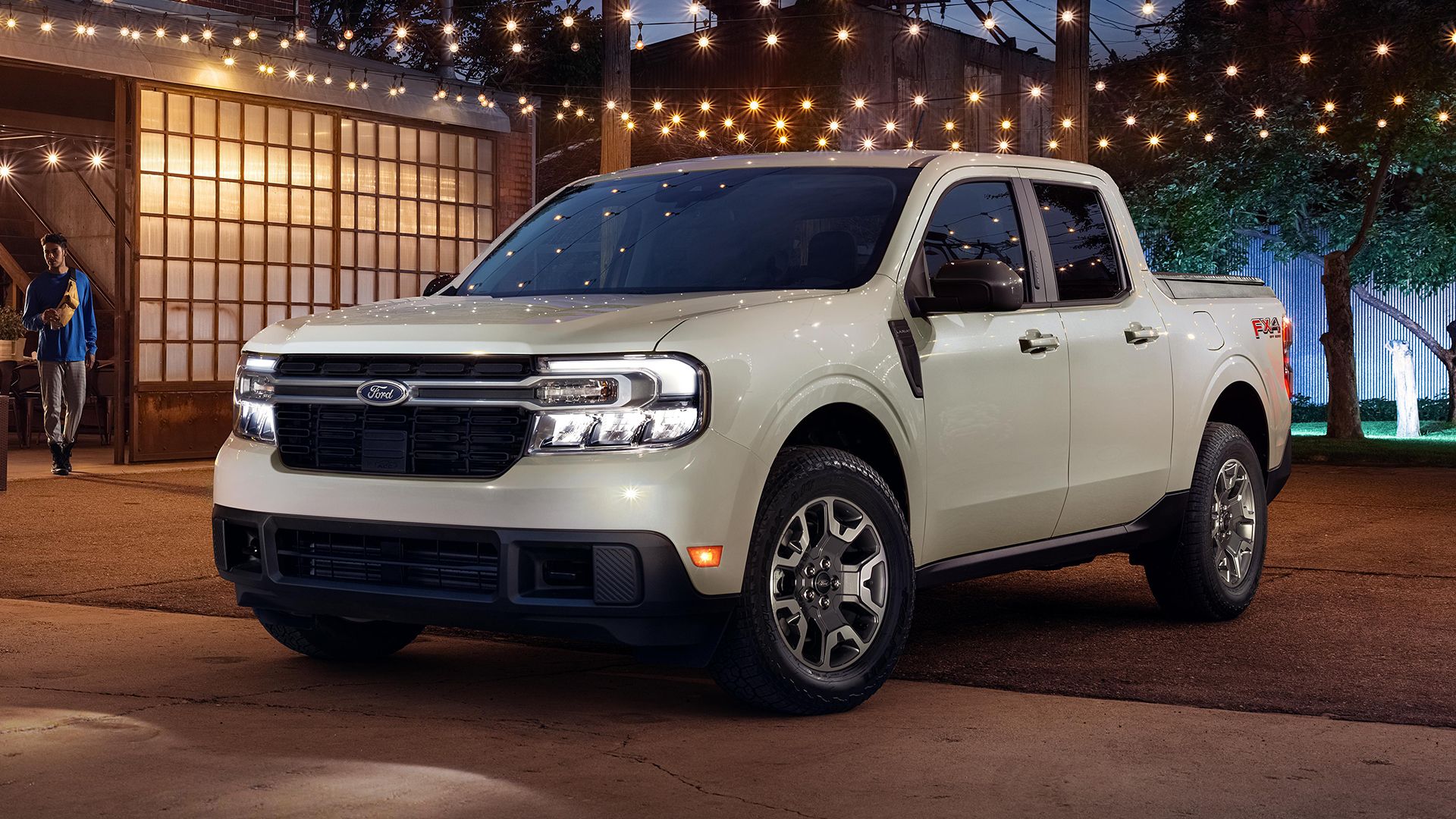
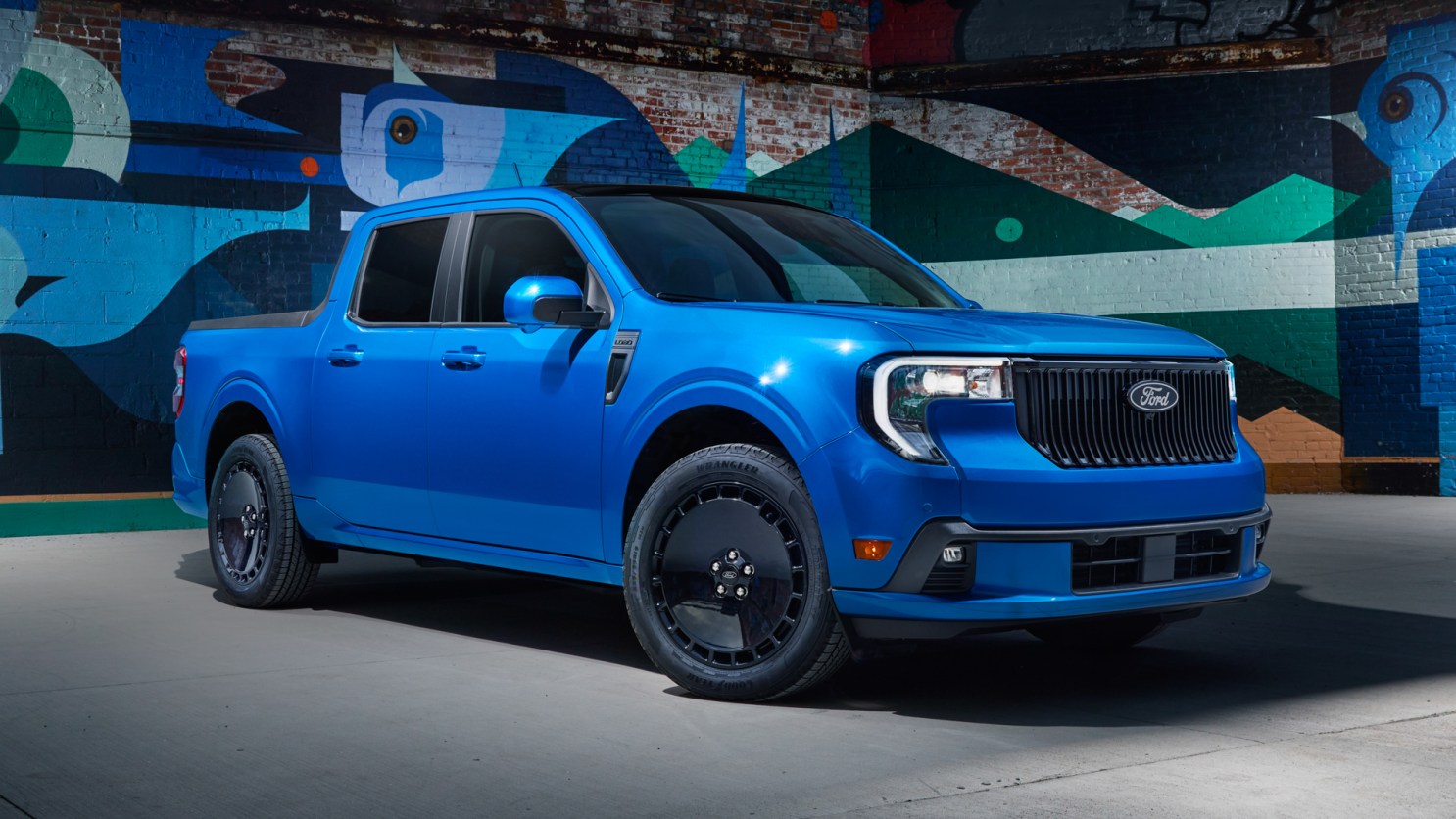
The 2025 Ford F-150 Lobo represents a specialized return to the high-performance street truck segment, prioritizing on-road handling and digital performance over traditional off-road utility. Designed for tech-savvy enthusiasts, it leverages advanced torque vectoring, a dedicated "Lobo Mode" software suite, and a lowered suspension to deliver a uniquely connected, car-like driving experience in a pickup frame.
The Evolution of the Street Truck: Why the 2025 Lobo is a Niche Choice
The automotive landscape has spent the last decade obsessed with off-road dominance. From the Raptor to the Tremor, the focus has been on long-travel suspension and dirt-clearing capabilities. However, as we look back from 2026, the 2025 F-150 Lobo stands out as a pivot toward a different kind of enthusiast. This is not a truck for the weekend crawler; it is a vehicle for the driver who views their truck as a high-performance terminal.
The "Lobo" nameplate, traditionally used for the F-150 in the Mexican market, was repurposed for the 2025 model year to signify a distinct "street" identity. For the tech-savvy buyer, the appeal lies in how Ford has used software-defined vehicle architecture to transform a heavy-duty frame into a responsive, corner-carving machine. This niche positioning is intentional, targeting a demographic that values precision, digital integration, and aesthetic uniqueness over the ability to traverse a boulder field.
Software-Defined Performance: Understanding "Lobo Mode"
The centerpiece of the 2025 Lobo’s technical appeal is its proprietary "Lobo Mode." Unlike standard "Sport" or "Track" modes found in traditional performance vehicles, Lobo Mode is specifically calibrated for the geometry of a lowered, short-wheelbase truck. This mode is intended strictly for closed-course use, as it significantly alters the vehicle’s electronic stability control (ESC) and traction management systems.
Torque Vectoring and Electronic Differentials
In Lobo Mode, the truck utilizes the electronic locking rear differential and the advanced braking system to mimic true torque vectoring. By applying subtle braking force to the inner wheel during a high-speed turn, the system pushes more power to the outer wheel. This reduces the inherent understeer often found in pickups, allowing the truck to "rotate" around a corner with a level of agility that feels digitally enhanced.
Throttle Mapping and Steering Response
The tech-savvy driver will notice the aggressive remapping of the drive-by-wire throttle. In Lobo Mode, the 3.5L EcoBoost engine stays in its peak power band longer, with a specialized transmission calibration that holds gears through corners. Furthermore, the electronic power-assisted steering (EPAS) tightens significantly, providing more direct feedback to the driver about tire-to-tarmac contact—a crucial requirement for performance-oriented driving.
Hardware Specifications: The Foundation of the Tech
While software is the brain, the hardware of the 2025 Lobo provides the necessary muscle. Ford’s engineers took a "parts bin" approach in the best possible way, pulling the highest-performing components from across the F-150 lineup to create this niche variant.
- Powertrain: The truck is powered by the high-output 3.5-liter twin-turbocharged EcoBoost V6, delivering 400 horsepower and 500 lb-ft of torque. While these numbers are familiar to F-150 fans, the delivery is tuned for street sprints rather than heavy towing.
- Suspension Geometry: The Lobo sits significantly lower than a standard F-150, with a 2-inch drop in the front and a 1.5-inch drop in the rear. This lower center of gravity is fundamental to its technical performance, reducing body roll and improving aerodynamic efficiency at high speeds.
- Braking System: To manage the kinetic energy of a performance truck, Ford equipped the Lobo with the dual-piston front calipers from the F-150 Raptor. This ensures consistent stopping power and better heat dissipation during spirited driving sessions.
- Wheels and Tires: The 22-inch turbofan-style wheels are not just a design choice; they are engineered for brake cooling. They come wrapped in high-performance street tires that offer a higher grip coefficient on dry pavement compared to the all-terrain rubber found on most high-trim pickups.
Digital Cockpit and Connectivity Features
For the tech-savvy user, the interior of the 2025 Lobo serves as a command center. By 2026 standards, the integration of Ford's latest software stack remains a benchmark for the industry, offering a seamless blend of performance data and lifestyle connectivity.
The 12-Inch Digital Instrument Cluster
The Lobo features a fully customizable digital cluster that provides real-time telemetry. Users can track boost pressure, oil temperature, and even G-force meters directly within their primary line of sight. This data-heavy approach caters to those who want to quantify their driving performance.
Sync 5 Integration and Over-the-Air (OTA) Updates
The 2025 Lobo was one of the early adopters of the refined Sync 5 infotainment system. This system supports wireless Apple CarPlay and Android Auto but goes further with deep vehicle integration. Owners can monitor the truck’s health via the FordPass app, and the vehicle is designed to receive Over-the-Air updates that can refine the Lobo Mode algorithms or add new digital features over time. This "living vehicle" aspect is a major draw for those who expect their technology to improve during the ownership cycle.
BlueCruise 1.3
While the Lobo is a "driver's truck," it also includes the hardware for BlueCruise, Ford’s hands-free highway driving technology. The tech-savvy owner appreciates this duality: a raw, software-enhanced performance machine on the track, and a sophisticated, semi-autonomous cruiser on the commute.
Comparing the 2025 Lobo to Traditional F-150 Trims
To understand why the Lobo is a niche option, it is helpful to see how it sits alongside its siblings. The following table highlights the technical trade-offs between street performance, off-road capability, and standard utility.
| Feature | 2025 F-150 Lobo | 2025 F-150 Raptor | 2025 F-150 Lariat |
|---|---|---|---|
| Primary Terrain | Street / Track | Desert / Off-Road | All-Purpose / Towing |
| Suspension Type | Lowered, Stiffened | Fox Live Valve Shocks | Standard Leaf/Coil |
| Wheels | 22-inch Turbofan | 17-inch Beadlock-capable | 18 to 20-inch |
| Special Drive Mode | Lobo Mode (On-Road) | Baja Mode (Off-Road) | Tow/Haul & Eco |
| Braking | High-Performance (Raptor Spec) | High-Performance | Standard Heavy Duty |
| Ride Height | Lowered (-2" Front) | Lifted (+High Clearance) | Standard |
| Torque Vectoring | Software-defined (Street) | Mechanical Locking (Off-Road) | Traditional Open/Lock |
Practical Considerations for the Niche Buyer
Choosing a niche vehicle like the 2025 Lobo requires an understanding of its limitations. Tech-savvy buyers usually perform a cost-benefit analysis of their vehicle’s utility versus its specialized features.
Towing and Payload Constraints
Because the suspension has been tuned for handling and lowered for aesthetics, the Lobo does not match the maximum towing capacities of a standard F-150. If your primary goal is hauling a 10,000-pound trailer, the Lobo’s stiffened, lower springs will be a hindrance rather than a help. It is designed for those who might tow a small jet ski or a motorcycle trailer but prioritize the unladen driving experience.
Maintenance of Specialized Components
The 22-inch wheels and performance-oriented tires are more expensive to replace than standard truck tires. Additionally, the specialized dampers used to achieve the Lobo’s stance may require more specific maintenance or replacement schedules if used frequently on closed courses. Owners should also be aware that "Lobo Mode" wear-and-tear on brakes and tires can be significant.
Urban Maneuverability
One unexpected benefit of the Lobo’s tech-focused design is its urban utility. The lowered ride height makes it easier to fit into parking garages that would be inaccessible to a Raptor or a lifted 4x4. For the tech professional living in a metropolitan area, the Lobo offers the presence of a truck with the practicality of a street-tuned vehicle.
Technical Troubleshooting and Common Questions
As the 2025 Lobo enters its second year on the road in 2026, certain technical questions have become common among the community.
Is Lobo Mode legal on public roads?
Ford explicitly states that Lobo Mode is for closed-course use only. Technically, the mode reduces certain safety interventions (like stability control) to allow for more aggressive handling. Engaging it on public roads is not recommended and may result in increased liability in the event of an accident.
Can the suspension be adjusted?
The 2025 Lobo comes with a fixed-height performance suspension. While it is lower than a standard truck, it is not an air-suspension system. Tech-savvy owners looking for adjustability often look toward aftermarket integration, though this can sometimes interfere with the pre-programmed "Lobo Mode" calibrations.
How does the 5G connectivity impact the experience?
The truck's onboard 5G modem facilitates lightning-fast map updates and smoother streaming for the infotainment system. For the tech-savvy, this also means the truck can act as a high-speed Wi-Fi hotspot for up to 10 devices, making it a viable mobile office.
Why "Niche" is the Ultimate Compliment
In a market saturated with "jack-of-all-trades" vehicles, the 2025 Ford F-150 Lobo succeeds by being unapologetically specific. It appeals to a buyer who understands that performance is as much about code as it is about cams. By focusing on the street-performance niche, Ford has created a vehicle that doesn't just transport the driver but engages them through a sophisticated digital and mechanical interface.
The 2025 Lobo isn't for everyone—and that is exactly why it is successful. It targets the intersection of automotive nostalgia (the 90s street truck) and modern technical sophistication. For those who want their truck to handle like a sports sedan while retaining the utility of a bed, the Lobo stands alone.
Frequently Asked Questions
Does the 2025 Lobo have All-Wheel Drive? Yes, the 2025 Lobo utilizes a specialized Four-Wheel-Drive (4WD) system that includes a 4A (Automatic) mode. This is crucial for street performance, as it allows the truck to distribute torque to the front wheels during hard acceleration on pavement without the binding associated with traditional part-time 4WD systems.
How does the interior differ from a standard F-150? The Lobo features unique interior stitching, "Lobo" branding, and materials inspired by high-end streetwear. From a technical standpoint, the interface is largely similar to the Lariat or Platinum trims but includes specific performance-tracking pages in the Sync system that are not available on other models.
Can I use BlueCruise on the 2025 Lobo? Yes, the 2025 Lobo comes equipped with the necessary hardware for BlueCruise. Depending on the initial purchase package, owners may have a trial period or a subscription to use the hands-free driving feature on compatible highways.
What is the fuel economy like on a street-tuned truck? While the 3.5L EcoBoost is efficient for its power output, the Lobo's performance tuning and 22-inch wheels mean it generally aligns with the standard 3.5L F-150 ratings (roughly 17-24 MPG). Aggressive use of Lobo Mode will, naturally, decrease these figures significantly.
Final Recommendation for the Tech Savvy
If you are a buyer who prioritizes the latest in automotive software, appreciates the engineering required to make a large vehicle handle with precision, and prefers the "street" aesthetic over the "off-road" look, the 2025 Lobo is your best option in the current 2026 pre-owned or remaining-stock market. Before purchasing, verify that the previous owner has kept the Sync system updated and inspect the 22-inch wheels for any curb rash, as these are integral to the truck's performance and value.