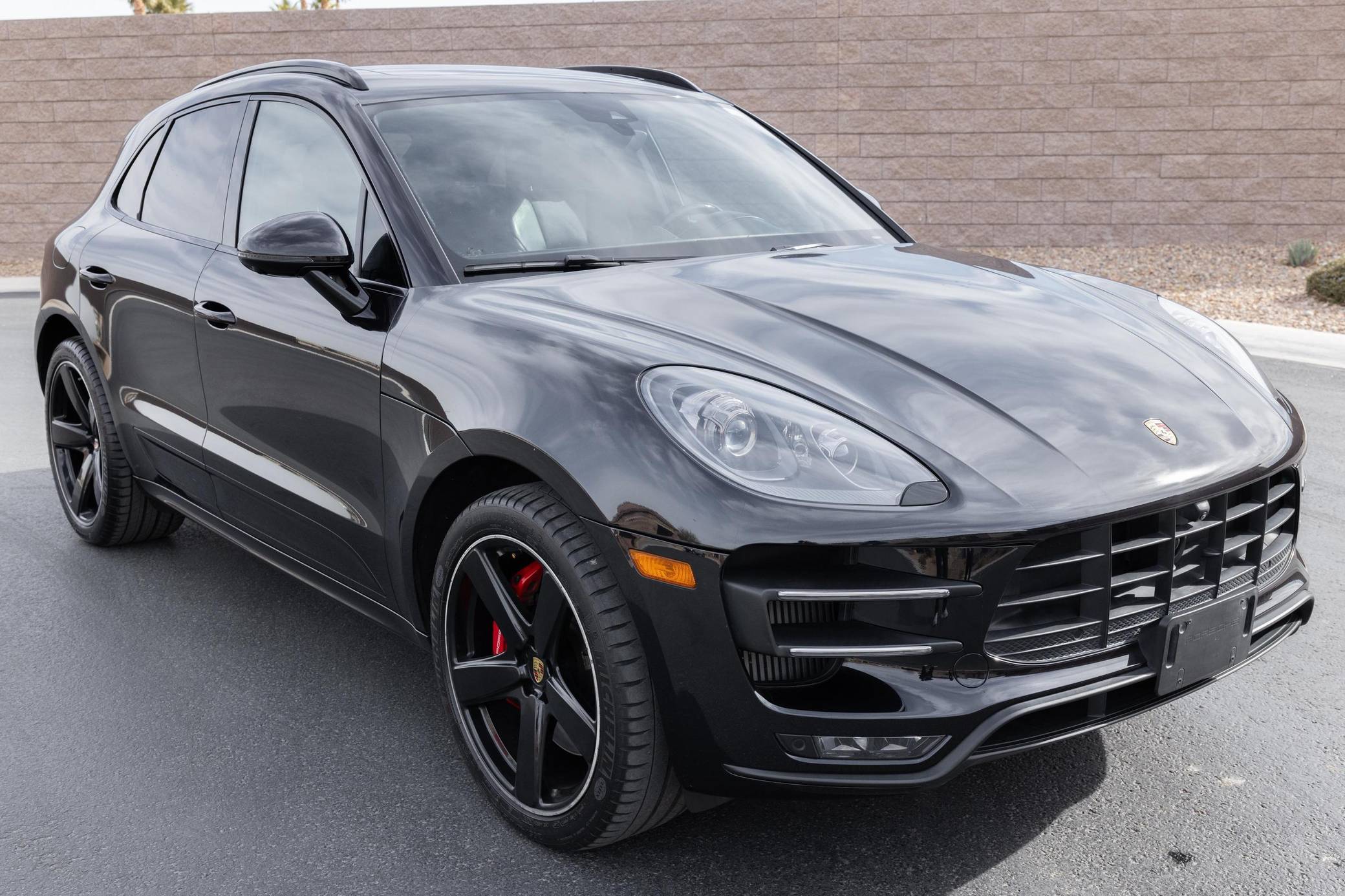
The 2018 Porsche Macan Turbo delivers 400 horsepower (294 kW) from its 3.6-liter twin-turbocharged V6 engine. For models equipped with the optional Performance Package, this output is increased to 440 horsepower (324 kW). These specifications represent the pinnacle of the Macan lineup for the 2018 model year, blending compact SUV practicality with high-performance sports car dynamics.
Understanding the Macan Turbo Powertrain
The 2018 Porsche Macan Turbo serves as the flagship variant of the first-generation Macan, which established a new benchmark for handling and engine response in the luxury crossover segment. At its core lies a bespoke 3.6-liter twin-turbocharged V6 engine. Unlike many competitors that utilized larger displacement naturally aspirated engines during this era, Porsche opted for forced induction to achieve a broad torque curve and high horsepower output.
The engine architecture utilizes a 90-degree V-angle, a configuration chosen for its compact dimensions, which allows it to fit within the Macan’s chassis while maintaining the center of gravity necessary for sports-sedan-like handling. By utilizing two turbochargers—one for each cylinder bank—Porsche minimized turbo lag, ensuring that the 400 horsepower output is accessible across a wide portion of the rev range. This power is transmitted to all four wheels via a seven-speed Porsche Doppelkupplung (PDK) dual-clutch transmission, which provides rapid gear changes and maximizes the efficiency of the engine’s power delivery.
The Performance Package Distinction
A critical aspect of the 2018 Porsche Macan Turbo is the optional Performance Package. While the base "Turbo" trim was formidable with its 400 horsepower, the Performance Package reconfigured the engine management system and increased boost pressure to elevate the output to 440 horsepower. This 40-horsepower gain was not merely a software update; it was a comprehensive performance suite.
The Performance Package also included upgraded brakes, with 390mm front discs (15mm larger than the standard Turbo), a lowered sport chassis, and a sport exhaust system. The inclusion of the Sport Chrono Package meant that models with this upgrade were capable of a 0 to 60 mph time of just 4.2 seconds, significantly faster than the standard Turbo’s 4.6-second time. Understanding whether a specific 2018 Macan Turbo possesses this package is essential for owners and prospective buyers, as it fundamentally alters the vehicle's driving character and maintenance requirements.
Technical Specifications Table
| Feature | Macan Turbo (Standard) | Macan Turbo (w/ Performance Package) |
|---|---|---|
| Engine Displacement | 3.6L Twin-Turbo V6 | 3.6L Twin-Turbo V6 |
| Horsepower | 400 hp | 440 hp |
| Peak Torque | 406 lb-ft | 442 lb-ft |
| 0–60 MPH Time | 4.6 Seconds | 4.2 Seconds |
| Top Track Speed | 164 mph | 169 mph |
| Transmission | 7-Speed PDK | 7-Speed PDK |
Real-World Performance and Driving Dynamics
Beyond the raw horsepower figures, the 2018 Macan Turbo is defined by its chassis engineering. The engine's power is managed by the Porsche Traction Management (PTM) system, which continuously monitors road conditions and driver input to distribute torque between the front and rear axles. This ensures that the high horsepower does not overwhelm the chassis, allowing for precise cornering even in inclement weather.
The dual-clutch PDK transmission is integral to this performance. It offers "Pre-selection" capabilities, meaning the next gear is already engaged before the driver shifts. This results in nearly instantaneous transitions that keep the engine within its power band. Owners often note that while 400 or 440 horsepower is significant for a crossover, the real-world experience is dominated by the linear nature of the acceleration. Unlike some turbocharged engines that experience a sudden "punch" of power, the Macan Turbo delivers a consistent, forceful push that feels remarkably similar to the brand's legendary naturally aspirated engines.
Prerequisites for Optimal Performance
To maintain the stated horsepower and overall vehicle health of a 2018 Macan Turbo, owners must adhere strictly to maintenance protocols. High-output turbocharged engines are sensitive to oil viscosity, fuel quality, and cooling system efficiency.
- Fuel Quality: Porsche mandates the use of premium unleaded fuel (typically 93 octane in the U.S.) to prevent engine knock. Running lower-octane fuel will force the Engine Control Unit (ECU) to pull back timing, effectively reducing the available horsepower and decreasing fuel efficiency.
- Cooling Maintenance: The twin-turbo setup generates significant heat. Ensuring the coolant levels are correct and the radiator intakes are free of debris is vital to prevent heat soak, which occurs when the intake air temperature becomes too high, causing the engine to reduce power output to protect itself.
- Service Intervals: The PDK transmission and the twin-turbo V6 have rigorous service intervals. Ignoring oil changes or PDK fluid flushes can lead to increased friction and heat, which manifests as sluggish throttle response and a noticeable decline in performance.
Comparing the Turbo to Other Trims
When evaluating the 2018 Macan lineup, it is helpful to understand the hierarchy of power. The Macan S offered 340 horsepower, and the Macan GTS offered 360 horsepower. The Turbo, at 400–440 horsepower, sat clearly at the top.
Buyers often struggle with the decision between the Macan GTS and the Macan Turbo. The GTS is often tuned for a more aggressive exhaust note and sharper suspension feedback, whereas the Turbo is focused on raw engine output and grand-touring comfort. Because the Turbo uses a 3.6L engine compared to the 3.0L engines found in the S and GTS, the Turbo provides significantly more mid-range torque, which is felt during highway passing maneuvers and heavy acceleration.
Common Considerations for Owners
The primary challenge for owners of a 2018 Macan Turbo is managing the cost of consumables. Higher horsepower correlates with faster wear on specific components. Tires, for instance, are subjected to higher lateral loads and torque demands. Using tires that do not meet the "N-spec" (Porsche-approved) rating can lead to unpredictable handling and may trigger stability control systems prematurely.
Additionally, the braking system on the Turbo—especially the larger discs on the Performance Package—is expensive to service. Because the Macan is a relatively heavy vehicle, the kinetic energy converted into heat during braking is substantial. Keeping the brake fluid fresh is critical to maintaining a firm pedal feel, as old fluid with high water content can boil under spirited driving conditions, leading to "brake fade."
Frequently Asked Questions
Can I upgrade a standard 2018 Macan Turbo to Performance Package specs? While software tunes exist in the aftermarket to increase horsepower, the factory Performance Package involved specific hardware changes, including larger brake discs and a bespoke sport exhaust. Attempting to replicate the package through aftermarket parts may void warranties or lead to reliability issues.
Does high horsepower make the Macan Turbo difficult to drive in city traffic? No. One of the main advantages of the Porsche PDK transmission and the engine's torque curve is that the vehicle remains tractable and smooth in stop-and-go traffic. The car does not feel "jumpy" or aggressive unless the driver selects the Sport or Sport Plus driving modes.
What is the most common reason for a loss of perceived horsepower? A clogged air filter or a failing turbo diverter valve are the most common culprits. The 3.6L V6 breathes a large volume of air, and a restricted intake path will immediately prevent the engine from reaching its rated boost levels, resulting in a noticeable decline in acceleration.
Is it necessary to use premium fuel? Yes. Porsche engines are high-compression, high-performance units. Using lower-grade fuel will cause the engine management system to adjust ignition timing to prevent damage, which directly results in lower horsepower and potentially increased carbon buildup.
Does the 2018 Macan Turbo require special oil? Yes, owners should use only motor oil that meets the Porsche A40 specification. This ensures the oil can withstand the high temperatures generated by the twin turbochargers while maintaining the necessary lubrication for the complex valvetrain.
Final Recommendation
For those seeking the maximum performance available in a 2018 Porsche Macan, the variant with the Performance Package is the definitive choice. It balances the 440-horsepower engine with improved braking and suspension geometry. Whether you are driving a standard 400-horsepower model or the 440-horsepower Performance variant, the key to maintaining this power is proactive maintenance—specifically adhering to oil change intervals, using premium fuel, and ensuring the cooling system remains in optimal condition. If you experience a sudden loss in power, prioritize a diagnostic check of the turbo system and intake tract rather than relying on software resets.