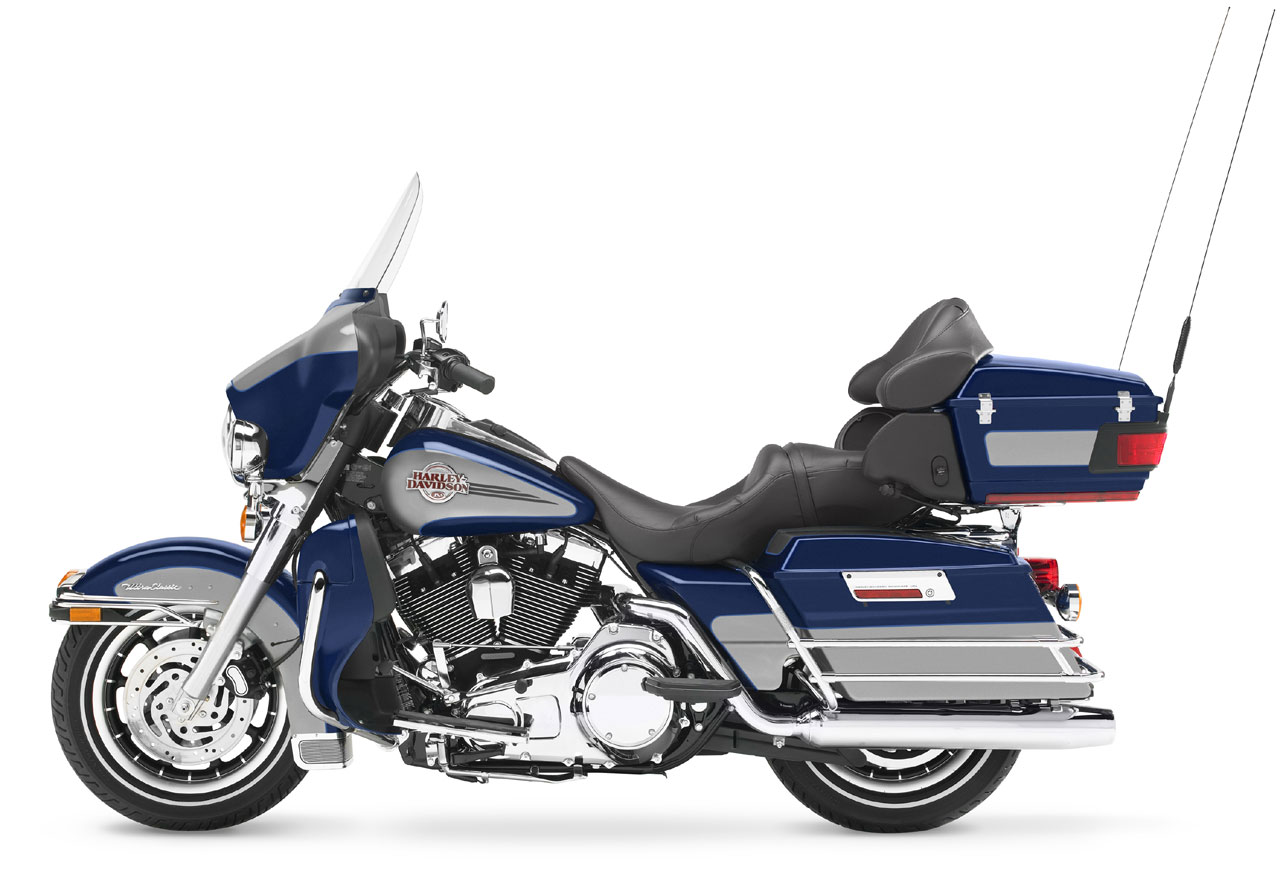
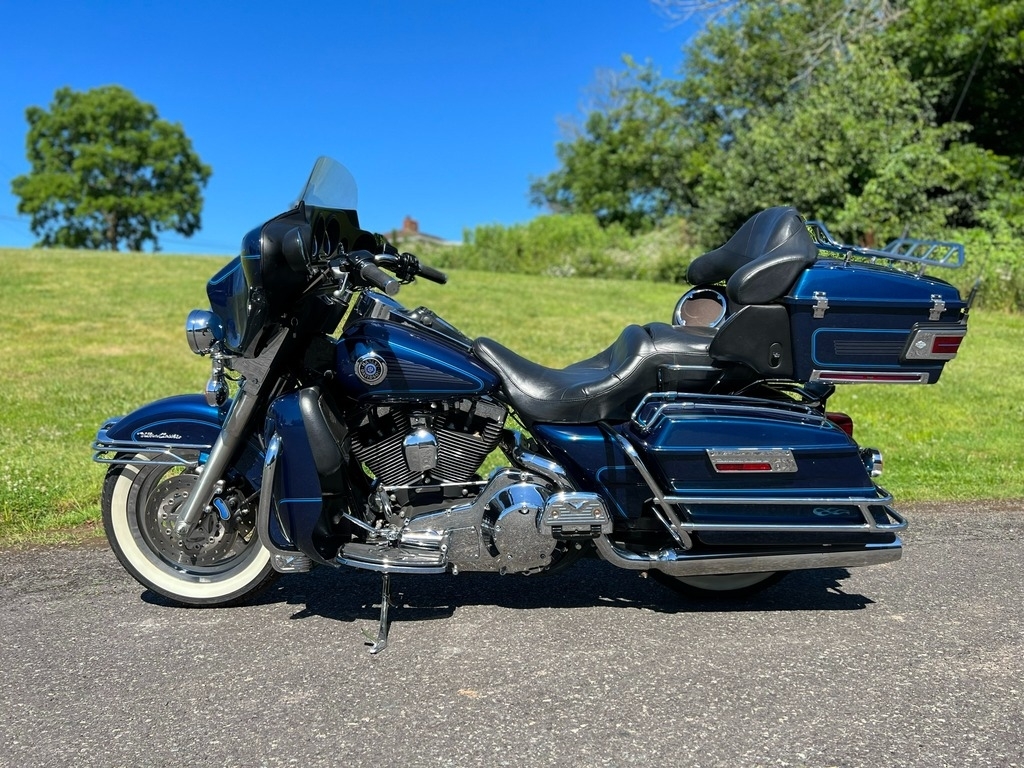
The 2000 Harley-Davidson Ultra Classic Electra Glide (FLHTCUI) represents a pivotal moment in touring history, featuring the then-new Twin Cam 88 engine and the Magneti Marelli fuel injection system. As a premier long-haul motorcycle, it offers a blend of classic "Batwing" styling, comprehensive luggage capacity, and air-adjustable suspension designed for cross-country comfort.
The Historical Significance of the 2000 Model Year
To understand the 2000 Harley-Davidson Ultra Classic, one must look at the landscape of the American motorcycle industry at the turn of the millennium. By 2000, Harley-Davidson was in the second year of its transition from the venerable Evolution (Evo) engine to the Twin Cam 88. While 1999 introduced the Twin Cam to the touring line, the 2000 model year is often cited by enthusiasts as the year Harley-Davidson refined the manufacturing processes for this new architecture.
The Ultra Classic was the flagship of the "FL" touring family. In 2000, it sat atop the hierarchy, positioned above the Electra Glide Classic and the Road King. It was designed to compete directly with the Honda Gold Wing, offering a more traditional, "visceral" American experience compared to the Japanese "smooth-at-all-costs" philosophy. This year also marked a period of high demand where customers often waited months for a new unit, cementing its status as a luxury touring standard.
Technical Specifications: The Twin Cam 88 Engine
The heart of the 2000 Ultra Classic is the Twin Cam 88 engine, a 1450cc (88 cubic inch) V-twin that was a radical departure from the Evolution engine it replaced. Unlike the single-cam Evo, the Twin Cam utilized two cams to drive the pushrods, allowing for better valve geometry and increased displacement potential.
Engine Architecture and Cooling
The engine is air-cooled and rubber-mounted within the frame. This mounting system is critical to the Ultra Classic's identity; at idle, the engine shakes noticeably within the frame, but once the RPMs rise above 1,500, the vibrations smooth out, providing a glass-like ride at highway speeds.
The Twin Cam 88 featured a larger cooling fin area than the Evo, a response to the increasing heat generated by larger displacements and leaner fueling required by emissions standards. However, owners in 2026 should note that these early Twin Cams still run quite hot in stop-and-go traffic, a characteristic that led to the widespread adoption of aftermarket oil coolers.
The Magneti Marelli EFI System
The "I" in FLHTCUI stands for "Injected." The 2000 model utilized the Magneti Marelli Electronic Fuel Injection (EFI) system. This system was used from 1995 through 2001 before Harley-Davidson switched to the Delphi system in 2002.
The Magneti Marelli system is a dual-throat throttle body design. While reliable when properly maintained, it is often criticized in the modern era for its complexity compared to the Delphi units. Common issues include a high idle caused by a failing Idle Air Control (IAC) motor or sensitivity to engine temperature sensor failures. For riders today, finding technicians who are intimately familiar with the specific "tuning" requirements of the Marelli system can be a challenge, though many enthusiasts have successfully converted these bikes to carburetors or modern aftermarket EFI systems.
Chassis, Suspension, and Braking Improvements
The 2000 model year brought several important updates to the chassis and braking systems that significantly improved the safety and ride quality of the Ultra Classic.
Four-Piston Caliper Brakes
One of the most significant upgrades for the 2000 model year was the introduction of four-piston fixed caliper brakes. Prior to 2000, Harley-Davidson used single-piston floating calipers that were often described as "wooden" or lacking in initial bite. The 2000 braking system provided a massive increase in stopping power and modulation, which was essential for a bike that, when fully loaded with a passenger and gear, could approach 1,100 pounds.
Air-Adjustable Suspension
The Ultra Classic features a 41.3mm telescopic front fork and air-adjustable rear shocks. This allowed riders to fine-tune the suspension based on the load. By adding or releasing air via a Schrader valve (typically located near the saddlebag), the rider could prevent the bike from bottoming out during two-up touring. While the technology is primitive compared to the electronic semi-active suspensions of 2026, it remains an effective and durable solution for long-distance comfort.
Touring Amenities: The "King of the Highway"
The Ultra Classic earned its name through its exhaustive list of standard features. In 2000, it was arguably the most well-equipped motorcycle on the market.
- The Batwing Fairing: The fork-mounted fairing provides exceptional wind protection for the rider’s torso and hands. It also houses the "cockpit," which includes a speedometer, tachometer, fuel gauge, voltmeter, oil pressure gauge, and ambient air temperature gauge.
- King Tour-Pak and Saddlebags: The hard luggage provides approximately 4.2 cubic feet of storage. The Tour-Pak (top trunk) serves as a comfortable backrest for the passenger and includes integrated wrap-around lighting.
- Advanced Audio System: For the year 2000, the audio system was cutting-edge. It featured an AM/FM/Cassette head unit with four speakers (two in the fairing, two in the passenger armrests). It also included a standard CB radio and an intercom system for rider-to-passenger communication.
- Cruise Control: The electronic cruise control on the 2000 Ultra Classic is a true automotive-style system, operated via thumb switches on the right handlebar. It remains one of the most reliable components of the bike.
| Feature | Specification |
|---|---|
| Engine Type | Twin Cam 88 (V2, four-stroke) |
| Displacement | 1450 cc / 88.5 cu-in |
| Bore x Stroke | 95.3 x 101.6 mm |
| Compression Ratio | 8.9:1 |
| Fuel System | Magneti Marelli Sequential Port Fuel Injection |
| Transmission | 5-Speed, Belt Drive |
| Dry Weight | 788 lbs (357.4 kg) |
| Fuel Capacity | 5.0 Gallons (18.9 Liters) |
| Front Brakes | Dual 292mm discs, 4-piston calipers |
| Rear Brakes | Single 292mm disc, 4-piston caliper |
| Seat Height | 27.3 inches (Laden) |
Critical Maintenance: The Cam Chain Tensioner Issue
If there is one technical "Achilles heel" that every owner of a 2000 Ultra Classic must address, it is the cam chain tensioner system.
Inside the cam chest of the early Twin Cam 88, Harley-Davidson used two spring-loaded plastic shoes to maintain tension on the cam chains. Over time, these plastic shoes wear down. If the plastic wears through completely, the metal spring arm will grind against the chain, sending metal shavings throughout the engine, which typically leads to catastrophic failure of the oil pump and bearings.
Solutions for the 2026 Owner:
- Inspection: The shoes should be inspected every 15,000 to 20,000 miles.
- Hydraulic Upgrade: Many owners opt to install the later-style (2007+) hydraulic tensioner plate and high-flow oil pump. This is a common and highly recommended "bulletproofing" modification.
- Gear Drive Conversion: For those seeking ultimate reliability, a gear-drive cam setup (like those from S&S Cycle) eliminates the chains and tensioners entirely. However, this requires very low crankshaft runout (less than .003"), which must be verified by a mechanic.
Riding Dynamics: What to Expect
Riding a 2000 Ultra Classic in 2026 is an exercise in "mechanical nostalgia." It does not have the lean-angle sensors, traction control, or cornering ABS of modern touring bikes. However, it offers a sense of stability and "heft" that many modern bikes lack.
The bike is notoriously top-heavy at low speeds. The heavy fairing is mounted directly to the forks, meaning every steering input at a parking lot pace requires deliberate effort. Once at speed, however, the geometry provides excellent straight-line stability. The 5-speed transmission, while lacking the "overdrive" 6th gear found on 2007 and newer models, is geared perfectly for 65–75 mph cruising. At 80+ mph, the engine may feel like it is working harder than a modern 114 or 117 cubic inch Milwaukee-Eight, but it is more than capable of sustained high-speed travel.
Buying Guide and Market Value in 2026
As the 2000 Ultra Classic moves deeper into "classic" status, its value has stabilized. For a buyer in 2026, the appeal lies in the bike's simplicity and the fact that it is one of the last "analog" feeling Harleys.
What to Look For:
- Service Records: Prioritize bikes that have documented cam tensioner service.
- EFI Health: Ensure the bike starts easily when cold and doesn't hunt for an idle. If the idle is erratic, be prepared for potential Magneti Marelli troubleshooting.
- Tire Age: Many of these bikes are "garage queens" with low mileage. Check the DOT date codes on the tires; regardless of tread depth, tires older than 6 years should be replaced.
- Air Suspension Integrity: Pump up the rear shocks and see if they hold pressure overnight. Leaks are common in the aging plastic air lines.
- Electronics: Test the cruise control and the speakers. Replacing the old cassette deck with a modern head unit is a common and easy upgrade that adds Bluetooth functionality.
Pricing:
In 2026, a well-maintained 2000 Ultra Classic with 30,000–50,000 miles typically sells for between $5,500 and $7,500 USD. Pristine examples with rare paint sets (like the Millennium Peace Officer editions) can fetch higher prices from collectors.
Comparison: 2000 vs. Later Generations
When comparing the 2000 model to the 2009+ frame redesign, the older bike feels narrower and slightly more nimble in some regards, but it lacks the lateral stiffness of the newer frame. The 2000 model also uses a 130mm rear tire, which is significantly narrower than the 180mm tires used on modern Harleys. While the narrower tire offers slightly less grip in aggressive corners, it makes the bike easier to tip into turns at moderate speeds.
The braking system, while an improvement over the 1999 model, still lacks ABS, which became an option in 2008. For riders who prioritize safety technology, the 2000 model may feel "dated," but for those who enjoy the pure mechanics of motorcycling, it is a rewarding platform.
FAQ
Q: Can I use modern synthetic oil in a 2000 Twin Cam 88? A: Yes. High-quality synthetic 20W-50 oil is highly recommended for these engines, especially because they tend to run hot. Synthetic oil handles the higher operating temperatures better than conventional mineral oil and provides superior protection for the cam chest components.
Q: Is the 2000 Ultra Classic's radio compatible with modern phones? A: Not in its stock configuration. The 2000 model uses a cassette deck. However, you can use a cassette-to-aux adapter or, more commonly, replace the head unit with an aftermarket "plug-and-play" radio that offers Bluetooth and USB connectivity while retaining the handlebar thumb control functionality.
Q: How often should I change the primary and transmission fluids? A: Harley-Davidson recommends changing the primary fluid every 10,000 miles and the transmission fluid every 20,000 miles. However, many owners choose a "three-hole" service every 5,000 miles (changing engine, primary, and trans oil at the same time) for peace of mind.
Q: What is the fuel range on a 2000 Ultra Classic? A: The 5.0-gallon tank typically provides a range of 150 to 180 miles, depending on riding style and load. The "low fuel" light usually illuminates with about 1 gallon of reserve remaining.
Final Recommendations
The 2000 Harley-Davidson Ultra Classic remains a viable and enjoyable touring machine in 2026, provided the owner is aware of its specific mechanical needs. It is an ideal motorcycle for the DIY-oriented rider who appreciates the "golden era" of Harley-Davidson styling but wants the improved performance of the Twin Cam engine.
If you are considering purchasing one, your first action should be to verify the status of the cam chain tensioners. If they have not been upgraded to a hydraulic or gear-drive system, budget approximately $1,000–$1,500 for this work to be performed by a professional. Once this "fuse" is deactivated, the 2000 Ultra Classic is capable of another 100,000 miles of comfortable, iconic American touring.