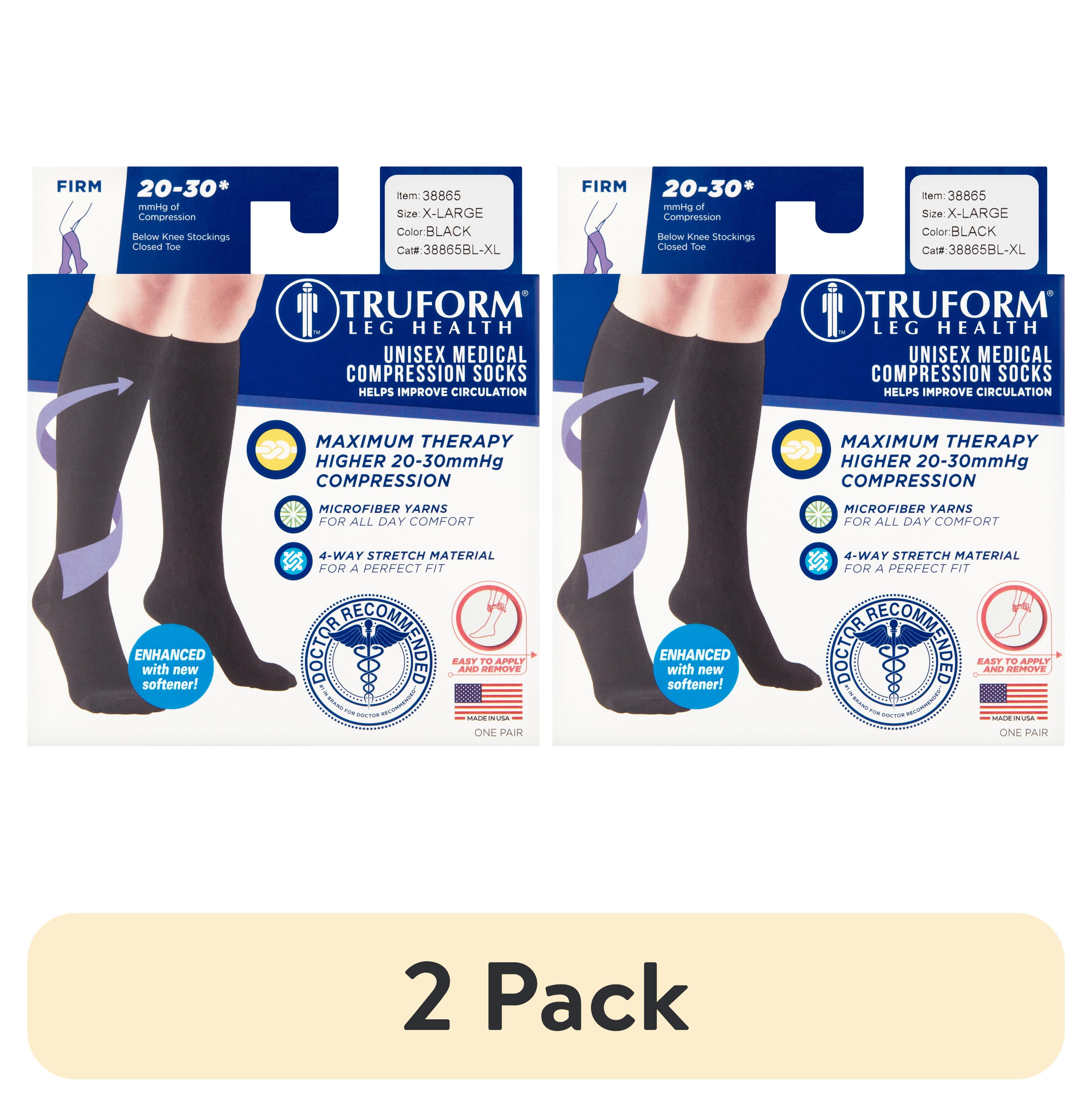
Gradient compression therapy requires precise measurements and reliable product sourcing, making over-the-counter medical-grade garments a common choice for individuals managing venous insufficiencies, edema, or prolonged standing fatigue. Walgreens offers a selection of moderate-to-firm compression hosiery, notably featuring the 20 to 30 mmHg pressure tier, which is frequently recommended by healthcare professionals for moderate swelling, varicose veins, and post-surgical recovery. Understanding what these garments offer, how they function, and what to expect when purchasing them through a national retail pharmacy helps ensure safe, effective therapeutic use.
Understanding 20 to 30 mmHg Compression Strength
Compression hosiery is categorized by millimeters of mercury (mmHg), which measures the amount of pressure the garment exerts on the limb. A rating of 20 to 30 mmHg falls into the "firm" or "moderate-to-firm" medical compression category. This specific level is significantly stronger than standard over-the-counter light support socks (which typically range from 15 to 20 mmHg) and requires careful consideration regarding comfort, fit, and medical necessity.
The primary mechanism of 20 to 30 mmHg socks is gradient compression. The garment is tightest at the ankle and gradually decreases in pressure as it moves up the calf toward the knee or thigh. This progressive pressure assists the venous valves in pushing deoxygenated blood back up toward the heart against gravity. Without this external support, blood can pool in the lower extremities, leading to chronic venous insufficiency, aching legs, heaviness, and visible superficial varicosities.
Because of the substantial pressure exerted by 20 to 30 mmHg garments, they are often recommended for specific clinical indications. Patients recovering from vein procedures, individuals managing moderate lymphedema, pregnant women experiencing severe lower-extremity edema, and frequent flyers looking to prevent deep vein thrombosis (DVT) frequently utilize this pressure tier. However, because of the elevated pressure, individuals with peripheral arterial disease (PAD), severe neuropathy, or active skin infections must consult a physician before wearing them, as restricted arterial blood flow can cause severe complications.
Product Availability and Options at Walgreens
Walgreens supplies a variety of compression wear options both in-store and through its online retail platform, catering to consumers seeking immediate access without waiting for specialized medical supply delivery. The inventory typically includes major therapeutic brands alongside Walgreens private-label options, providing choices across different price points, lengths, and styles.
When browsing the Walgreens catalog for 20 to 30 mmHg compression socks, shoppers generally encounter several distinct design variations:
- Knee-High (15-20 / 20-30 mmHg): The most common style for managing lower-leg fatigue, chronic venous insufficiency, and mild-to-moderate swelling below the knee.
- Thigh-High: Offers extended coverage for issues affecting the entire leg, often utilized post-surgery or for extensive varicosities.
- Pantyhose and Maternity Styles: Designed to support the abdomen and entire lower body, frequently utilized during pregnancy or for continuous core-to-ankle support.
- Open-Toe vs. Closed-Toe: Open-toe variants allow for easier inspection of the toes, accommodate longer foot sizes, and reduce pressure on sensitive toes, whereas closed-toe variants provide complete foot coverage and a traditional sock feel.
Most consumer-facing compression socks at retail pharmacies are made from synthetic elastic blends, such as nylon and spandex or latex-free rubber alternatives. These fabrics balance durability with moisture-wicking properties to prevent skin irritation during all-day wear.
Evaluating Features, Materials, and Design Considerations
Selecting the right pair of 20 to 30 mmHg compression socks involves examining structural features that dictate both therapeutic efficacy and daily wearability. Unlike standard fashion socks, medical-grade compression hosiery is engineered with specific knitting techniques and reinforcement zones.
| Feature / Attribute | Standard Fashion Socks | 20-30 mmHg Medical Compression Socks |
|---|---|---|
| Pressure Profile | Uniform or non-graduated fit | Graduated pressure (highest at ankle, decreasing upward) |
| Fabric Composition | Cotton, wool, or synthetic blends | High-elastane, medical-grade nylon, latex-free spandex |
| Primary Purpose | Comfort, warmth, and style | Clinical management of venous flow, edema, and fatigue |
| Sizing Method | Shoe size (e.g., Small, Medium, Large) | Precise anatomical measurements (ankle, calf circumference, length) |
| Donning Method | Slips on easily by hand | Requires deliberate technique or specialized donning aids |
Durability and comfort rely heavily on top-band construction. A well-designed 20 to 30 mmHg sock features a non-restrictive top band that prevents the garment from rolling down or cutting into the skin beneath the knee. Reinforced heels and toes also add structural integrity to high-friction areas, extending the lifespan of the garment despite daily washing and heavy wear.
Proper Sizing, Measurement, and Fitting Guidance
The most critical factor in utilizing 20 to 30 mmHg compression socks effectively is obtaining the correct size. Unlike casual socks sized by shoe size, medical compression hosiery relies on precise circumference measurements of the limb. Wearing a size that is too small can result in a tourniquet effect, restricting blood flow dangerously. Conversely, a size that is too large will fail to provide the necessary pressure gradient, rendering the therapy ineffective.
To measure correctly for Walgreens compression socks, individuals should take measurements first thing in the morning before fluid accumulation (edema) sets in:
- Ankle Circumference: Measure the narrowest part of the ankle, right above the ankle bone.
- Calf Circumference: Measure the widest part of the calf muscle.
- Leg Length: For knee-high socks, measure from the floor up to the bend of the knee.
Consulting the specific brand sizing chart on the Walgreens packaging or online product listing is essential, as sizing metrics vary significantly between manufacturers. If measurements fall on the boundary between two sizes, patients should consult a pharmacist or healthcare provider to determine whether sizing up or down is appropriate based on their specific medical needs.
Application, Maintenance, and Daily Wear Best Practices
Applying 20 to 30 mmHg compression socks requires a different technique than wearing standard socks due to the high elasticity and firm resistance of the fabric. Rolling the sock down before pulling it over the heel can cause bunching and uneven pressure distribution.
Step-by-Step Donning Procedure
- Turn the sock inside out down to the heel pocket.
- Insert your foot into the foot portion, ensuring the heel is centered properly.
- Gradually draw the fabric up over the heel and smoothly glide it up the calf without pulling aggressively from the top band.
- Smooth out any wrinkles or folds to ensure an even distribution of pressure across the leg.
Proper maintenance is vital to preserve the elasticity of the synthetic fibers. Consumers should hand-wash or machine-wash their compression socks on a gentle cycle using mild, hypoallergenic detergents. Fabric softeners, bleach, and tumble drying on high heat must be avoided, as chemical additives and excessive heat degrade the elastane fibers, rapidly reducing the compression rating of the garment. Air-drying flat is the recommended method for maintaining structural longevity.
Frequently Asked Questions
Do I need a prescription to buy 20 to 30 mmHg compression socks at Walgreens?
No prescription is required to purchase 20 to 30 mmHg compression socks over-the-counter at Walgreens. However, because 20 to 30 mmHg is a medical-grade pressure level, consulting a physician or vascular specialist is strongly advised to confirm that firm compression is safe for your specific circulatory health.
How long do 20 to 30 mmHg compression socks maintain their pressure?
With daily wear and regular washing, high-quality compression socks typically retain their therapeutic pressure rating for approximately four to six months. Over time, the elastic fibers stretch out and lose their snap, meaning the garment will no longer provide the necessary graduated pressure and must be replaced.
Can I sleep while wearing 20 to 30 mmHg compression socks?
No, patients should generally remove 20 to 30 mmHg compression socks before going to bed unless a physician explicitly instructs otherwise. When lying horizontal, gravity no longer exerts the same downward pressure on the veins, making compression unnecessary. Furthermore, wearing firm compression while sleeping can sometimes restrict arterial blood flow when limbs are stationary for extended periods.
What should I do if the top band rolls down or digs into my leg?
A rolling top band often indicates an incorrect size, incorrect length, or worn-out elastic. If the sock is the correct size, ensure it is pulled up to the proper anatomical landmark without stretching it excessively high. If the issue persists, switching to a brand with a wider silicone dot band or a different knit style can resolve slippage.
Are Walgreens brand compression socks as effective as name-brand medical options?
Walgreens-labeled compression hosiery is manufactured to meet standardized compression specifications, providing reliable graduated pressure for everyday therapeutic needs. While premium medical specialty brands may offer wider custom sizing ranges or specialized breathable weaves, Walgreens options serve as an accessible, cost-effective alternative for general symptom management.
Practical Next Actions and Recommendations
For individuals ready to purchase or utilize 20 to 30 mmHg compression socks from Walgreens, starting with accurate morning measurements is the most important initial step. Review the sizing charts available on product packaging or the Walgreens website carefully before finalizing a selection. If you have underlying medical conditions such as diabetes, peripheral artery disease, or open skin ulcers, schedule a brief consultation with your primary care physician or a vein specialist before initiating compression therapy. Selecting the right size, establishing a consistent daily wear routine, and replacing the garments every few months will ensure optimal circulatory support and long-term leg health.