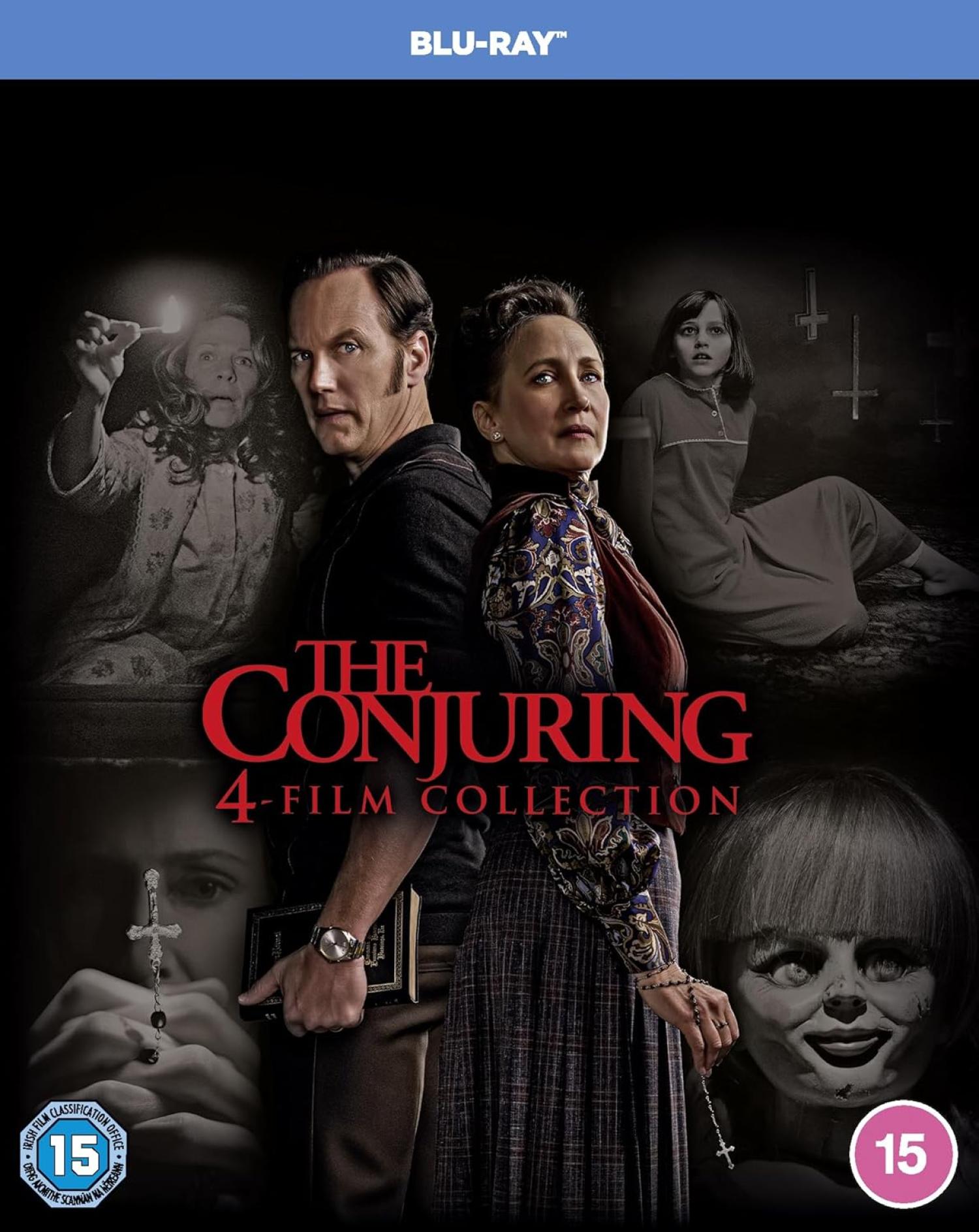
The debate surrounding "Phase 2" of The Conjuring Universe centers on the franchise's transition from a grounded, director-driven supernatural thriller series into a sprawling, multi-character cinematic universe. This era, primarily spanning from 2017 to 2021, sparked intense discussion among critics and fans regarding narrative saturation, the "MCU-ification" of horror, and the shift in tone from atmospheric dread to jump-scare-heavy spectacle.
Defining Phase 2: Chronology and Scope
To understand the debate, one must first define the boundaries of what fans and industry analysts categorize as "Phase 2." While New Line Cinema and Warner Bros. Discovery do not always use official "Phase" terminology in their marketing, the structural shift after 2016’s The Conjuring 2 is undeniable.
Phase 1 is generally recognized as the foundational era, consisting of The Conjuring (2013), the first Annabelle (2014), and The Conjuring 2 (2016). This period established Ed and Lorraine Warren as the emotional heart of the franchise and introduced the "investigative" style of horror that defined the series' early success.
Phase 2 began in earnest with Annabelle: Creation (2017) and extended through The Nun (2018), The Curse of La Llorona (2019), Annabelle Comes Home (2019), and culminated in the third mainline entry, The Conjuring: The Devil Made Me Do It (2021). As we stand in 2026, looking back at this period, Phase 2 is viewed as the "Expansion Era." It was characterized by an aggressive attempt to build a shared mythology through spin-offs that explored the origins of entities first glimpsed in the primary films.
The Shift in Narrative Focus
The primary point of contention in the Phase 2 debate is the move away from the Warrens. In Phase 1, the narrative was anchored by the chemistry between Vera Farmiga and Patrick Wilson. Their performances provided a domestic, almost comforting backbone to the terrifying events. In contrast, Phase 2 largely relegated the Warrens to the background or omitted them entirely, focusing instead on "monster-first" storytelling. Critics argued that by centering films on the "villains" (like Valak or the Ferryman) rather than the "heroes," the franchise lost the emotional stakes that made the original 2013 film a cultural phenomenon.
The Narrative Fragmentation: Spin-offs vs. The Core Trilogy
A significant portion of the Phase 2 debate involves the quality variance between the mainline films and the spin-offs. During this period, the franchise adopted a "hub and spoke" model. The Conjuring films acted as the "hub," introducing new demons, while the spin-offs acted as the "spokes," fleshing out those demons' histories.
The Case of Annabelle: Creation and The Nun
Annabelle: Creation is often cited by proponents of Phase 2 as a high point. Directed by David F. Sandberg, the film was a critical and commercial success that improved upon its predecessor by returning to a more claustrophobic, atmospheric style. However, the subsequent release of The Nun in 2018 became the flashpoint for the debate.
While The Nun was a massive box office success, grossing over $365 million worldwide, it received a lukewarm critical reception. The debate intensified here: was the franchise prioritizing brand recognition and "cool" monster designs over coherent storytelling? The Nun leaned heavily into Gothic tropes and jump-scares, moving away from the "slow-burn" tension James Wan perfected in the first two films.
The "La Llorona" Canon Controversy
The inclusion of The Curse of La Llorona in the Conjuring Universe remains one of the most debated technicalities of Phase 2. Although the film features Father Perez (reprising his role from Annabelle), director Michael Chaves and the producers have given conflicting statements over the years regarding its official status in the canon.
In 2026, the consensus among lore enthusiasts is that while it shares DNA with the universe, its exclusion from major "Anniversary Collections" suggests a retroactive distancing. This ambiguity during Phase 2 led to accusations of "brand slapping"—using the Conjuring name (or subtle links to it) to bolster the box office of unrelated horror projects.
The Aesthetic Shift: Directorial Changes and Visual Identity
The technical execution of the films changed significantly during Phase 2. James Wan, the architect of the franchise's visual language, stepped away from the director's chair after The Conjuring 2 to focus on producing. This left a void that several different directors attempted to fill, including David F. Sandberg, Corin Hardy, Gary Dauberman, and Michael Chaves.
From Wide-Angle Dread to Tight Jump-Scares
James Wan’s style is characterized by long takes, wide angles that force the viewer to scan the background for threats, and a meticulous use of negative space. In Phase 2, particularly in The Nun and The Devil Made Me Do It, there was a perceptible shift toward more traditional, tight-angled cinematography and edited jump-scares.
The "Phase 2 debate" often involves a technical critique of this cinematography. While the newer films were technically proficient and used modern VFX effectively, some fans felt the "handcrafted" feel of the first two movies was replaced by a more standardized, studio-led aesthetic. This led to a discussion about whether a "Universe" can maintain a consistent tone when the original visionary is no longer directing the individual installments.
Commercial Performance vs. Critical Longevity
One cannot discuss the Phase 2 debate without looking at the numbers. Economically, Phase 2 was a resounding success, proving that horror could function as a sustainable cinematic universe—a feat many other studios (such as Universal with its "Dark Universe") failed to achieve.
| Film Title | Release Year | Global Box Office (Approx.) | Rotten Tomatoes Score |
|---|---|---|---|
| The Conjuring (Phase 1) | 2013 | $319 Million | 86% |
| The Conjuring 2 (Phase 1) | 2016 | $320 Million | 80% |
| Annabelle: Creation (Phase 2) | 2017 | $306 Million | 71% |
| The Nun (Phase 2) | 2018 | $365 Million | 24% |
| The Curse of La Llorona (Phase 2) | 2019 | $123 Million | 28% |
| Annabelle Comes Home (Phase 2) | 2019 | $231 Million | 64% |
| The Conjuring: The Devil Made Me Do It (Phase 2) | 2021 | $206 Million | 55% |
The table illustrates the core of the debate: while the box office remained strong (especially considering the lower budgets of horror films), the critical reception saw a downward trend during the peak of Phase 2. This raised questions about "franchise fatigue." By the time The Devil Made Me Do It was released, the debate had shifted toward whether the series needed to return to its roots or continue innovating with new sub-genres (such as the "courtroom thriller" angle used in the third film).
The Role of the Warrens: From Protagonists to Cameos
A recurring theme in the Phase 2 debate is the management of the Warrens' IP. During the height of Phase 2, there was a clear strategy to see if the franchise could survive without them. Annabelle Comes Home attempted a middle ground, featuring the Warrens in a limited capacity while focusing on their daughter, Judy.
The debate here is twofold:
- Character Dilution: Did placing the Warrens in the background of spin-offs make their "main" appearances less special?
- The Ethics of Interpretation: Phase 2 coincided with more scrutiny regarding the real-life Ed and Lorraine Warren. As the films moved further into "superhero" territory (with the Warrens essentially battling demons in high-stakes action sequences), the debate about the films' "true story" branding intensified. Critics argued that the Phase 2 films leaned too heavily into fiction, losing the "pseudo-documentary" charm of the 2013 original.
Resolving the Debate: The Legacy of Phase 2 in 2026
As of 2026, the "Phase 2 debate" has largely been settled by the direction taken in the subsequent "Phase 3" (which includes The Nun II and The Conjuring: Last Rites). Looking back, Phase 2 is now viewed as a necessary, if turbulent, period of experimentation.
The lessons learned during the Phase 2 debate influenced the current state of the franchise. The studio realized that while spin-offs are profitable, the audience's primary loyalty lies with the Warrens and the specific "style" of horror James Wan established. Consequently, recent films have attempted to blend the atmospheric tension of Phase 1 with the expanded lore of Phase 2.
The "Phase 2 debate" wasn't just about whether the movies were "good" or "bad"; it was a larger conversation about the limits of horror as a franchise. It tested how far a story could be stretched before it lost its ability to actually scare people. While Phase 2 had its misses, it succeeded in creating a pantheon of horror icons—Valak, Annabelle, and the Malthus entity—that have become as recognizable to this generation as Freddy Krueger or Jason Voorhees were to previous ones.
Frequently Asked Questions
What is the "Phase 2" of the Conjuring Universe? Phase 2 refers to the second major wave of films in the franchise, beginning with Annabelle: Creation (2017) and ending with The Conjuring: The Devil Made Me Do It (2021). This era focused on expanding the lore through spin-offs and exploring the origins of various demons within the Warrens' occult museum.
Is "The Curse of La Llorona" actually part of Phase 2? Technically, yes, as it features a character (Father Perez) from the first Annabelle film. However, its status is often debated because the production team has occasionally distanced the film from the official Conjuring timeline. In most fan-made "Phase 2" lists, it is included as a tangential entry.
Why did James Wan stop directing during Phase 2? James Wan transitioned to a producer role to oversee the expansion of the universe and to pursue other projects, such as Aquaman and Malignant. While he remained heavily involved in the story and "look" of the films, his absence from the director’s chair is a central point in the debate over the shift in the franchise’s quality and tone.
Which film is considered the best of Phase 2? Annabelle: Creation is widely considered the critical darling of Phase 2. It is praised for its strong direction by David F. Sandberg and its ability to deliver genuine scares while effectively tying into the larger mythology of the possessed doll.
How does "The Conjuring: The Devil Made Me Do It" fit into the debate? As the first mainline "Conjuring" film not directed by James Wan, it serves as the climax of the Phase 2 debate. It attempted to change the franchise's formula by moving away from the "haunted house" trope and into a "detective/legal thriller" format, which received polarized reactions from the fanbase.
Are there any Phase 2 films that are not scary? Scare factor is subjective, but many fans argue that The Nun and The Curse of La Llorona relied too heavily on predictable jump-scares rather than the psychological dread seen in Phase 1. This "watering down" of the horror is a major pillar of the Phase 2 debate.
Final Practical Recommendation
For those looking to engage with the Conjuring Universe in 2026, the best approach to navigating "Phase 2" is to view it through the lens of world-building rather than standalone excellence. While films like The Nun may not offer the same narrative depth as the original 2013 movie, they provide essential context for the entities that reappear in later installments. If you are a completionist, watch the films in chronological order of the story's timeline rather than release date to see how the "Phase 2" lore pieces fit into the broader puzzle.