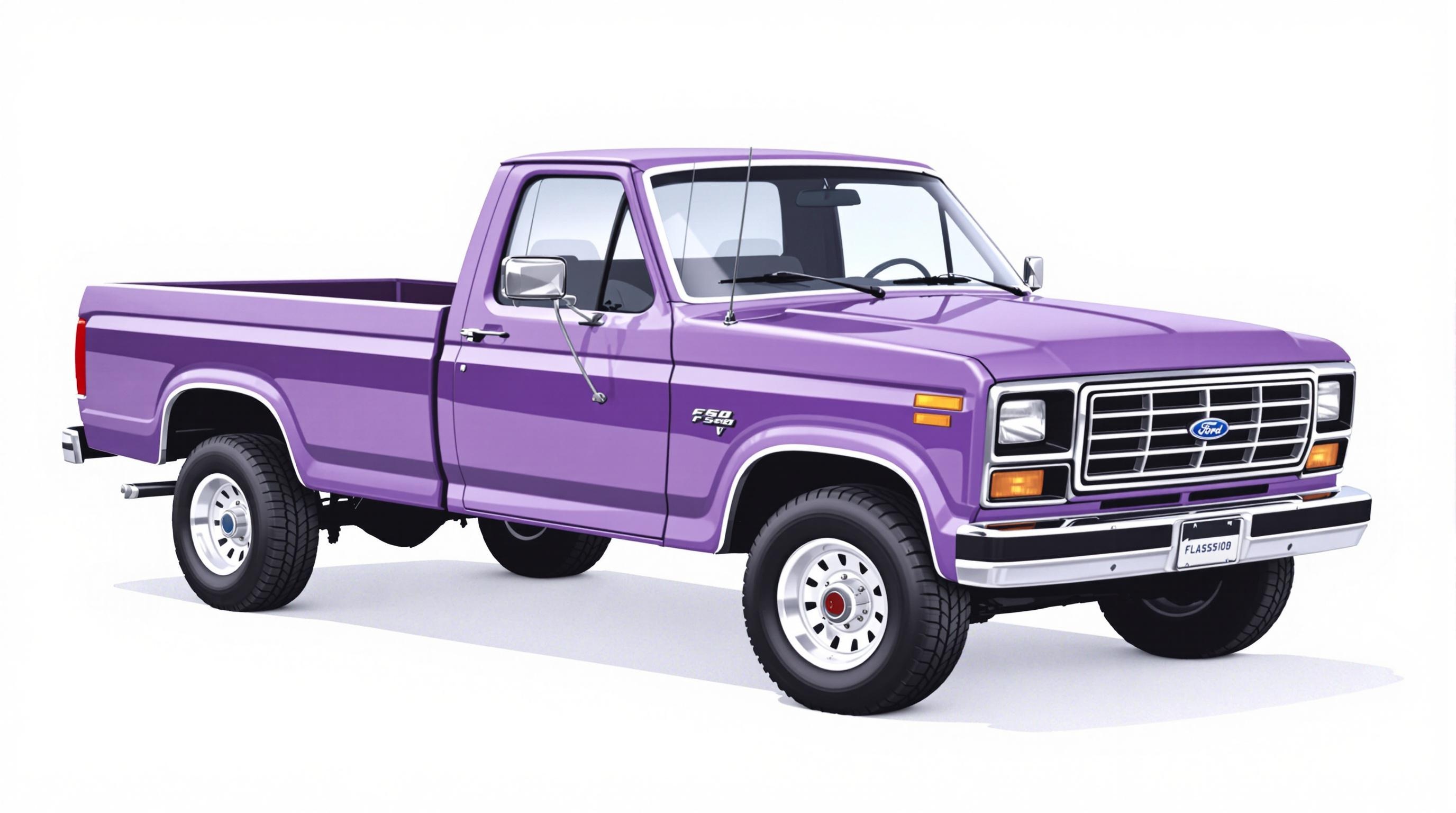
As of 2026, the 1986 Ford F-250 remains a cornerstone of the "Bullnose" era (1980–1986), representing the final year of this iconic body style. Shifting issues in these trucks typically stem from the transition between purely mechanical systems and early electronic engine management. Most disputes involve transmission reliability—specifically the C6 automatic and the T-19 manual—and the "mid-year" production shifts that often lead to part-matching confusion during restorations.
The 1986 Transition: A "Shift" in Automotive Philosophy
The 1986 model year was a pivotal moment for Ford’s heavy-duty truck line. It stood as the bridge between the rugged, simple mechanics of the 1970s and the increasingly complex, emissions-regulated designs of the late 1980s. When enthusiasts discuss "shifts" regarding the 1986 F-250, they are often referring to two distinct categories: the literal mechanical shifting of the transmission and the metaphorical shift in the truck's engineering DNA.
In 2026, collectors and mechanics continue to debate whether the 1986 model was the pinnacle of Ford's durability or a compromised hybrid of old and new technology. This was the year Ford significantly expanded Electronic Fuel Injection (EFI) in the F-Series, specifically for the 5.0L (302) V8. However, the heavier-duty F-250 engines, like the 5.8L (351 Windsor) and the massive 7.5L (460), largely retained carburetors. This technological split creates "disputes" among owners regarding fuel delivery reliability and its subsequent impact on vacuum-controlled shifting mechanisms.
Mechanical Shifting Disputes: The C6 Automatic vs. The Manuals
The primary mechanical dispute for 1986 F-250 owners centers on the Ford C6 three-speed automatic transmission. While legendary for its "bulletproof" strength, the C6 lacks an overdrive gear. In a modern context, this translates to high RPMs at highway speeds and poor fuel economy.
The C6 Vacuum Modulator Controversy
The most common "shifting dispute" reported by owners is a "late shift" or a "soft shift" in the C6. Because the C6 is not electronically controlled, it relies on a vacuum modulator to determine when to change gears based on engine load.
- The Problem: Vacuum leaks in the lines running from the intake manifold to the transmission often cause the truck to stay in gear too long or shift with a violent "thud."
- The Dispute: Mechanics often disagree on whether to simply replace the modulator or if the issue points to internal valve body wear.
- The 2026 Reality: Most "failed" C6 transmissions in these trucks are actually victim to perished rubber vacuum lines or a misadjusted Vacuum Regulator Valve (VRV) on diesel models.
The T-19 Manual and Synchronizer Wear
For those with a manual 1986 F-250, the Borg-Warner T-19 was the standard heavy-duty choice. Unlike the older T-18, the T-19 features a synchronized first gear.
- The Common Dispute: Owners often argue over the "grinding" noise when shifting into second gear. Many attribute this to the transmission reaching the end of its life, but it is frequently caused by the use of the wrong gear oil. The T-19 requires specific lubricants to allow the synchronizers to work correctly; using modern synthetic oils with the wrong friction modifiers can actually accelerate wear.
Technical Specifications: 1986 F-250 Transmission Options
To resolve disputes about which parts or fluids are required, it is essential to identify the specific transmission installed in the vehicle.
| Transmission Model | Type | Primary Engine Match | Common Shifting Issue | 2026 Parts Availability |
|---|---|---|---|---|
| Ford C6 | 3-Speed Automatic | 5.8L V8 / 7.5L V8 / 6.9L Diesel | Vacuum modulator failure; late shifts | High (Excellent aftermarket support) |
| Borg-Warner T-19 | 4-Speed Manual | 5.8L V8 / 6.9L Diesel | 2nd gear synchronizer grind | Medium (Harder to find specific synchros) |
| New Process NP435 | 4-Speed Manual | 4.9L I6 / 5.0L V8 | Sloppy shifter gate; long throws | High (Very common in salvage) |
| Borg-Warner T-18 | 4-Speed Manual | Various | Non-synchro 1st gear (normal "clunk") | High |
The Diesel Shifting Dilemma: The 6.9L IDI and the VRV
The 1986 F-250 equipped with the International Harvester 6.9L IDI diesel engine presents a unique shifting challenge. Because diesel engines do not produce natural vacuum, Ford utilized a gear-driven vacuum pump and a Vacuum Regulator Valve (VRV) mounted on the side of the fuel injection pump.
The VRV is a frequent subject of "remaining questions" because it mimics the vacuum signal of a gasoline engine to tell the C6 automatic when to shift. If the VRV is slightly out of adjustment, the truck may shift at 3,000 RPM under light throttle or refuse to downshift. As these parts have become rarer by 2026, enthusiasts have engaged in heated disputes over how to bypass this system or adapt modern cable-driven modulators.
Mid-Year Production Shifts: Why Parts Don't Fit
A major source of frustration and "dispute" at the parts counter is the mid-1986 production change. As Ford prepared for the 1987 "Bricknose" redesign, several components in the F-250 began to "shift" prematurely.
- Electrical Harnesses: Late-model 1986 trucks sometimes feature wiring connectors that match 1987 specifications rather than the 1980–1985 standards.
- Transfer Case Variations: Most 1986 F-250 4x4s used the Borg-Warner 1345 transfer case, but some late-year models have been found with the BW 1356, which was standard in 1987. Shifting into 4-High or 4-Low becomes a puzzle when the linkage doesn't match the service manual.
- The Fuel System: The 1986 5.0L trucks moved to a high-pressure EFI system with two fuel pumps (one in-tank, one on the frame rail). Owners often dispute which pump is failing when the truck stumbles, not realizing that a "shift" in fuel pressure can affect the engine's vacuum, which in turn ruins the transmission's shift timing.
Remaining Questions for Owners in 2026
Despite decades of collective knowledge, several questions remain unanswered or lack a "one-size-fits-all" solution for the 1986 F-250.
1. The Overdrive Swap Question
Is it better to keep the original C6 or swap in a ZF5 (5-speed manual) or an E4OD (4-speed automatic)? While the ZF5 swap is popular, it requires significant floor pan modification and a custom pedal assembly. The dispute remains: does modifying a "survivor" 1986 truck hurt its long-term value in a market that increasingly prizes originality?
2. Steering Column vs. Transmission Linkage
Many owners report "sloppy" shifting in the automatic column. The question remains whether the issue is usually in the plastic bushings at the base of the column or the linkage rods near the transmission. In 2026, with 40 years of wear, the answer is often "both," but the labor required to rebuild a 1986 steering column is a significant deterrent.
3. The 4x4 Hub Engagement Dispute
The 1986 F-250 featured manual locking hubs as standard on most trims, with "automatic" hubs as an option. There is an ongoing dispute regarding the reliability of the automatic hubs. While convenient, they are notorious for failing to "shift" into lock, leaving the driver without front-wheel power. Most experts recommend a "shift" back to manual Warn or Mile Marker hubs, though this removes the "factory original" status of the truck.
Troubleshooting the "Shift": A Step-by-Step Guide
If your 1986 F-250 is experiencing shifting disputes, follow this diagnostic path:
- Check Fluid Level and Quality: Ensure the fluid is bright red. A "burnt" smell indicates internal clutch failure, not a linkage or vacuum issue.
- Inspect Vacuum Lines: Trace the line from the transmission back to the engine. Any crack, no matter how small, will cause shifting disputes. Use a vacuum gauge to ensure at least 15-20 inches of mercury (Hg) at idle for gas engines.
- Evaluate Shifter Bushings: For manual trucks, if the shifter feels like "stirring a pot of soup," the plastic bushings at the base of the lever are gone. These are inexpensive to replace and solve 90% of manual shifting complaints.
- Verify the Neutral Safety Switch (NSS): If the truck won't "shift" into a starting state (won't crank in Park/Neutral), the NSS on the side of the transmission likely needs adjustment or replacement.
FAQ: Shifting and Transmission Disputes
Why does my 1986 F-250 shift hard into second gear?
On an automatic C6, a hard shift usually indicates high vacuum pressure or a failing vacuum modulator. On a manual T-19, it is typically a worn synchronizer. For the C6, try adjusting the modulator screw (if equipped) inward or outward to soften the shift. For the manual, ensure you are using a GL-4 rated lubricant rather than a modern GL-5, which can be too "slippery" for old synchronizers.
Can I add an overdrive unit to my 1986 C6 transmission?
Yes, companies like Gear Vendors offer bolt-on overdrive units. However, this is a major point of dispute due to the cost. In 2026, these units can cost more than the value of the truck itself. Most owners find it more cost-effective to either accept the 3-speed's limitations or perform a complete ZF5 5-speed swap.
What is the "VRV" and why does everyone talk about it for 1986 diesels?
The Vacuum Regulator Valve (VRV) is a plastic component on the diesel injection pump that regulates vacuum to the transmission. It is the most common cause of shifting issues in 1986 diesel F-250s. Because the part is no longer manufactured by Ford, the "remaining question" is how to repair them. Most owners now rely on 3D-printed internal components or high-end aftermarket rebuilds.
Is the 1986 F-250 4.9L Straight-Six better with a manual or automatic?
This is a classic enthusiast dispute. The 4.9L (300 cubic inch) I6 is a low-torque, "tractor" engine. Most agree that the NP435 4-speed manual is the best match for this engine, as the wide gear ratios allow you to stay in the power band. The C6 automatic tends to "sap" too much of the 4.9L's limited horsepower.
My shifter indicator doesn't line up with the gears. How do I fix it?
This is a mechanical alignment issue, not a transmission failure. There is a small white plastic thumbwheel located under the dashboard on the steering column. Turning this wheel adjusts the tension on a thin cable that moves the orange "needle" on your dash. This is a 5-minute fix that resolves many "shifting" complaints.
Final Practical Recommendation
For any 1986 Ford F-250 owner facing shifting disputes, the first action should always be a thorough vacuum system audit. Before spending thousands on a transmission rebuild, replace every rubber vacuum elbow and line. These components have surpassed their 40-year lifespan as of 2026 and are the primary culprits behind erratic shifting behavior. If the truck is a "late-year" 1986 build, always bring your old part to the store to verify it against 1987 specifications, as the production "shift" during this era was inconsistent across Ford’s various assembly plants.