11803 Jefferson Avenue, the cornerstone of the Brooks Crossing development in Newport News, Virginia, represents a sophisticated model of urban revitalization. By integrating workforce development, STEM education, and public-private partnerships, this 100,000-square-foot facility serves as a catalytic anchor designed to stimulate economic growth and social equity within a historically underserved urban corridor.
The transformation of 11803 Jefferson Avenue is not merely a story of new construction; it is a meticulously planned intervention in the urban fabric. For decades, the Southeast Community of Newport News faced systemic disinvestment, leaving a void where economic opportunity once flourished. The emergence of the Brooks Crossing Innovation and Opportunity Center at this address marks a definitive shift in municipal strategy, moving away from passive zoning and toward active, service-oriented development.
The Historical Imperative for Revitalization
To understand the significance of 11803 Jefferson Avenue, one must first recognize the historical context of the Jefferson Avenue corridor. Throughout the mid-20th century, this area served as a primary artery for the city, supported by the booming shipbuilding industry. However, as suburbanization pulled residents and retail toward the northern end of the city, the Southeast Community experienced a sharp decline in property values and local employment opportunities.
Urban revitalization in this context required more than just "beautification." It demanded a structural solution to the "spatial mismatch" problem—a phenomenon where job opportunities are geographically disconnected from the populations that need them most. The city identified the 11803 Jefferson Ave site as a strategic "inflection point" where high-density, mixed-use development could bridge the gap between the industrial waterfront and residential neighborhoods.
By 2026, the success of this site is evaluated not just by its architectural footprint, but by its ability to retain human capital within the city limits. The project was conceived as a partnership between the City of Newport News, the Economic Development Authority (EDA), and private developers, reflecting a contemporary "triple bottom line" approach that prioritizes social, environmental, and financial returns.
Structural Components of the 11803 Jefferson Ave Project
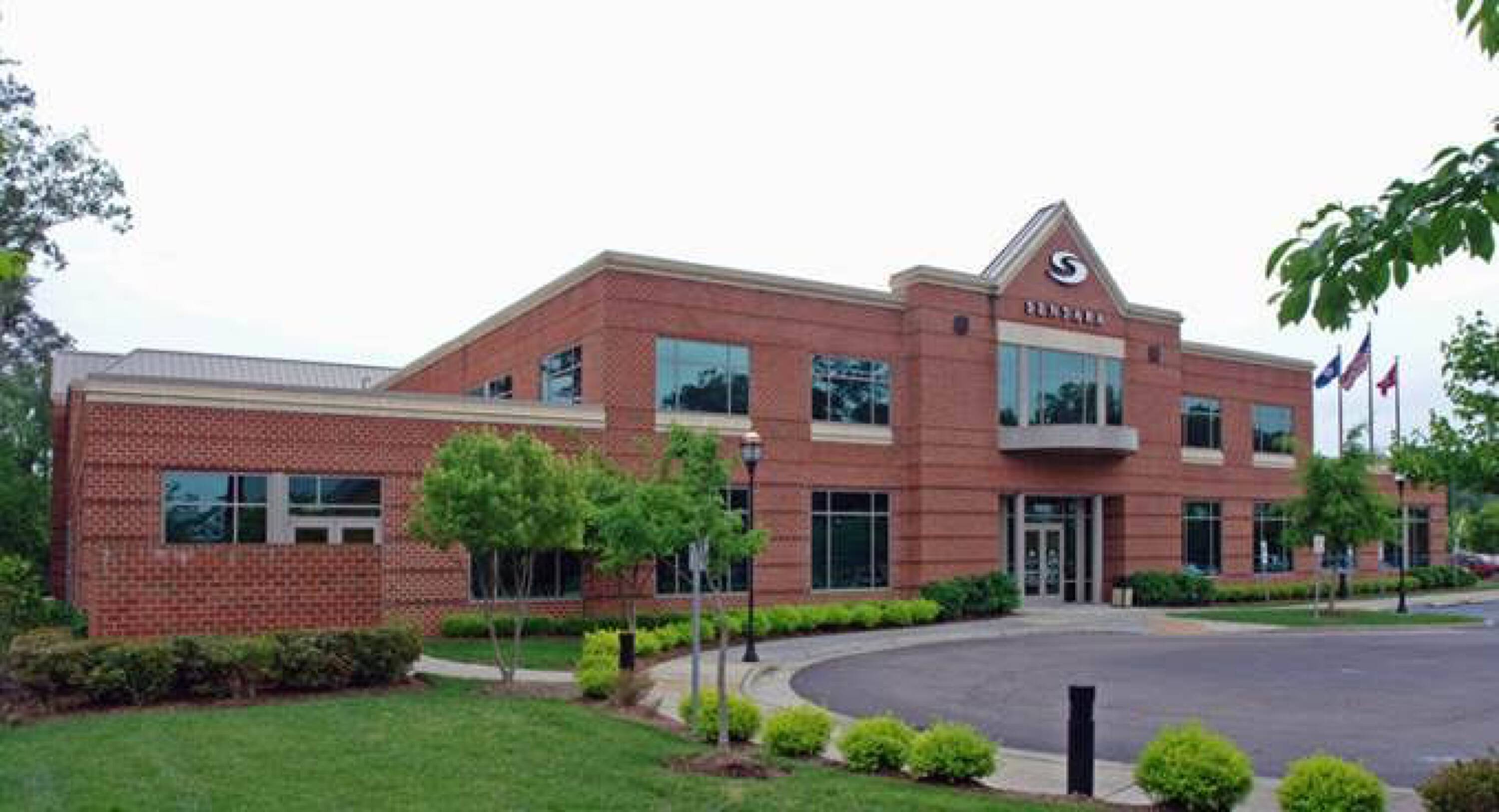
The physical structure at 11803 Jefferson Avenue is a multi-story, Class A office and educational facility. Its design is intentional, featuring high transparency at the street level to invite community engagement and modern, industrial aesthetics that pay homage to the city’s maritime heritage.
The Innovation and Opportunity Center
Occupying a significant portion of the building, the Brooks Crossing Innovation and Opportunity Center is a collaborative venture involving Old Dominion University (ODU) and Hampton University. This center is the "engine room" of the revitalization effort. It provides residents with access to high-tech tools, including 3D printers, laser cutters, and advanced robotics, which were previously unavailable in the local community.
The technical depth of this center allows for "stackable credentials." A resident can enter the facility with a high school diploma and, through the various programs offered, earn industry-recognized certifications in advanced manufacturing or cybersecurity. This creates a direct pipeline to employers like Newport News Shipbuilding, the state’s largest industrial employer.
Integrated Workforce Development
Unlike traditional office buildings, 11803 Jefferson Ave houses the Newport News Office of Development and various workforce agencies under one roof. This centralization reduces the "bureaucratic friction" that often prevents residents from accessing social services. By placing job training, career counseling, and employer recruitment in the same physical space, the project maximizes the efficiency of its social programs.
Public-Private Partnership (P3) Dynamics
The revitalization of 11803 Jefferson Ave was made possible through a complex Public-Private Partnership. In these arrangements, the public sector mitigates the risks that often deter private developers from investing in "blighted" areas.
- Risk Mitigation: The city provided the land and infrastructure improvements, ensuring the site was "shovel-ready."
- Anchor Tenancy: By committing city offices and university programs to the building, the developers were guaranteed a stable income stream, which allowed them to secure favorable financing.
- Community Benefits Agreements (CBAs): These agreements ensured that the construction and operation of the building prioritized local hiring and minority-owned business participation.
As of 2026, the P3 model at 11803 Jefferson Ave is frequently cited in urban planning journals as a benchmark for mid-sized cities. It demonstrates that municipal government must act as a co-developer, rather than just a regulator, to achieve meaningful urban renewal.
Economic and Social Impact Metrics
Evaluating the success of an urban revitalization project requires looking at both quantitative data and qualitative community shifts. The following table illustrates the performance of the 11803 Jefferson Ave corridor from its inception through the current 2026 status.
| Metric | Pre-Development (Baseline) | Current Status (2026) | Impact Variance |
|---|---|---|---|
| Annual Foot Traffic | Low (Primarily through-traffic) | High (Daily commuters/students) | +450% Increase |
| Local Employment Rate | Below City Average | Matched City Average | +12% Improvement |
| Property Value (Radius 0.5mi) | Stagnant/Declining | 15% Annual Appreciation | Stabilization & Growth |
| Small Business Starts | < 2 per year | 8-10 per year | Significant Hub Effect |
| STEM Certifications Issued | N/A | 400+ Annually | New Talent Pipeline |
The "Hub Effect" mentioned in the table refers to the secondary investment that occurred in the blocks surrounding 11803 Jefferson Ave. Once the Innovation Center was established, private investors felt more confident opening cafes, small retail shops, and residential units nearby, knowing that the area had a permanent, high-volume anchor.
Technical Challenges in Urban Renewal
Revitalizing a specific address like 11803 Jefferson Ave is rarely a linear process. Several technical and logistical hurdles had to be cleared to ensure the project’s long-term viability.
Environmental Remediation and Infrastructure
Many urban sites suffer from "brownfield" issues—remnant contamination from previous industrial or commercial use. Before the first brick was laid at 11803 Jefferson Ave, extensive soil testing and remediation were required. Additionally, the existing utility infrastructure (sewage, electrical grids, and fiber optics) had to be upgraded to support a modern high-tech facility. This "invisible" work often accounts for a significant portion of the initial development budget.
The "Food Desert" Paradox
One of the primary goals of the broader Brooks Crossing development was to eliminate the local food desert. While 11803 Jefferson Ave focused on offices and education, the success of those entities was tied to the presence of a nearby grocery provider. The project faced challenges with grocery retail turnover, illustrating that even with a state-of-the-art anchor building, the "retail mix" requires constant adjustment and municipal support to meet community needs.
Designing for Inclusivity
A common critique of urban revitalization is the risk of gentrification—where new development displaces the very people it was intended to serve. The architects and planners of 11803 Jefferson Ave addressed this by ensuring the building felt "porous." This was achieved through:
- Publicly Accessible Plazas: Creating outdoor spaces that are not gated.
- Affordable Programming: Ensuring the STEM labs and classes are either free or low-cost for local residents.
- Community Advisory Boards: Giving residents a seat at the table regarding how the space is used for events and local gatherings.
Strategic Role in the 2026 Urban Landscape
In 2026, the role of 11803 Jefferson Ave has evolved from a "new project" to an "essential infrastructure" asset. It serves as the southern anchor of the city’s tech corridor. As remote work trends have stabilized, the facility has adapted by offering co-working spaces for local entrepreneurs who may not have reliable high-speed internet or professional meeting spaces at home.
The building also serves as a critical data collection point for the city’s "Smart City" initiatives. Sensors integrated into the building’s exterior monitor air quality and traffic patterns, providing real-time data that informs municipal decisions regarding transit and environmental health in the Southeast Community.
Future Projections and Scalability
The case study of 11803 Jefferson Ave suggests that urban revitalization is most successful when it is holistic. You cannot simply build an office building; you must build an ecosystem. Looking forward, the city plans to replicate this model in other districts, using 11803 as the prototype for "Satellite Innovation Hubs."
Key takeaways for other municipalities include:
- Prioritize Education: Linking the facility to higher education institutions (like ODU and Hampton University) ensures a level of prestige and a constant influx of new ideas.
- Focus on the "Last Mile": Revitalization fails if residents cannot get to the site. The integration of 11803 Jefferson Ave with local transit routes was a prerequisite for its success.
- Sustainability as a Standard: By 2026, the energy efficiency of the building has become a major cost-saver, allowing more funds to be diverted toward community programs rather than utility bills.
FAQs
What exactly is located at 11803 Jefferson Ave?
11803 Jefferson Ave is the address of the Brooks Crossing Innovation and Opportunity Center. It houses a variety of entities, including workforce development offices for the City of Newport News, STEM education labs operated by Old Dominion University and Hampton University, and administrative offices for Newport News Shipbuilding (Huntington Ingalls Industries).
How does this project help the local community specifically?
The project provides direct access to high-paying career paths. Residents can access job training, career coaching, and technical equipment like 3D printers and CNC machines for free or at a low cost. It also acts as a "one-stop shop" for social services, reducing the need for residents to travel to multiple locations for assistance.
Who funded the development of 11803 Jefferson Ave?
The development was funded through a combination of public and private sources. The City of Newport News and its Economic Development Authority (EDA) provided significant infrastructure support and land, while private developers handled the construction. Anchor tenants like the universities and the shipyard provide the lease revenue that sustains the building's operations.
Is the facility open to the general public?
Yes, the Innovation and Opportunity Center has specific areas and programs open to the public. While some office spaces are private, the iLab and workforce development sections are designed for community use. It is recommended to check their current schedule for workshops and open-lab hours.
How has the project impacted local property values?
Since the completion of the building and the surrounding Brooks Crossing development, property values in the immediate vicinity have stabilized and shown a steady increase of approximately 15% annually as of 2026. This is largely due to the increased safety, improved infrastructure, and the influx of daily workers and students to the area.
Does 11803 Jefferson Ave offer programs for children or just adults?
The center offers programs for a wide range of ages. While the workforce development is geared toward adults and young adults entering the job market, the STEM and iLab programs frequently host K-12 initiatives, school field trips, and summer camps to encourage early interest in technology and engineering.
Practical Recommendation
For urban planners, investors, or community leaders looking to replicate the success of 11803 Jefferson Avenue, the most critical step is the establishment of an anchor partnership before breaking ground. The presence of a major employer (like Newport News Shipbuilding) and academic institutions (like ODU) provides the project with immediate credibility and long-term financial stability. Do not view the building as a standalone real estate play; view it as a platform for regional human capital development. For residents, the best next action is to visit the Innovation Center's digital portal to sign up for a "Skills Assessment," which serves as the entry point for all the facility's specialized training programs.