Navigating 1099 tax help requires understanding that independent contractors, freelancers, and small business owners face distinct self-employment tax obligations, filing thresholds, and expense-deduction rules that fundamentally differ from traditional W-2 employment structures.
Independent contractor taxes often feel overwhelming due to a lack of employer-withheld income taxes, confusing form thresholds, and complex regulatory frameworks. Taxpayers frequently rely on outdated advice, workplace myths, or misunderstood internet forums, leading to costly filing errors, missed deductions, or unexpected audits by the Internal Revenue Service (IRS). Separating fact from fiction is essential for accurate filing and optimal financial health. This comprehensive guide clarifies the realities of 1099 taxation, debunking prevalent myths surrounding reporting thresholds, estimated tax payments, deductions, entity structures, and recordkeeping.
Understanding the 1099 Tax Landscape
Operating as an independent contractor or freelancer means you are legally classified as a sole proprietor, single-member LLC, independent vendor, or gig economy worker. Unlike traditional employees who receive a Form W-2 and have federal income tax, Social Security, and Medicare withheld automatically by their employers, 1099 workers receive non-employee compensation and must manage their own tax liabilities.
This shift in responsibility introduces several unique administrative tasks. You are responsible for calculating your gross receipts, tracking legitimate business expenses, paying quarterly estimated taxes, and submitting an annual return using Schedule C (Profit or Loss From Business) alongside Schedule SE (Self-Employment Tax) of Form 1040. Because the tax system relies heavily on voluntary compliance and accurate recordkeeping, misunderstandings about how these mechanisms work can result in severe penalties, interest charges, and unnecessary tax liabilities.
Misconception 1: "If I Don't Receive a 1099 Form, I Don't Need to Report the Income"
One of the most persistent and dangerous myths in the independent workforce is that income is only taxable if a client issues a formal information return. Historically, clients were required to issue a Form 1099-NEC (Nonemployee Compensation) if they paid an independent contractor $600 or more in a calendar year.
The Reality of Gross Income Reporting
The Internal Revenue Code requires taxpayers to report all global income earned, regardless of whether an information return was issued. The $600 threshold applies to the payer's reporting obligation to the IRS, not to the payee's obligation to report earnings.
- No Form Required: If you earned $450 from a client who did not issue a Form 1099-NEC, that income is still fully taxable and must be reported on your tax return.
- Digital Platforms: Workers utilizing digital platforms or payment processors may receive a Form 1099-K. However, failing to receive a form due to processing thresholds or administrative oversights does not exempt anyone from reporting taxable cash, check, or direct deposit income.
- Audit Triggers: The IRS utilizes matching algorithms to compare reported income against submitted 1099 documents. Discrepancies or unfiled income streams often trigger automated matching notices (CP2000 notices) or formal audits.
Misconception 2: "I Only Need to Pay Taxes Once a Year in April"
Many new freelancers assume that self-employment taxes operate exactly like traditional employment taxes, where all financial reconciliation occurs during the annual filing season.
The Pay-As-You-Go Tax System
The United States tax system operates on a pay-as-you-go basis. Income tax and self-employment tax must be paid as you earn or receive income throughout the year, rather than in a single lump sum in the spring.
- Quarterly Estimated Payments: If you expect to owe $1,000 or more in taxes when your return is filed, you are generally required to make quarterly estimated tax payments using IRS Form 1040-ES.
- Payment Deadlines: These payments are typically due four times a year: April 15, June 15, September 15, and January 15 of the following year.
- Underpayment Penalties: Waiting until April to pay your entire annual tax bill can trigger IRS underpayment penalties and interest, even if you file your return on time and pay the balance immediately.
Misconception 3: "Writing Off Personal Expenses Is Standard Practice"
A common misconception is that operating a business allows individuals to run personal living expenses through their business accounts to lower their tax liability.
The Ordinary and Necessary Standard
Under IRS guidelines, deductible business expenses must be both "ordinary" (common and accepted in your trade or business) and "necessary" (helpful and appropriate for your business). Personal, living, or family expenses are strictly non-deductible.
| Expense Category | Deductible Business Expense | Non-Deductible Personal Expense |
|---|---|---|
| Transportation | Mileage driven directly to client meetings or job sites. | Standard daily commute from your home to a regular primary office. |
| Meals | 50% of meals eaten while traveling for business or entertaining clients with a business purpose. | Daily groceries or routine lunches eaten alone while working. |
| Clothing | Specialized safety gear, uniforms, or branded work attire unsuitable for everyday streetwear. | Standard business-casual suits, shoes, or daily wardrobe items. |
| Communication | The percentage of phone and internet use dedicated exclusively to business operations. | Total monthly household utility bills without business-use allocation. |
Attempting to deduct personal expenses crosses the line into tax evasion, which carries severe civil penalties and potential criminal consequences.
Misconception 4: "Form 1099-NEC and Form 1099-MISC Are Interchangeable"
With the resurrection and permanent establishment of Form 1099-NEC for reporting nonemployee compensation, taxpayers often confuse it with the older Form 1099-MISC.
Understanding the Forms
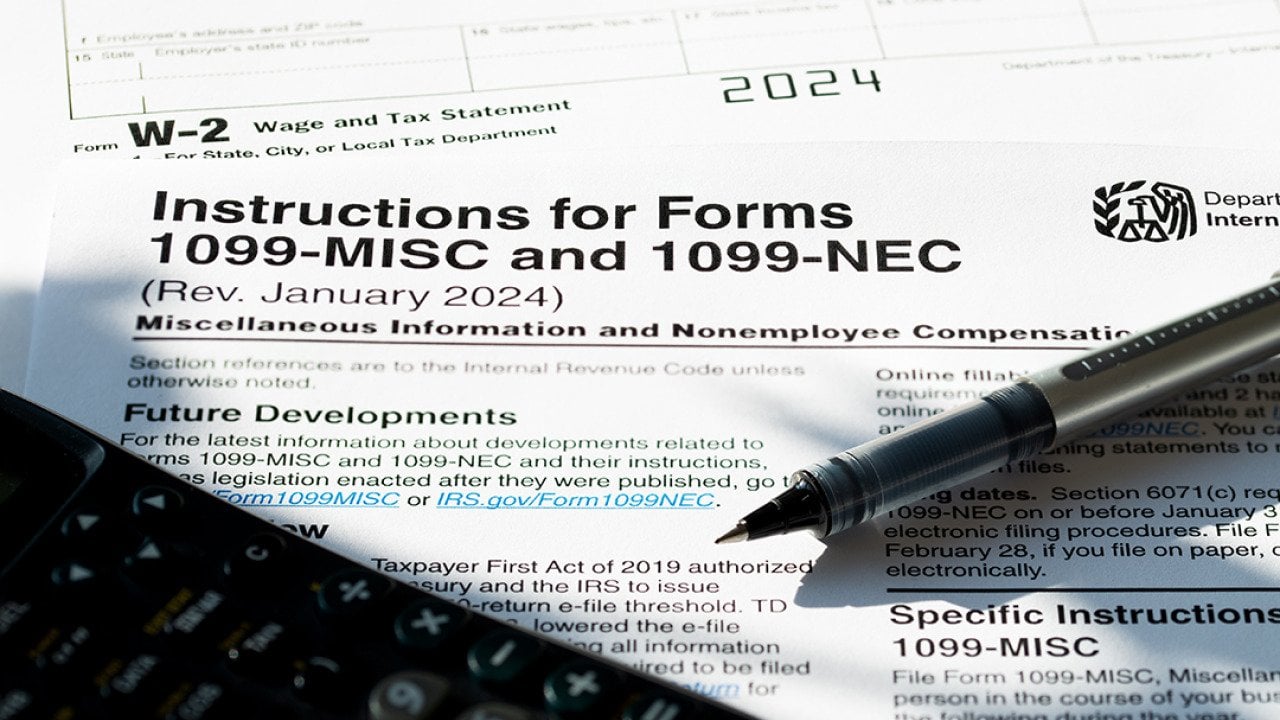
- Form 1099-NEC (Nonemployee Compensation): Used exclusively to report payments of $600 or more made to non-employees (independent contractors, freelancers, or vendors) for services rendered in the course of a trade or business.
- Form 1099-MISC (Miscellaneous Information): Used to report other types of financial transactions, such as rent payments, prize winnings, medical and healthcare payments, or gross proceeds paid to an attorney.
Filing the wrong form or misreporting categories can delay processing and create unnecessary correspondence with tax authorities.
Misconception 5: "Forming an LLC Automatically Lowers My Taxes"
A prevalent piece of freelance folklore is that registering a Limited Liability Company (LLC) magically reduces self-employment tax obligations.
The Reality of Pass-Through Taxation
By default, a single-member LLC is treated as a "disregarded entity" by the IRS for tax purposes. This means the business income and expenses are reported directly on the owner's personal tax return on Schedule C.
- Self-Employment Tax Parity: A standard single-member LLC pays the exact same income tax and self-employment tax (15.3% for Social Security and Medicare on net earnings) as an unincorporated sole proprietor.
- Corporate Elections: To change tax treatment, an LLC must proactively elect to be taxed as an S-corporation or C-corporation by filing specific IRS elections (such as Form 2553). S-corp election can potentially reduce self-employment tax by allowing owners to take a reasonable salary alongside distributions, but it also introduces complex payroll requirements, corporate filings, and administrative costs.
Misconception 6: "Cash and Barter Transactions Don't Count"
Some independent contractors assume that cash payments exchanged directly between clients or services rendered via bartering systems escape taxation because they lack a digital paper trail.
Legal Requirements for Non-Cash Income
- Cash Income: Cash receipts are legally identical to electronic payments and must be recorded and reported accurately.
- Barter Exchanges: According to the IRS, if you provide a service in exchange for goods, services, or property, you must report the fair market value of the goods or services received as gross income on your tax return. Barter clubs and direct service trades are subject to the same compliance checks as cash transactions.
Essential Steps for 1099 Tax Compliance
To manage 1099 tax obligations successfully and minimize audit risks, independent workers should follow a structured, proactive approach throughout the tax year.
[Track Gross Income] ---> [Separate Business Accounts] ---> [Calculate Quarterly Estimates] ---> [Log Expenses] ---> [File Annual Returns]
- Establish Dedicated Business Accounts: Open a separate checking and savings account specifically for your freelance business. Never comingle personal and business funds, as clear separation simplifies bookkeeping and audit defense.
- Track Every Mile and Receipt: Use reputable digital mileage-tracking applications and receipt-scanning software to document deductible business expenses in real time.
- Set Aside Tax Reserves: Immediately transfer 25% to 30% of every incoming client payment into a dedicated tax savings account to cover federal, state, and local self-employment taxes.
- Consult Qualified Professionals: Work with a Certified Public Accountant (CPA) or Enrolled Agent (EA) who specializes in self-employed taxation to review your quarterly calculations, depreciation schedules, and entity structures.
Frequently Asked Questions
What is the self-employment tax rate for 1099 workers?
The self-employment tax rate is 15.3%. This is composed of 12.4% for Social Security (up to the annual wage limit) and 2.9% for Medicare. This tax applies to your net earnings from self-employment, and you are allowed to deduct half of your self-employment tax when calculating your adjusted gross income.
Can I deduct my home office on my 1099 tax return?
Yes, if you use a specific area of your home exclusively and regularly for conducting business. You can use either the simplified method (multiplying square footage by a standard rate up to a statutory cap) or the regular method (calculating actual proportional housing expenses like rent, utilities, and insurance).
What happens if I miss a quarterly estimated tax payment?
Missing a quarterly payment or paying insufficient amounts can result in an underpayment penalty assessed by the IRS when you file your annual return. To minimize penalties, you can make a catch-up payment as soon as possible or ensure your withholding and estimated payments meet safe-harbor guidelines.
Are health insurance premiums deductible for independent contractors?
Yes, self-employed individuals can often deduct 100% of the health, dental, and qualifying long-term care insurance premiums paid for themselves, their spouse, and their dependents as an adjustment to income on Schedule 1 of Form 1040, provided they are not eligible for an employer-sponsored plan.
How long should I keep my tax records and receipts?
The IRS generally recommends keeping tax records, receipts, and 1099 forms for at least three years from the date you filed your original return or two years from the date the tax was paid, whichever is later. For records involving major asset depreciation, property, or unfiled returns, longer retention periods apply.
Final Recommendation
Managing 1099 tax obligations requires vigilance, organization, and a clear understanding of legal requirements. Do not wait until the tax deadline approaches to organize your finances or rely on urban legends shared on social media. Open a dedicated business bank account today, set aside funds from every client payment for quarterly estimated taxes, and partner with a certified tax professional to ensure total compliance and peace of mind.