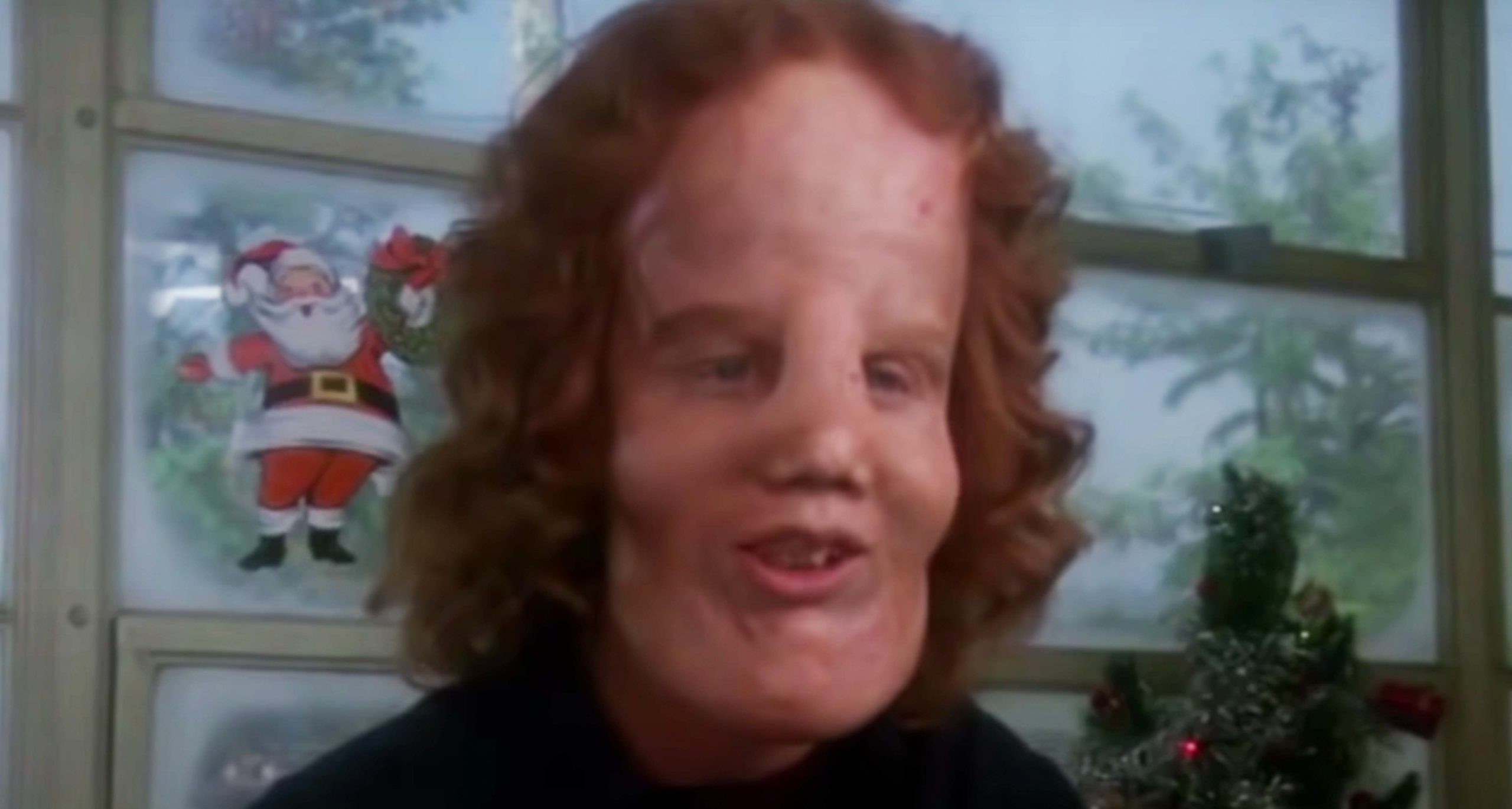
The 1985 biographical drama Mask, directed by Peter Bogdanovich, tells the poignant true story of Roy L. "Rocky" Dennis, a teenager living with craniodiaphyseal dysplasia, a rare bone disorder. The role of Rocky was famously portrayed by actor Eric Stoltz, whose performance remains a touchstone for character-driven cinema and prosthetic-heavy transformation in 1980s film history.
The True Story Behind the Mask
Released in 1985, Mask is based on the life of Roy L. Dennis, born in 1961 in Glendora, California. Rocky suffered from a rare condition known as craniodiaphyseal dysplasia, which caused calcium deposits to build up in his skull, significantly distorting his facial features and leading to various health complications. Despite the physical challenges he faced, the film focuses on his indomitable spirit, his relationship with his mother, Florence "Rusty" Dennis, and his pursuit of a normal social and educational life.
The film is not merely a portrait of the disorder but a exploration of the human condition. It examines how society perceives those who look different and how a supportive, albeit unorthodox, family environment can cultivate resilience. The screenplay, written by Anna Hamilton Phelan, was drawn from her own meetings with the real Rocky Dennis, ensuring the narrative remained grounded in his actual experiences and personality.
Eric Stoltz: The Man Behind the Prosthetics
The heavy lifting of the film fell upon Eric Stoltz, then a burgeoning actor. To play Rocky, Stoltz had to undergo an grueling daily transformation. The makeup, designed by renowned artist Michael Westmore, was an architectural feat for the mid-1980s. Applying the foam latex prosthetics took several hours each morning, requiring Stoltz to arrive on set long before the rest of the cast to ensure the physical transformation was complete before filming began.
Stoltz’s performance is widely lauded for its restraint. Rather than leaning into a caricature of a disabled teenager, he utilized his voice and body language to convey Rocky’s intelligence, humor, and frustration. Because the prosthetics obscured his facial expressions, Stoltz had to rely on a precise physical cadence, which added a layer of profound vulnerability to the character. His work in Mask served as a breakout performance, leading to a prolific career in both television and film.
The Supporting Cast: A Snapshot of 1985 Talent
The effectiveness of Mask relies heavily on the ensemble cast surrounding Stoltz. The dynamics of the Dennis family and their biker-community social circle provide the emotional anchor for the audience.
- Cher as Florence "Rusty" Dennis: Cher’s portrayal of Rocky’s mother is often cited as the performance that solidified her status as a serious dramatic actor. Rusty is a complex character—tough, drug-using, and rebellious, yet fiercely protective and nurturing toward her son. Her chemistry with Stoltz serves as the heartbeat of the film.
- Sam Elliott as Gar: The late Sam Elliott played the role of Gar, a biker who forms a fatherly bond with Rocky. Elliott’s presence brings a sense of stoic stability to the film’s chaotic world.
- Laura Dern as Diana Adams: Laura Dern played the blind girl whom Rocky meets at a summer camp, a relationship that provides one of the film's most tender and meaningful arcs.
The casting choices reflected a shift in 1980s Hollywood, where major studios began backing "social issue" dramas that centered on outsiders. By surrounding Stoltz with established stars like Cher and Elliott, the filmmakers ensured the emotional stakes of the film were clearly communicated to mainstream audiences.
Comparative Look at Biographical Drama Casting
To understand the significance of the casting in Mask, one must look at how biographical films of the era handled transformative roles. The following table highlights the approach taken in Mask versus other notable biographical dramas of the time.
| Film | Subject | Lead Actor | Focus of Performance |
|---|---|---|---|
| Mask (1985) | Rocky Dennis | Eric Stoltz | Prosthetics and behavioral study |
| The Elephant Man (1980) | Joseph Merrick | John Hurt | Emotional weight through heavy makeup |
| Raging Bull (1980) | Jake LaMotta | Robert De Niro | Physical transformation and intensity |
| Amadeus (1984) | Wolfgang Mozart | F. Murray Abraham | Psychological transformation |
This era of filmmaking was defined by "method" approaches to transformation. While modern cinema relies heavily on CGI, Mask stands as a testament to the tactile, practical effects era where actors had to physically live inside their character's skin for the duration of the shoot.
The Technical Challenge: Michael Westmore’s Makeup
The prosthetics in Mask were not merely costumes; they were biological maps based on real medical charts. Michael Westmore, who later became famous for his work on Star Trek, spent months studying the medical records of craniodiaphyseal dysplasia patients.
For the production team, the challenge was twofold: the makeup had to be realistic enough to satisfy the director’s vision, but comfortable enough for Stoltz to speak and express emotion for twelve-hour shooting days. The resulting prosthetics included multiple layers of foam latex, dental appliances to mimic the dental crowding associated with the condition, and specialized contact lenses. The success of the film at the 1986 Academy Awards, where it won for Best Makeup, remains the definitive validation of this technical effort.
Legacy and Societal Impact
More than four decades later, Mask is still studied for its impact on how disability is portrayed in media. It transitioned away from the "pity" narrative, instead depicting Rocky as a high-achieving, quick-witted, and sexually active teenager. By focusing on his everyday struggles—such as getting into a school he wants to attend or dealing with the disappointment of a romantic interest—the film humanized a condition that, at the time, was largely misunderstood by the general public.
In 2026, the film is frequently revisited by students of film history as a prime example of the "biopic" genre done right. It avoids the temptation to over-romanticize the subject, presenting instead a balanced, often gritty view of a life lived intensely under extraordinary circumstances.
Frequently Asked Questions
1. Was Eric Stoltz the first choice for the role of Rocky Dennis? While the casting process for Mask was extensive, Stoltz ultimately won the role due to his ability to convey immense emotional range despite the heavy makeup constraints. Bogdanovich wanted an actor who could project warmth and intelligence without needing to rely on facial muscle movement.
2. Is the film Mask accurate to the real Roy Dennis? The film is highly accurate in its depiction of the relationship between Rocky and his mother, Rusty. While some of the secondary characters and specific subplots were dramatized for cinematic pacing, the emotional core and the general trajectory of Rocky’s life were pulled directly from the accounts provided by his family and the screenwriter, Anna Hamilton Phelan.
3. Did the real Rocky Dennis participate in the film’s production? The real Rocky Dennis passed away in 1978, several years before the film was produced. The screenwriter, Anna Hamilton Phelan, spent significant time interviewing his mother and friends to ensure the script was as authentic as possible.
4. How did the prosthetic makeup affect the filming schedule? The makeup process was a significant factor in the film’s production logistics. Stoltz was required to be in the makeup chair for approximately three to four hours before filming commenced each day. This meant that the production schedule had to be carefully managed to ensure he had enough stamina to perform effectively after such a taxing preparation.
5. Why is this film often confused with the 1994 film The Mask? The similarity in titles frequently causes confusion. While the 1985 Mask is a serious biographical drama, the 1994 The Mask is a high-energy, slapstick comedy starring Jim Carrey. They share no thematic or narrative DNA beyond the word in the title.
Recommendations for Further Viewing
If you are interested in the biographical drama genre of the mid-1980s, consider revisiting The Elephant Man, which shares a similar focus on physical difference and societal reaction. Additionally, those interested in the craft of acting should look at behind-the-scenes documentaries regarding the 1985 Mask production, which provide greater detail on the collaboration between Peter Bogdanovich and his cast.
For those conducting research on the film, the Academy of Motion Picture Arts and Sciences archive contains documentation regarding the makeup techniques used in the film, which serves as an excellent primary resource for understanding the technical evolution of character makeup in 20th-century cinema.