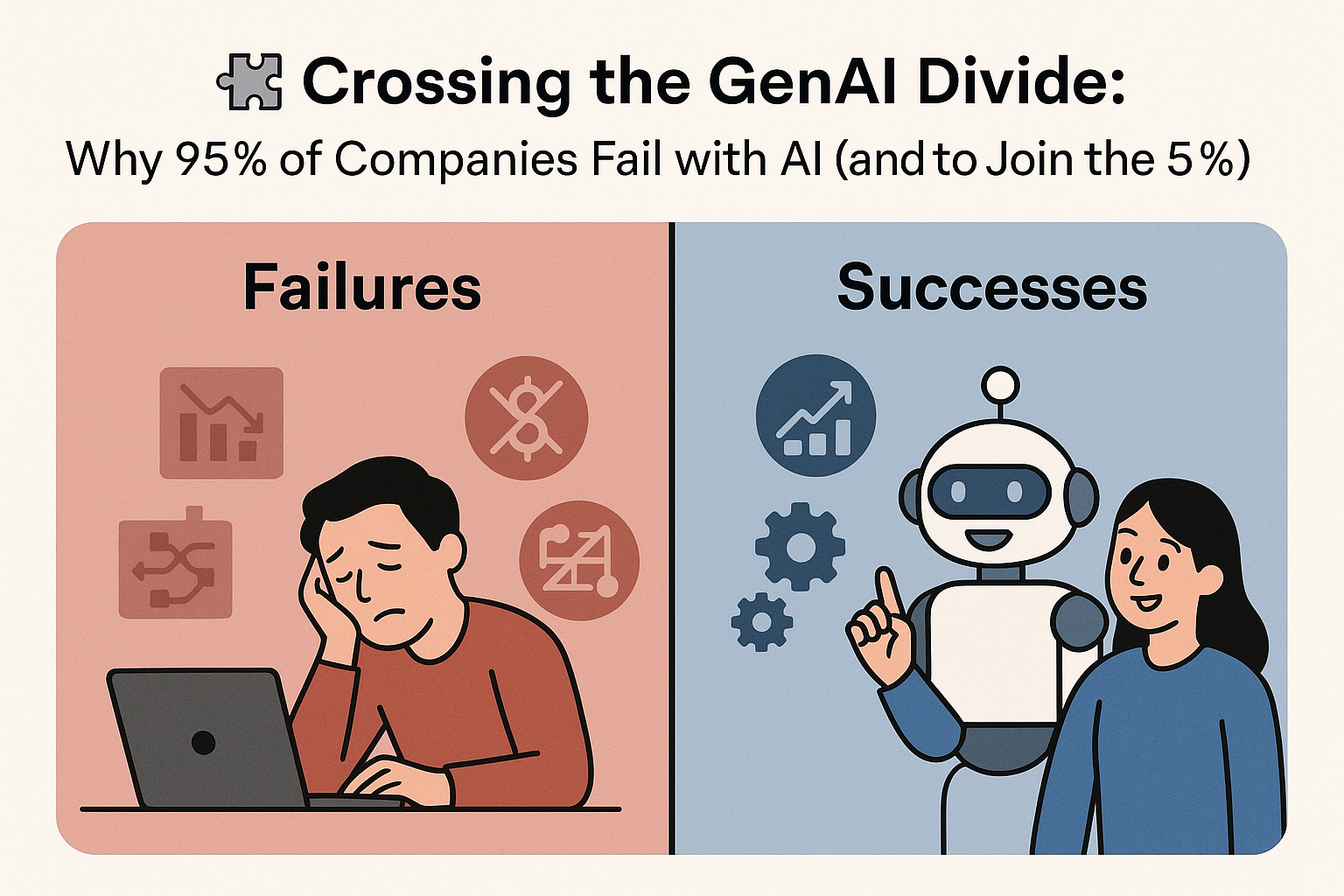
The concept of a "GenAI divide" describes the widening performance and adoption gap between organizations that successfully operationalize generative artificial intelligence and those trapped in fragmented, pilot-phase experimentation. Research from institutions such as the Massachusetts Institute of Technology (MIT) highlights that while foundational model technology is universally accessible, strategic execution, workforce integration, and governance infrastructure separate market leaders from laggards.
Understanding the GenAI Divide in Modern Enterprise
The rapid proliferation of large language models, multimodal networks, and autonomous agents created a false sense of parity across industries. Early enterprise strategies often treated generative artificial intelligence (GenAI) as a standalone software upgrade rather than a systemic transformation. Organizations that treated AI as an isolated tool quickly hit a plateau, whereas organizations that restructured their operating models around data flow and human-AI collaboration began pulling away.
The core of this divide lies in organizational agility and technical maturity. Implementing a consumer-grade chatbot for customer service is vastly different from building proprietary domain-specific pipelines that securely integrate with enterprise resource planning (ERP) systems. Businesses caught on the wrong side of the divide often face ballooning software costs, cultural resistance, security vulnerabilities, and a lack of measurable return on investment (ROI).
Structural Factors Driving the Gap
Several structural dimensions underpin the widening performance chasm between enterprise tiers:
- Data Readiness: Advanced organizations maintain clean, unified data lakes with robust metadata management, while lagging firms struggle with siloed, unstructured, and legacy data stores.
- Talent and Literacy: Market leaders cultivate internal cross-functional fluency, ensuring that domain experts work hand-in-hand with data engineers. Laggards rely on isolated pockets of technical talent without business alignment.
- Governance Architecture: Mature enterprises establish clear guardrails for risk, bias, hallucination mitigation, and intellectual property protection before scaling deployments.
- Leadership Vision: C-suite executives on the leading side view AI as a core strategic lever, redesigning workflows from the ground up rather than automating broken or inefficient legacy processes.
Key Findings from MIT Research on AI in Business
Academic and applied research from MIT—including initiatives from the MIT Sloan School of Management and MIT’s Computer Science and Artificial Intelligence Laboratory (CSAIL)—has consistently tracked how organizations adapt to digital shifts. When examining the modern artificial intelligence landscape, academic investigations emphasize that technology adoption follows an uneven, bifurcated trajectory.
Research indicates that the primary bottleneck for business value is rarely model capability. State-of-the-art models possess advanced reasoning and pattern-recognition skills. Instead, the bottleneck rests on the "implementation chasm." Organizations must bridge the gap between generalized model outputs and deterministic business outcomes.
The Illusion of Universal Adoption
While executive surveys often report high interest and high experimentation rates across global enterprises, granular operational tracking reveals a different story. Many companies run dozens of isolated proofs-of-concept (PoCs) without establishing a clear path to production deployment.
| Metric Dimension | Experimental Stage (Lagging Enterprises) | Production Stage (Leading Enterprises) |
|---|---|---|
| Primary Goal | Testing standalone features and chatbots | Redesigning end-to-end workflows and value chains |
| Data Architecture | Fragmented silos and manual data cleaning | Unified enterprise knowledge graphs and automated pipelines |
| Measurement | Vanity metrics (number of prompts run, user sign-ups) | Hard financial metrics (cost reduction, cycle time, revenue uplift) |
| Risk Management | Ad-hoc checks and reactive patch fixes | Automated guardrails, continuous monitoring, and strict compliance |
Operational Hurdles and Technical Debt
Crossing the GenAI divide requires acknowledging and rectifying profound operational bottlenecks. Many businesses underestimate the technical debt incurred by rushing unvetted models into production environments.
Data Silos and Infrastructure Deficits
Generative models are only as effective as the context provided to them. Companies that maintain fragmented IT architectures—where customer data lives in one legacy system, financial data in another, and product documentation in unstructured PDF folders—cannot easily deploy effective Retrieval-Augmented Generation (RAG) systems.
Without clean ingestion pathways, models hallucinate, misinterpret proprietary terminology, or fail to surface actionable insights. Resolving this requires substantial capital expenditure in data engineering before any machine learning model delivers enterprise value.
Security, Compliance, and Intellectual Property Risk
Enterprise adoption demands rigorous security protocols. Public models that ingest proprietary corporate data can inadvertently expose sensitive trade secrets or breach regulatory compliance frameworks such as GDPR, HIPAA, or financial sector mandates.
Leading organizations build private cloud instances, fine-tune open-weight models on secure internal infrastructure, and implement robust validation layers. Conversely, lagging businesses often rely on shadow AI—where employees paste sensitive code, financial statements, or customer lists into consumer-tier interfaces—exposing the company to severe legal and reputational risks.
Workforce Transformation and Cultural Integration
Technology alone cannot solve the GenAI divide. The human element—how employees interact with algorithms, how job descriptions evolve, and how leadership communicates change—determines long-term enterprise viability.
Upskilling Versus Replacement
Fear of job displacement often creates passive-aggressive resistance among line workers. Successful organizations reframe AI as a force multiplier rather than a replacement mechanism. They invest heavily in internal prompt engineering workshops, workflow redesign seminars, and domain-specific training programs.
By empowering employees to automate mundane tasks—such as draft generation, meeting summarization, and data categorization—companies free up human capital for creative problem-solving, strategic negotiation, and relationship management.
Redefining Middle Management
Middle management frequently bears the brunt of the GenAI transition. In traditional hierarchies, middle managers act as information conduits and status reporters. Because generative tools can rapidly aggregate data and draft status reports, the traditional oversight role must evolve. Leaders who help middle managers transition into workflow architects and strategic coaches successfully navigate the divide. Those who fail to adapt see middle management become an organizational friction point.
Strategic Roadmap for Bridging the Divide
Organizations looking to transition from experimental stagnation to enterprise-wide value realization must execute a structured, methodical playbook.
Phase 1: Audit & Foundation
Phase 2: Targeted RAG & Workflow Redesign
Phase 3: Governance & Security Guardrails
Phase 4: Scale, Measure, & Iterate
Conduct a Comprehensive Readiness Audit: Evaluate existing data silos, cloud infrastructure, legal risk exposure, and internal AI literacy levels before purchasing new software licenses.
Focus on High-Impact, Low-Risk Use Cases: Target internal productivity boosters or customer support augmentation where errors carry low financial or safety penalties.
Establish Clear Governance Frameworks: Form a cross-functional AI steering committee comprising legal, technical, operational, and ethical representatives to review deployments continuously.
Measure Rigorously: Move beyond activity metrics. Tie every AI project directly to balance-sheet impacts, employee time savings, or customer satisfaction scores.
Frequently Asked Questions
What is the GenAI divide in business?
The GenAI divide refers to the performance and strategic gap separating companies that successfully scale generative artificial intelligence into profitable core operations from those trapped in endless, low-impact experimentation phases.
Why do many business AI pilots fail to reach production?
Many pilots fail due to fragmented data architectures, lack of executive alignment, poor integration with legacy systems, unaddressed security risks, and treating AI as a simple software upgrade rather than a workflow redesign.
How do data silos affect generative AI performance?
Data silos prevent models from accessing comprehensive, up-to-date, and secure context. Without unified data pipelines, models struggle with hallucinations and fail to deliver accurate, domain-specific enterprise insights.
What role does leadership play in bridging the AI divide?
Effective leadership sets a clear strategic vision, invests in foundational data infrastructure, fosters a culture of continuous learning, and establishes cross-functional governance to manage legal and operational risks.
How can organizations measure the ROI of generative AI projects?
Organizations measure ROI by tracking hard financial metrics such as operational cost reduction, processing cycle-time acceleration, revenue growth from new AI-assisted products, and measurable employee productivity gains.
Conclusion
The GenAI divide represents a critical juncture for modern enterprises. As highlighted by ongoing research from institutions like MIT, possessing access to advanced machine learning models no longer guarantees competitive advantage. Sustainable success requires a deliberate combination of clean data architecture, robust security governance, continuous workforce upskilling, and ruthless strategic focus on measurable business outcomes. Organizations that bridge this divide will define their respective industries, while those that remain stuck in the pilot phase risk strategic obsolescence.