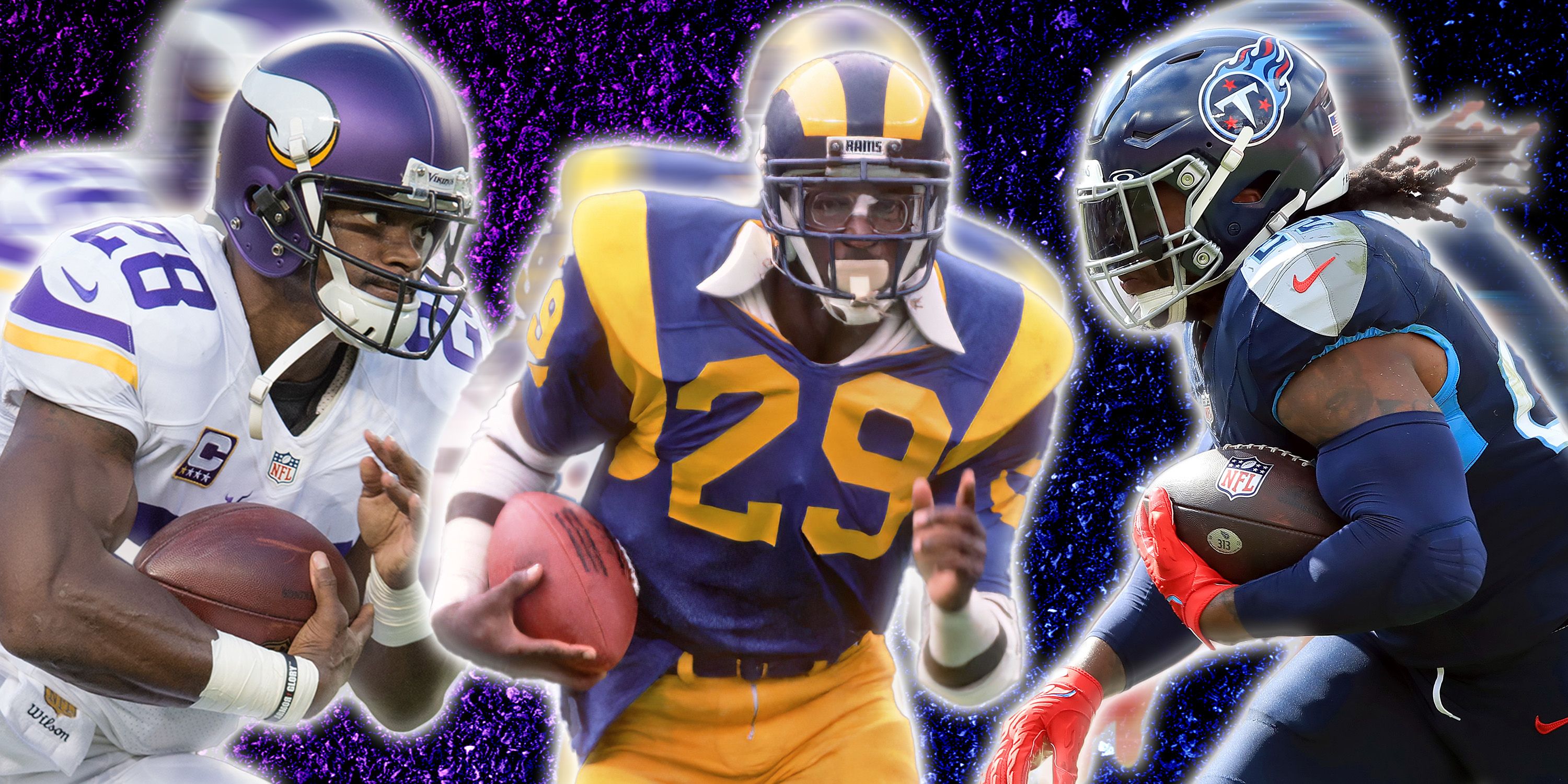
When evaluating the 1 best running back in football history, consensus is rarely simple across generations, eras, and styles of play. Jim Brown, Walter Payton, and Barry Sanders represent the apex of the position, each offering a distinct combination of durability, explosive athleticism, and historic production that defines greatness on the gridiron.
The Mount Rushmore of Pro Football Running Backs
Determining the single greatest ball carrier of all time requires looking past raw statistics to examine era-adjusted performance, longevity, offensive scheme adaptation, and overall impact on the game. While modern offenses have shifted toward a committee approach and a heavy emphasis on the passing game, the running back position remains deeply storied. Four players consistently dominate discussions for the top spot: Jim Brown, Walter Payton, Barry Sanders, and Emmitt Smith.
Each of these athletes dominated their respective eras through vastly different methodologies. Jim Brown combined unmatched size and speed to physically overwhelm defenders during the 1950s and 1960s. Walter Payton utilized tireless work ethic, punishing tackle-breaking ability, and unmatched versatility as a receiver and blocker. Barry Sanders brought a level of shiftiness and open-field elusiveness that left entire defenses grasping at air. Meanwhile, Emmitt Smith leveraged supreme vision, relentless consistency, and durability to capture the NFL's all-time career rushing crown.
Comparing these legends demands an analytical framework that weighs peak dominance against career longevity. A player like Jim Brown retired at the absolute peak of his powers, whereas Emmitt Smith played deep into his thirties to accumulate records that may stand for decades. Understanding these nuances is essential for any serious debate regarding the ultimate icon of the backfield.
Statistical Comparison of Elite Historical Running Backs
To ground the debate in objective reality, examining the career metrics of top-tier historical running backs offers valuable perspective. While rule changes, length of seasons, and defensive schemes have evolved dramatically over the decades, raw production remains a foundational pillar of evaluation.
| Player | Active Era | Career Rushing Yards | Career Rushing Touchdowns | Yards Per Carry | Rushing Yards Per Game | MVP Awards |
|---|---|---|---|---|---|---|
| Jim Brown | 1957–1965 | 12,312 | 106 | 5.2 | 104.3 | 3 |
| Walter Payton | 1975–1987 | 16,726 | 110 | 4.4 | 88.0 | 1 |
| Barry Sanders | 1989–1998 | 15,269 | 99 | 5.0 | 99.8 | 1 |
| Emmitt Smith | 1990–2004 | 18,355 | 164 | 4.2 | 81.2 | 1 |
| Eric Dickerson | 1983–1993 | 13,259 | 90 | 4.4 | 90.8 | 0 |
As the data demonstrates, volume and efficiency tell two different stories. Jim Brown’s staggering average of 104.3 rushing yards per game stands alone, especially considering he played in an era of 12- and 14-game regular seasons. Conversely, Emmitt Smith's longevity allowed him to shatter the career rushing yards and touchdown benchmarks, benefiting from a dominant offensive line and a 16-game schedule.
Jim Brown: The Standard of Peak Dominance
For many historians, analysts, and former players, Jim Brown is the undisputed 1 best running back in football history. Playing nine seasons for the Cleveland Browns from 1957 to 1965, Brown led the NFL in rushing yards in eight of those campaigns. He was selected to the Pro Bowl in every single year of his career and earned three Associated Press NFL Most Valuable Player awards.
Physical Profile and Playing Style
Standing 6 feet 2 inches tall and weighing 232 pounds, Brown was an extraordinary physical specimen for his era—or any era. He possessed the rare combination of a fullback’s power and a sprinter’s open-field speed. Rather than running out of bounds or sliding to avoid contact, Brown frequently sought out defensive backs, wearing down entire units over the course of four quarters.
The Argument for Peak Over Longevity
Brown’s retirement at the age of 29, at the absolute height of his athletic prowess to pursue an acting career, leaves fans to wonder what records he might have achieved. Yet, his per-game dominance has never been matched. Averaging over 104 yards per contest across nearly a decade against packed boxes and unrefined training regimens solidifies his legacy as a transcendent force in sports history.
Walter Payton: The Epitome of Versatility and Grit
Walter Payton, affectionately known as "Sweetness," redefined what it meant to be a complete football player during his 13-year career with the Chicago Bears. When Payton retired in 1987, he held the NFL career rushing record with 16,726 yards, a mark he held for over a decade.
Comprehensive Skill Set
Payton was far more than just a runner. He excelled as a pass-catcher, an elite blocker in blitz pickup, and even threw several touchdown passes over his career. His famous "stiff-arm" and legendary leg drive enabled him to gain extra yardage after contact consistently. Furthermore, Payton famously missed only one game in his entire 13-year professional career, displaying a level of durability that remains rare for players absorbing high-impact collisions week after week.
The Impact on Championship Culture
Beyond individual statistics, Payton was the heartbeat of the legendary 1985 Chicago Bears championship team. His tireless work conditioning routine—featuring the punishing training hill in Illinois—became folklore and set a benchmark for professional athletic dedication. His combination of humility, toughness, and production makes him a primary contender for the top spot.
Barry Sanders: The Purest Artistry in Open Space
If Jim Brown represents power and Walter Payton represents completeness, Barry Sanders represents pure, unadulterated elusiveness. Playing ten seasons for the Detroit Lions, Sanders rushed for 15,269 yards and averaged an astonishing 5.0 yards per carry behind offensive lines that were rarely considered elite.
Unmatched Agility and Vision
Sanders possessed lateral quickness and change-of-direction capabilities that defied physics. Capable of stopping on a dime and accelerating to full speed instantly, he frequently turned broken plays and negative backfield penetration into long touchdowns. He rushed for over 1,000 yards in every single season of his career, including a historic 2,053-yard campaign in 1997.
The "What-If" Factor
Like Jim Brown, Sanders walked away from the game while still operating at an elite level, retiring abruptly before the 1999 season when he was just 1,457 yards shy of breaking Walter Payton's career record. Had he played another two or three seasons at his usual production rate, his career numbers would likely be untouchable.
Frequently Asked Questions
Who holds the record for most career rushing yards in NFL history?
Emmitt Smith holds the all-time NFL record for career rushing yards, finishing his storied 15-year career with 18,355 yards. He achieved the majority of this milestone while playing for the Dallas Cowboys during their dominant championship runs of the 1990s.
Why is Jim Brown often ranked above players with higher career totals?
Jim Brown is frequently ranked first because of his unmatched dominance relative to his era. He led the league in rushing in eight of his nine professional seasons and maintained the highest yards-per-game average in NFL history while retiring at the peak of his athletic career.
Did Barry Sanders break the single-season rushing record?
Barry Sanders rushed for 2,053 yards during the 1997 regular season, making him one of only a select group of runners to cross the historic 2,000-yard threshold in a single year.
How do modern running backs compare to historical legends?
Modern running backs often face different challenges, including lighter defensive fronts due to pass-heavy schemes, but they also benefit from superior sports science, nutrition, and rehabilitation methods. However, shorter career spans in the modern era make historic longevity milestones increasingly difficult to replicate.
Conclusion and Final Verdict
Selecting the single best running back in football history ultimately depends on what an analyst values most. For unmatched peak dominance and physical intimidation, Jim Brown stands alone. For completeness, durability, and leadership, Walter Payton sets the gold standard. For pure elusiveness and jaw-dropping highlight reels, Barry Sanders has no equal. However, weighed across overall impact, peak efficiency, and historic per-game output, Jim Brown remains the definitive choice for the ultimate title in backfield history.