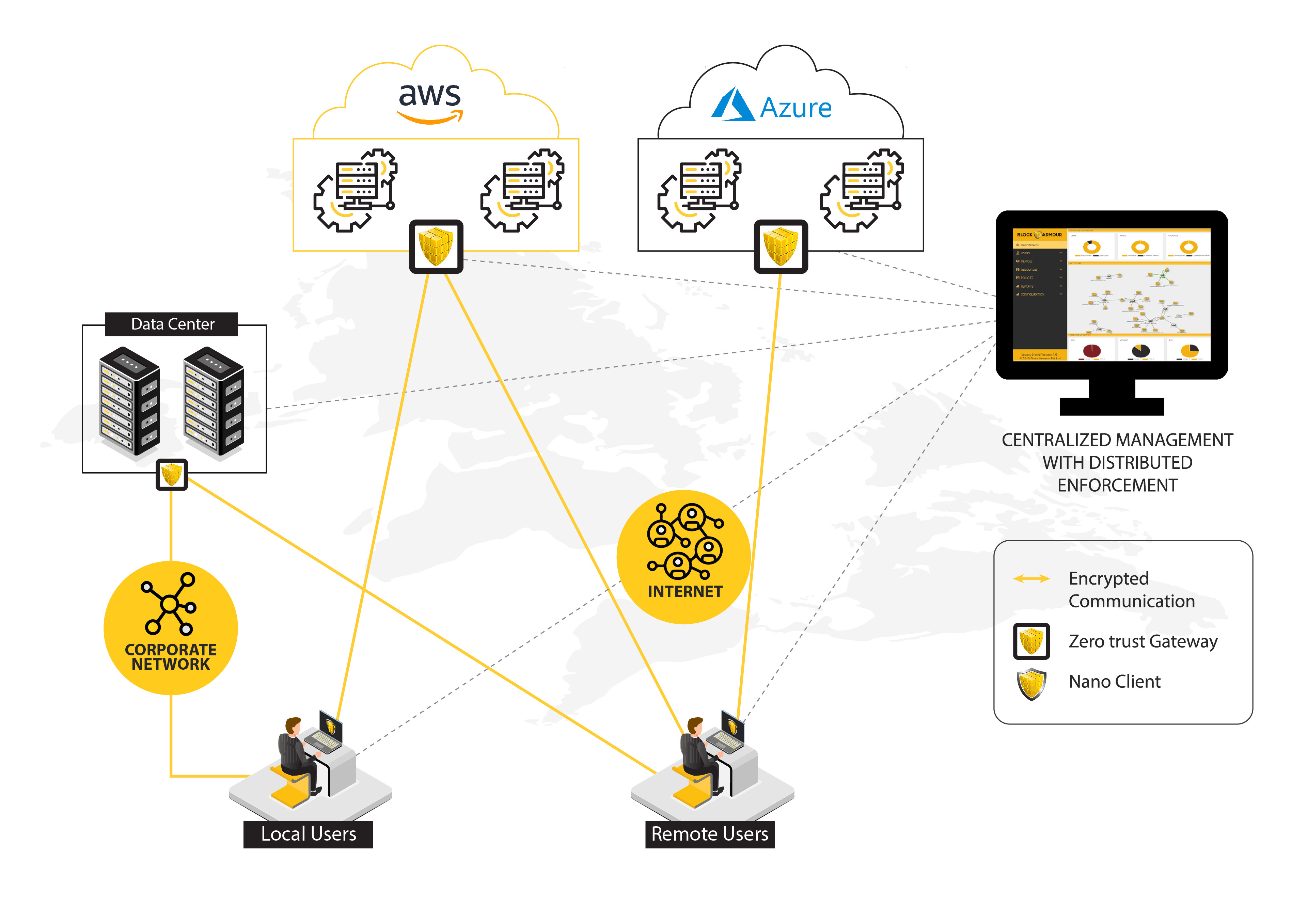
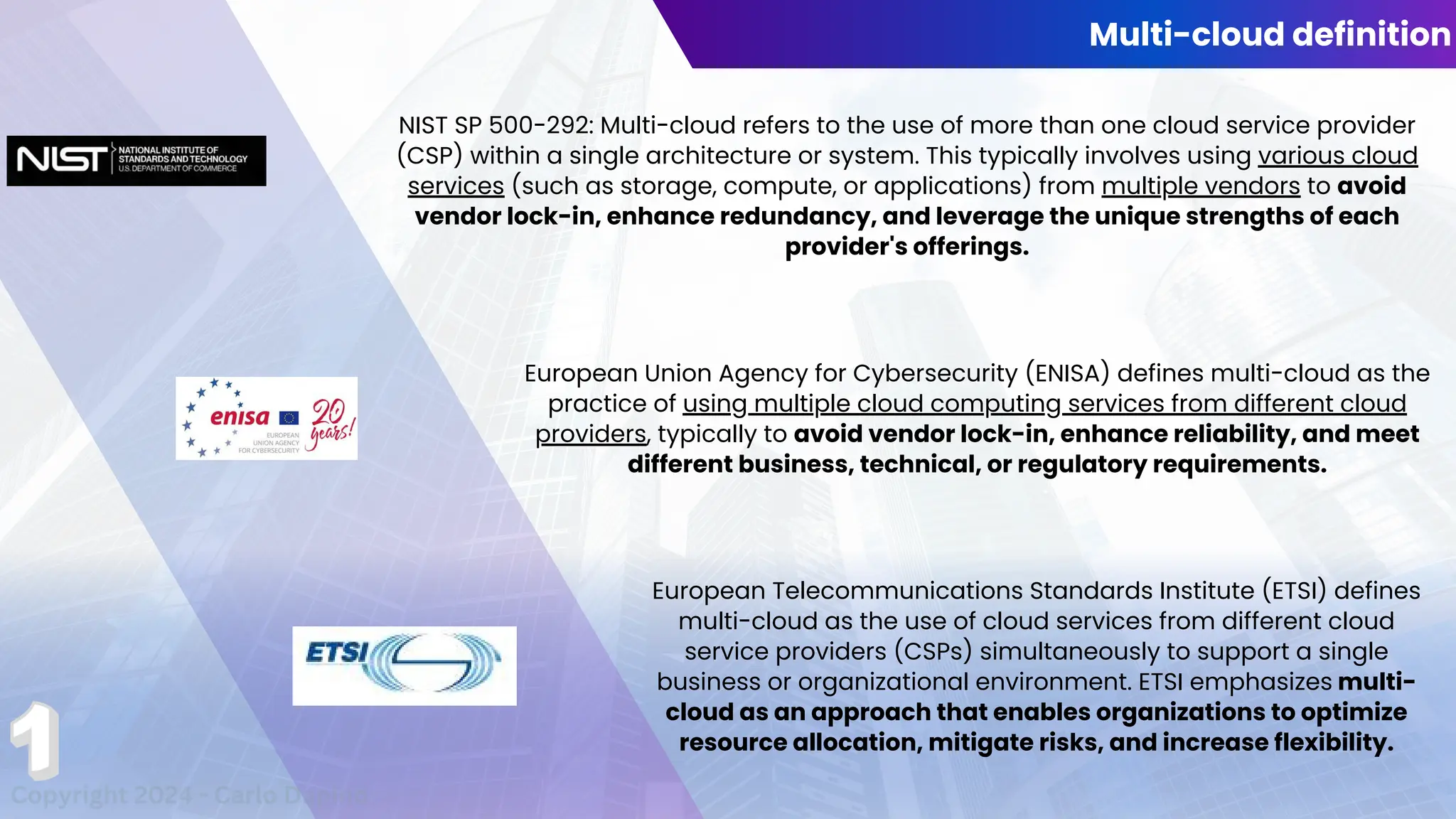
A multi-cloud security strategy is a comprehensive framework of unified policies, integrated tools, and standardized procedures designed to protect data, applications, and infrastructure across multiple cloud service providers. It prioritizes centralized visibility, identity-centric controls, and automated compliance to mitigate the risks of fragmented security silos and configuration drift.
The Evolution of Multi-Cloud Security in 2026
By 2026, the architectural landscape of enterprise IT has shifted from simple multi-cloud adoption to a state of "cloud-smart" maturity. Organizations no longer use multiple clouds by accident or through shadow IT; they do so by design to optimize costs, enhance performance, and satisfy stringent data sovereignty requirements. However, this diversification introduces a significant "security tax" in the form of increased complexity.
The primary challenge in 2026 remains the inconsistency of security controls across different platforms. Amazon Web Services (AWS), Microsoft Azure, and Google Cloud Platform (GCP) each offer robust native security tools, but these tools operate in isolation. A multi-cloud security strategy serves as the connective tissue, ensuring that a security policy defined in one environment is consistently enforced in another, regardless of the underlying infrastructure. This requires moving away from vendor-specific scripts toward platform-agnostic orchestration.
Core Pillars of a Modern Multi-Cloud Security Strategy
To build a strategy that survives the dynamic nature of 2026's threat landscape, security leaders must focus on four foundational pillars: identity, visibility, automation, and data centricity.
1. Identity as the New Perimeter
In a multi-cloud environment, the traditional network perimeter is effectively non-existent. Identity and Access Management (IAM) has become the most critical security boundary. A robust strategy utilizes Cloud Infrastructure Entitlement Management (CIEM) to manage identities across all providers.
Organizations must implement the Principle of Least Privilege (PoLP) by auditing permissions continuously. In 2026, this involves moving beyond static roles toward Just-in-Time (JIT) access, where permissions are granted for a specific window and revoked automatically upon task completion. This reduces the "blast radius" should an identity be compromised.
2. Centralized Visibility and Posture Management
You cannot secure what you cannot see. The fragmentation of logs and telemetry data across different cloud dashboards is a primary cause of security breaches. Cloud Security Posture Management (CSPM) tools are essential for providing a "single pane of glass" view.
These tools monitor for misconfigurations—such as open S3 buckets or unencrypted databases—and provide real-time alerts. In 2026, advanced CSPM has evolved into Cloud-Native Application Protection Platforms (CNAPP), which integrate posture management with workload protection, allowing security teams to see the context of a vulnerability from the code level to the runtime environment.
3. Unified Policy Orchestration
Standardization is the enemy of complexity. A multi-cloud strategy must define security policies in a way that is "provider-blind." This is often achieved through Infrastructure as Code (IaC). By using tools like Terraform or Pulumi, organizations can embed security requirements directly into their deployment templates.
If a policy dictates that all storage volumes must be encrypted with customer-managed keys, that policy should be written once and applied automatically whether the volume is being spun up in Azure or AWS. This prevents "configuration drift," where security settings gradually deviate from the established baseline over time.
4. Data-Centric Security and Sovereignty
As global privacy regulations like GDPR and updated regional data laws become more stringent, a multi-cloud strategy must account for where data resides and how it is moved. Data Security Posture Management (DSPM) is now a standard component of the security stack. DSPM helps organizations discover "shadow data"—sensitive information that has been copied or moved without authorization—and ensures it is protected according to its classification level.
Comparing Multi-Cloud Security Approaches
Choosing the right approach depends on the organization's technical maturity and regulatory requirements. The following table compares three common methodologies used in 2026.
| Feature | Native-First Approach | Third-Party Agnostic Approach | Hybrid/Open-Source Approach |
|---|---|---|---|
| Tooling | Uses AWS Shield, Azure Sentinel, GCP Armor, etc. | Uses unified platforms (e.g., Wiz, Palo Alto Prisma, CrowdStrike). | Uses OPA (Open Policy Agent), Falco, and custom scripts. |
| Complexity | High: Teams must learn 3+ different toolsets. | Low: Single interface for all clouds. | Medium: High initial setup, low vendor lock-in. |
| Cost | Variable: Often cheaper for single-cloud, expensive at scale. | Predictable: Usually based on workload or seat licenses. | Low: Lower licensing fees, high engineering labor costs. |
| Visibility | Siloed: Difficult to correlate threats across clouds. | Holistic: Correlates data from all environments automatically. | Customizable: Visibility depends on the quality of integrations. |
| Best For | Organizations with 90% of traffic on one cloud. | Large enterprises with diverse, high-growth cloud footprints. | Tech-heavy firms with specialized security engineering teams. |
Practical Implementation Steps
Transitioning to a unified multi-cloud security strategy is an iterative process. It cannot be accomplished overnight but should follow a structured roadmap.
Phase 1: Assessment and Inventory
Start by identifying every cloud asset currently in use. This includes officially sanctioned accounts and "shadow" environments. Use discovery tools to map data flows between clouds. Understanding the interdependencies between an application hosted in AWS and a database hosted in Azure is vital for creating effective firewall rules and access policies.
Phase 2: Establish a Security Landing Zone
A "Landing Zone" is a pre-configured environment that includes baseline security settings, networking, and identity management. By mandating that all new projects start within a standardized landing zone, you ensure that every new resource is "secure by design." This significantly reduces the manual overhead of retrofitting security onto existing workloads.
Phase 3: Implement Automated Remediation
In 2026, the speed of automated attacks exceeds the speed of human response. A mature strategy incorporates automated remediation for common risks. For example, if a CSPM tool detects a publicly accessible database containing sensitive information, the system should automatically modify the security group to block access and notify the owner, rather than just sending an alert for a human to review eight hours later.
Phase 4: Continuous Compliance Monitoring
Compliance is no longer a "once-a-year" event. Multi-cloud environments change too rapidly for periodic audits to be effective. Utilize tools that provide continuous compliance scores against frameworks such as SOC2, ISO 27001, or the NIST Cybersecurity Framework. These tools should generate evidence automatically, saving hundreds of hours during formal audit periods.
The Role of AI and Machine Learning in 2026 Cloud Defense
As of 2026, Artificial Intelligence (AI) has become a double-edged sword in cloud security. While attackers use generative AI to create more convincing phishing campaigns and automated exploit kits, defenders use AI to manage the sheer volume of security signals generated by multi-cloud environments.
Modern security strategies leverage AI-driven behavioral analytics to identify anomalies that traditional signature-based tools would miss. For instance, if an IAM user who typically logs in from London suddenly attempts to export a large volume of data from a GCP bucket in Singapore at 3:00 AM, the AI can trigger an immediate challenge-response or lock the account. This "adaptive security" is essential for managing the scale of multi-cloud operations without hiring an unmanageable number of security analysts.
Common Pitfalls to Avoid
Even with the best intentions, multi-cloud security strategies often fail due to predictable mistakes:
- Treating the Cloud like a Data Center: Applying traditional on-premises security logic (like heavy reliance on virtual appliances) to the cloud often results in bottlenecks and poor scalability. Cloud security must be API-driven.
- Ignoring the Shared Responsibility Model: Many organizations still mistakenly believe the cloud provider is responsible for securing their data. As outlined in the AWS Shared Responsibility Model, the provider secures the "cloud," but the customer secures what is "in the cloud."
- Tool Sprawl: Buying a different security tool for every small problem leads to "alert fatigue." Prioritize platforms that offer multiple capabilities (CNAPP) over point solutions.
Frequently Asked Questions
Which cloud provider is the most secure in 2026?
There is no single "most secure" provider. AWS, Azure, and Google Cloud all meet the highest international security standards. Security depends on how you configure and manage the resources within those clouds. A multi-cloud strategy ensures that you maintain a high security baseline regardless of which provider you are using.
How does a multi-cloud strategy impact operational costs?
Initially, implementing a unified strategy may increase costs due to the licensing of third-party security platforms. However, in the long term, it reduces costs by preventing expensive data breaches, automating manual compliance tasks, and reducing the need for specialized experts for every individual cloud platform.
Can I achieve multi-cloud security using only native tools?
While possible, it is extremely difficult for large organizations. Using only native tools requires your security team to be experts in the unique syntax, logging formats, and API structures of every provider. This often leads to "security gaps" where policies are inconsistently applied, making a third-party unified platform a more reliable choice for most.
What is the difference between CSPM and CWPP?
CSPM (Cloud Security Posture Management) focuses on the "outside" of the cloud—checking if settings, buckets, and permissions are configured correctly. CWPP (Cloud Workload Protection Platform) focuses on the "inside"—protecting the actual applications, virtual machines, and containers from malware and exploits. In 2026, most organizations use CNAPPs which combine both.
How do I handle data residency in a multi-cloud setup?
Data residency is managed through policy-based placement. You can define tags or metadata that restrict certain datasets to specific regions (e.g., keeping EU citizen data within Azure's Frankfurt region). Modern DSPM tools can then scan all clouds to ensure no data has "leaked" into unauthorized geographic regions.
Final Recommendation: Start with Unified Identity
If you are beginning your multi-cloud security journey in 2026, prioritize Identity and Access Management (IAM) integration. Because identity is the common denominator across all cloud providers, establishing a single, centralized identity source (such as through OIDC or SAML integration) provides the most immediate reduction in risk. Once your identities are secured and governed by the principle of least privilege, you can then layer on visibility and automated remediation tools to complete your strategy.