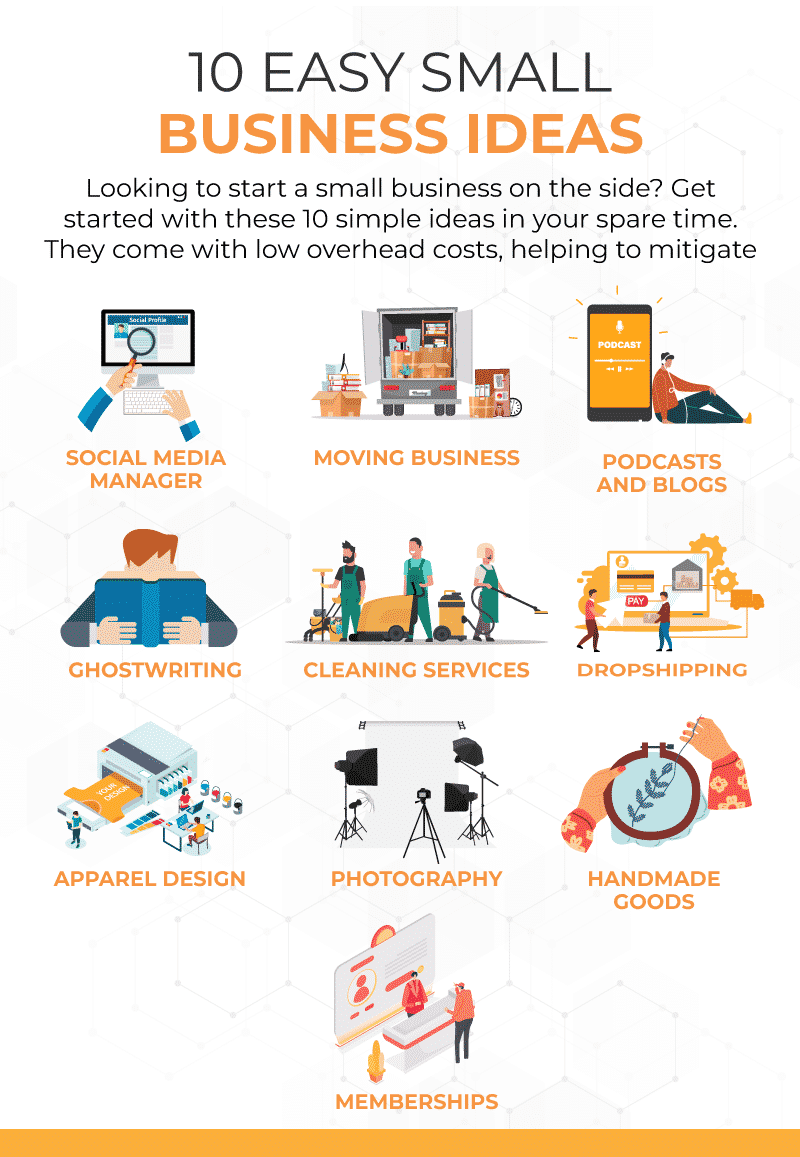
Starting a small business that yields a high return on investment (ROI) in 2026 requires focusing on low-overhead service models, high-demand technical niches, or specialized health and sustainability sectors. The most successful ventures currently leverage automation to minimize labor costs while providing personalized, high-value solutions that large corporations cannot easily replicate.
Understanding the "Pay Off": ROI vs. Cash Flow
When entrepreneurs look for a business where "money pays off," they are typically looking for two things: a quick recovery of the initial capital (ROI) and strong, consistent monthly profit (cash flow). In the 2026 economic environment, the speed of this "pay off" is heavily influenced by how much physical inventory you have to carry.
Traditional retail and manufacturing often require significant upfront capital for stock and machinery. Conversely, service-based businesses—especially those that solve a specific "pain point" for either aging populations or busy professionals—offer the most immediate payoff. In these models, your primary investment is your time and specialized equipment, which allows for profit margins often exceeding 40%. To ensure your money pays off, you must evaluate the Customer Acquisition Cost (CAC) against the Lifetime Value (LTV) of the client. If it costs $50 in digital advertising to acquire a client who spends $500 annually for three years, your investment has successfully paid off.
1. AI Implementation for Small-to-Medium Enterprises (SMEs)
By 2026, Artificial Intelligence has moved past the "hype" phase into a mandatory operational tool. However, many local business owners—lawyers, contractors, and medical practitioners—lack the technical expertise to integrate these tools into their daily workflows.
The Opportunity
Starting a consultancy that focuses on AI implementation is one of the highest ROI businesses today. You don't need to build the software; you simply need to understand how to configure existing platforms like OpenAI, Anthropic, or specialized CRM automations for specific industries. Your role is to bridge the gap between "technology" and "utility."
Why the Money Pays Off
The startup costs are incredibly low, consisting primarily of your own training and a few software subscriptions. A typical "AI Audit and Integration" package for a small law firm can range from $3,000 to $10,000, with very little overhead once the system is set up. The payoff is rapid because you are selling efficiency, which has a direct and measurable financial value to the client.
2. Specialized Senior "Aging-in-Place" Services
With the demographic shift toward an older population in 2026, the demand for services that help seniors remain in their homes safely has skyrocketed. This goes beyond medical care; it involves physical environment modifications and lifestyle management.
Technical Depth: Home Modification
A highly profitable niche within this sector is home retrofitting. This involves installing smart monitoring systems, non-slip flooring, and grab bars, or widening doorways for accessibility. According to the AARP, the vast majority of seniors prefer to stay in their homes rather than move to assisted living.
Investment and Returns
The "payoff" here is driven by the high ticket price of home renovations and the specialized knowledge required to meet safety standards. While you need a contractor's license in most jurisdictions, the demand is virtually recession-proof. Families are often willing to pay a premium for the peace of mind that a loved one is safe, making this a high-margin, high-impact business.
3. Mobile Commercial Fleet Maintenance
In 2026, the logistics and delivery sector remains the backbone of the economy. Small to medium-sized delivery fleets—many of which have transitioned to Electric Vehicles (EVs)—require regular maintenance but cannot afford the downtime of taking vehicles to a central shop.
The Service Model
A mobile fleet maintenance business brings the garage to the client. Using a specialized van equipped with diagnostic tools and parts, you perform routine checks, software updates, and minor repairs during the fleet’s off-hours (usually at night).
Scaling for Profit
The initial investment includes a heavy-duty van and specialized EV diagnostic equipment. However, the business pays off quickly through recurring service contracts. Instead of waiting for one-off customers, you sign a contract to maintain 15 delivery vans twice a month. This predictable revenue stream allows you to recoup your equipment costs within the first 12 to 18 months of operation.
4. Residential Short-Term Rental Management
The "sharing economy" has matured, and property owners are increasingly looking for professional management to handle the complexities of short-term rentals (STRs). If you live in a high-demand area, managing properties for others is a classic "low-capital, high-return" business.
Management vs. Ownership
You do not need to own the property to profit from it. As a manager, you take a percentage (typically 15% to 25%) of the gross booking revenue. Your responsibilities include dynamic pricing, guest communication, and coordinating cleaning crews.
Why It Pays Off
Because you aren't carrying a mortgage, your primary costs are software for booking management and marketing. In a 2026 market where domestic travel remains strong, managing just five high-performing properties can generate a significant six-figure income. The "payoff" is immediate because you begin earning commissions from the first booking.
Comparison of High-ROI Small Businesses in 2026
| Business Type | Estimated Startup Cost | Time to Initial ROI | Key Success Factor | Scalability |
|---|---|---|---|---|
| AI Implementation | $1,500 - $5,000 | 1 - 3 Months | Specialized Technical Knowledge | High (Software/Systems) |
| Senior Home Retrofitting | $10,000 - $25,000 | 6 - 12 Months | Licensing & Safety Compliance | Medium (Labor Intensive) |
| Mobile Fleet Service | $40,000 - $70,000 | 12 - 18 Months | Long-term B2B Contracts | High (Add more vans) |
| STR Management | $2,000 - $7,000 | 2 - 4 Months | Marketing & Guest Experience | High (Portfolio Growth) |
| Eco-Consultancy | $3,000 - $8,000 | 4 - 8 Months | Knowledge of Green Credits | Medium (Consultant Time) |
5. Niche Eco-Consulting and Energy Auditing
As energy costs fluctuate and government regulations regarding carbon footprints tighten, homeowners and small businesses are desperate for ways to lower their utility bills. An eco-consultancy helps clients identify energy leaks and navigate government rebates for solar, heat pumps, and insulation.
The Technical Edge
To make this business pay off, you must stay ahead of the U.S. Department of Energy (DOE) guidelines and local tax incentives. By providing a "roadmap to savings," you aren't just an expense; you are an investment for your client.
Operational Flow
- Audit: Use thermal imaging and sensor data to find inefficiencies.
- Report: Provide a cost-benefit analysis of upgrades.
- Referral/Management: Take a fee for referring clients to vetted contractors or managing the upgrade project. This "fee-for-service" model ensures that your money (spent on diagnostic tools) pays off via high consulting hourly rates.
Critical Financial Steps to Ensure Your Money Pays Off
To ensure that your investment doesn't just disappear into "busy work," you must follow a strict financial framework during your first year.
1. Minimal Viable Product (MVP) Launch
Do not overspend on a fancy office or a high-end website before you have your first three paying customers. In 2026, social proof and direct outreach are more effective than broad-spectrum advertising. Spend your initial capital on the tools required to deliver the service, not the aesthetics of the business.
2. Focus on Recurring Revenue
One-off sales are the enemy of a high-ROI business. Whether it is a monthly AI maintenance fee, a quarterly fleet check-up, or a percentage-based management fee, recurring revenue is what pays back your initial investment. It lowers your marketing costs significantly because you don't have to "buy" every customer every month.
3. Automate the Back-End
Use 2026's advanced AI tools for bookkeeping, scheduling, and basic customer service. By minimizing the need for an administrative assistant in the early stages, you keep your margins high. Every dollar saved on overhead is a dollar that goes toward paying off your initial startup costs.
Troubleshooting Common Startup Failures
Even a "good" business can fail to pay off if managed poorly. Here are the most common pitfalls to avoid:
- Underpricing: Many new owners underprice to "get a foot in the door." This often leads to a cycle of low-value clients and zero profit. Research the market and price based on the value you provide, not the hours you work.
- Over-leveraging: Taking on too much debt to start a small business can be fatal. If possible, bootstrap the business using your own savings or a small, low-interest microloan from the Small Business Administration (SBA).
- Ignoring the Cash Gap: This is the time between when you pay for your business expenses and when the customer pays you. If you have a 60-day cash gap, you may run out of money even if you are "profitable" on paper. Always negotiate for deposits or upfront payments.
Frequently Asked Questions
Which small business has the highest profit margin in 2026?
Service-based businesses generally have the highest margins because they lack the "Cost of Goods Sold" (COGS) associated with physical products. Specifically, specialized consulting (like AI implementation or sustainability auditing) often sees margins of 60-80% because the primary input is intellectual capital and low-cost digital tools.
How much money do I really need to start a business that "pays off"?
While some businesses require significant capital, many high-ROI ventures in 2026 can be started with $5,000 to $10,000. The key is to avoid high fixed costs like long-term office leases and instead use that capital for high-quality equipment and targeted lead generation.
Is it better to buy a franchise or start from scratch?
A franchise offers a proven system but comes with high entry fees and ongoing royalties that can eat into your "payoff." Starting from scratch in a high-demand niche (like AI or senior care) allows you to keep 100% of the profits, though it requires more effort to build brand recognition and operational systems.
What is the most "recession-proof" business right now?
Any business that addresses non-discretionary needs is typically recession-proof. This includes senior safety modifications, essential vehicle maintenance, and cost-saving energy audits. When the economy slows, people stop buying luxury goods, but they still need to save money on bills and keep their homes safe.
How do I calculate when my business has officially "paid off"?
The "Payback Period" is calculated by taking your total initial investment and dividing it by your average monthly profit. For example, if you spent $12,000 to start a mobile grooming business and you net $2,000 in profit each month, your business "pays off" in 6 months.
Practical Recommendation: Your Next Steps
To start a small business where your money truly pays off, begin by identifying a local service gap in one of the high-growth sectors mentioned above—specifically AI integration or specialized senior services.
- Research: Use local data to see how many competitors exist in your 20-mile radius.
- Validate: Offer your service to one client at a discount in exchange for a testimonial and a "deep dive" into their needs.
- Invest: Purchase the high-quality equipment or software needed to do the job efficiently.
- Scale: Once you have three consistent clients, use their revenue to fund your marketing to the next ten.
By focusing on high-margin services and maintaining low overhead, you ensure that your capital is working for you, rather than you working just to pay off your business debt.