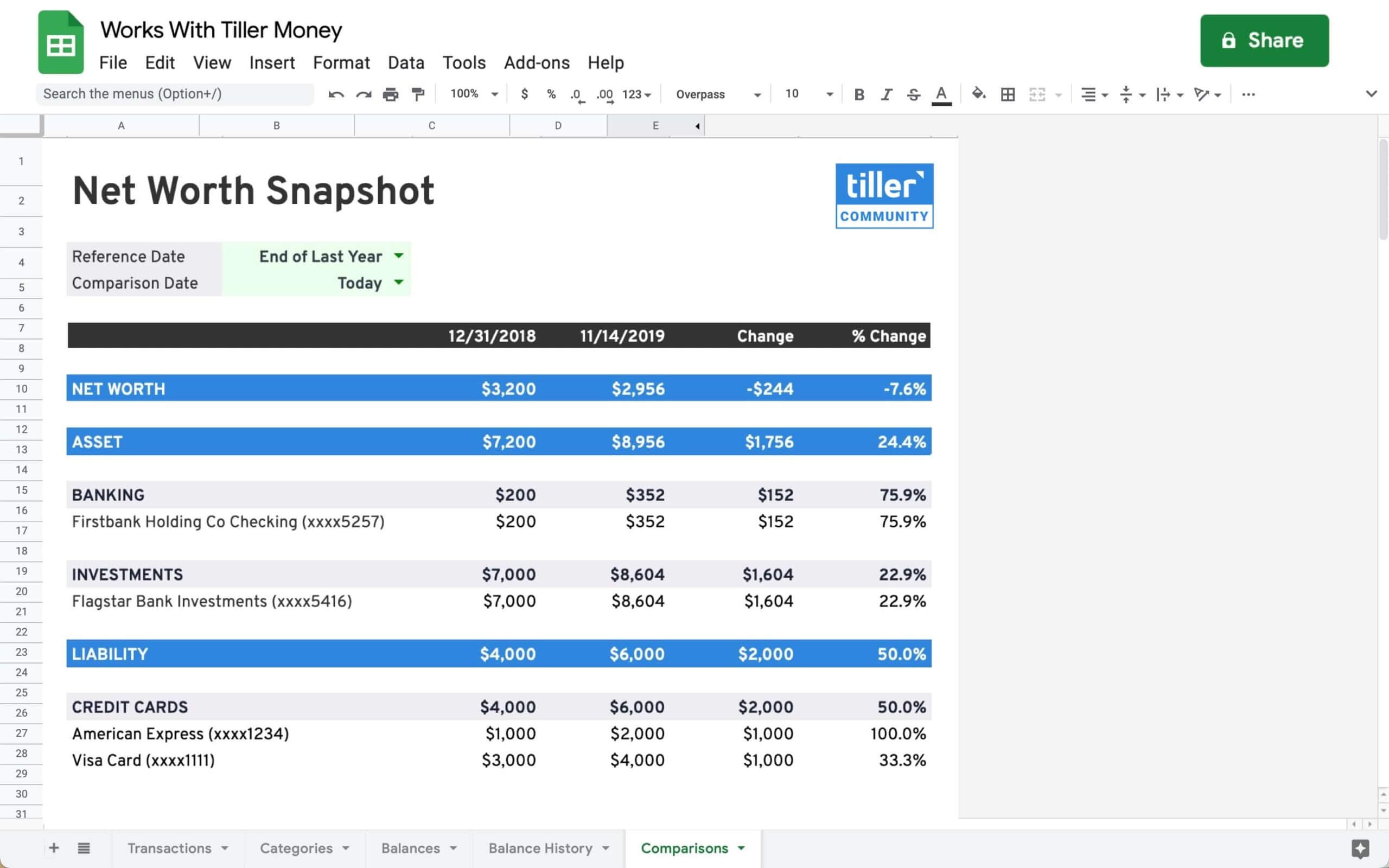
Asset net worth represents the total value of an individual’s or entity’s holdings after all outstanding liabilities have been subtracted. This figure serves as a definitive financial snapshot at a specific point in time, offering a clear view of actual wealth beyond mere income or gross asset values.
Calculating your asset net worth is more than a simple accounting exercise; it is the fundamental baseline for all strategic financial planning. In 2026, as markets face unique shifts in digital asset integration and real estate volatility, understanding the "why" and "how" of this snapshot is critical for maintaining long-term solvency and growth. Whether you are managing personal finances or overseeing a corporate balance sheet, the net worth figure provides the most accurate reflection of economic resilience.
Understanding the Fundamentals of Asset Net Worth
At its core, asset net worth is the residual value that remains if all assets were liquidated and all debts were paid off immediately. While many people focus on their annual income or the total value of their investment portfolio, these numbers can be misleading. High income does not equate to high net worth if expenses and debts are equally high. Conversely, a modest income can lead to a substantial net worth through disciplined saving and debt management.
The concept of a "snapshot" is vital. Markets fluctuate, property values shift, and interest rates impact the present value of future obligations. Therefore, a net worth statement is only accurate for the moment it is calculated. By 2026 standards, the inclusion of diverse asset classes—ranging from traditional equities to tokenized physical assets—has made the calculation more complex but also more necessary for a holistic view of financial health.
The Core Equation: Assets vs. Liabilities
The mathematical foundation of net worth is deceptively simple: Total Assets - Total Liabilities = Net Worth. However, the complexity lies in the accurate classification and valuation of the items within those two categories.
Defining Assets
Assets are resources with economic value that an individual or corporation owns or controls with the expectation that they will provide a future benefit. In 2026, these are generally categorized into three tiers:
- Liquid Assets: Cash, savings accounts, and money market instruments that can be converted to currency almost instantly without significant loss in value.
- Invested Assets: Stocks, bonds, mutual funds, and retirement accounts (like 401(k)s or IRAs). This also includes the 2026-era prominence of decentralized finance (DeFi) holdings and staked digital assets.
- Use Assets: Physical property such as primary residences, vehicles, jewelry, and art. While these have value, they are often less liquid and may incur maintenance costs.
Defining Liabilities
Liabilities are obligations to pay a person or entity a sum of money or to provide a service. They are the "claims" against your assets.
- Short-term Liabilities: Credit card balances, utility bills, and taxes due within the year.
- Long-term Liabilities: Mortgages, student loans, car loans, and business term loans that are repaid over several years.
Why Net Worth is a "Snapshot" in Time
The term "snapshot" is used because net worth is a static measurement of a dynamic system. Financial life is in a constant state of flux. On any given day in 2026, your net worth might change based on the closing price of the S&P 500, a shift in regional housing demand, or even the daily accrual of interest on a high-yield savings account.
Capturing this snapshot periodically—monthly, quarterly, or annually—allows for trend analysis. It helps answer the question: "Is my wealth growing faster than my debt?" Without this snapshot, an individual might feel "rich" because they have a high bank balance, while failing to realize that their impending tax liabilities or depreciating assets are eroding their actual value.
Detailed Breakdown of Asset Categories in 2026
To get an accurate snapshot, one must look deeply into various asset classes. The 2026 financial landscape requires a nuanced approach to valuation.
Real Estate and Physical Property
Real estate often constitutes the largest portion of a household's net worth. In 2026, valuation should rely on recent "comparables" and professional appraisals rather than outdated purchase prices. It is also important to account for "net home equity"—the market value minus the remaining mortgage balance and estimated selling costs (typically 5-6%).
Investment Portfolios
This includes traditional brokerage accounts and retirement vehicles. In the current 2026 environment, investors often hold a mix of ESG (Environmental, Social, and Governance) funds, index trackers, and specialized sector ETFs. Valuation here is straightforward as it is based on the "mark-to-market" value provided by financial institutions.
Digital and Intangible Assets
By 2026, digital assets have matured. This includes not just cryptocurrencies, but also tokenized real-world assets (RWAs) like fractional shares of commercial real estate or intellectual property rights. These should be valued based on reputable exchange rates at the time of the snapshot.
Business Interests
For entrepreneurs, the value of a private business is a significant component of net worth. This is often the hardest to value. Common methods include a multiple of earnings (EBITDA) or a discounted cash flow (DCF) analysis. According to the U.S. Small Business Administration, regular valuation is essential for succession planning and securing credit.
The Impact of Liabilities on Your Total Value
Liabilities act as a drag on your assets. However, in the context of net worth, not all debt is created equal. "Good debt," such as a mortgage at a low interest rate, allows for the acquisition of an appreciating asset. "Bad debt," like high-interest credit card balances used for depreciating consumer goods, aggressively reduces net worth.
When taking a snapshot of value in 2026, it is crucial to record the payoff balance of loans, not just the monthly payment. The payoff balance includes the principal and any accrued interest required to clear the debt entirely. This distinction is vital for an accurate net worth statement.
Step-by-Step Calculation Guide
To generate an accurate snapshot of asset net worth, follow these systematic steps:
- List all Cash Equivalents: Gather balances from checking, savings, and physical cash.
- Value Your Investments: Log into all brokerage and retirement portals to find the current market value.
- Estimate Personal Property Value: Use tools like Kelley Blue Book for vehicles and recent real estate listings for your home. Be conservative; it is better to undervalue an asset than to overstate your wealth.
- Sum Your Total Assets: This is your "Gross Asset Value."
- Identify All Debts: List every creditor, the total balance owed, and the current interest rate.
- Sum Your Total Liabilities: This is the total claim against your holdings.
- Subtract Liabilities from Assets: The resulting figure is your Net Worth.
| Asset/Liability Type | Valuation Method | Liquidity Level | 2026 Consideration |
|---|---|---|---|
| Cash/Savings | Face Value | High | Inflation impact on purchasing power |
| Public Equities | Market Price | High | Volatility during earnings seasons |
| Primary Residence | Market Comp / Appraisal | Low | Impact of 2026 interest rates on buyers |
| Digital Assets | Exchange Rate | High/Medium | Regulatory compliance and custody fees |
| Mortgage | Payoff Balance | N/A | Refinancing opportunities |
| Student Loans | Statement Balance | N/A | Government forgiveness or subsidy status |
Valuation Challenges: Liquid vs. Illiquid Assets
A common mistake in net worth snapshots is treating all assets as if they have equal utility. Liquidity refers to how quickly an asset can be converted into cash without a significant discount.
An individual might have a net worth of $2 million, but if $1.8 million of that is tied up in a private business and a primary residence, they are "asset rich but cash poor." In 2026, financial advisors place a heavy emphasis on the Liquidity Ratio—the percentage of net worth that can be accessed within 30 days. This ratio is a key indicator of an individual's ability to handle financial emergencies or capitalize on sudden investment opportunities.
Strategic Financial Planning Using Your Net Worth Statement
Once you have your snapshot, the goal is to use it as a tool for improvement. There are three primary ways to increase net worth:
- Appreciation: Owning assets that increase in value over time (stocks, real estate).
- Debt Reduction: Using income to pay down principal balances on liabilities.
- Savings and Reinvestment: Diverting income into new assets rather than consumption.
In 2026, tax efficiency plays a massive role in net worth. For instance, assets held in a Roth IRA are technically worth more than the same amount in a traditional IRA because the future tax liability has already been settled. When viewing your snapshot, consider the "after-tax" value of your assets to get the most realistic picture of your spendable wealth.
Common Pitfalls in Asset Valuation
To ensure your snapshot remains an accurate tool, avoid these frequent errors:
- Including Leased Items: Do not list a leased vehicle as an asset. You do not own the equity; you are merely paying for use.
- Ignoring Depreciation: Assets like cars, electronics, and machinery lose value quickly. They should be adjusted downward annually.
- Overestimating Collectibles: Art, wine, and jewelry are only worth what a buyer will pay. These should often be valued at "fire-sale" prices (30-50% of retail) for a conservative net worth statement.
- Forgetting "Hidden" Liabilities: Unpaid taxes, outstanding legal settlements, or co-signed loans (where you are contingently liable) must be considered.
FAQs
What is the difference between net worth and income?
Income is the flow of money you receive over a period (e.g., a salary of $100,000 per year). Net worth is a cumulative snapshot of your total value at a single moment (e.g., $500,000 in total assets minus $200,000 in debt). You can have a high income but a negative net worth if you spend more than you earn and accumulate significant debt.
How often should I update my net worth snapshot?
For most individuals, a quarterly or bi-annual update is sufficient. Updating too frequently can lead to unnecessary stress over short-term market fluctuations. However, significant life events—such as buying a home, receiving an inheritance, or changing jobs—should trigger an immediate update to your net worth statement.
Does net worth include my salary or future earnings?
No. Net worth only includes assets you currently own and liabilities you currently owe. While your "human capital" (future earning potential) is a valuable economic concept, it is not included in a standard net worth snapshot because it cannot be sold or liquidated today.
Why is net worth important for getting a loan?
Lenders use net worth to assess your "skin in the game." A high net worth suggests that you have the resources to repay a loan even if your primary income source is interrupted. It also indicates financial discipline. According to the Federal Reserve, net worth is a primary factor in determining creditworthiness for large commercial and mortgage loans.
Should I include my furniture and clothing in my net worth?
Generally, no. Unless you own high-value items like designer vintage collections or antiques with a documented resale market, personal effects are considered "sunk costs." Including them often inflates net worth with assets that are difficult to sell and provide little liquidity in a crisis.
Moving Toward Financial Clarity
Understanding your asset net worth is the first step toward true financial independence. By treating your wealth as a "snapshot of value," you move away from the emotional volatility of daily market moves and toward a structured, data-driven approach to money management. In 2026, the tools for tracking these metrics—from AI-driven portfolio aggregators to blockchain-based asset registries—have made it easier than ever to maintain an accurate record.
Your next action should be to perform a "clean sweep" of your financial accounts. Use the calculation steps provided above to establish your current baseline. Once you have that number, set a target for where you want your net worth to be in twelve months, and identify which lever—asset growth or debt reduction—will be your primary focus.