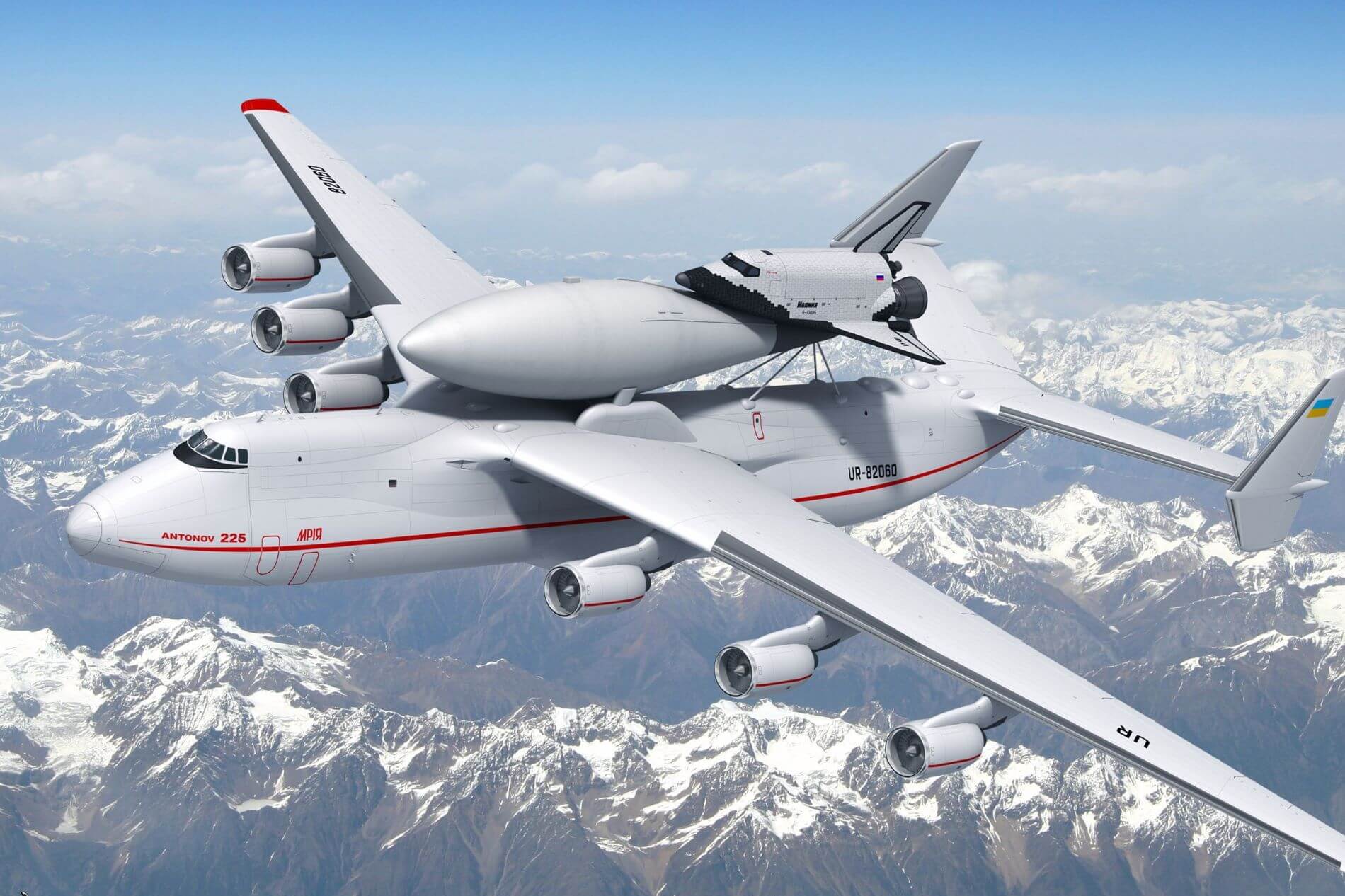
The Antonov An-225 Mriya, the world's largest and heaviest strategic airlift cargo aircraft, was destroyed in February 2022 during the Battle of Antonov Airport. As of 2026, it remains a symbol of engineering excellence, with ongoing international efforts and technical assessments focused on completing a second, modernized airframe to restore its unique heavy-lift capabilities.
The Engineering Marvel: Technical Specifications of the An-225
The Antonov An-225 Mriya (Ukrainian for "Dream") was designed and built during the 1980s by the Antonov Design Bureau in the Ukrainian SSR. Its primary mission was the transport of the Buran space shuttle and Energia rocket boosters. To achieve this, engineers had to push the boundaries of aerodynamics and structural integrity beyond any existing aircraft at the time.
The aircraft is powered by six Ivchenko-Progress D-18T turbofans, each capable of producing 229.5 kN (51,600 lbf) of thrust. This massive power plant was necessary to lift a maximum takeoff weight (MTOW) of 640 tonnes (1,410,958 lbs). To put this in perspective, the An-225 could carry nearly twice the payload of a Boeing 747-8F.
One of its most distinctive features is the landing gear system. To distribute its immense weight and prevent damage to airport runways, the Mriya utilized a 32-wheel landing gear system. The nose gear consisted of two steerable units with four wheels each, while the main gear featured 28 wheels organized into seven rows on each side. This configuration allowed the aircraft to "kneel," lowering the nose to facilitate cargo loading through the front ramp.
Aerodynamic Design and Tail Configuration
Unlike its predecessor, the An-124 Ruslan, the An-225 featured a twin-tail fin (H-tail) design. This was not merely an aesthetic choice; it was a functional necessity for the Buran program. When carrying large, outsized loads on its back—such as the space shuttle—the aerodynamic wake generated by the external cargo would have disrupted the airflow over a conventional single vertical stabilizer. The twin-tail design moved the vertical fins into undisturbed air, ensuring lateral stability during heavy external transport.
Operational History: Carrying the World’s Heaviest Cargo
The An-225 officially entered service in 1988, making its first flight on December 21 of that year. After the cancellation of the Soviet space program, the aircraft was mothballed for several years in the 1990s. However, the growing global demand for "outsize" cargo transport led to its restoration and certification for commercial use in 2001 under Antonov Airlines.
Throughout its operational life, the Mriya set over 240 world records, many of which remain unchallenged. In 2004, it carried the heaviest single piece of air cargo ever: a 189-tonne generator for a gas power plant in Armenia. In 2010, it transported the world's longest piece of air cargo—two 42.1-meter wind turbine blades from China to Denmark.
Beyond industrial logistics, the An-225 played a critical humanitarian role. During the COVID-19 pandemic, it was utilized to move massive quantities of medical supplies, including masks, testing kits, and ventilators, often delivering more in a single flight than multiple smaller aircraft could achieve in a week. Its ability to fly 15,400 kilometers (9,570 miles) with maximum fuel made it a unique asset for rapid global response.
The Destruction of the Mriya at Hostomel (2022)
The most tragic chapter in the history of the An-225 occurred in late February 2022. During the initial phase of the Russian invasion of Ukraine, the Hostomel (Antonov) Airport became a primary strategic target. The airport, located just outside Kyiv, served as the home base for the Mriya and the Antonov Airlines fleet.
On February 24, 2022, the airport was attacked by paratroopers and subjected to heavy shelling. Initial reports regarding the aircraft's status were conflicting. However, by February 27, satellite imagery and ground-level footage confirmed that the hangar housing the An-225 had been struck and the aircraft was severely damaged. Subsequent inspections by Antonov engineers revealed that the cockpit, forward fuselage, and segments of the wings were destroyed by fire and munitions.
The loss was felt globally by the aviation community. The Mriya was more than just a cargo plane; it was a testament to what human engineering could achieve. Following the liberation of the airport, the remains of the aircraft were carefully examined to determine which components could be salvaged for a potential future rebuild.
The Path to Reconstruction: Status in 2026
As of 2026, the dream of seeing the An-225 fly again has transitioned from a conceptual goal to a multi-stage technical project. Shortly after the original’s destruction, the Antonov Company and the Ukrainian government announced plans for a "second Mriya."
This project relies heavily on the existence of a second An-225 airframe that was partially constructed in the late 1980s. This second airframe was roughly 60% to 70% complete when production was halted due to lack of funding following the collapse of the Soviet Union. It has been stored in a climate-controlled hangar for decades, and initial assessments indicate that the fuselage, wings, and tail section are structurally sound.
Technical Challenges and Modernization
Building a "new" An-225 in 2026 involves more than just assembling old parts. The aviation landscape has changed significantly since 1988. Any new version must meet modern international aviation standards, including:
- Avionics Integration: The original Mriya used analog systems and older navigation suites. A 2026 version will feature a "glass cockpit" with modern digital displays, advanced flight management systems (FMS), and updated communication protocols.
- Engine Efficiency: While the D-18T engines were reliable, they are loud and less fuel-efficient compared to modern high-bypass turbofans. Engineers are evaluating whether to use modernized versions of the D-18T or adapt Western power plants, though the latter would require extensive structural redesign of the wings.
- Materials: Advances in composite materials offer the opportunity to reduce the weight of non-load-bearing components, potentially increasing the payload or range even further.
Financing the Rebuild
The estimated cost of rebuilding the An-225 ranges from $500 million to over $3 billion. Funding is being sourced through a combination of:
- State-sponsored defense and reconstruction funds.
- International donations and aviation industry partnerships.
- The "Be Brave Like Ukraine" initiative.
- Licensing and digital partnerships, such as the successful collaboration with Microsoft Flight Simulator, where proceeds from the An-225 DLC were directed toward the reconstruction effort.
Comparative Analysis of Heavy-Lift Aircraft
To understand the necessity of the An-225, it is important to compare its capabilities with other prominent heavy-lift aircraft in service as of 2026.
| Aircraft Model | Max Payload (Tonnes) | Wingspan (Meters) | Primary Use Case |
|---|---|---|---|
| Antonov An-225 Mriya | 250 | 88.4 | Ultra-heavy, outsize cargo |
| Antonov An-124 Ruslan | 150 | 73.3 | Military and commercial heavy lift |
| Lockheed C-5 Galaxy | 127 | 67.9 | Strategic military transport |
| Boeing 747-8F | 137 | 68.4 | Standard commercial freight |
| Airbus A300-600ST (Beluga) | 47 | 44.8 | Aircraft component transport |
While the An-124 and the C-5 Galaxy are incredibly capable, they cannot accommodate the sheer volume or the specific "back-loading" capabilities required for specialized industrial equipment that the An-225 handled routinely. The An-225 represents a niche capability that, when missing, creates a significant gap in the global logistics chain for the energy and aerospace sectors.
Operational Limitations and Requirements
Operating the An-225 was never a routine task. Because of its size and weight, it required specific infrastructure that limited the number of airports it could visit.
- Runway Requirements: The aircraft needed a runway length of at least 3,000 to 3,500 meters for a maximum weight takeoff. Furthermore, the runway had to be rated for high Load Classification Numbers (LCN) to ensure the pavement wouldn't crack under the pressure of the 32 wheels.
- Turning Radius: On the ground, the Mriya required a massive taxiing area. Many airports were forced to shut down adjacent taxiways or clear large sections of the ramp just to allow the aircraft to reach its parking stand.
- Crew Complement: A standard mission required a crew of six, including pilots, flight engineers, and a navigator. For long-haul commercial missions, additional loadmasters were often required to manage the complex weight and balance calculations for irregular cargo.
Frequently Asked Questions (FAQ)
1. How many Antonov An-225 aircraft were actually built?
Only one An-225 was ever fully completed and flown. A second airframe was started in the late 1980s but remained unfinished. While several parts for a third were manufactured, they were never assembled. The destroyed aircraft at Hostomel was the only operational unit in existence.
2. What was the maximum speed of the An-225?
The Mriya had a cruise speed of 800 km/h (430 knots) and a maximum speed of approximately 850 km/h (460 knots). While not as fast as modern passenger jets, its speed was more than sufficient for its role as a heavy strategic lifter.
3. Can the destroyed An-225 be repaired?
General consensus among aviation experts and Antonov engineers is that the original airframe (registration UR-82060) is beyond repair. The heat from the fires compromised the aluminum alloys of the main wing spar and central fuselage. However, specific components like the landing gear, some engines, and the tail section may be salvaged to be used in the construction of the second airframe.
4. Why was the An-225 so important for the COVID-19 response?
The An-225’s internal volume was 1,300 cubic meters. During the pandemic, the bottleneck for medical supplies was often volume rather than weight. The Mriya could carry millions of masks and protective suits in a single trip, significantly reducing the number of flights needed to resupply a country, which was critical when air traffic was restricted.
5. When is the new An-225 expected to be finished?
While work on the second airframe is active in 2026, there is no confirmed completion date. The timeline depends heavily on the geopolitical situation in Ukraine and the steady flow of international funding. Expert estimates suggest that even with optimized conditions, flight testing would not likely begin until the late 2020s.
The Future of the "Dream"
The legacy of the Antonov An-225 Mriya is not merely one of records and statistics, but of a unique capability that the world currently lacks. The destruction of the aircraft was a significant blow to global logistics, particularly for industries that rely on moving massive, non-divisible loads.
For aviation professionals and enthusiasts, the path forward involves a delicate balance of preserving the original's history while embracing modern technology for the second airframe. The reconstruction of the Mriya is not just an engineering project; it is a statement of resilience.
Final Recommendation: Organizations and logistics planners requiring ultra-heavy lift capacity should currently rely on the Antonov An-124-100 or the C-5M Super Galaxy for strategic needs. Meanwhile, the aviation community should continue to monitor official updates from the Antonov Company and the International Civil Aviation Organization (ICAO) regarding the progress of the Mriya’s successor and updated heavy-lift regulations.