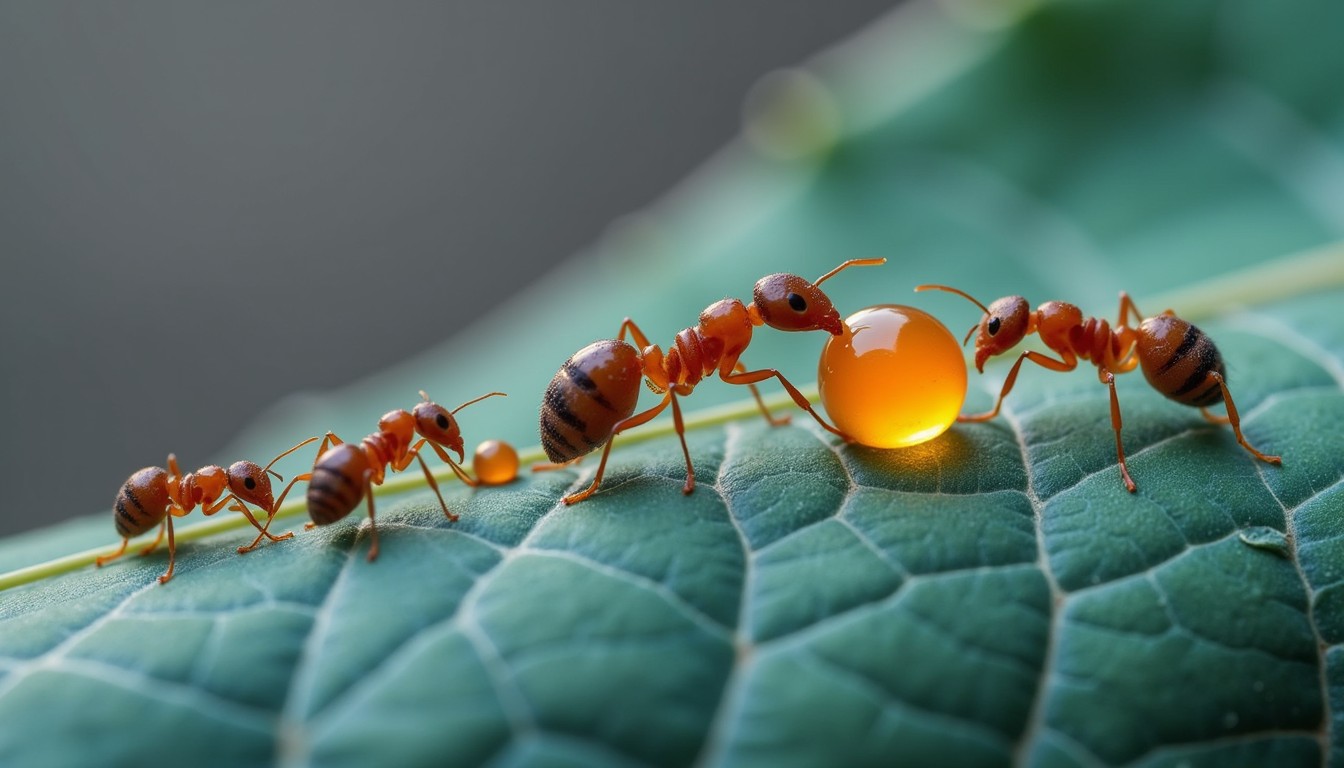
Ants are attracted to honey because it serves as a high-energy carbohydrate source, primarily composed of fructose and glucose. This natural interaction is driven by the ants' metabolic needs and their sophisticated olfactory systems, which detect volatile organic compounds in sugars to guide the colony toward efficient nutrient recruitment and survival.
The Biochemistry of Attraction: Why Ants Seek Honey
The interaction between ants and honey is fundamentally rooted in the nutritional requirements of the colony. Honey is a dense, supersaturated sugar solution produced by bees from floral nectar. For an ant colony, honey represents a "jackpot" of calories that can be quickly converted into adenosine triphosphate (ATP), the primary energy currency for muscle movement, foraging, and nest maintenance.
Most ant species, particularly those in the subfamilies Formicinae and Myrmicinae, possess specialized chemoreceptors on their antennae. These sensors are finely tuned to detect the scent of sugars and the moisture content of various substances. In 2026, advanced entomological research continues to highlight the sensitivity of these "gustatory receptors," which allow scout ants to identify trace amounts of glucose and fructose from significant distances.
Once a scout ant locates a honey source, the interaction shifts from individual discovery to collective exploitation. The ant does not merely consume the honey; it evaluates the quality. If the sugar concentration is high enough to justify the energy expenditure of recruitment, the scout returns to the nest, laying a pheromone trail. This chemical path acts as a biological GPS, directing sisters to the honey. The "natural interaction" here is a complex feedback loop of chemistry and social coordination.
Honeydew vs. Bee Honey: The Wild Context
While humans often observe ants raiding a jar of honey in a kitchen, the most common "natural" version of this interaction in the wild involves honeydew. Honeydew is a sticky, sugar-rich liquid excreted by aphids and other scale insects (Hemiptera) as they feed on plant sap.
In many ecosystems, ants have evolved a mutualistic relationship with these insects. This is often referred to as "ant farming." The ants protect the aphids from predators like ladybugs, and in exchange, they "milk" the aphids for honeydew by stroking them with their antennae. Chemically, honeydew is very similar to honey, though it often contains specific trisaccharides like melezitose, which are particularly attractive to certain ant species.
The interaction with actual bee honey is more antagonistic. In the wild, honey is stored deep within a beehive, protected by thousands of stinging workers. For an ant colony to access this honey, it must find a weakened hive or engage in a high-risk raid. Some species, such as the Argentine ant (Linepithema humile), are known for their ability to overwhelm bee colonies through sheer numbers, driving the bees away to feast on the honey stores and larvae.
The Physical Mechanics of Honey Ingestion
Ants interact with honey through a specialized digestive anatomy. Because honey is highly viscous (thick), ants cannot simply "drink" it like water. Instead, they use their mandibles and a pump-like structure in their heads called the cibarial pump to draw the liquid into their mouths.
One of the most fascinating aspects of this interaction is the use of the "social stomach" or crop. When an ant consumes honey, the liquid does not immediately go to its midgut for digestion. Instead, it is stored in the crop, a distensible organ in the abdomen. This allows the worker to carry a significant payload of honey back to the nest. Upon arrival, the worker regurgitates the honey to feed the queen and the larvae through a process called trophallaxis. This liquid exchange is the primary method of nutrient distribution within the colony, ensuring that even members who never leave the nest receive the high-energy benefits of the honey.
Risks and Limitations: The "Honey Trap"
Despite the nutritional benefits, the interaction between ants and honey is not without peril. The very physical properties that make honey a stable food source—high viscosity and low moisture—present significant dangers to smaller ant species.
- Drowning and Entrapment: Because honey is incredibly sticky, a small ant can easily become mired in a drop. The surface tension of the honey is often stronger than the ant’s ability to pull itself free. Once stuck, the ant’s spiracles (breathing holes) can become clogged, leading to death by suffocation.
- Dehydration: While honey is a liquid, its high sugar concentration makes it hygroscopic, meaning it absorbs moisture. If an ant consumes honey that is too concentrated without access to water, it can lead to osmotic stress, potentially dehydrating the insect.
- Pathogen Exposure: In a domestic setting, honey that has been sitting out can ferment or collect airborne spores. In the wild, raided honey may contain bee-specific pathogens which, while often harmless to ants, can sometimes contaminate the ant nest's environment.
Comparing Sugar Sources for Ant Foraging
To understand where honey sits in the hierarchy of ant preferences, we can compare it to other common sugar sources found in both natural and urban environments.
| Feature | Floral Nectar | Aphid Honeydew | Bee Honey | Granulated Sugar (Sucrose) |
|---|---|---|---|---|
| Primary Sugars | Sucrose, Glucose | Melezitose, Sucrose | Fructose, Glucose | Pure Sucrose |
| Viscosity | Low (Watery) | Moderate | Very High | Solid (Requires liquid) |
| Nutritional Density | Moderate | High | Very High | High (But lacks minerals) |
| Accessibility | High (Flowers) | High (Symbiosis) | Low (Hive Defenses) | Moderate (Human proximity) |
| Collection Speed | Fast | Continuous | Slow (Due to thickness) | Very Slow |
Practical Implications: Honey in Pest Management
Understanding the natural interaction between ants and honey is vital for effective, low-impact pest management. Because ants are so strongly attracted to the scent and caloric density of honey, it is frequently used as a primary attractant in "baiting" systems.
In a professional pest control context, honey or a similar synthetic sweet gel is mixed with a slow-acting insecticide (such as boric acid or fipronil). The strategy relies on the ant's social behavior:
- Step 1: The scout finds the honey bait.
- Step 2: The scout signals the colony, and multiple workers begin transporting the "honey" back to the nest.
- Step 3: Through trophallaxis, the workers share the poisoned honey with the queen and larvae.
- Step 4: The entire colony is eliminated from the inside out, rather than just killing the visible foragers.
However, using pure honey as a "natural" repellent is a common misconception. Honey does not repel ants; it actively invites them. If you find ants in your honey jar at home, it is a sign that the seal is compromised, allowing the volatile sugar molecules to escape and reach the ants' sensors.
Behavioral Variations Across Species
Not all ants interact with honey in the same way. Species-specific behaviors dictate how a colony will react to a honey source:
- Carpenter Ants (Camponotus): These large ants are highly attracted to sweets and will often travel long distances from their satellite nests in wood to find a honey source. They are particularly active at night.
- Sugar Ants (Camponotus consobrinus): As the name suggests, their biology is centered around sugar recruitment. They are efficient at processing high-viscosity liquids.
- Fire Ants (Solenopsis invicta): While they prefer proteins and fats for larval growth, workers will consume honey for the energy needed to sustain their aggressive foraging and territorial defense.
- Pharaoh Ants (Monomorium pharaonis): These tiny ants can exploit very small amounts of honey. They are notorious for "budding," where the colony splits if they feel threatened, making their interaction with honey baits more complex to manage.
Environmental Factors Affecting the Interaction
The intensity of the ant-honey interaction is heavily influenced by the environment. In 2026, climate patterns continue to show that temperature and humidity play a massive role in foraging behavior.
- Temperature: Ants are ectotherms (cold-blooded). In cooler temperatures, their metabolism slows down, and their interest in honey may decrease. Conversely, in warm weather, their activity peaks, and the demand for "fast" energy like honey increases.
- Humidity: In dry conditions, ants may seek out honey not just for the sugar, but for the small amount of moisture it provides. However, if the honey becomes too dry and crystallizes, most ants will lose interest as they cannot easily ingest solid sugar crystals without first dissolving them in water.
Frequently Asked Questions
Does honey kill ants?
Honey itself is not toxic to ants; in fact, it is a potent food source. However, ants can drown in honey due to its high viscosity and stickiness. If the honey is used as a bait with added minerals like borax, then it becomes lethal to the colony.
Why do ants avoid some types of honey?
Ants may avoid honey that has fermented or honey that contains natural repellents from specific floral sources. Some plants produce nectar with secondary metabolites (like caffeine or certain phenols) that can be deterrents to specific ant species. Additionally, if a colony is currently focused on protein for larval development, they may temporarily ignore sugar sources.
Can ants eat crystallized honey?
Ants struggle to eat crystallized honey because they require liquids for their cibarial pump to function. To consume crystallized honey, an ant must first regurgitate water or saliva onto the crystals to dissolve them back into a liquid state, which is an energy-intensive process they often avoid if easier sources are available.
Is honey or sugar better for attracting ants?
Honey is generally more attractive than dry granulated sugar because it is already in a liquid state and emits stronger volatile scents. The combination of fructose and glucose in honey is often more appealing to a wider range of ant species than the pure sucrose found in table sugar.
How do I stop ants from getting into my honey?
The most effective way is to keep the exterior of the honey jar clean and ensure the lid has an airtight seal. Storing the jar in a "moat" (a shallow dish of water with a drop of dish soap) can also prevent ants from reaching the jar, as they cannot cross the soapy water barrier.
Recommendations for Managing the Interaction
To manage the natural interaction between ants and honey in a domestic or agricultural setting, focus on containment and sanitation. If you are observing ants in a natural setting, avoid interfering with their recruitment trails, as these are essential for the local ecosystem's nutrient cycling.
For homeowners dealing with an influx of ants attracted to sweets, the following steps are recommended:
- Identify the Entry Point: Follow the ant trail back from the honey source to find where they are entering the structure.
- Sanitize the Trail: Use a mixture of vinegar and water to wipe down the area. This doesn't just clean the honey; it destroys the pheromone trail that other ants use for navigation.
- Seal Food Sources: Transfer honey and other syrups into glass jars with rubber gaskets.
- Strategic Baiting: If an infestation exists, use a honey-based bait specifically designed for the species in your area. Place baits near the entry points, not directly where you have seen the ants feeding, to draw them away from your living spaces.
By understanding that the interaction between ants and honey is a biological necessity for the colony, we can better appreciate the complexity of these insects while effectively managing their presence in our daily lives.