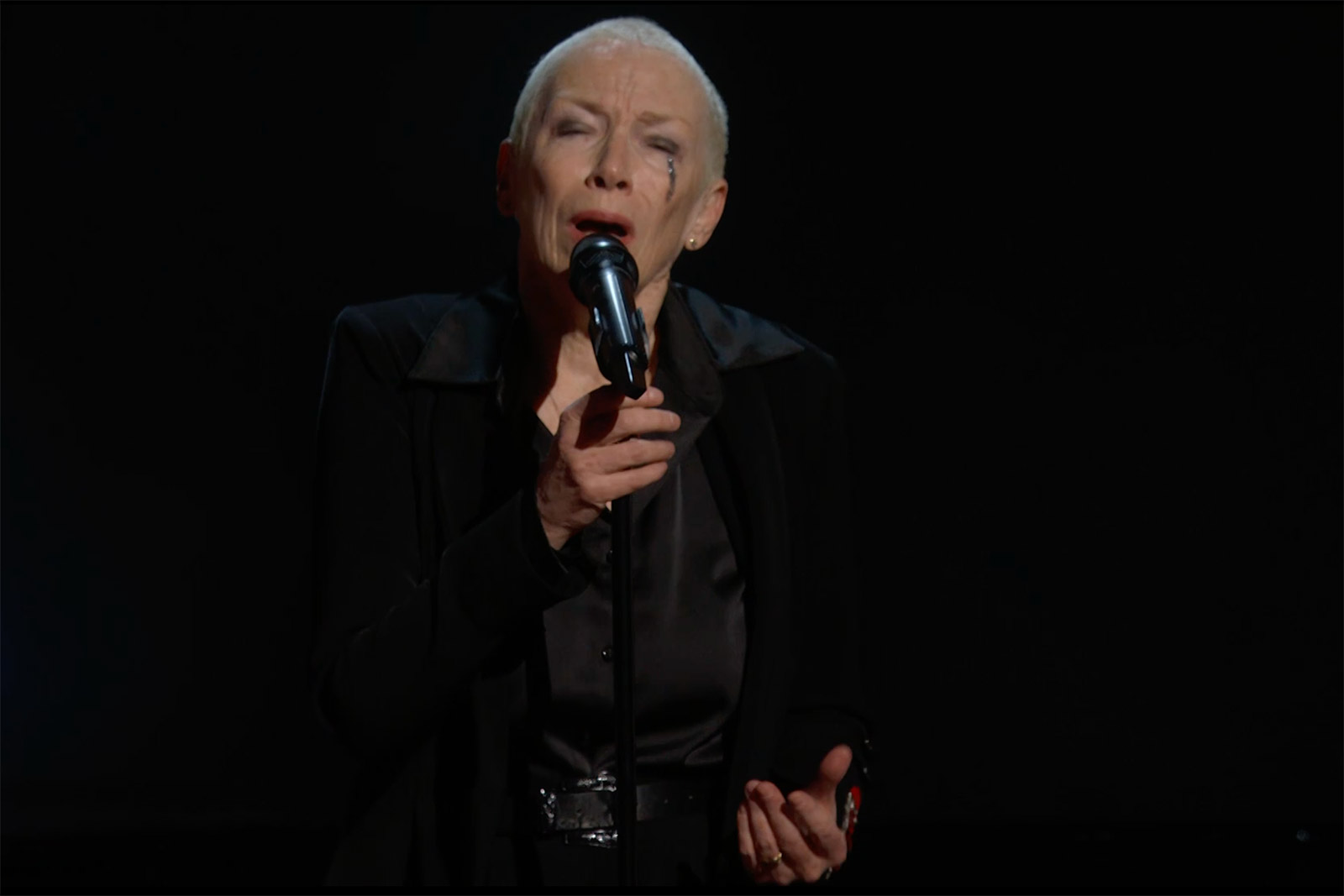
Annie Lennox has occupied a rare echelon in contemporary music for over four decades, blending avant-garde visual aesthetics, uncompromising lyricism, and a vocal delivery widely regarded as one of the most powerful in popular music history. When analyzing Annie Lennox on the Grammys legacy, observers examine not merely her multiple competitive wins and honorary accolades, but her capacity to use the Grammy Awards stage as a medium for artistic evolution, political commentary, and emotional resonance. From her groundbreaking early work as one-half of Eurythmics to her prolific solo career and impactful collaborative performances, Lennox's relationship with the Recording Academy reflects the shifting landscape of the music industry itself—moving from commercial pop dominance to revered artistic statesmanship.
The Foundations of Recognition: Eurythmics and the 1980s Pop Revolution
The journey of Annie Lennox within the Grammy ecosystem began during the global ascendance of Eurythmics, the synth-pop duo she formed with multi-instrumentalist Dave Stewart. Emerging from the post-punk wreckage of The Tourists, Eurythmics captured the cultural zeitgeist of the early 1980s with a clinical, electronically driven soundscape anchored by Lennox’s striking contralto and striking, gender-subverting visual presentation.
While the band achieved immediate commercial and critical saturation with their breakthrough sophomore album, Sweet Dreams (Are Made of This) (1983) and subsequent releases like Touch (1983) and Be Yourself Tonight (1985), the Grammy Awards of that era initially categorized pop and electronic synthesis through a traditional lens. Eurythmics secured multiple nominations during their peak operational years, establishing Lennox as a formidable vocal and songwriting force.
Her delivery style on tracks like "Here Comes the Rain Again" and "Would I Lie to You?" demonstrated a technical range that bridged soul music intensity with cold, industrial pop mechanics. These early nominations laid the groundwork for a long-term artistic dialogue with the Recording Academy, proving that commercial pop success could coexist with intense artistic experimentation and uncompromising personal identity.
| Era / Project | Key Musical Release | Grammy Recognition Focus | Cultural and Technical Impact |
|---|---|---|---|
| Eurythmics (Early) | Sweet Dreams (Are Made of This) (1983) | Pop and synth-pop visibility | Redefined female pop presentation; introduced complex electronic production to mainstream awards consideration. |
| Eurythmics (Mid-Career) | Be Yourself Tonight (1985) | Rock and pop vocal performance | Shifted towards organic soul and R&B influences; highlighted Lennox’s raw, blues-infused vocal power. |
| Solo Breakthrough | Diva (1992) | Album of the Year, Best Female Pop Vocal Performance | Cemented her status as an elite solo auteur; bridged sophisticated adult contemporary pop with art-pop aesthetics. |
| Solo Maturity | Medusa (1995) | Best Female Pop Vocal Performance (Won for "No More 'I Love You's'") | Demonstrated interpretive mastery of male-penned compositions; elevated the art of the cover album. |
Solo Ascendance: Diva, Medusa, and Critical Validation
The transition from a duo format to a solo career brought Lennox her most direct, individual triumphs at the Grammy Awards. Following the temporary hiatus of Eurythmics, Lennox released her debut solo studio album, Diva, in 1992. The record was a critical and commercial triumph, utilizing lush arrangements, biting lyrical wit, and sophisticated production values.
At the 35th Annual Grammy Awards, Diva earned major nominations, including the coveted Album of the Year category, alongside nods for Best Music Video, Long Form (for Diva: The Video) and Best Female Pop Vocal Performance. While veteran artist Eric Clapton swept many of the major categories that year with "Unplugged," the sheer presence of Diva in the Album of the Year lineup signaled that the Recording Academy recognized Lennox not just as a hitmaker, but as a master album architect.
She secured her first competitive Grammy win shortly thereafter at the 38th Annual Grammy Awards in 1996, taking home the trophy for Best Female Pop Vocal Performance for her haunting rendition of "No More 'I Love You's'," the lead single from her 1995 cover album, Medusa. This victory validated her unique ability to deconstruct existing pop and new wave compositions—originally recorded by The Lover Speaks—and imbue them with operatic grandeur and emotional weight.
Unforgettable Grammy Performances: Defining Moments on the Stage
Beyond trophies and nominations, Annie Lennox’s legacy within the Grammys is permanently etched into television history through her live performances. Unlike artists who rely on backing tracks or standard promotional staging, Lennox has consistently treated Grammy appearances as theatrical events, utilizing minimalism, high-fashion costumery, and raw vocal vulnerability.
The Power of Collaborative Spectacle
Lennox has frequently shared the Grammy stage with contemporaries and younger artists, demonstrating both her status as an elder stateswoman of pop and her enduring collaborative spirit. Whether performing alongside Dave Stewart during Eurythmics reunions or joining tribute ensembles, her stage presence remains commanding.
Her performance style is characterized by a deliberate rejection of superficial pop choreography in favor of intense eye contact, dramatic phrasing, and absolute vocal control. This approach has earned her the enduring respect of peer musicians, many of whom cite her as a primary influence on modern alternative pop and vocal delivery.
Activism and Social Consciousness
A defining element of Lennox's modern legacy—both inside and outside the Grammy framework—is her tireless humanitarian work, particularly through the SING campaign and her advocacy for HIV/AIDS awareness in women and children in South Africa. While award shows often risk superficiality, Lennox has frequently utilized her platform, red carpet appearances, and acceptance speeches to draw attention to global humanitarian crises. Her alignment with socially conscious artistry has influenced how the Recording Academy and its audience view the responsibilities of cultural icons, proving that commercial visibility can and should be paired with moral urgency.
The Modern Era and the Enduring Standard of Excellence
As the music industry transitioned into the digital era, Lennox's output became more measured, punctuated by select releases such as Songs of Mass Destruction (2007) and her 2014 jazz standard cover album, Nostalgia. Nostalgia proved her vocal agility remained completely intact, earning a Grammy nomination for Best Traditional Pop Vocal Album at the 58th Annual Grammy Awards.
This late-career recognition underscores a vital aspect of the Grammys' historical function: acknowledging enduring artistry across generations. While younger artists dominate streaming metrics and youth-culture categories, nominations for established legends like Lennox provide institutional validation of long-form career dedication and technical mastery.
Common Misconceptions Regarding Lennox’s Grammy History
- Misconception: Lennox won numerous Grammys during Eurythmics' 1980s peak.
- Fact: Despite widespread commercial success and multiple nominations, Eurythmics did not win a competitive Grammy Award during their primary 1980s run, making her solo wins in the 1990s all the more significant.
- Misconception: Lennox's Grammy recognition is limited strictly to pop categories.
- Fact: Her nominations span rock, alternative, traditional pop, long-form music video, and the general field category of Album of the Year, reflecting her stylistic versatility.
Frequently Asked Questions
How many Grammy Awards has Annie Lennox won?
Annie Lennox has won four Grammy Awards over the course of her career, encompassing both her solo work and her contributions to music video excellence. Her wins highlight her transition from innovative pop pioneer to revered solo interpretive artist.
What was Annie Lennox’s first Grammy win?
Her first competitive Grammy win came in 1996 for Best Female Pop Vocal Performance, awarded for her striking interpretation of "No More 'I Love You's'" from her covers album, Medusa.
Was Eurythmics ever nominated for a Grammy?
Yes, Eurythmics received multiple Grammy nominations during the 1980s for their pioneering work in synth-pop and rock, establishing the foundation for Lennox's subsequent solo accolades within the Recording Academy.
What genres are represented in Annie Lennox’s Grammy nominations?
Her nominations span a wide array of categories, including Best Pop Vocal Performance, Best Rock Vocal Performance, Album of the Year, Best Traditional Pop Vocal Album, and Best Music Video, reflecting a career defined by stylistic breadth.
Conclusion and Next Actions
The legacy of Annie Lennox at the Grammy Awards is a testament to artistic fearlessness, vocal endurance, and uncompromising identity. From her early electronic explorations with Eurythmics to her sophisticated solo masterworks and vital humanitarian advocacy, she has consistently challenged the commercial and aesthetic boundaries of popular music. For listeners and aspiring musicians seeking to understand the intersection of technical vocal mastery and enduring cultural impact, revisiting her nominated catalog and landmark performances offers an invaluable masterclass in artistic longevity.