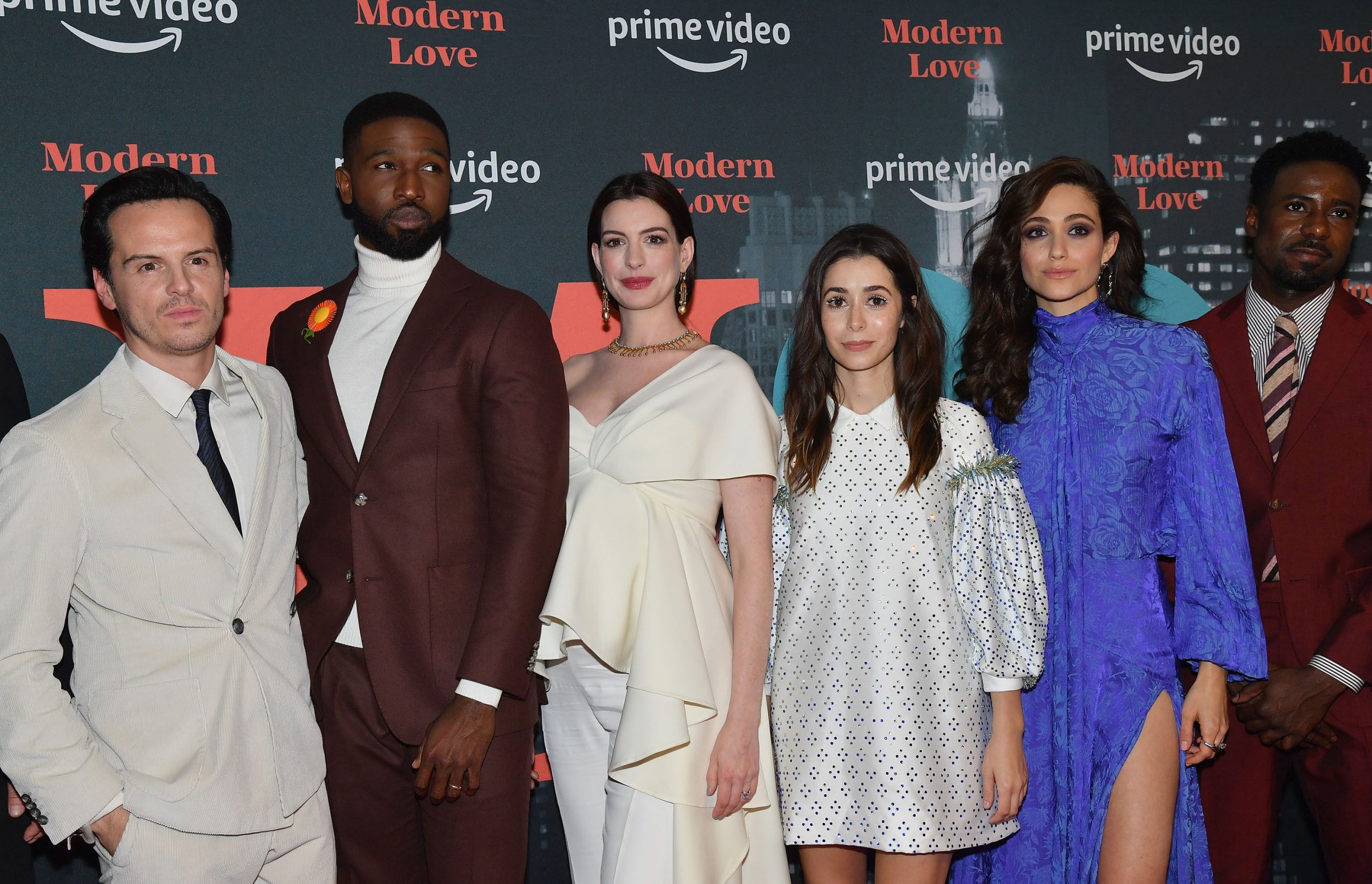
In the acclaimed Amazon Original anthology series Modern Love, Andy Garcia portrays Michael in Season 1, Episode 2, titled "When Cupid Is a Prying Journalist." He plays the long-lost love of Julie (Catherine Keener), appearing in a poignant narrative about missed opportunities, the enduring nature of true affection, and the courage required to seek a second chance decades later.
The anthology series Modern Love, which premiered in 2019 and continues to be a staple of romantic television in 2026, is based on the famous New York Times column of the same name. Each episode explores the complexities of human connection in various forms—romantic, platonic, and familial. While the series features an ensemble of A-list talent, Andy Garcia’s performance in the first season remains one of its most grounded and emotionally resonant highlights.
The Narrative Structure of "When Cupid Is a Prying Journalist"
To understand Andy Garcia’s role, one must first look at the unique structure of Episode 2. Directed by John Carney, the episode features two parallel stories that eventually intersect through the power of storytelling.
The "present-day" plot follows Joshua (Dev Patel), a successful dating app founder being interviewed by a seasoned journalist named Julie (Catherine Keener). When Julie asks Joshua if he has ever been in love, he recounts a heartbreaking tale of a lost relationship with Emma (Caitlin McGee). In exchange for his vulnerability, Joshua asks Julie the same question, prompting her to recount her own "one that got away"—a man named Michael, played by Andy Garcia.
The episode moves between Joshua’s youthful, frantic energy and Julie’s more contemplative, mature reflection. Garcia’s character, Michael, exists for much of the episode as a memory, a phantom of "what might have been," before eventually appearing in the physical world of the narrative. This delayed entry gives his character an almost mythic quality; he represents the cumulative weight of thirty years of "what if."
Analyzing Andy Garcia’s Performance as Michael
Andy Garcia brings a sophisticated, understated gravitas to the role of Michael. By 2026, Garcia has solidified his reputation for playing characters with deep internal lives, and his work in Modern Love is a masterclass in "acting through presence."
Michael is introduced through flashbacks as a young man who was supposed to meet Julie at a train station but never showed up due to a series of unfortunate circumstances. When we finally see Garcia as the older Michael, he embodies the weariness and wisdom of a man who has lived a full life but carries a specific, quiet void.
The Power of the "Gaze"
One of the most striking elements of Garcia's performance is how he looks at Catherine Keener's character during their reunion. There is no histrionic dialogue or grand cinematic gesture. Instead, Garcia uses his eyes to convey a mixture of shock, recognition, and immediate, rekindled warmth. He portrays Michael not as a man who has spent every second pining, but as a man who, upon seeing Julie again, realizes that the path of his life was permanently altered the day they lost touch.
Subtle Emotional Architecture
Garcia avoids the tropes of the "lonely old man." Michael is presented as someone who has moved on—he has had a life, perhaps a family or a career—but he remains emotionally accessible. This accessibility is key to the episode’s climax. When he and Julie finally sit down to talk, Garcia plays the scene with a refreshing lack of ego. He acknowledges his mistakes and his missed chances with a vulnerability that makes the audience root for a resolution that transcends typical romantic comedy endings.
The Chemistry Between Andy Garcia and Catherine Keener
The success of "When Cupid Is a Prying Journalist" relies heavily on the chemistry between its leads. While Dev Patel and Caitlin McGee handle the "young love" aspect with a frantic, modern energy, Garcia and Keener provide the episode’s emotional anchor.
Their interactions feel lived-in. Despite not having seen each other for decades, the rapport they establish suggests a shared history that doesn't need to be explained through clunky exposition. Garcia’s Michael provides a perfect foil to Keener’s Julie; where she is sharp and perhaps a bit cynical from years of journalism, he is grounded and receptive.
This pairing is a testament to the casting choices of Modern Love. Casting an actor of Garcia’s stature—known for roles in The Godfather Part III and Ocean's Eleven—brings a sense of cinematic history to the small screen. He represents a classic Hollywood masculinity that is softened here, showing a different side of his range that focuses on intimacy rather than authority.
From Column to Screen: The Real Story of Deborah Copaken
The episode is based on a real-life essay by Deborah Copaken, which became one of the most-read pieces in the history of the Modern Love column. Understanding the source material adds another layer of depth to Garcia’s portrayal.
In the original essay, the "Michael" figure is a real person with whom Copaken had a missed connection at a young age. The adaptation keeps the core truth of the story: that sometimes, love is not a matter of compatibility, but of timing. Garcia’s performance honors the real-life Michael by portraying him as a person, not a plot device.
In the transition from page to screen, John Carney (known for Once and Sing Street) infused the story with a rhythmic, almost musical quality. Even though Michael is a man of few words, Garcia’s performance fits into this "visual music." His movements, his pauses, and his reactions are timed perfectly to the emotional beats of the score, creating a sense of harmony that suggests Michael and Julie were always meant to be in the same "song."
Comparative Analysis: Youthful Passion vs. Mature Regret
The episode presents a fascinating contrast between the two central couples. The following table highlights the differences in how the show handles the concept of "The One That Got Away" across two different life stages.
| Feature | Joshua & Emma (The Present) | Julie & Michael (The Past) |
|---|---|---|
| Stage of Life | Twenties / Early Thirties | Late Fifties / Sixties |
| Core Conflict | Infidelity and Miscommunication | A Missed Connection (Lost Letter) |
| Role of Technology | Central (Dating App Founder) | Obstacle (Lack of cell phones/internet) |
| Resolution Type | Immediate and External | Reflective and Internal |
| Andy Garcia's Role | N/A | The "Anchor" of the story's resolution |
| Emotional Tone | Anxiety and Urgent Longing | Acceptance and Bittersweet Hope |
This comparison underscores why Garcia’s performance is so vital. Without the weight he brings to the "Past" storyline, the episode might feel like a standard romantic drama. His presence elevates the material into a meditation on how time changes our perspective on love.
The Themes of Timing and Forgiveness
"When Cupid Is a Prying Journalist" is ultimately about the cruelty and kindness of timing. For Andy Garcia’s Michael, timing was a villain for thirty years. The missed meeting at the train station was a result of a lost book and a misunderstanding—small, mundane accidents that changed the trajectory of two lives.
Garcia portrays the acceptance of this "lost time" with remarkable grace. There is a scene where he explains what happened on that fateful day, and he does so without bitterness. This is a crucial character choice. By 2026, audiences have grown tired of characters who harbor decades of toxic resentment. Michael represents a healthier path: recognizing the tragedy of the past while remaining open to the possibilities of the present.
His performance also touches on the theme of forgiveness—not just of the other person, but of oneself. Michael has to forgive himself for not finding a way back to Julie sooner, and Julie has to forgive the universe for the circumstances that kept them apart.
Technical Elements: Directing Garcia
John Carney’s direction often emphasizes the environment as much as the actors. In the scenes featuring Garcia, the setting—a quiet, autumnal New York City—acts as a mirror to Michael’s stage of life. The lighting is warm and golden, highlighting the lines on Garcia’s face, which tell their own story of the years gone by.
The use of close-ups during the park bench scene is particularly effective. Carney trusts Garcia’s face to carry the narrative. As Michael listens to Julie explain her life, the subtle shifts in Garcia’s expression provide more information than any monologue could. We see the exact moment Michael decides that he is not going to let her walk away a second time.
Why This Role Matters in Andy Garcia’s Career
By 2026, Andy Garcia’s filmography is vast, ranging from high-stakes thrillers to family comedies. However, his role in Modern Love stands out because of its vulnerability. Actors who often play "cool" or "tough" characters—as Garcia has in many of his most famous roles—sometimes find it difficult to transition into roles that require pure emotional openness.
In Modern Love, Garcia sheds the armor of his previous archetypes. He isn't the smartest man in the room or the most dangerous; he is simply a man who loved someone and lost them. This role served as a reminder of his versatility and his ability to command the screen in a quiet, intimate setting.
Frequently Asked Questions
Who does Andy Garcia play in Modern Love?
Andy Garcia plays Michael in Season 1, Episode 2, titled "When Cupid Is a Prying Journalist." He is the long-lost love of the character Julie, played by Catherine Keener. His character represents the "second chance" narrative arc within the episode.
Is the episode featuring Andy Garcia based on a true story?
Yes, the episode is based on a real-life essay written by Deborah Copaken for the New York Times "Modern Love" column. The essay recounts her real-life experience of reconnecting with a man she had lost touch with many years prior.
How long is Andy Garcia’s screen time in the episode?
While Garcia is a central figure in the story’s emotional arc, he does not appear until the latter half of the episode. Much of his character's history is established through flashbacks (with a younger actor playing the role) and through Catherine Keener’s narration before Garcia appears in the present-day scenes.
Does Andy Garcia’s character end up with Catherine Keener’s character?
The episode ends on a hopeful and bittersweet note. While it does not explicitly show them living "happily ever after" in a traditional sense, it strongly implies that they have chosen to rekindle their relationship and explore what a future together looks like in their later years.
Where was Andy Garcia’s portion of Modern Love filmed?
Like the rest of the series, the episode was filmed on location in New York City. Garcia’s scenes primarily take place in iconic outdoor settings and intimate interiors that capture the quintessential "New York" feel of the series.
Final Thoughts and Practical Takeaways
Andy Garcia’s appearance in Modern Love is a powerful reminder that it is never too late to address the "unresolved business" of the heart. For viewers, Michael’s story offers several practical reflections:
- The Value of Vulnerability: Like Michael, being honest about past regrets can open doors that seemed permanently closed.
- Timing Isn't Everything: While bad timing can separate people, the enduring nature of a true connection can sometimes bridge even a thirty-year gap.
- The Importance of "Showing Up": The episode centers on a missed meeting. In 2026, as much as in the past, the simple act of being present is the foundation of any relationship.
For fans of Andy Garcia, this episode is essential viewing. It showcases a veteran actor at the height of his powers, using subtlety and soulfulness to tell a story that resonates with anyone who has ever wondered about the person they left behind. Whether you are coming to the series for the first time or revisiting it in 2026, Garcia’s Michael remains a beacon of hope for second chances.