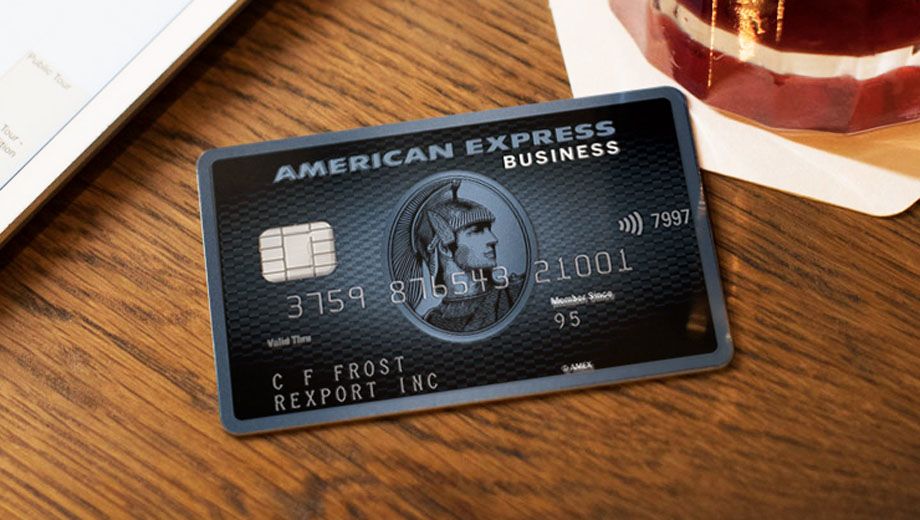
The American Express Business Line of Credit is a flexible, unsecured financing solution designed for small to mid-sized businesses seeking quick access to capital between $2,000 and $250,000. Unlike traditional loans, it features a unique monthly fee structure rather than a standard APR, providing funds with no origination or prepayment fees.
The landscape of business financing has evolved significantly, yet the American Express Business Line of Credit remains a cornerstone for entrepreneurs who prioritize speed and brand reliability. Formed through the acquisition and integration of Kabbage, this product offers a streamlined digital experience that connects directly to a business's financial data. In 2026, as businesses navigate fluctuating markets and digital-first operations, understanding the nuances of this specific credit line is essential for strategic capital management.
Understanding the American Express Business Line of Credit Model
The American Express Business Line of Credit operates differently than a traditional bank line of credit. At its core, it is a revolving facility where each "draw" or withdrawal essentially functions as a separate installment loan. This distinction is vital for cash flow planning. When you draw funds, you select a specific repayment term—typically 6, 12, or 18 months—and the total cost of that draw is determined at the outset.
Because it is unsecured, businesses do not need to pledge specific collateral such as real estate or equipment to qualify. This lowers the barrier to entry for service-based businesses or startups that lack heavy physical assets. However, like most small business lending products, a personal guarantee is generally required, meaning the business owner is personally responsible for the debt if the business cannot repay.
The digital integration is perhaps the product's most modern feature. Rather than submitting stacks of paper tax returns and bank statements, applicants link their business bank accounts and accounting software (such as QuickBooks or Xero) directly to the American Express platform. The system uses automated underwriting to assess real-time cash flow, which often results in approval decisions within minutes rather than weeks.
Detailed Eligibility and Approval Criteria
To maintain the quality of its lending portfolio, American Express enforces specific eligibility requirements. While these criteria are more accessible than those of a traditional commercial bank, they still require a baseline of financial health and operational history.
- Time in Business: Your business must have been in operation for at least one year. American Express verifies this through Secretary of State filings and the age of your business financial records.
- Credit Score: A personal FICO score is a primary factor. As of 2026, a score of at least 660 is generally the minimum required for consideration. However, higher limits and lower fee tiers are typically reserved for those with scores above 720.
- Revenue Requirements: The business must demonstrate an average monthly revenue of at least $3,000 (equivalent to $36,000 annually). This is verified through the linked bank accounts.
- Entity Type: The product is available to various structures, including Sole Proprietorships, LLCs, S-Corps, and C-Corps.
- Location: The business must be based in the United States.
It is important to note that meeting the minimum requirements does not guarantee approval. American Express also looks at "cash flow volatility"—if your bank balance frequently hits zero or if you have numerous non-sufficient funds (NSF) incidents, your application may be denied despite meeting the revenue and credit score benchmarks.
The Cost Breakdown: Monthly Fees vs. Interest Rates
The most common point of confusion for new borrowers is the American Express fee structure. American Express does not use a standard compounding interest rate. Instead, it charges a monthly fee on the outstanding principal of each draw.
For a 6-month term, the total monthly fees typically range from 2% to 9% of the borrowed amount. For a 12-month term, they might range from 7.5% to 18%. It is crucial to understand that these fees are front-loaded. In a 6-month loan, you might pay a higher fee percentage in the first two months and a lower percentage in the final four.
This front-loaded structure means that while there is no "prepayment penalty," the cost savings of paying the loan off early are not as significant as they would be with a traditional interest-bearing loan. If you pay off the line in month three, you have already paid the most expensive portion of the fees. However, you will avoid the remaining monthly fees for months four, five, and six.
| Feature | 6-Month Term | 12-Month Term | 18-Month Term |
|---|---|---|---|
| Total Fee Range | 2% – 9% | 7.5% – 18% | 15.75% – 27% |
| Repayment Frequency | Monthly | Monthly | Monthly |
| Best Used For | Inventory, bridge gaps | Small equipment, marketing | Expansion, larger projects |
| Fee Structure | Front-loaded | Front-loaded | Front-loaded |
Note: Fees are subject to credit approval and may vary based on the health of the business and the personal credit of the guarantor.
Comparing Terms: 6, 12, and 18-Month Structures
When you take a draw from your American Express Business Line of Credit, you are presented with available terms based on your total credit limit and the amount you are requesting.
- The 6-Month Term: This is the most popular option for short-term "in-and-out" needs. If a business needs $10,000 to purchase inventory for a seasonal rush, the 6-month term offers the lowest total cost of capital. Because the repayment is compressed into half a year, the monthly installments will be higher, which requires robust short-term cash flow.
- The 12-Month Term: This provides a balance between cost and monthly affordability. It is often used for investments that take a few months to yield a return, such as a localized digital marketing campaign or hiring a temporary contractor.
- The 18-Month Term: This term is typically only available for larger draws and for businesses with higher credit tiers. While the monthly payments are smaller and easier on the budget, the total fees paid over the life of the draw are significantly higher. This should be used for projects where the return on investment (ROI) is expected to manifest over a longer horizon.
The Application Experience and Technical Integration
The hallmark of the American Express Business Line of Credit is its "FinTech" DNA. The application process is almost entirely automated.
Connecting Data Sources
During the application, you will be asked to connect your business checking account using a secure third-party service (like Plaid). This allows American Express to analyze your transaction history. According to the American Express Business terms, they look for consistent deposits and a healthy average daily balance. Linking accounting software like QuickBooks can provide additional "points" toward your creditworthiness by showing a more holistic view of your accounts receivable and payable.
Credit Impact
When you apply, American Express typically performs a soft credit pull to provide you with a conditional offer. This does not affect your personal credit score. However, once you accept the offer and move forward with the line of credit, a hard credit pull may be performed, which can result in a temporary dip in your score.
Fund Disbursement
Once approved and a draw is initiated, funds are usually sent via ACH. In 2026, many major banks support Real-Time Payments (RTP), allowing funds to arrive in the business account within hours. For standard ACH transfers, it typically takes 1 to 3 business days.
Strategic Advantages: Why Choose Amex?
There are several compelling reasons why a business owner would choose this product over a traditional bank loan or an alternative lender like OnDeck or Bluevine.
- No Origination Fees: Many business lenders charge 1% to 5% of the total loan amount just to process the paperwork. American Express does not charge this.
- Brand Reliability: Borrowing from a global institution like American Express provides a level of security and customer service that smaller, independent FinTechs may lack.
- Membership Rewards: In some cases, American Express allows businesses to earn Membership Rewards points on their loan activities or provides incentives for existing Amex cardholders. This integration can provide peripheral value to the business owner’s overall ecosystem.
- Transparency: The dashboard is highly intuitive. Before you take a draw, you see exactly what your monthly payment will be and exactly how much the total fees will cost. There are no hidden "maintenance fees" or "inactivity fees."
Limitations and Potential Drawbacks
While the product is highly efficient, it is not the right fit for every financial situation.
- High Relative Cost: If you compare the monthly fees to a traditional bank’s APR, the American Express Business Line of Credit is expensive. A traditional bank might offer a secured line of credit at 8-12% APR. The effective APR of an Amex line can range from 15% to over 30% depending on the fee tier and term.
- Repayment Frequency: Payments are due monthly and are automatically deducted from your business bank account. If your business has a month with zero revenue, you still must make the payment, which can create a liquidity crisis if not managed carefully.
- Not for Long-term Debt: If you need to finance a purchase over 5 or 10 years (like a building or heavy machinery), a line of credit is an inappropriate tool. You would be better served by an SBA 7(a) loan or a traditional term loan.
- Personal Guarantee: The requirement for a personal guarantee means your personal assets (house, savings) are technically at risk if the business fails to meet its obligations.
How it Compares to Competitors
In the 2026 lending market, American Express competes primarily with Bluevine, Fundbox, and traditional regional banks.
| Feature | Amex Business Line of Credit | Bluevine | Traditional Bank (e.g., Chase/Wells) |
|---|---|---|---|
| Max Limit | $250,000 | $250,000 | $500,000+ |
| Approval Speed | Minutes/Hours | Hours/Days | Weeks |
| Collateral | Unsecured | Often Unsecured | Usually Secured |
| Pricing Model | Monthly Fees | Weekly/Monthly Interest | Annual Percentage Rate (APR) |
| Min FICO | 660 | 625+ | 700+ |
Bluevine often provides a more traditional interest-based revolving line, which can be cheaper if paid off very quickly. However, American Express often provides a more seamless user interface and better integration for those already within the Amex ecosystem (e.g., Business Platinum or Gold cardholders).
Common Use Cases for the Amex Line of Credit
How should a business owner actually use this tool? Based on financial best practices, here are the most effective scenarios:
- Bridging the Accounts Receivable Gap: If you have a $50,000 invoice due from a client in 45 days but need to pay your staff next week, a quick draw from the line of credit solves the timing issue.
- Bulk Inventory Discounts: If a supplier offers a 15% discount for buying in bulk, but you don't have the cash on hand, the cost of the credit line (perhaps 3-6% in fees) is far outweighed by the 15% savings on COGS (Cost of Goods Sold).
- Emergency Repairs: If a delivery vehicle breaks down or an HVAC system fails, the speed of Amex's funding allows the business to remain operational without waiting weeks for a bank's loan committee to meet.
FAQ: American Express Business Line of Credit
Does American Express require a hard credit pull for the business line of credit?
Initially, American Express often uses a soft credit pull to determine eligibility and show you potential terms. This does not affect your credit score. However, once you finalize the application and accept the line of credit, a hard inquiry is typically performed, which may be reported to consumer credit bureaus.
Can I increase my credit limit over time?
Yes. American Express periodically reviews account performance. If you make your payments on time and your business revenue increases, you may be eligible for a limit increase. You can also manually request a review through your dashboard after several months of positive payment history.
Is there a fee for not using the line of credit?
One of the primary benefits of the American Express Business Line of Credit is the lack of inactivity fees. Unlike some bank lines of credit that charge an annual "maintenance fee" or a "non-usage fee," you only pay when you actually draw funds.
How do repayments work?
Repayments are automated. When you take a draw, you authorize American Express to withdraw the monthly installment (principal + fee) directly from your linked business checking account via ACH on the same day each month.
Can I have multiple draws active at once?
Yes, you can take multiple draws as long as the total amount does not exceed your approved credit limit. Each draw can have its own term (e.g., one draw for 6 months and another for 12 months), and each will be billed as a separate line item in your monthly statement.
Final Recommendation: Is it Right for You?
The American Express Business Line of Credit is an excellent tool for businesses that value agility and transparency over the absolute lowest cost of capital. It is ideal for "gap financing"—situations where a specific, short-term need exists and the business has a clear plan to repay within 6 to 12 months.
If your business has a FICO score above 660 and consistent monthly revenue, this product provides a "safety net" that costs nothing to maintain but is there the moment an opportunity or emergency arises. However, if you are looking for long-term expansion capital or have the luxury of waiting weeks for a traditional bank's lower interest rates, you should explore those options first. For the modern, fast-moving small business in 2026, the Amex Business Line of Credit offers a compelling mix of speed, simplicity, and brand-backed security.