While the Limited Liability Company (LLC) remains a popular choice for its flexibility and ease of maintenance, alternatives like S-Corporations, C-Corporations, and Limited Liability Partnerships (LLPs) often provide superior tax advantages, easier access to venture capital, or specialized professional protections. Choosing the right structure requires balancing liability limits, tax treatment, and long-term growth objectives.
Why Entrepreneurs Look Beyond the LLC
The LLC is often marketed as the "default" choice for small business owners due to its hybrid nature, combining the asset protection of a corporation with the pass-through taxation of a partnership. However, as of 2026, the evolving tax landscape and the increasing complexity of international trade have highlighted specific limitations of the LLC structure. For businesses planning to go public, those seeking institutional investment, or professional firms with multiple partners, the "one-size-fits-all" approach of an LLC can become a hindrance.
One primary reason to look elsewhere is the treatment of self-employment tax. In a standard multi-member LLC, all active members are typically subject to self-employment taxes on their entire share of the profits. This can become prohibitively expensive as the business scales. Furthermore, the lack of standardized corporate governance in an LLC can make venture capitalists (VCs) hesitant. Investors often prefer the predictable, well-litigated framework of a C-Corporation, which offers clear distinctions between shareholders, directors, and officers.
The C-Corporation: Built for Scalability and Investment
The C-Corporation (C-Corp) is the traditional legal structure for businesses that intend to grow large, seek external funding, or eventually launch an initial public offering (IPO). Unlike an LLC, a C-Corp is a completely separate legal entity from its owners, governed by a board of directors and managed by officers.
Advantages in Capital Raising
For founders in 2026 aiming for rapid growth, the C-Corp is often the only viable option. Institutional investors, such as venture capital firms, almost exclusively invest in C-Corps. This preference stems from the ability to issue different classes of stock—such as preferred stock—which can carry specific liquidation preferences, anti-dilution rights, and voting powers. Additionally, many investment funds are prohibited by their own bylaws from investing in pass-through entities like LLCs because of the tax complexities involved (such as the generation of Unrelated Business Taxable Income).
Tax Considerations and Section 1202
While the "double taxation" of C-Corps (taxed at the corporate level and again at the shareholder level upon dividends) is a common deterrent, it is often mitigated by lower corporate tax rates and specific incentives. As of 2026, the Qualified Small Business Stock (QSBS) under Section 1202 remains a massive draw. If specific criteria are met, founders and early investors may be eligible to exclude up to 100% of their capital gains from federal tax upon the sale of the stock, provided they held it for at least five years. This incentive is not available to LLC members or S-Corp shareholders.
The S-Corporation: A Strategic Tax Election
It is a common misconception that an S-Corporation (S-Corp) is a distinct legal entity type. In reality, it is a tax designation made with the IRS. A business can be formed as a corporation or an LLC and then "elect" to be treated as an S-Corp under Subchapter S of the Internal Revenue Code.
Mitigating Self-Employment Tax
The most compelling reason to choose an S-Corp structure is the potential to save on self-employment taxes (Social Security and Medicare). In an S-Corp, owners who work for the business are treated as employees. They must be paid a "reasonable salary," which is subject to payroll taxes. However, any profit remaining after that salary can be distributed to the owners as dividends, which are not subject to self-employment tax. This distinction can save business owners thousands of dollars annually compared to a standard LLC.
Strict Eligibility Requirements
The S-Corp status comes with rigid compliance hurdles. To maintain S-Corp status in 2026, the entity must:
- Have no more than 100 shareholders.
- Ensure all shareholders are U.S. citizens or residents (certain trusts and estates are also eligible).
- Issue only one class of stock (though voting and non-voting rights can differ).
- Be a domestic entity.
Failure to adhere to these rules can lead to an involuntary termination of S-Corp status, which may trigger immediate and costly tax consequences.
Limited Liability Partnership (LLP) for Professional Services
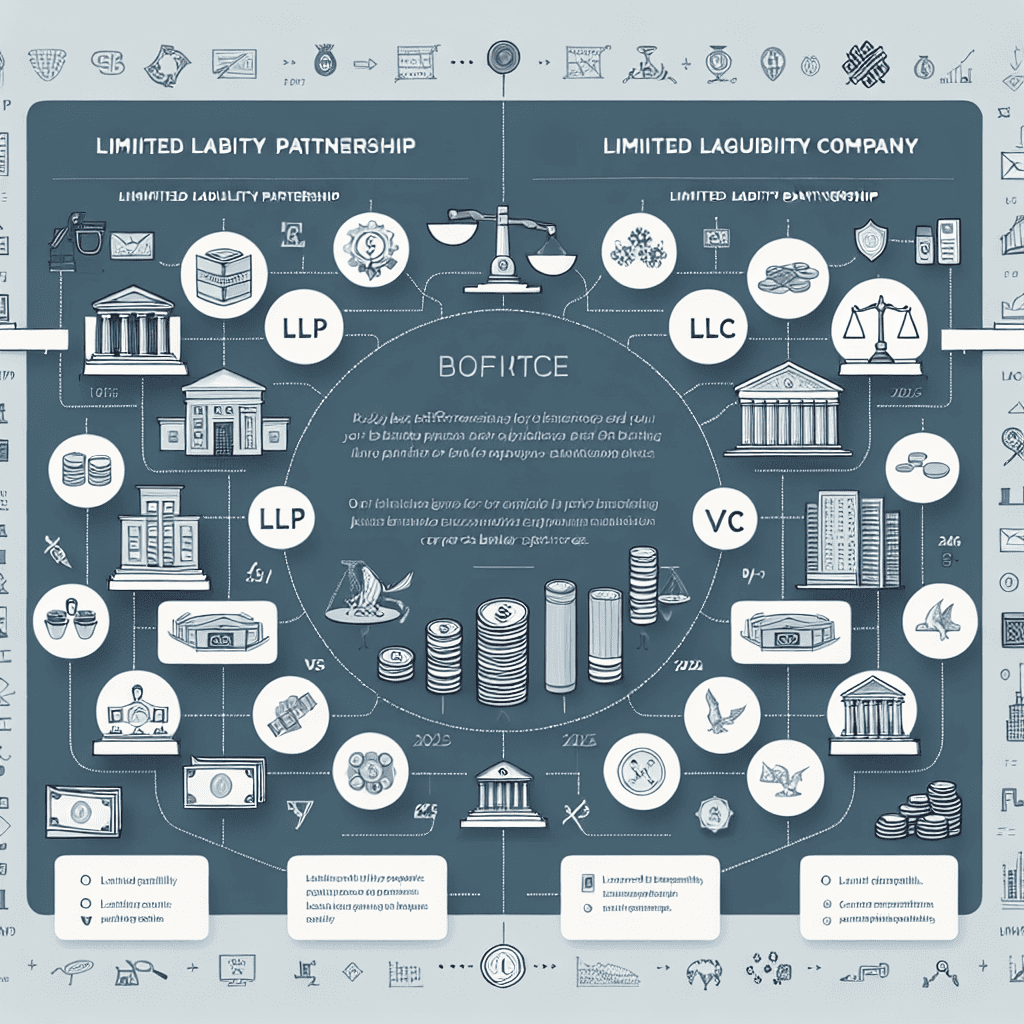
For groups of licensed professionals—such as lawyers, accountants, architects, and physicians—the Limited Liability Partnership (LLP) is often the most appropriate alternative to an LLC. The LLP structure is specifically designed to allow professionals to pool resources while protecting individual partners from the professional malpractice of their peers.
Liability Nuances in an LLP
While an LLC provides general liability protection for the business's debts, an LLP is tailored for professional environments. In an LLP, a partner is generally not personally liable for the negligence or "malpractice" of another partner. This is a critical distinction in high-risk professional fields. However, it is important to note that partners remain personally liable for their own professional errors and for the debts of the partnership in some jurisdictions, depending on specific state statutes.
Administrative Ease
LLPs are often easier to manage than corporations because they do not require a board of directors or formal shareholder meetings. They operate under a Partnership Agreement, which provides significant flexibility in how profits are shared and how the firm is managed. In 2026, many states have streamlined the annual reporting requirements for LLPs, making them a competitive alternative for mid-sized professional firms.
Sole Proprietorships and General Partnerships
If simplicity and cost-minimization are the highest priorities, a Sole Proprietorship or General Partnership may be considered, though they come with significant risks. These are "unincorporated" structures where there is no legal separation between the owner(s) and the business.
The Risk of Unlimited Liability
In a Sole Proprietorship, the owner is personally responsible for all business lawsuits and debts. If the business defaults on a loan or loses a legal judgment, the owner’s personal assets—such as their home, car, and personal bank accounts—can be seized to satisfy the debt. General Partnerships carry an even greater risk: "joint and several liability." This means each partner is potentially liable for the entire debt of the partnership, even if that debt was incurred by another partner without their knowledge.
When Simplification Makes Sense
These structures are usually only appropriate for very low-risk, hobby-style businesses or for testing a concept before formalizing the entity. As of 2026, the cost of forming a single-member LLC has dropped in many jurisdictions, making the "no-protection" route increasingly difficult to justify for any serious commercial endeavor.
Comparative Overview of Business Structures
The following table compares the primary alternatives to an LLC based on key operational and financial metrics as of 2026.
| Feature | C-Corporation | S-Corporation (Election) | LLP (Professional) | Sole Proprietorship |
|---|---|---|---|---|
| Liability Protection | Full entity protection. | Full entity protection. | Protective against partner malpractice. | None (Owner is the entity). |
| Federal Taxation | Double taxation (Corp + Dividends). | Pass-through (No corp tax). | Pass-through (No corp tax). | Pass-through (Schedule C). |
| Self-Employment Tax | Not on dividends; yes on salary. | Only on "Reasonable Salary." | Yes, on all active income. | Yes, on all net profit. |
| Capital Raising | Excellent (Preferred stock/VCs). | Limited (100 shareholder cap). | Difficult (Partner-funded). | Very Difficult. |
| Complexity | High (Bylaws, Board, Minutes). | Moderate (Strict IRS filings). | Moderate (Partnership agreement). | Very Low. |
| Ownership Limits | Unlimited. | Max 100; U.S. residents only. | Licensed professionals only. | Single owner only. |
Benefit Corporations and the Rise of Purpose-Driven Entities
In 2026, the "Benefit Corporation" (or B-Corp) has gained significant traction as a legitimate alternative to the traditional C-Corp or LLC. Unlike a standard corporation, which has a fiduciary duty to maximize shareholder profit above all else, a Benefit Corporation is legally required to consider the impact of its decisions on workers, customers, suppliers, community, and the environment.
This structure is ideal for social entrepreneurs who want to bake their mission into the company’s legal DNA. It prevents future investors or owners from abandoning the social mission in favor of short-term profits. While it carries higher reporting requirements—often necessitating an annual "Benefit Report"—it attracts a growing demographic of "conscious consumers" and impact investors.
Key Factors in Choosing the Right Structure
Deciding between these alternatives requires a thorough analysis of three core pillars: taxation, governance, and the "exit strategy."
- Taxation Goals: If your primary goal is to minimize self-employment taxes and you meet the residency requirements, the S-Corp election is often the winner. If you plan to reinvest all profits back into the business, the C-Corp’s flat tax rate (21% as of recent standardizations) might be more efficient than the individual tax rates applied to pass-through income.
- Operational Governance: Do you want a simple "manager-managed" approach (LLC/LLP) or a formal "oversight" approach (C-Corp)? Corporations require more "corporate hygiene," such as holding annual meetings and keeping detailed minutes. Failure to do so can lead to "piercing the corporate veil," where a court ignores the legal entity and holds owners personally liable.
- Future Funding: If you need to issue stock options to employees or attract "angel" and "VC" investors, the C-Corp is the gold standard. Most sophisticated investors will require you to convert your LLC or S-Corp into a C-Corp before they wire any funds.
For more detailed information on federal tax requirements, business owners should consult the Internal Revenue Service (IRS) Business Section. For state-level registration and compliance, the Small Business Administration (SBA) provides comprehensive guides for each jurisdiction.
Frequently Asked Questions
Can I change my business structure later?
Yes, it is possible to convert one business entity into another, but the process can be complex and expensive. For example, converting an LLC to a C-Corp is a common path for startups. This is often done through a "statutory conversion" or a "statutory merger," depending on state law. However, converting a C-Corp back into an LLC can trigger significant "liquidation" taxes, so it is generally better to start as an LLC and convert to a corporation later than vice-versa.
Is an S-Corp always better than an LLC for taxes?
Not necessarily. While an S-Corp can save on self-employment taxes, it also introduces more administrative costs, such as running payroll and filing a separate corporate tax return (Form 1120-S). If your business profit is relatively low (e.g., under $60,000 to $70,000), the cost of maintaining the S-Corp may outweigh the tax savings.
Do I need a lawyer to form a C-Corp or LLP?
While online filing services exist, consulting a legal professional is highly recommended for C-Corps and LLPs. These structures involve complex founding documents like Bylaws or Partnership Agreements that dictate how disputes are resolved and how the company is sold. Errors in these documents can lead to expensive "founder disputes" or compliance failures in the future.
What is the main difference between an LLP and an LLC?
The primary difference lies in the liability for professional malpractice and the eligibility of owners. LLPs are generally reserved for licensed professionals (like CPAs and Attorneys) and specifically protect partners from each other's negligence. LLCs are available to almost any business type and provide broader protection against general business debts but may not offer the same "malpractice" specific shields in all states.
Are there international tax implications for these structures?
Yes. C-Corps are often preferred for international business because they are recognized globally and have clear treaty protections. Pass-through entities like LLCs and S-Corps can create complex tax filing requirements for non-resident owners or for income earned in foreign countries, often leading to potential double taxation if not managed correctly.
Final Recommendation for 2026
Choosing an alternative to an LLC should be a proactive decision based on your 5-year growth plan. If you are a solo freelancer or a small local service provider, the S-Corp election (via an LLC) is likely your most efficient path for tax savings. If you are building a high-growth technology startup or plan to seek institutional funding, skip the LLC and form a Delaware C-Corporation from day one to avoid future conversion costs. For professional practices with multiple partners, the LLP remains the superior choice for balancing collaboration with individual professional protection. Always verify your specific state's filing fees and local tax treatment before finalizing your decision.