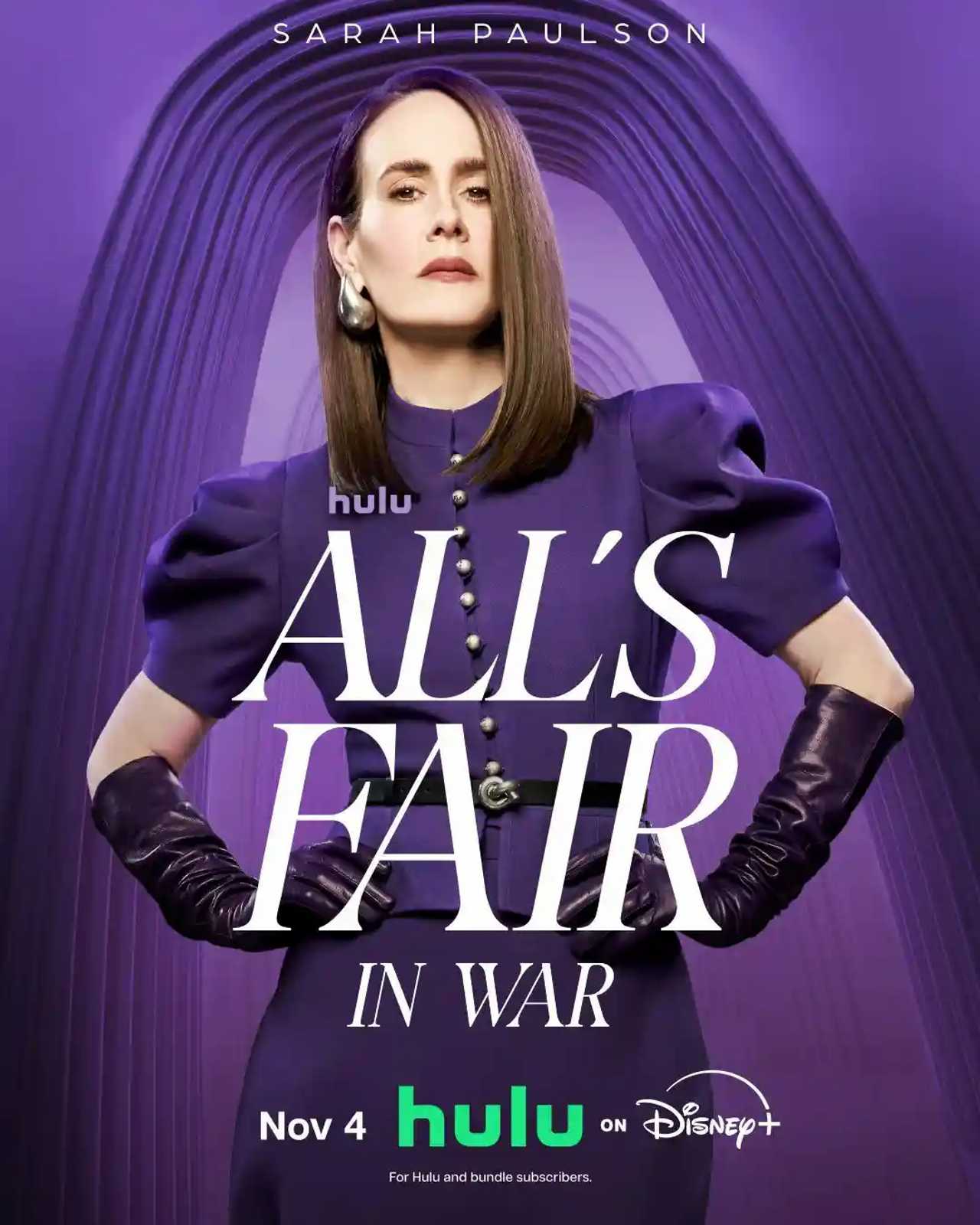
As of 2026, the television series All’s Fair consists of a debut season featuring a total of 10 episodes. Each installment adheres to a standard hour-long broadcast format, designed to accommodate narrative depth within the legal drama and personal conflict genres central to the show’s premise.
Defining the Scope of All’s Fair Season One
When tracking the episode count for a new television production, viewers often encounter discrepancies caused by split-season releases, mid-season breaks, or international distribution variations. For the first season of All’s Fair, the production structure is straightforward, comprising 10 distinct episodes produced for its initial run. Understanding this count is essential for viewers looking to navigate streaming platforms or physical media collections without confusion.
In the landscape of modern television, 10 episodes have become the "gold standard" for high-budget dramas. Unlike traditional network series that frequently ordered 22-episode seasons to fill a fall-to-spring schedule, the contemporary model adopted by platforms like Hulu and Disney+ often focuses on a tighter, 10-episode arc. This approach allows for a more cinematic storytelling experience, where the pacing remains consistent from the premiere through the season finale.
Narrative Arc and Structural Design
The decision to cap the first season at 10 episodes serves a functional purpose in the show's narrative delivery. By limiting the scope, the creative team ensures that each episode contributes meaningfully to the overarching conflict rather than relying on episodic "filler." In the context of All’s Fair, which centers on a high-stakes legal firm, the 10-episode count allows for a slow-burn progression of the central litigation plotlines while providing enough space to flesh out character dynamics.
The progression of these 10 episodes is typically divided into three acts:
- The Introduction (Episodes 1–3): Establishing the setting, the primary legal team, and the inciting incident that drives the season's core conflict.
- The Complication (Episodes 4–7): Expanding on the legal complexities and personal stakes, introducing secondary conflicts that threaten the stability of the firm.
- The Resolution (Episodes 8–10): Bringing the primary legal battle to a head while resolving major character arcs, setting the stage for potential future seasons.
Viewing and Accessibility Requirements
To fully engage with the 10 episodes of All’s Fair, viewers must understand the distribution platform's specific viewing model. Because the show is produced under the Ryan Murphy Productions umbrella, it follows the distribution standards typically associated with Hulu’s original content.
Potential viewers should consider the following prerequisites for an optimal experience:
- Subscription Access: Ensure an active subscription to the appropriate streaming service that holds the rights to the series in your specific region.
- Connectivity Standards: High-definition or 4K streaming requires a stable broadband connection. Given that modern dramas often feature high-contrast, low-light scenes, a stable bitrate is vital to avoid compression artifacts.
- Release Scheduling: While the season contains 10 episodes, verify if the platform opted for a "binge-drop" (releasing all at once) or a "weekly release" model, as this significantly impacts the pace at which a viewer can complete the series.
Comparison of Episode Formats
It is helpful to view the All’s Fair episode count in the context of broader industry standards. The following table illustrates how the 10-episode season compares to other common television structures.
| Season Structure | Total Episodes | Common Industry Use Case | Pacing Style |
|---|---|---|---|
| Limited Series | 6–8 | Anthologies or self-contained stories | Very fast-paced |
| Standard Cable Drama | 10–12 | High-budget dramas (e.g., All's Fair) | Character-focused |
| Network Procedural | 20–22 | Legal or medical procedurals | Episodic/Self-contained |
| Soap/Daytime | 100+ | Daily serials | Nonlinear/Extended |
This comparison highlights that All’s Fair falls into the category of high-production-value serialized television, which prioritizes long-form storytelling over the "case-of-the-week" format seen in longer-running network shows.
Common Misconceptions Regarding Episode Counts
A recurring issue for fans is the confusion between "filmed episodes" and "aired episodes." Occasionally, a show may produce 12 episodes, but a network might hold two back for a later season or release them as a separate special. For the first season of All’s Fair, the record remains firmly at 10.
Another common point of confusion involves the inclusion of "behind-the-scenes" or "recap" episodes. These are sometimes listed as part of the total count on database sites like IMDb or Wikipedia, even though they do not contain new narrative content. When evaluating the length of the season, readers should distinguish between scripted narrative episodes and supplementary content to ensure they are getting the full, intended story.
Technical Limitations and Troubleshooting
If you find that your streaming interface shows a different count, consider these troubleshooting steps:
- Cache Clearing: If you have previously viewed episodes in a different country, your application may be caching location-specific data. Clear your app cache or log out and back in.
- Regional Licensing: Rights vary by territory. In some regions, a 10-episode season might be split into two "parts" due to local broadcast regulations. This does not change the total count but may make it appear as if the series is shorter or longer than intended.
- Update Status: Ensure your application is running the most recent version. In 2026, many streaming platforms have updated their UI to group seasons by "Part 1" and "Part 2," which can sometimes obfuscate the total episode count.
The Impact of Modern Production Cycles
The shift toward 10-episode seasons in the mid-2020s is largely driven by the economics of prestige television. Producing 10 episodes allows for longer shooting days and more post-production refinement, which is necessary for the high-end legal aesthetics seen in All’s Fair. By maintaining a strict 10-episode count, the producers avoid "stretching" the plot, which would otherwise lead to a drop in narrative quality.
For the viewer, this means that every minute of the 10 episodes is intended to move the needle. There are no "bottle episodes" designed solely to save budget; instead, the budget is spread evenly across the 10-hour run, ensuring that the legal proceedings and the interpersonal drama maintain a consistent, high-quality tone from the premiere to the finale.
FAQ: Frequently Asked Questions about All’s Fair
Is the 10-episode count for All’s Fair permanent? Yes, the first season is confirmed at 10 episodes. This is the complete narrative unit for the debut season.
Do the 10 episodes follow a weekly release schedule? Release schedules are determined by the streaming platform’s current strategy. In 2026, most platforms favor a weekly release to maintain social media engagement over an 8-to-10-week period.
Are there any bonus episodes or specials included in the count? No, the count of 10 refers strictly to the scripted narrative episodes. Any additional behind-the-scenes content is usually categorized separately by platforms.
Will there be more episodes added to season one later? No. A production season is finalized upon its release. Any additional narrative content would be relegated to a potential second season.
How long is the total runtime of the first season? With 10 episodes typically running between 45 and 60 minutes each, the total runtime is approximately 8 to 10 hours of content.
Final Recommendation
When preparing to watch All’s Fair, treat the 10-episode season as a single cohesive film rather than a traditional episodic series. To ensure you don't miss key narrative beats, it is recommended to watch the episodes in order, as the legal and personal stakes compound linearly. If you are catching up in 2026, confirm your platform's specific regional availability to ensure you have access to the full 10-episode catalog.