Allie Hamilton’s wedding dress in The Notebook is a custom-designed 1940s-period gown created by costume designer Karyn Wagner. It features an illusion lace neckline, long tapered sleeves, and a classic A-line silhouette crafted from silk and delicate lace, symbolizing the refined, high-society life Allie was expected to lead with Lon Hammond Jr.
Though the film was released in 2004, the aesthetic of Allie Hamilton’s bridal look remains a cornerstone of vintage wedding inspiration in 2026. The dress serves as more than just a costume; it is a narrative pivot point that represents the conflict between Allie’s familial obligations and her true desires. Understanding the "why" behind the design requires looking at the historical accuracy of the late 1940s, the specific choices made by Karyn Wagner, and the psychological impact of the dress on the film’s protagonist.
The Creative Vision of Karyn Wagner
Costume designer Karyn Wagner was tasked with creating a wardrobe that didn't just look "old," but felt lived-in and emotionally resonant. For Allie’s wedding dress, Wagner needed to capture the essence of a wealthy Southern socialite in the post-WWII era. The 1940s were a time of transition in fashion, moving from the austerity and fabric rationing of the war years toward the "New Look" popularized by Christian Dior in 1947, which emphasized femininity, volume, and luxury.
Wagner designed the gown to look expensive and "perfect." It was intended to be the ultimate symbol of the Hamilton family's status. Unlike Allie’s more casual, vibrant summer dresses seen in the 1940s flashback sequences, the wedding gown is restrictive. It is high-collared, structured, and heavily layered. This design choice was intentional; it illustrates how Allie is being "fitted" into a life that, while beautiful on the surface, might not offer her the freedom she found with Noah Calhoun.
Technical Specifications: Fabric, Cut, and Construction
To truly explain the allure of the gown, one must analyze its technical construction. The dress is a masterclass in mid-century bridal couture.
The Illusion Neckline and Lace Detail
The most striking feature of the dress is the illusion neckline. This involves a sheer panel of fabric—usually fine tulle or organza—onto which intricate lace motifs are appliquéd. In Allie’s case, the lace appears to float against her skin, climbing up to a modest but elegant high neck. This was a popular style in the 1940s because it offered a way to show "skin" while remaining strictly formal and traditional.
The lace itself is a delicate floral pattern, likely inspired by Alençon or Chantilly lace, which were staples of high-end bridal wear of the period. The lace extends down the bodice and into the long sleeves, which taper sharply at the wrists and finish with a row of tiny fabric-covered buttons.
The Silhouette and Train
The dress features a classic A-line or "column-adjacent" silhouette. It is fitted through the natural waist, emphasizing Rachel McAdams' petite frame, before flowing into a full-length skirt. The fabric used for the skirt is a heavy silk or satin, which provides a "weighted" look. This weight is significant in cinema; it makes the character’s movements more deliberate and slow, contributing to the somber mood Allie feels during her fitting.
The train is of a moderate length—often referred to as a "chapel" train. It is long enough to signify a high-society wedding at a large venue (like the Hamiltons' estate) but not so long that it becomes impractical for the era’s ballroom dancing.
Headpiece and Veil
To complete the look, Wagner chose a fingertip-length veil attached to a lace-covered headpiece or "Juliet cap." This was a quintessential 1940s bridal accessory. The veil adds a layer of literal and metaphorical fog to Allie’s character, hiding her expressions of doubt from those around her.
Historical Context: 1940s Bridal Trends
The year The Notebook is set (the flashback portion) is approximately 1940 to 1947. Allie’s wedding preparation occurs in the post-war period. During the war, many brides wore their "Sunday best" or suits due to fabric shortages. However, by the time Allie is engaged to Lon, the restrictions had eased for the wealthy.
The "Notebook" dress is historically accurate in its restraint. It avoids the excessive poofiness of the 1950s or the extreme shoulder pads of the early 40s. Instead, it leans into a timeless elegance. This historical accuracy is why the dress hasn't "aged" poorly in the eyes of modern audiences. In 2026, brides still seek out 1940s silhouettes because they bridge the gap between the structured Victorian era and the free-flowing styles of the 1970s.
The Narrative Role: A Gilded Cage
In film theory, costumes are rarely just clothes; they are psychological indicators. Allie’s wedding dress represents her "Old Money" destiny. Lon Hammond Jr. is the "perfect" man on paper—wealthy, handsome, and approved by her parents. The dress is the physical manifestation of that "perfect" life.
When we see Allie in the dress, she is often surrounded by mirrors or other people (her mother, the seamstress). She is being looked at, measured, and pinned. This creates a sense of claustrophobia. The dress is beautiful, but it is also a uniform for a role Allie isn't sure she wants to play.
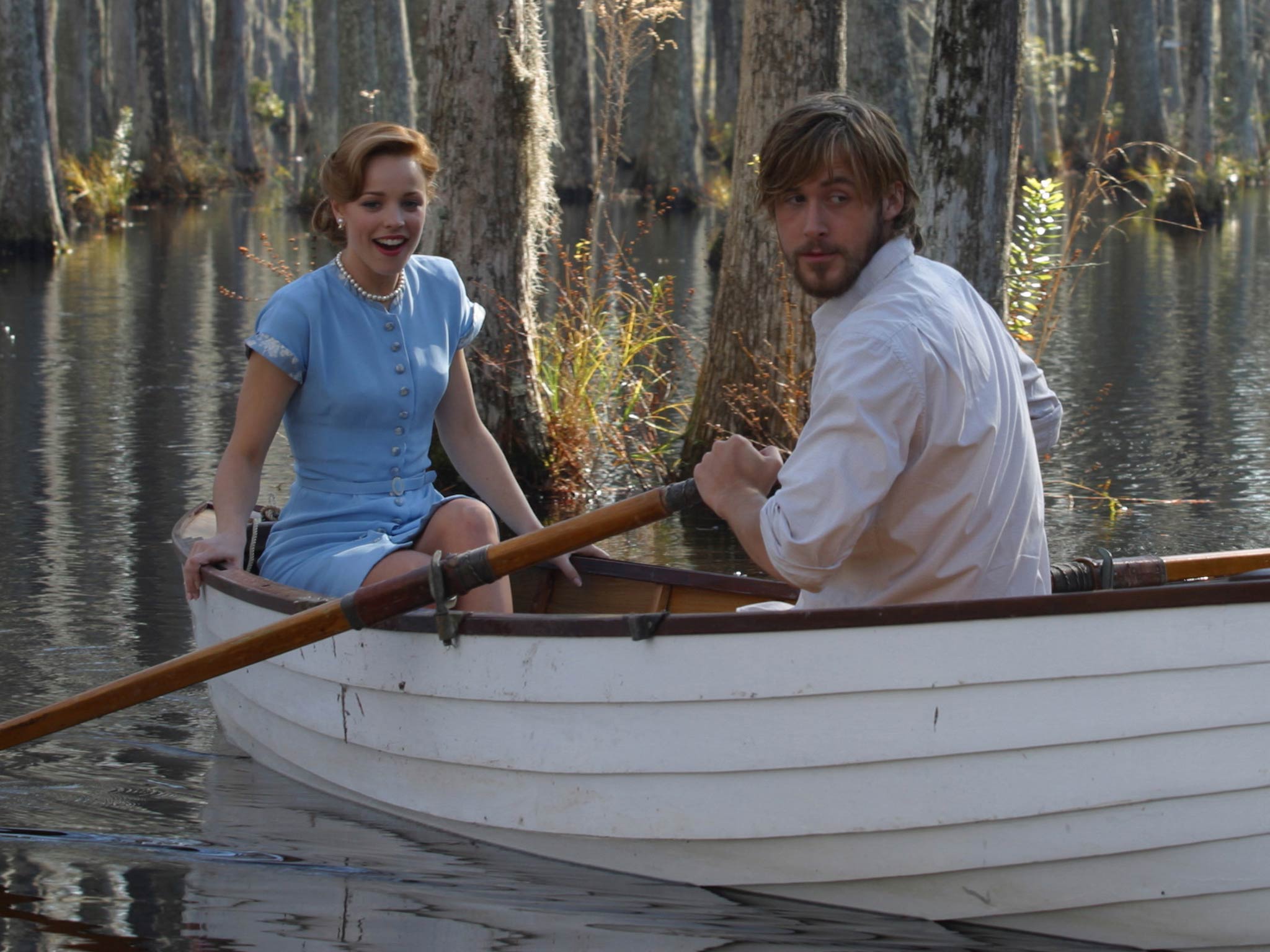
The contrast between this gown and the simple, blue button-down dress she wears when she goes to see Noah in Seabrook is stark. The blue dress allows her to run, to sit in the rain, and to be herself. The wedding dress, by comparison, requires her to stand still and be silent.
The Infamous Fitting Scene: A Turning Point
The "wedding dress" is most famous for the scene in which Allie is being fitted by a seamstress while her mother, Anne (Joan Allen), watches. It is during this moment—while Allie is literally encased in the lace and silk of her future with Lon—that she sees the newspaper clipping of Noah in front of the house he built for her.
The visual of Allie in her wedding gown, staring at a picture of her first love, is one of the most iconic images in romantic cinema. It represents the "sliding doors" moment of her life. The dress becomes a barrier she must literally take off to find her truth. In the film, she eventually faints or becomes overwhelmed, a physical reaction to the pressure that the dress (and the wedding) represents.
| Feature | Allie's Wedding Dress | Allie's Blue "Reunion" Dress |
|---|---|---|
| Material | Silk, Illusion Lace, Tulle | Cotton or Linen Blend |
| Sleeves | Long, Tapered, Button-fastened | Short, Cuffed |
| Neckline | High, Illusion Sheer | Collared, Button-down |
| Symbolism | Social status, duty, the "perfect" life | Freedom, nostalgia, authentic self |
| Setting | Formal interior, fitting room | Outdoors, the marsh, the porch |
| Era Influence | Late 1940s Formal/Couture | 1940s Practical/Everyday |
The Legacy of the Dress in 2026
Even two decades after the film's release, Allie’s wedding dress is frequently cited in bridal magazines and fashion blogs. Its influence can be seen in the "vintage-minimalism" trend of the mid-2020s.
Modern designers like Monique Lhuillier and Grace Loves Lace have often produced pieces that echo the "Notebook" aesthetic—specifically the use of long lace sleeves and modest necklines. The dress has stayed relevant because it avoids "trendy" 2004 elements (like the heavy satin pickups or excessive rhinestone embroidery popular when the movie was filmed) and instead stayed true to its 1940s roots.
For brides in 2026, the dress represents a "classic romantic" archetype. It appeals to those who want a wedding that feels like a timeless storybook rather than a modern production.
How to Replicate the Look
For those looking to emulate Allie Hamilton’s bridal style, there are several key elements to prioritize:
- The Lace Choice: Look for "eyelash" lace or Chantilly lace. It should be thin and delicate, not chunky or "boho."
- The Neckline: If a full high-neck is too restrictive, a "mock neck" or a "bateau" neckline with sheer lace overlay can achieve a similar effect.
- The Buttons: Authentic vintage looks always feature functional or decorative fabric-covered buttons on the sleeves and the back.
- The Fabric: Opt for silk crepe or a high-quality matte satin. Avoid overly shiny fabrics, which can look "costumey" rather than "cinematic."
- Tailoring: The 1940s look relies heavily on a precise waistline. Professional tailoring is essential to ensure the bodice fits perfectly without bunching.
Common Mistakes to Avoid
- Too much volume: Allie’s dress is an A-line, not a ballgown. Excessive petticoats will ruin the streamlined 1940s silhouette.
- Modern Jewelry: The dress is a statement on its own. In the film, Allie wears minimal jewelry—usually just pearl earrings. Heavy necklaces will clash with the high lace neckline.
- Bright White: Real 1940s gowns were often "ivory," "cream," or "eggshell." A stark, fluorescent white can look too modern for this specific style.
FAQs
Who designed the wedding dress in The Notebook?
The dress was designed by Karyn Wagner, the film's costume designer. It was not a "ready-to-wear" bridal gown from a major house but a custom creation designed specifically to fit the character of Allie Hamilton and the historical setting of the film.
Did Allie actually get married in the dress?
No. In the film’s narrative, Allie is seen in the dress during fittings and preparations, but she ultimately leaves Lon to be with Noah. The dress is never worn for a completed wedding ceremony, which adds to its symbolic weight as a "path not taken."
What kind of lace was used on the dress?
While the exact textile manufacturer is a trade secret of the production, the lace is a period-accurate illusion lace, likely a silk-based Chantilly or Alençon. It features floral motifs that are spaced out to allow the sheer tulle backing to be visible.
Is the dress on display anywhere?
Costumes from The Notebook have occasionally appeared in museum exhibits or "Hollywood Heritage" displays. However, most film costumes are held in private studio archives (New Line Cinema/Warner Bros.) and are not on permanent public display.
Can I buy a replica of the Notebook wedding dress?
Many "vintage-inspired" bridal shops offer gowns that are nearly identical to Allie's. In 2026, search terms like "1940s illusion lace wedding gown" or "Allie Hamilton bridal replica" will lead to several boutique designers who specialize in this specific cinematic aesthetic.
Final Practical Recommendation
If you are a bride or a costume enthusiast looking to capture the essence of Allie Hamilton’s wedding dress, focus on the silhouette and the sleeves. The tapered sleeve with button details is the hallmark of this design. Ensure the lace is soft and high-quality; the "illusion" effect only works if the mesh matches your skin tone perfectly. Finally, remember that the dress was designed to tell a story of refined elegance—keep your accessories simple and let the craftsmanship of the lace be the focal point.