The all-time double-double leaders in the NBA are categorized by two distinct eras: the modern era (post-1983) and the historical era. Since 1983, Tim Duncan holds the record with 841 career double-doubles. However, including estimated historical data, Wilt Chamberlain and Bill Russell remain the undisputed kings, with Chamberlain recording an estimated 968 double-doubles.
A double-double is defined as a single-game performance in which a player accumulates ten or more in two of the five main statistical categories: points, rebounds, assists, steals, and blocked shots. While most double-doubles consist of points and rebounds (for big men) or points and assists (for guards), the statistic has evolved into a primary metric for measuring a player's nightly impact and consistency. As of 2026, the leaderboard reflects a mix of retired legends who defined the "Big Man" era and active superstars who are rewriting the record books with unprecedented versatility.
The Evolution of the Double-Double Statistic
The term "double-double" did not enter the common basketball lexicon until the late 1970s and early 1980s. Before this period, statistics were tracked, but the specific achievement of reaching double digits in two categories wasn't a primary focus for media or fans. The NBA began officially tracking steals and blocks in the 1973-74 season, which means the triple-double and double-double totals for legends like Wilt Chamberlain, Bill Russell, and Oscar Robertson are technically incomplete.
In the modern era, which statistical databases typically mark as starting in the 1983-84 season, data tracking became more granular. This allows for a precise ranking of players based on every game played. When discussing "all-time" leaders, it is essential to distinguish between the verified modern era and the estimated historical era. The modern era favors longevity and consistent rebounding, while the historical era reflects a time when rebounding totals were significantly higher due to faster paces and lower shooting percentages.
Modern Era Leaders: The Post-1983 Rankings
Since the 1983-84 season, the leaderboard has been dominated by power forwards and centers who specialized in "cleaning the glass" and scoring in the paint.
1. Tim Duncan (841 Double-Doubles)
Known as "The Big Fundamental," Tim Duncan’s career was a masterclass in consistency. Over his 19 seasons with the San Antonio Spurs, Duncan averaged a double-double in his first 13 consecutive seasons. His ability to impact the game on both ends of the floor without flashy play allowed him to accumulate a record that many believe will be difficult to surpass. Duncan’s double-doubles were almost exclusively point-rebound combinations, though his shot-blocking ability often hovered near the double-digit mark in playoff games.
2. Karl Malone (814 Double-Doubles)
The "Mailman" delivered with incredible regularity. Karl Malone’s ranking is a testament to his durability; he rarely missed games and remained a double-double threat well into his late 30s. Malone benefited from playing alongside John Stockton, whose elite passing ensured Malone always had the scoring half of the double-double covered. Malone’s physical style of play allowed him to dominate the boards against smaller power forwards of the 1990s.
3. Hakeem Olajuwon (775 Double-Doubles)
"The Dream" was unique because his double-doubles weren't just limited to points and rebounds. Olajuwon is one of the few players in history to record double-doubles involving blocks. His defensive presence was so dominant that he frequently reached double digits in rebounds and blocks in the same game. His footwork and scoring touch made the point-rebound double-double a nightly expectation for the Houston Rockets throughout the 80s and 90s.
4. Kevin Garnett (742 Double-Doubles)
Kevin Garnett brought a level of intensity and versatility to the power forward position that bridged the gap between the traditional post player and the modern mobile big. Garnett led the league in rebounding for four consecutive seasons (2004–2007), which served as the engine for his high double-double totals. Unlike Malone or Duncan, Garnett was also an elite playmaker for his position, occasionally recording point-assist double-doubles.
Historical Giants: The Wilt and Russell Era
If we look at the pre-1983 era, the numbers become astronomical. According to research by Basketball-Reference and historical box score aggregators, the totals for 1950s and 60s players dwarf modern figures.
- Wilt Chamberlain: With an estimated 968 career double-doubles, Wilt is the statistical anomaly of the NBA. In the 1961-62 season alone, he averaged 50.4 points and 25.7 rebounds per game. He essentially recorded a double-double in every game he played for the first decade of his career.
- Bill Russell: Russell’s focus was almost entirely on defense and rebounding. While his scoring wasn't as prolific as Wilt’s, his rebounding (22.5 per game career average) ensured that any night he scored at least 10 points—which was most nights—he secured a double-double.
- Oscar Robertson: The "Big O" is famous for averaging a triple-double over a season, but he is also a top-tier double-double leader. His double-doubles were frequently point-assist combinations, making him the only guard to rival the big men in all-time rankings before the arrival of modern stars like Russell Westbrook.
The Rise of the "Point-Center" in 2026
As of the 2025-2026 season, the landscape of double-double leaders is shifting. The emergence of versatile big men who act as primary playmakers has changed how these stats are accumulated.
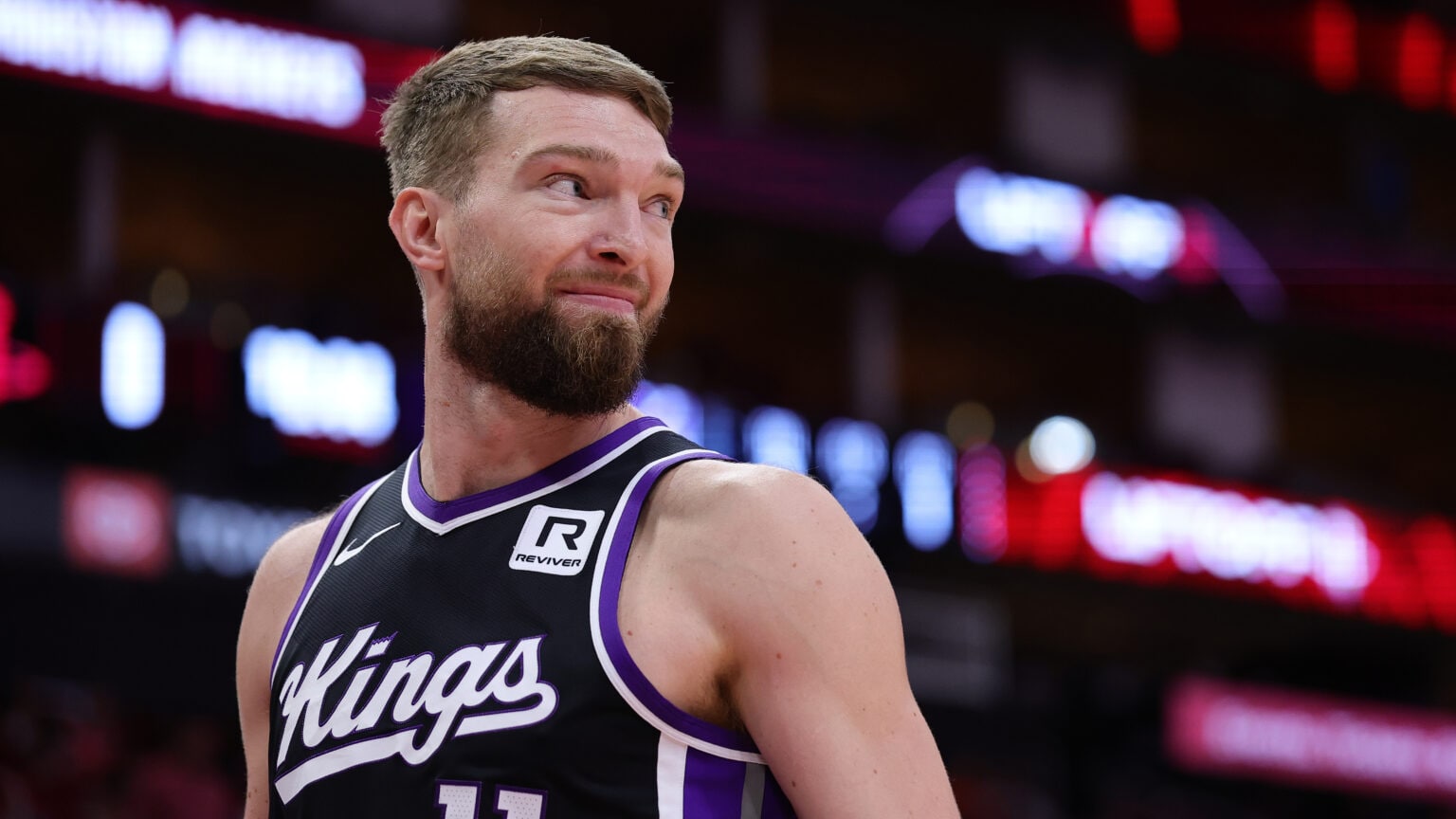
Nikola Jokic and Domantas Sabonis are the modern torchbearers. Sabonis, in particular, has put up historic numbers between 2023 and 2026, at one point recording 61 consecutive double-doubles—a feat that surpassed Kevin Love’s modern-era record. Jokic, while more focused on triple-doubles, remains a fixture at the top of the double-double leaderboards because his rebounding and passing are both elite.
The "Point-Center" phenomenon means that players are no longer reliant solely on rebounds to get their second "double." We are seeing more 10-point, 10-assist games from centers than ever before in NBA history. This versatility suggests that while Duncan’s 841 might seem safe, the sheer volume of stats in the modern, high-pace NBA could see a player like Jokic or Sabonis challenge those heights by the end of their careers.
Comparison of All-Time Double-Double Leaders (Modern Era + Historical Estimates)
The following table combines verified modern era data with the most widely accepted historical estimates as of 2026.
| Player | Estimated/Verified Total | Primary Era | Primary Categories |
|---|---|---|---|
| Wilt Chamberlain | 968 (Est.) | 1959–1973 | Points / Rebounds |
| Bill Russell | 830 (Est.) | 1956–1969 | Points / Rebounds |
| Tim Duncan | 841 (Verified) | 1997–2016 | Points / Rebounds |
| Karl Malone | 814 (Verified) | 1985–2004 | Points / Rebounds |
| Hakeem Olajuwon | 775 (Verified) | 1984–2002 | Points / Rebounds / Blocks |
| Dwight Howard | 748 (Verified) | 2004–2022 | Points / Rebounds |
| Kevin Garnett | 742 (Verified) | 1995–2016 | Points / Rebounds |
| Shaquille O'Neal | 727 (Verified) | 1992–2011 | Points / Rebounds |
| John Stockton | 714 (Verified) | 1984–2003 | Points / Assists |
| Charles Barkley | 710 (Verified) | 1984–2000 | Points / Rebounds |
| Domantas Sabonis | 620+ (Active) | 2016–2026 | Points / Rebounds / Assists |
Note: Bold names indicate players with fully verified game-by-game data starting from 1983.
Why the Double-Double Remains a Vital Metric
Despite the rise of advanced analytics like Player Efficiency Rating (PER) or Win Shares, the double-double remains a popular "bread and butter" stat for several reasons:
- Reliability: A player who consistently records double-doubles is providing a guaranteed floor of production. Coaches value players like Rudy Gobert or Giannis Antetokounmpo because they know they are getting double-digit production in two phases of the game every night.
- Marketability: For fans and media, the "double-double" is an easy-to-understand benchmark of excellence. It signifies that a player didn't just have a good game in one area, but dominated multiple aspects of the contest.
- Fantasy Basketball Impact: In the world of fantasy sports, double-doubles are often rewarded with bonus points. This has kept the statistic relevant in the digital age, as fans track the nightly progress of players like Anthony Davis or Nikola Vucevic.
Factors Influencing Double-Double Totals
Several environmental factors in the NBA influence how easily these records are broken or maintained.
Game Pace and Possessions
In the 1960s, teams averaged over 120 possessions per game. This resulted in more missed shots and more opportunities for rebounds. In the 1990s, the pace slowed down to the 90s, making every rebound more precious. In 2026, the pace has climbed back up toward 100 possessions per game, which explains why modern players are seeing a slight inflation in their double-double totals compared to the "slugfest" era of the early 2000s.
The Three-Point Revolution
The shift toward three-point shooting has created "long rebounds." Traditionally, centers camped under the rim to grab misses. Now, rebounds often bounce out toward the free-throw line or the wings. This has allowed guards like Russell Westbrook and Luka Doncic to accumulate rebounds and double-doubles at a rate previously reserved for 7-footers.
The "Double-Double Machine" Archetype
Certain players are specifically built to maximize this stat. For example, Andre Drummond and Dwight Howard made careers out of being "double-double machines." They may not have been the primary scoring options, but their elite positioning for offensive rebounds guaranteed them second-chance points and high rebounding totals.
Practical Guidance for Evaluating Leaders
When comparing all-time leaders, researchers should consider the following:
- Minutes Played: Players like Wilt Chamberlain played nearly 48 minutes per game. Modern stars often play 32-35 minutes. Per-minute double-double rates can offer a fairer comparison across eras.
- Opposition Talent: The 1960s had fewer teams, meaning star players faced each other more frequently, but the overall depth of the league was thinner than the global talent pool available in 2026.
- Official Sources: For the most accurate, updated-daily statistics, the Official NBA Stats Portal is the primary resource for verified modern data.
Common Mistakes in Tracking Double-Doubles
A frequent error is conflating Double-Doubles with Triple-Doubles. While all triple-doubles are technically double-doubles (since you reached ten in at least two categories), the reverse is not true. Another common mistake is ignoring the ABA (American Basketball Association) stats. For players like Artis Gilmore or Julius Erving, their all-time rankings often look different depending on whether their ABA double-doubles are included. Most "NBA All-Time" lists strictly exclude ABA data unless specified as "Professional Basketball All-Time" lists.
Frequently Asked Questions
Who has the most consecutive double-doubles in NBA history? Wilt Chamberlain holds the record with 227 consecutive double-doubles. In the modern era (post-merger), the record was held by Kevin Love (53) until Domantas Sabonis broke it during the 2023-24 season, reaching 61 consecutive games.
Can a player get a double-double without scoring 10 points? Yes. Although rare, a player can record a double-double with 10+ rebounds and 10+ assists, or 10+ rebounds and 10+ blocks. Draymond Green, for instance, famously recorded a triple-double without scoring 10 points (points being the missing category), which highlights how players can dominate without being primary scorers.
Is the double-double more common today than in the 90s? Yes. Due to the increased pace of play and the higher volume of three-point attempts (which leads to more rebounding opportunities), the average number of double-doubles per night across the league has increased significantly since the mid-2010s.
Who is the shortest player to be a leader in double-doubles? John Stockton, standing at 6'1", is the most prolific "small" double-double leader. His 714 double-doubles were almost entirely points and assists. Chris Paul is another guard who ranks exceptionally high despite his stature.
Do playoff double-doubles count toward the all-time list? Standard "all-time" leaderboards generally refer to regular-season games only. Playoff statistics are tracked separately by the NBA. If you combine them, Tim Duncan’s lead in the modern era becomes even more substantial due to his extensive postseason career.
Final Recommendation
For those tracking the all-time double-double leaders, the most important distinction is the 1983-84 tracking line. While Wilt Chamberlain is the historical leader, Tim Duncan remains the gold standard for the modern, fully-verifiable era. If you are analyzing current players for historical greatness, watch the trajectory of Domantas Sabonis and Nikola Jokic; as of 2026, they are the only active players with the consistency and durability to potentially crack the top three of the modern era rankings within the next few seasons.